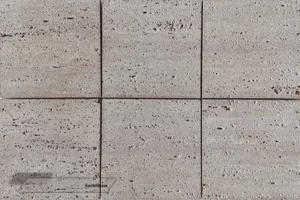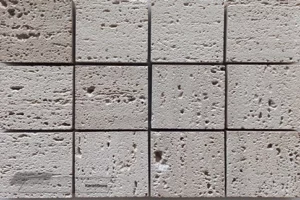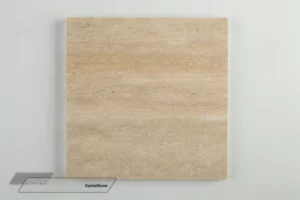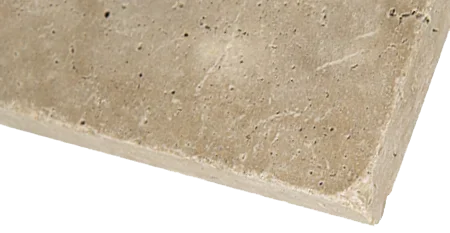
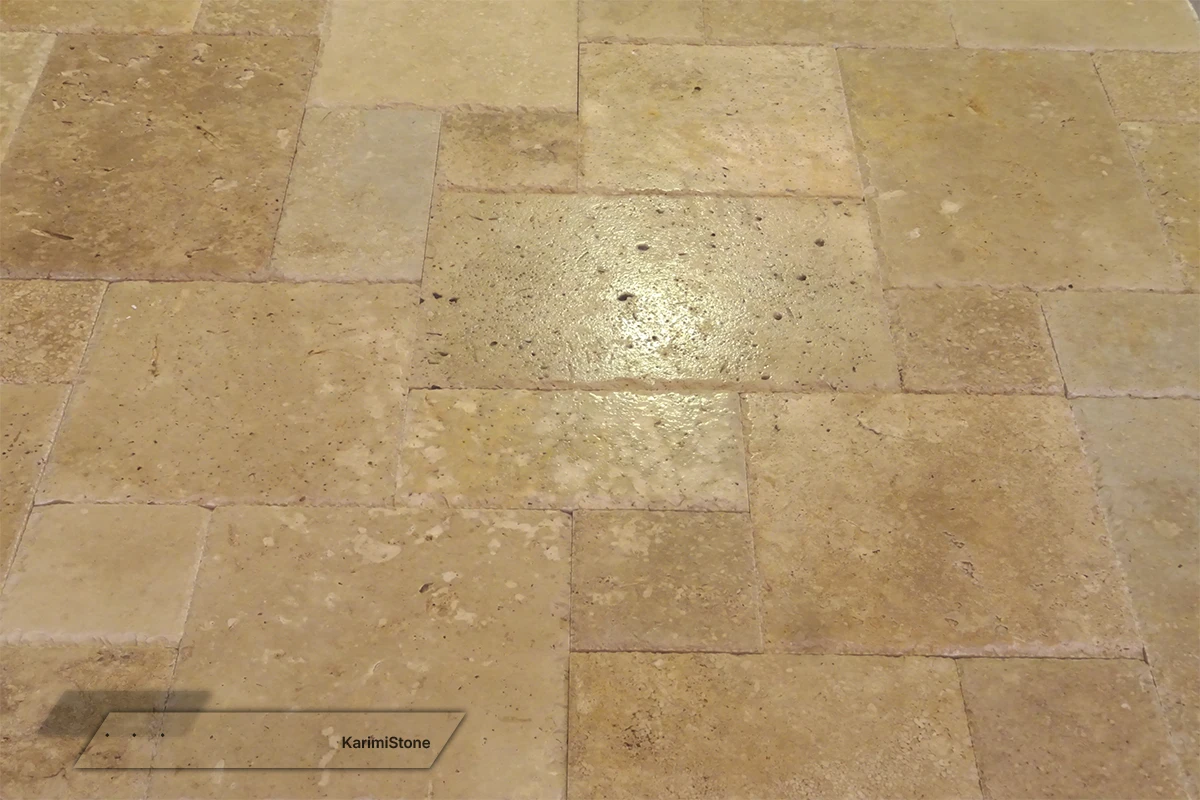
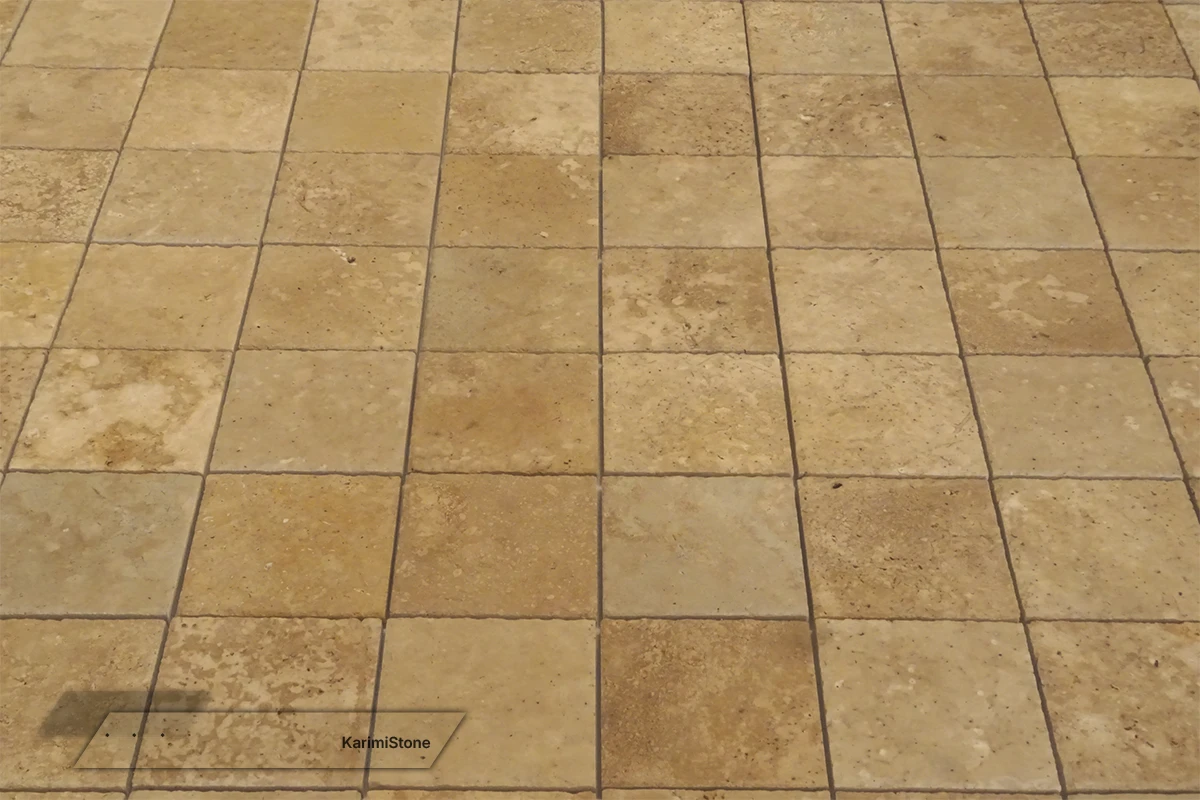
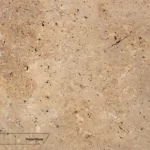
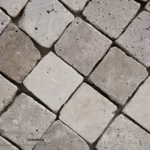
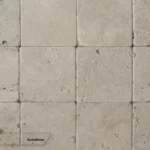
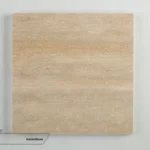
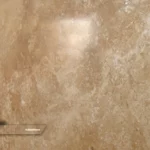
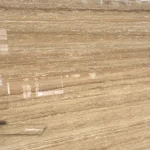
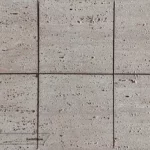
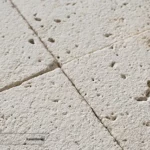
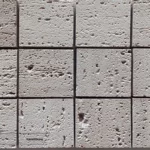
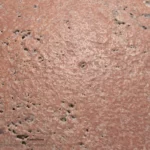
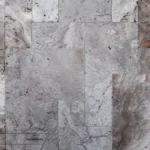
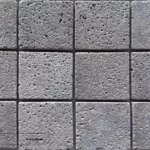
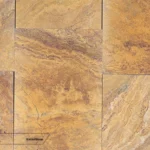







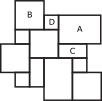
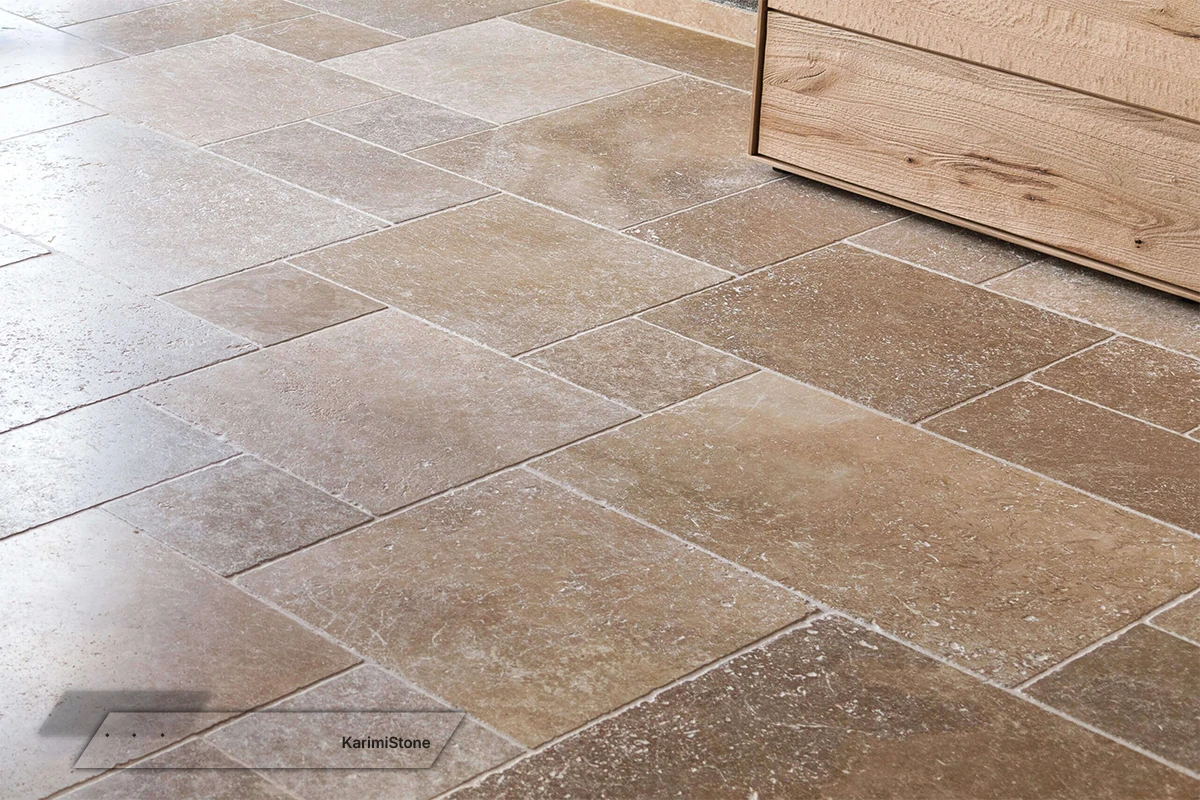
Beige Travertine Brushed & Tumbled is an Iranian natural stone with warm cream and beige tones, natural pores, a softly textured surface, and gently aged edges. This product combines a brushed surface with a tumbled edge finish and a Cross-Cut pattern, creating a natural architectural appearance with low sheen and subtle visual variation.
The brushing process develops a soft tactile texture across the face of the stone, while tumbling softens sharp edges and corners. Together, these treatments give the stone a more relaxed, naturally aged character than precisely finished stone with sharp edges.
Its warm color, visible pores, softly textured face, and Cross-Cut movement make Beige Travertine Brushed & Tumbled suitable for interior floors, walls, courtyards, patios, villas, hotels, stairs, landscape projects, and custom architectural elements.
What Is Beige Travertine Brushed & Tumbled?
Beige Travertine Brushed & Tumbled is natural beige travertine processed with two complementary mechanical treatments.
Brushing works mainly on the exposed face of the stone. Flexible abrasive brushes move across the surface and gradually affect softer areas while harder mineral sections remain slightly more pronounced. This creates a subtle tactile relief without producing an excessively rough surface.
Tumbling primarily affects the edges, corners, and overall visual character of the finished pieces. It softens sharp details and produces slightly rounded and naturally irregular edges.
When combined, the two treatments create a low-sheen stone surface with natural pores, soft relief, gently aged edges, and a less formal architectural character.
What Is Beige Travertine?
Beige Travertine is a natural calcium-carbonate stone known for its warm neutral colors, porous structure, and characteristic mineral patterns.
Travertine forms through the precipitation of calcium carbonate from mineral-rich water. The U.S. Geological Survey explains how the loss of dissolved carbon dioxide can lead to calcium-carbonate precipitation and travertine formation.
This geological process creates the layers, pores, cavities, and natural variations that make travertine visually distinctive.
Iranian Beige Travertine commonly shows:
- Light cream to beige backgrounds
- Warm beige and honey tones
- White or light brown mineral markings
- Natural pores and cavities
- Layered geological structure
- Warm and neutral architectural appearance
Color and Visual Character
Beige Travertine usually has a soft and balanced color range. Depending on the quarry, extraction layer, and material selection, colors may range from light cream and ivory beige to warmer beige and honey tones.
White mineral markings, pale brown areas, and natural variations may also appear across the surface.
The brushed and tumbled treatment supports this natural character. Instead of creating a perfectly flat and highly reflective surface, it allows the stone’s pores, mineral movement, and subtle relief to remain visible.
You can explore other Beige Travertine products and specifications from Karimi Stone or browse the complete range of natural stone surface finishes.
Cross-Cut Beige Travertine
This product is produced with a Cross-Cut pattern.
In Cross-Cut production, the travertine block is sawn across its natural sedimentary layers rather than parallel to them. This cutting direction produces a more irregular and less directional visual pattern than Vein-Cut travertine.
Instead of long linear bands, Cross-Cut Beige Travertine may display:
- Cloud-like mineral movement
- Rounded or circular patterns
- Flowing beige and cream areas
- Honey-colored mineral patches
- White and pale brown markings
The Cross-Cut pattern works particularly well with brushed and tumbled processing because both treatments emphasize the naturally varied and relaxed character of the stone.
What Is a Brushed Finish?
A brushed finish is produced using flexible abrasive brushes that work across the surface of natural stone.
Travertine responds particularly well to brushing because its structure naturally includes areas with different hardness levels, mineral layers, and pores.
During brushing, softer areas may become slightly recessed while denser mineral sections remain more pronounced.
A brushed Beige Travertine surface generally has:
- Soft tactile texture
- Low surface sheen
- Subtle natural relief
- Visible pores
- Natural mineral structure
- Soft visual depth
The final texture depends on brush type, abrasive grit, brush pressure, machine speed, number of processing passes, stone hardness, and natural pore distribution.
More information about this type of surface is available in the Karimi Stone collection of brushed natural stone products.
What Is a Tumbled Finish?
Tumbling is used to soften the edges and details of natural stone and give finished pieces a slightly aged appearance.
During processing, sharp edges and corners become less precise and slightly rounded. Small controlled irregularities may also develop.
The result typically includes:
- Softer edges
- Slightly rounded corners
- Natural-looking edge variation
- A gently aged appearance
- Less formal geometry
- A traditional or relaxed architectural character
The exact result depends on stone dimensions, production method, processing time, and the approved project sample.
Other products with this edge treatment can be viewed in the Tumbled natural stone collection.
Why Combine Brushing and Tumbling?
Brushing and tumbling affect different parts of the finished product.
Brushing develops the face texture, while tumbling mainly softens edges, corners, and the overall geometry.
Together, they create a stone with a soft textured face, reduced reflection, natural pores, slightly softened edges, subtle irregularity, and an aged architectural character.
This combination is particularly suitable for projects inspired by Mediterranean, traditional, rustic, natural, or relaxed contemporary architecture.
Natural Pores and Surface Character
Porosity is a defining characteristic of natural travertine.
The pores may vary in size, depth, shape, number, and distribution. Some Beige Travertine selections contain relatively small and consistent pores, while others show larger and more visible cavities.
With brushed and tumbled processing, these pores can remain part of the overall visual composition.
The combination of pores, tactile surface relief, Cross-Cut mineral movement, and softened edges clearly expresses the natural origin of the material.
Filling Options
Natural travertine cavities may be filled depending on the required appearance and application.
Suitable filling systems may include resin, epoxy, or UV-based stone fillers.
However, filling intensity should be coordinated with the desired architectural character. Excessive filling can reduce some of the natural qualities associated with a brushed and tumbled finish.
For projects that require a more authentic or aged appearance, keeping part of the natural pore structure visible may be preferable.
Iranian Beige Travertine Sources
Iran has several important quarry regions associated with Beige Travertine, including Vartoon, Abyaneh, Takab, Haji Abad, and Mahallat.
Stone appearance may vary between quarry regions and extraction layers. Some selections have cleaner cream backgrounds, while others contain more beige, honey, white, or brown mineral movement.
Pore size and distribution may also differ.
For architectural orders, material should therefore be selected according to the required color range, mineral pattern, pore structure, and overall design rather than relying only on the commercial quarry name.
Architectural Applications
Interior Flooring
Interior flooring is one of the most suitable applications for Beige Travertine Brushed & Tumbled.
It can be considered for residential interiors, hotel spaces, entrance halls, corridors, restaurants, villas, and traditional or natural-style interiors.
The softened visual character can make large floors feel warmer and less formal.
Where a specific slip-resistance rating is required, the actual finished stone should be tested according to the applicable project standard.
Courtyards and Patios
The warm beige tone and softly aged character work naturally in courtyards, patios, villa outdoor areas, covered exterior spaces, garden zones, and indoor-outdoor transition areas.
Beige Travertine combines particularly well with vegetation, brick, wood, concrete, and other natural materials.
Interior Wall Cladding
Beige Travertine Brushed & Tumbled can be used where walls require natural texture without highly reflective surfaces.
Possible applications include feature walls, hotel interiors, villa walls, restaurant interiors, entrance areas, and decorative architectural surfaces.
Landscape Architecture
Suitable material can be considered for garden pathways, landscape walls, outdoor seating areas, villa gardens, courtyard features, and decorative landscape elements.
The aged surface character can help connect contemporary construction with natural surroundings.
Staircases
Beige Travertine can also be processed into stair treads, risers, landings, entrance steps, and custom staircase elements.
The required thickness, edge profile, installation system, and technical properties should be selected according to the individual project.
Fireplaces and Decorative Elements
The warm beige color and naturally aged finish are also suitable for fireplace surrounds, stone benches, decorative frames, wall details, architectural features, and custom natural stone products.
Sorting and Project Selection
There is no single universal visual grading system for Beige Travertine.
Material is normally selected according to background color, beige tone, mineral pattern, pore distribution, surface appearance, and consistency between pieces.
Some projects require highly controlled visual consistency. Other projects intentionally use a broader range of tones and patterns to create a more natural result.
For brushed and tumbled stone, small variations can support the intended aged character, but the acceptable range should still be agreed before large-volume production.
Why Choose Beige Travertine Brushed & Tumbled?
Beige Travertine Brushed & Tumbled combines the warmth of Iranian Beige Travertine with a tactile and naturally aged architectural surface.
Its main advantages include warm cream and beige colors, low sheen, soft surface relief, visible natural pores, gently softened edges, Cross-Cut mineral movement, and the ability to suit both traditional and contemporary natural-design concepts.
Frequently Asked Questions
What is Beige Travertine Brushed & Tumbled?
It is Beige Travertine processed with brushing and tumbling. Brushing creates a soft textured face, while tumbling softens the edges and gives the stone a gently aged appearance.
What does Cross-Cut mean?
Cross-Cut means the block is cut across its natural sedimentary layers, producing a less directional and more cloud-like pattern than Vein-Cut travertine.
Is Brushed & Tumbled Travertine rough?
It has a tactile textured surface, but the exact degree of roughness depends on the processing specification and approved sample.
Are natural pores visible?
They can be. Visibility depends on the selected material and the amount of filling required for the project.
Can Beige Travertine Brushed & Tumbled be used for flooring?
Yes. Suitable material can be considered for interior floors, villas, courtyards, and selected architectural flooring applications.
Can it be used outdoors?
Suitable material can be considered for selected outdoor applications when stone properties, thickness, installation method, drainage, and climate conditions meet the project requirements.
Can the finish be customized?
Yes. Brushing intensity, edge softness, filling level, and overall aged character can be coordinated according to an approved production sample.
Beige Travertine Brushed & Tumbled by Karimi Stone
Karimi Stone produces, processes, supplies, and exports Iranian natural stone for residential, commercial, hospitality, landscape, and architectural projects.
For Beige Travertine Brushed & Tumbled projects, material can be selected according to beige tone, Cross-Cut pattern, pore structure, dimensions, thickness, filling level, and required surface character.
Production can include controlled brushing and tumbling, project-based sorting, custom dimensions and thicknesses, quality control, export-grade packaging, and international project supply.
With its warm color, natural pores, Cross-Cut pattern, tactile brushed face, and softened tumbled edges, Beige Travertine Brushed & Tumbled offers a distinctive Iranian natural stone option for floors, walls, villas, courtyards, landscape projects, stairs, hotels, and custom architectural applications.