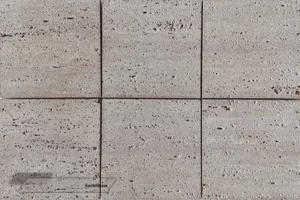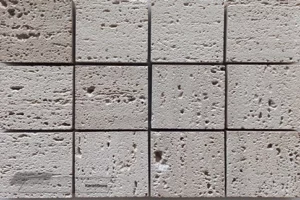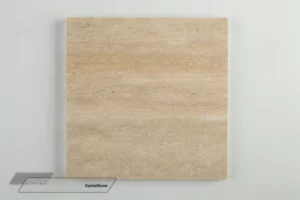
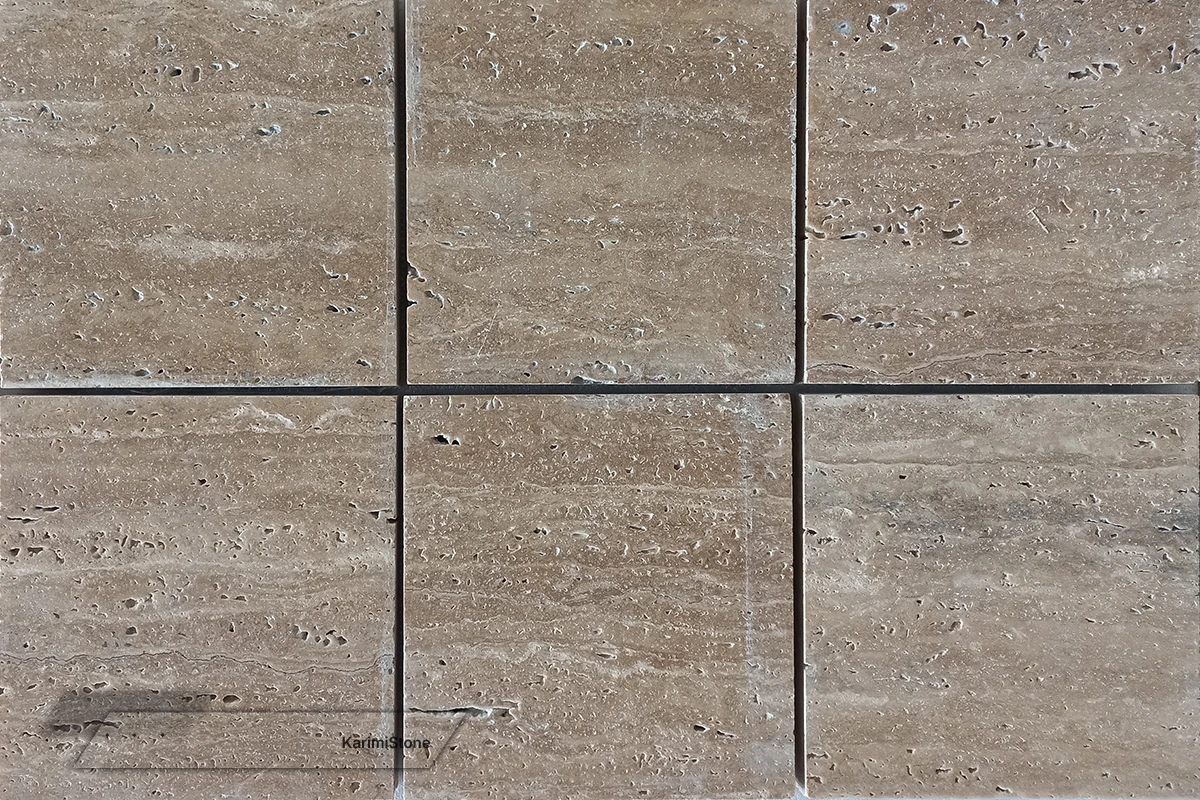
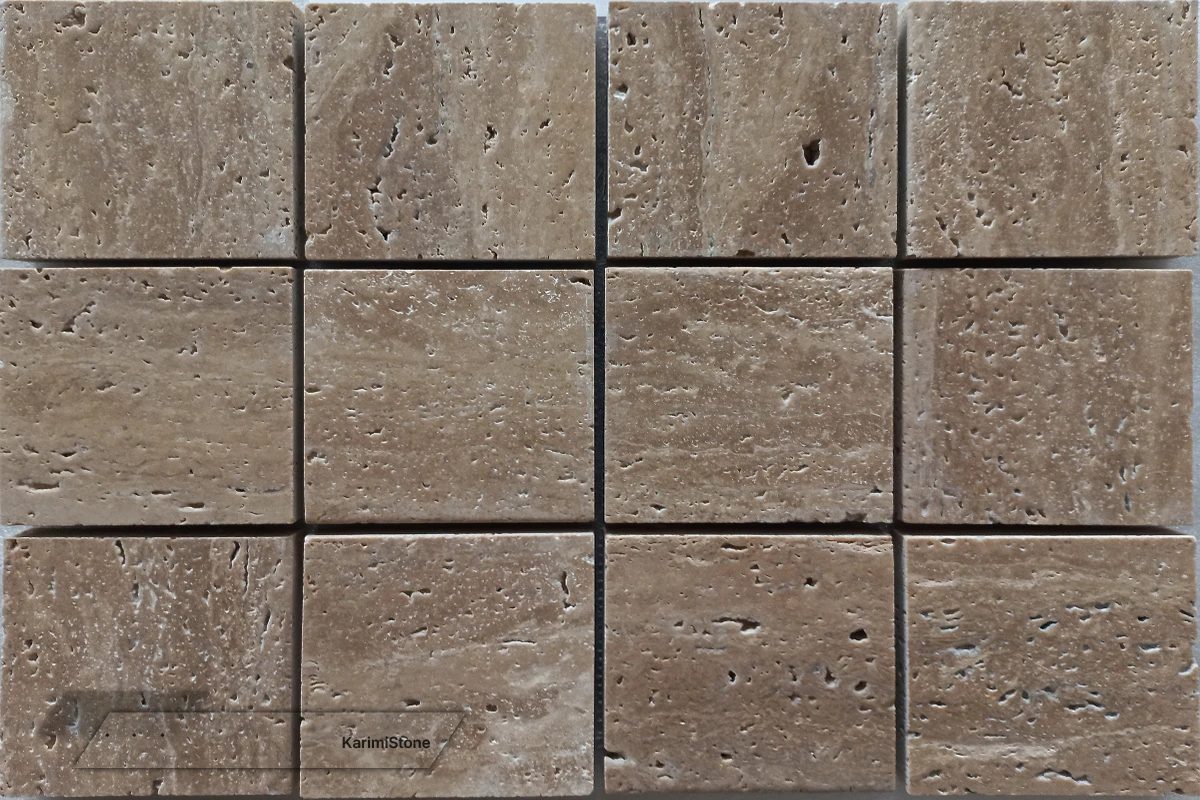
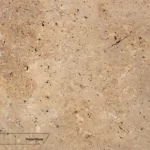
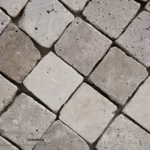
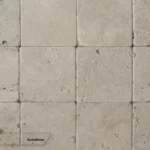
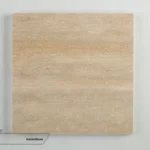
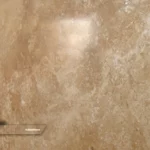
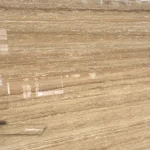
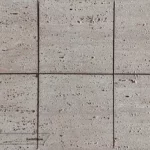
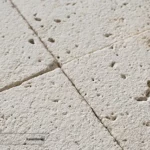
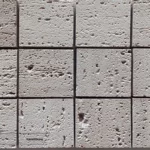
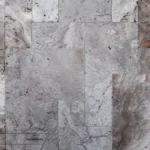
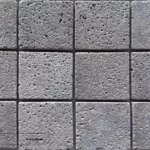
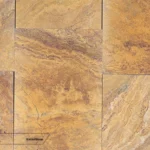






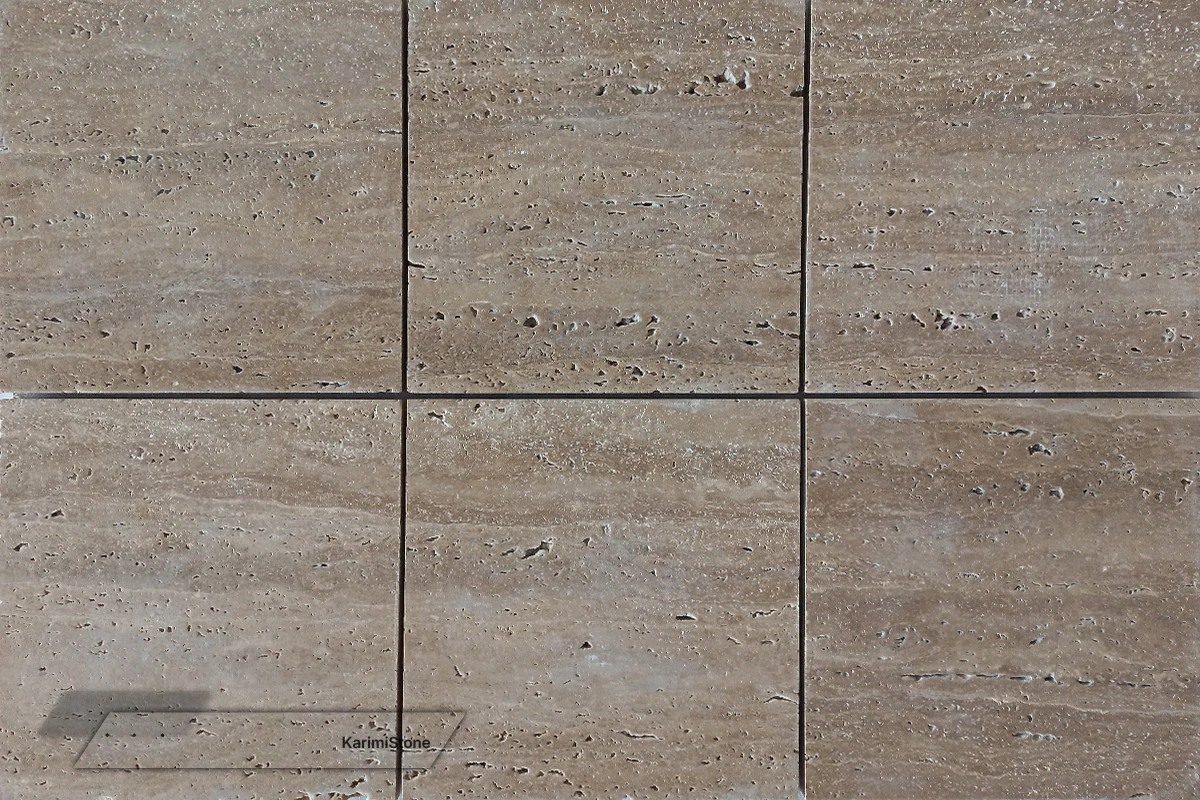
Beige Travertine Brushed is an Iranian natural stone characterized by warm cream-to-beige tones, natural pores, linear mineral layers, and a soft textured surface. In this product, the stone is processed in a vein-cut direction and finished with abrasive brushing, creating a low-sheen surface that highlights the natural structure of the travertine.
The combination of directional veins and subtle surface relief gives Beige Travertine Brushed a distinctive architectural character. It can be considered for exterior and interior walls, facades, flooring, stairs, entrances, villas, hotels, landscape elements, and custom architectural stonework.
What Is Beige Travertine Brushed?
Beige Travertine Brushed is a textured version of natural beige travertine in which flexible abrasive brushes are used to work across the surface of the stone. Because travertine naturally contains pores, mineral layers, and areas with slightly different hardness, the brushing process does not create a completely flat surface.
Instead, softer areas may become slightly recessed while harder mineral sections remain more pronounced. This produces a tactile surface with subtle relief, low sheen, visible natural pores, and a more organic appearance.
The finish works particularly well with travertine natural stone because it follows the geological structure of the material rather than covering it.
Color and Natural Appearance
Iranian Beige Travertine generally ranges from light cream and ivory beige to warmer beige and honey tones. Depending on the quarry and stone selection, white mineral bands, pale brown lines, and variations in pore structure may also be visible.
Unlike highly reflective finishes, the brushed surface has relatively low sheen. This allows the natural beige background, pores, veins, and sedimentary layers to remain the dominant visual elements.
The overall appearance is usually calm and balanced, making Beige Travertine Brushed suitable for large architectural surfaces where excessive visual contrast may not be desirable.
Vein-Cut Beige Travertine
This Beige Travertine Brushed product is produced in a vein-cut pattern. In vein-cut production, the travertine block is sawn parallel to its natural sedimentary layers. These geological layers therefore appear as relatively long and continuous lines across the stone surface.
In beige travertine, the lines may include cream, beige, white, honey, and light brown tones. The directional pattern creates strong visual movement and makes the natural layered structure of the stone easier to recognize.
Brushing adds soft surface relief without removing the linear character of the vein-cut pattern. For architectural projects, the direction of these veins can also be coordinated between adjacent pieces to create better visual continuity.
What Is a Brushed Finish?
A brushed finish is created by processing natural stone with flexible abrasive brushes. These brushes gradually work across softer areas, pores, and minor surface irregularities to create a controlled textured finish.
A properly produced brushed surface should not feel excessively rough. The objective is to create a subtle tactile texture that preserves the natural characteristics of the stone while producing a consistent architectural finish.
The final appearance depends on several production variables, including abrasive grit, brush type, pressure, machine speed, number of passes, natural stone hardness, pore distribution, and the required texture depth.
You can also explore other brushed natural stone products supplied by Karimi Stone.
Why Brushing Works Well with Beige Travertine
Travertine has a naturally porous and layered structure. Brushing works with these characteristics instead of attempting to hide them.
During processing, softer sections of the stone may become slightly deeper, harder sections may remain more pronounced, natural cavities remain visible, and mineral layers become part of the final surface texture. This creates a direct relationship between the geological character of the stone and its finished architectural appearance.
The result is a surface that feels naturally textured rather than mechanically patterned.
Natural Pores and Surface Structure
Porosity is one of the defining characteristics of travertine. The pores found in Beige Travertine can vary considerably in size, depth, shape, frequency, and distribution depending on the quarry and extraction layer.
Some selections contain relatively small and evenly distributed pores, while other selections show larger visible cavities. On a brushed finish, these natural pores can contribute to the texture and visual depth of the material.
For projects requiring a cleaner or more controlled surface, some of these cavities can be filled. Resin, epoxy, and other suitable stone-filling systems may be used depending on the required appearance and technical specification.
The level of filling should therefore be selected according to the intended application rather than applying the same treatment to every project.
Iranian Beige Travertine Sources
Iran has several important quarry regions associated with beige travertine. Recognized sources include Vartoon, Abyaneh, Takab, Haji Abad, and Mahallat.
Material from each quarry and extraction layer can have a different visual character. Some selections offer a cleaner light-beige background, while others contain more honey, white, or brown mineral movement. Pore size and distribution can also vary.
For architectural orders, selection should therefore consider the required background color, vein pattern, pore structure, surface texture, and overall visual consistency.
Architectural Characteristics
Beige Travertine combines a neutral architectural appearance with the natural structural characteristics of travertine. Its porous surface, layered mineral pattern, workable structure, and ability to accept different finishes make it suitable for a broad range of architectural applications.
Its natural pore structure may also support mechanical bonding when appropriate mortar-based installation systems are used. However, the technical properties of natural stone can vary between quarries and extraction layers.
For projects with specific structural, climatic, slip-resistance, or engineering requirements, the test results of the selected production batch should always be reviewed before final specification.
Applications of Beige Travertine Brushed
Exterior Wall Cladding and Facades
Suitable selections of Beige Travertine Brushed can be used for building facades, villa exteriors, entrance walls, exterior columns, architectural frames, and feature walls.
The warm beige background can create a consistent appearance across large surfaces, while the linear character of vein-cut stone provides architects with a clear visual direction for facade layouts.
Interior Walls
Brushed Beige Travertine can introduce natural texture into hotel lobbies, reception areas, residential feature walls, commercial interiors, office entrances, and decorative wall panels.
Because the brushed surface produces relatively little reflection, attention remains focused on the texture, mineral layers, and natural color of the stone.
Flooring
Suitable material may also be considered for residential interiors, hotel areas, corridors, entrance floors, lobbies, and selected commercial flooring applications.
A brushed surface provides more texture than a highly polished stone surface. However, when a project requires a particular slip-resistance classification, the actual finished product should be tested according to the applicable project standard.
Stairs and Entrance Areas
Beige Travertine can be manufactured as stair treads, risers, landings, entrance steps, and other architectural stair components.
With vein-cut material, the direction of the natural mineral bands can be coordinated between pieces to create a more organized and continuous appearance.
Landscape and Outdoor Architecture
The warm neutral color of Beige Travertine works naturally alongside wood, concrete, vegetation, and other outdoor materials. Depending on the project requirements, it can be considered for landscape walls, villa entrances, courtyard features, garden elements, architectural seating, and decorative exterior stonework.
Custom Architectural Products
Beige Travertine Brushed can also be processed into fireplaces, stone benches, decorative panels, architectural frames, custom-cut components, and other interior or exterior design elements.
Sorting and Selection
There is no single universal visual grading system for all Beige Travertine. Producers generally sort material according to background color, beige tone, vein consistency, pore distribution, overall visual balance, and consistency between individual pieces.
For vein-cut material, the direction and continuity of the natural bands are also important considerations.
Some projects require a highly consistent appearance, while others intentionally use a wider natural range. For larger orders, the acceptable color range, vein pattern, pore structure, and surface texture should therefore be established before production.
Why Choose Beige Travertine Brushed?
The main appeal of Beige Travertine Brushed is the combination of a warm neutral color with a natural tactile surface. The brushed finish produces subtle relief and low sheen while preserving the pores and geological structure that make travertine visually distinctive.
Its relatively calm color palette allows it to cover large architectural surfaces without becoming visually overwhelming, while its vein-cut structure adds controlled directional movement.
Different Iranian quarry sources also provide architects and project buyers with options for selecting the required beige tone, mineral movement, pore structure, and overall character.
Beige Travertine Brushed FAQ
What is Beige Travertine Brushed?
Beige Travertine Brushed is natural beige travertine processed with abrasive brushes to create a soft textured surface with low sheen while maintaining the stone’s natural pores and mineral structure.
What color is Beige Travertine?
Its color generally ranges from light cream and ivory beige to warmer beige and honey tones, often with white or light brown mineral bands.
What does brushing do to travertine?
Brushing works across softer and harder sections of the stone to create subtle surface relief while keeping its pores, natural colors, and mineral layers visible.
Is brushed travertine completely smooth?
No. A brushed surface has a subtle tactile texture and slight natural irregularity rather than the flat surface associated with highly polished finishes.
What is vein-cut Beige Travertine?
Vein-cut Beige Travertine is cut parallel to its natural sedimentary layers, causing the mineral structure to appear as long, directional bands across the stone surface.
Can Beige Travertine Brushed be used for facades?
Suitable selections can be used for exterior wall cladding when stone properties, thickness, fixing systems, local climate, and engineering requirements are appropriate for the project.
Can Beige Travertine Brushed be used for flooring?
Yes. Suitable material can be considered for interior flooring and selected architectural floor applications. Where specific performance ratings are required, the finished stone should be tested for the intended application.
Can the natural pores be filled?
Yes. Depending on the desired appearance and application, natural cavities can be treated with suitable filling materials such as resin or epoxy.
Is Beige Travertine suitable for large architectural projects?
Yes. For large orders, the material should be selected and sorted according to the required beige tone, vein direction, pore structure, surface texture, and overall visual consistency.
Beige Travertine Brushed by Karimi Stone
Karimi Stone produces, supplies, and exports Iranian natural stone for residential, commercial, hospitality, landscape, and architectural projects.
For Beige Travertine Brushed projects, material can be selected according to color range, vein direction, pore structure, dimensions, thickness, and required surface characteristics. Production can also include controlled brushing, project-based selection, custom dimensions, quality control, export-grade packaging, and preparation for international supply.
For vein-cut orders, the natural direction of the material can be considered during selection and production to improve visual continuity across the completed architectural surface.
With its warm beige color, natural pores, linear vein-cut structure, and subtle brushed texture, Beige Travertine Brushed offers a versatile Iranian natural stone solution for facades, interior walls, flooring, stairs, villas, hotels, landscape projects, and custom architectural elements.