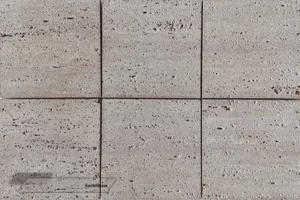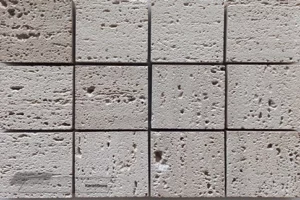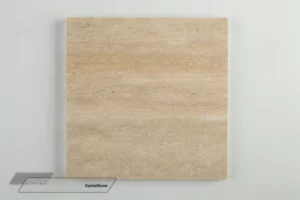
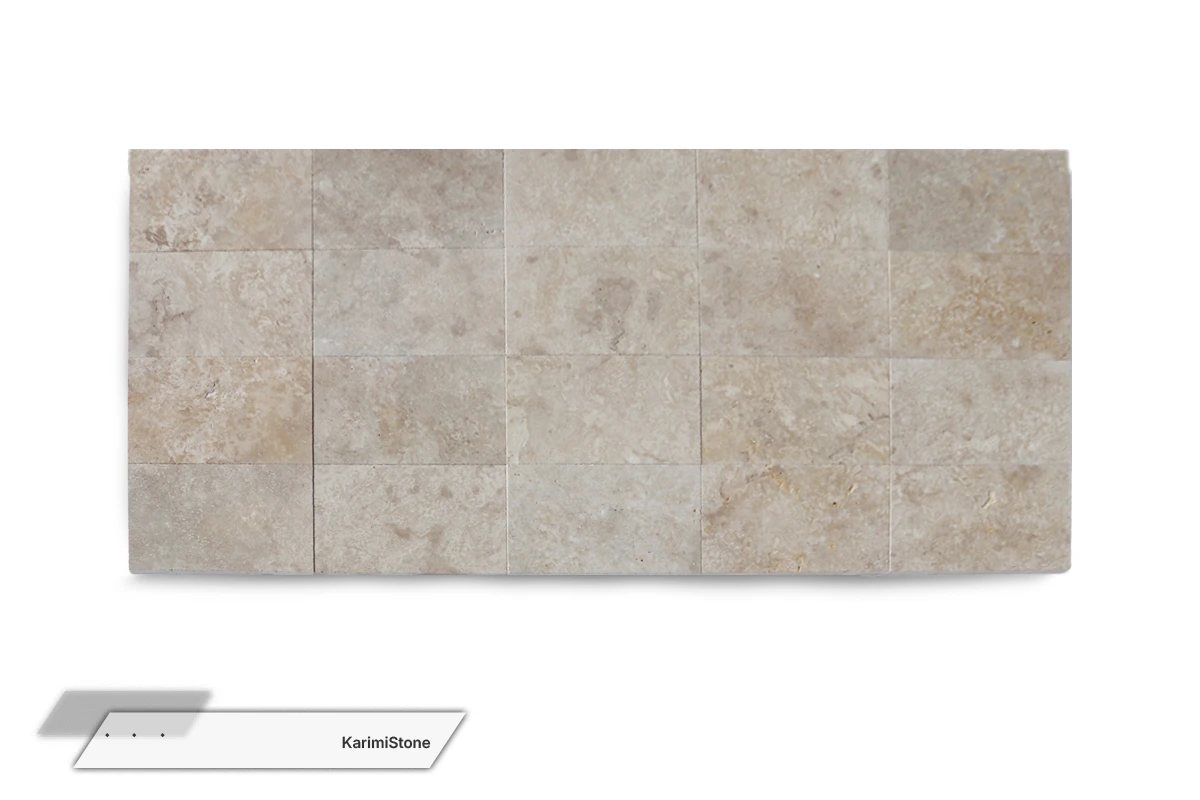
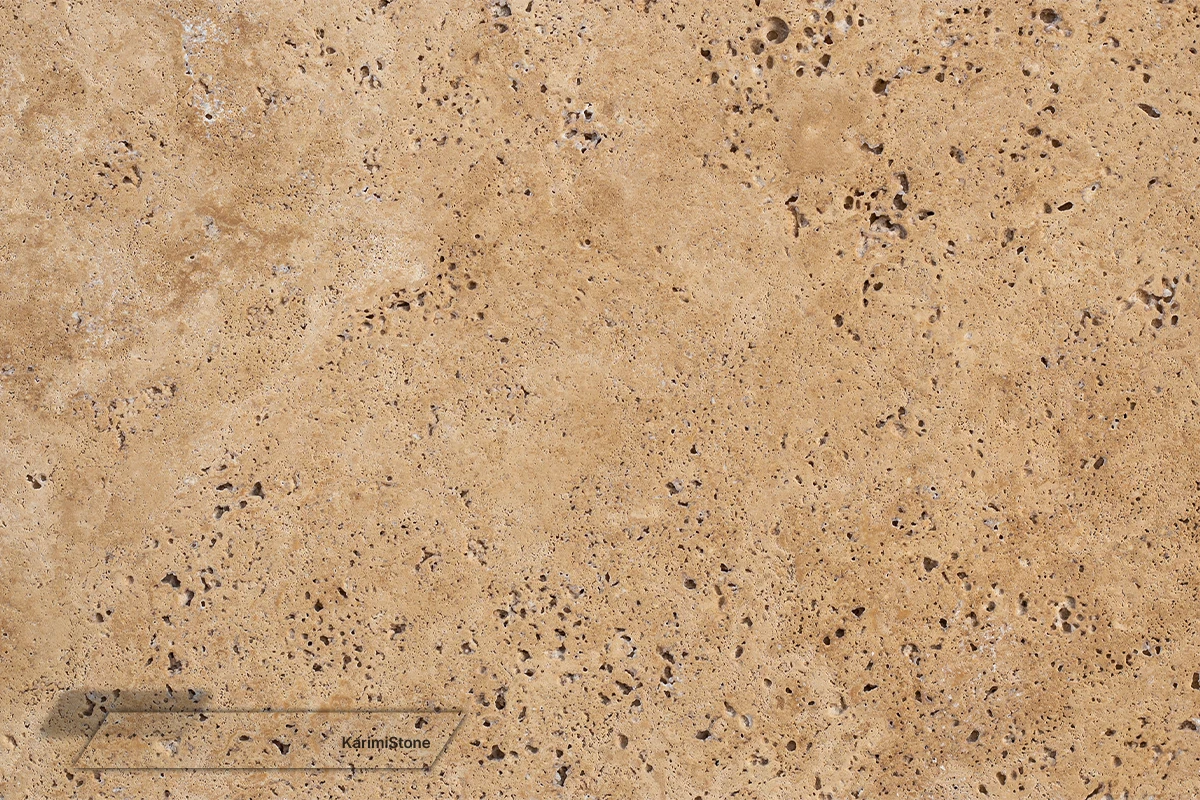
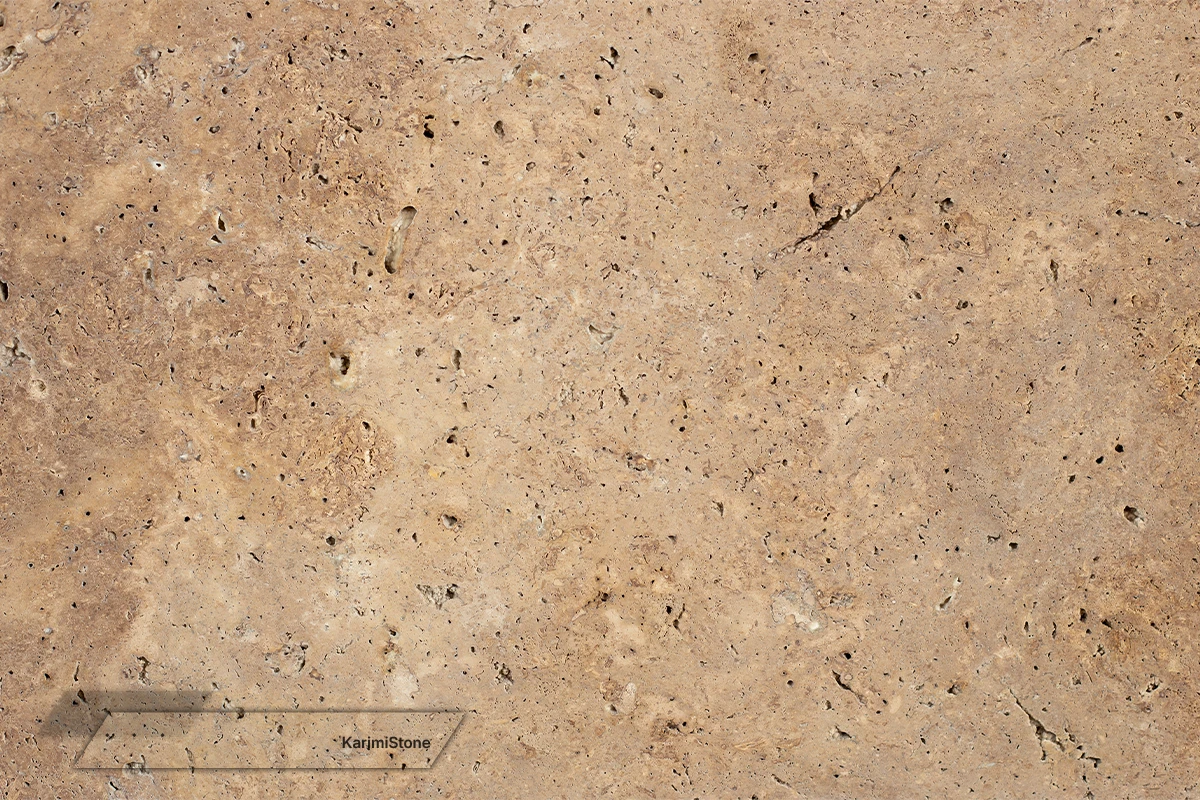
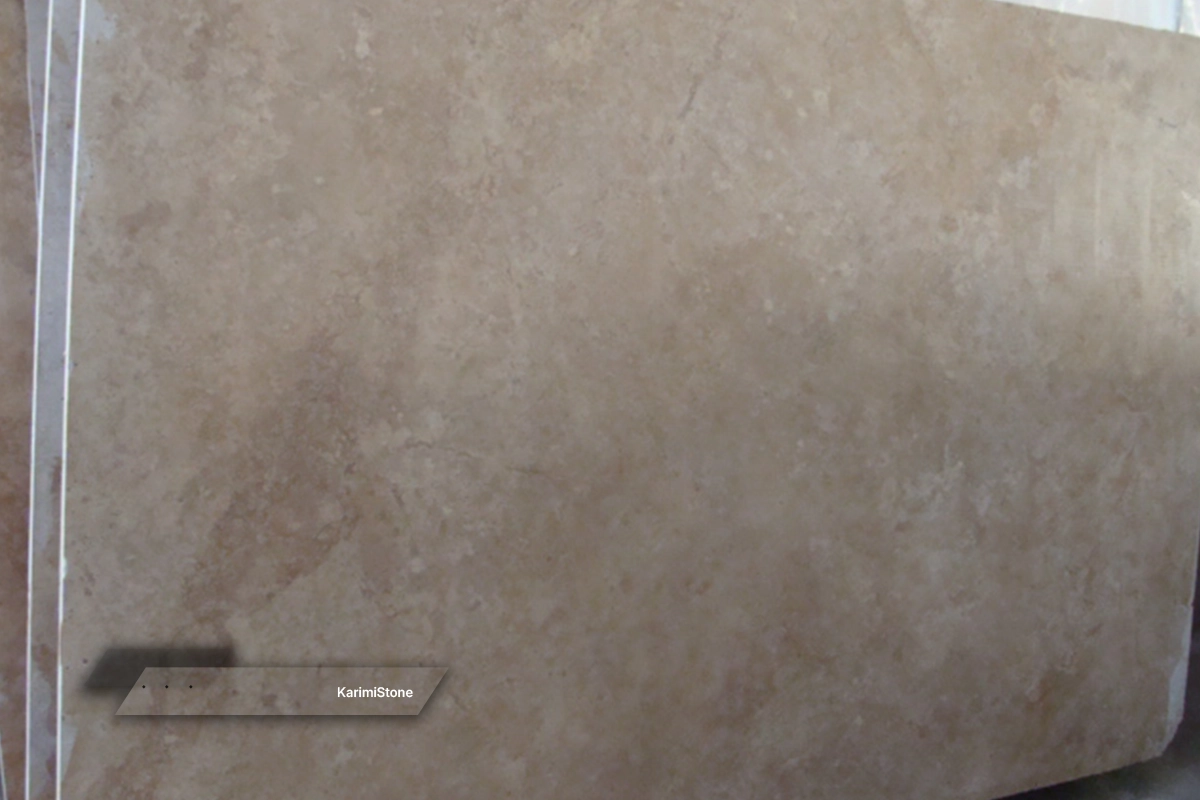
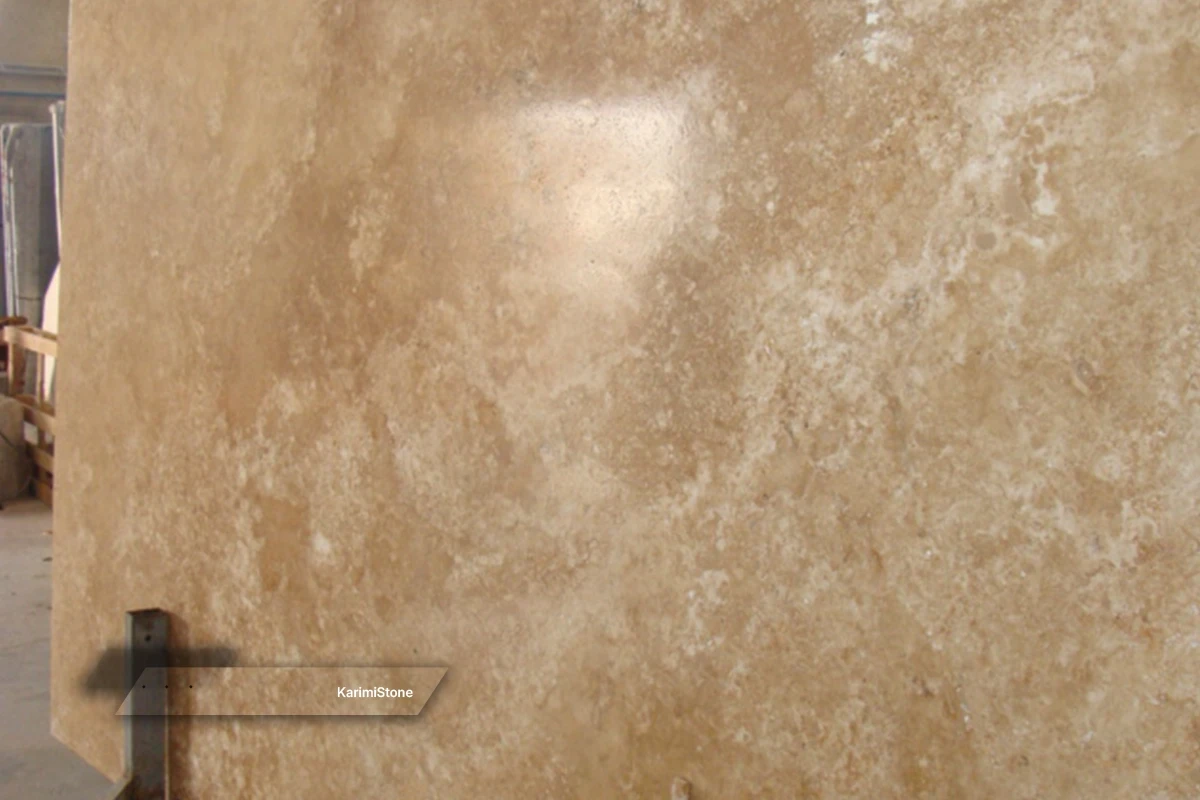
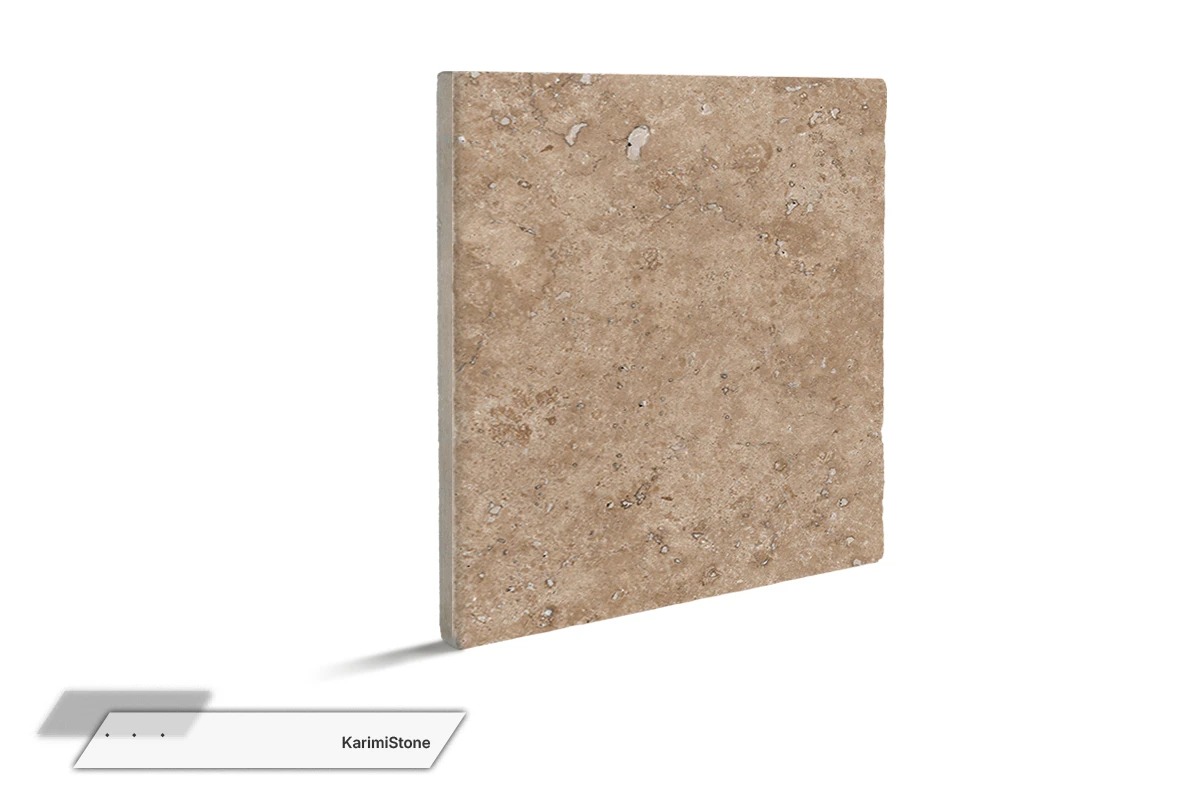
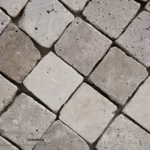

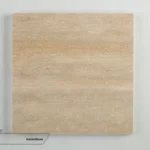
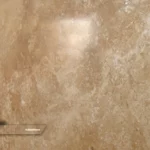
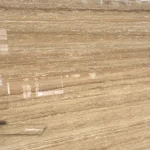
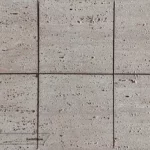
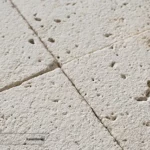
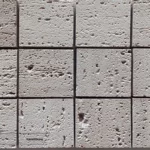
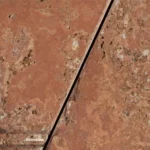
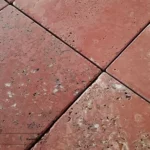
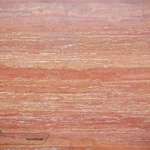
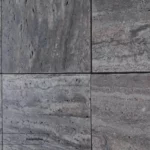
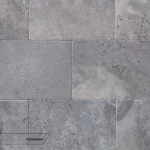

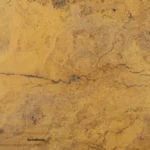














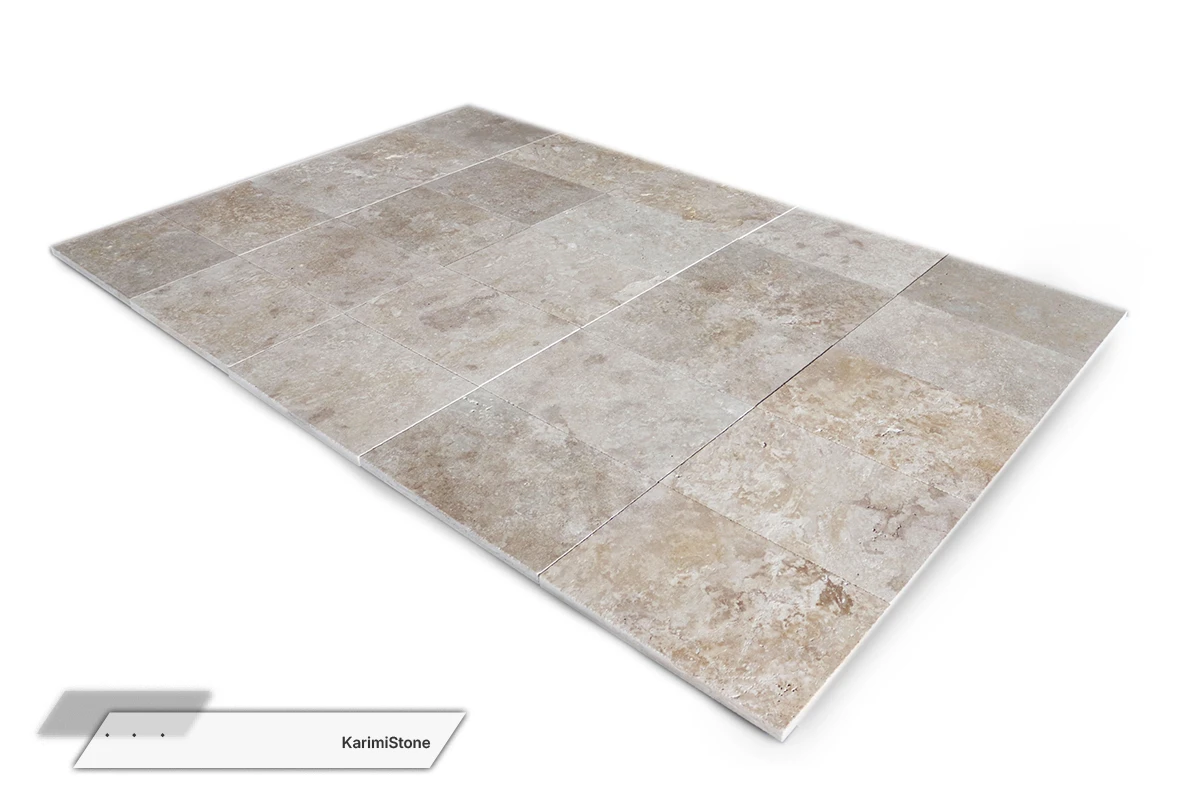
Beige Travertine Honed is an Iranian natural stone with warm cream-to-beige colors, natural pores, subtle mineral movement, and a smooth matte surface. The honed finish creates a refined, low-reflection face that keeps the natural color and structure of the travertine clearly visible without the strong shine of a polished finish.
This product is produced in a Cross-Cut pattern. Cutting across the natural sedimentary layers creates softer, cloud-like and flowing patterns rather than the long parallel lines associated with Vein-Cut travertine.
With its neutral color, smooth surface, and versatile architectural character, Beige Travertine Honed can be considered for interior and exterior walls, flooring, facades, stairs, villas, hotels, entrance areas, bathrooms, and custom architectural elements.
What Is Beige Travertine Honed?
Beige Travertine Honed is natural Beige Travertine mechanically refined with controlled abrasives to create a smooth, flat, and matte surface.
Unlike polished travertine, honing stops before a highly reflective finish develops. This reduces glare while preserving the natural beige background, pores, and mineral patterns of the stone.
The result is a clean and controlled surface that works particularly well where architects want natural stone to provide warmth without dominating the overall design.
What Is Beige Travertine?
Beige Travertine is a natural calcium-carbonate stone characterized by cream and beige colors, natural pores, cavities, and layered mineral patterns.
Travertine develops through the precipitation of calcium carbonate from mineral-rich water. The U.S. Geological Survey (USGS) explains how calcium-carbonate precipitation from mineral-rich water contributes to travertine formation.
This geological process creates many of the stone’s recognizable characteristics:
- Cream to beige background colors
- White or light brown mineral markings
- Natural pores and cavities
- Layered stone structure
- Warm neutral appearance
- Natural variation between pieces
Color and Visual Character
Iranian Beige Travertine usually has a calm and balanced color range. Depending on the quarry and stone selection, it may include light cream, ivory beige, pale beige, warm beige, honey tones, soft brown areas, and white mineral movement.
The honed finish keeps these colors soft because the surface reflects relatively little direct light.
This makes Beige Travertine Honed suitable for both traditional and contemporary architecture, including villas, hotels, residential developments, commercial buildings, and interior design projects.
What Is a Honed Finish?
A honed finish is produced by mechanically grinding and refining the stone until a smooth, flat, and low-reflection surface is achieved.
Typical characteristics include:
- Smooth and even texture
- Matte appearance
- Low surface reflection
- Soft tactile character
- Visible natural beige color
- Clear mineral patterns
- Controlled architectural appearance
The objective is not to create a textured face. Instead, honing produces a clean surface while allowing the natural characteristics of the stone to remain visible.
To compare Honed with other treatments, visit Karimi Stone’s Natural Stone Surface Finishes guide.
How Beige Travertine Is Honed
Producing a consistent honed surface requires controlled mechanical processing. Several factors influence the final appearance, including abrasive type, abrasive grit, machine pressure, processing speed, number of grinding stages, stone hardness, and the initial surface condition.
Production consistency is especially important for large projects. Differences in the degree of honing can become visible when many pieces are installed next to one another.
Cross-Cut Beige Travertine
This Beige Travertine Honed is produced with a Cross-Cut pattern.
In Cross-Cut production, the block is sawn across its natural sedimentary layers rather than along them. This reveals the internal structure as more irregular and less directional patterns.
The surface may display:
- Cloud-like patterns
- Circular mineral movement
- Soft flowing forms
- Cream and beige areas
- Honey-colored movement
- White and light brown markings
The honed finish keeps these patterns visually soft and balanced while maintaining the natural Cross-Cut character of the stone.
Natural Pores and Stone Structure
Natural pores are an important characteristic of travertine. Their size, shape, depth, frequency, and distribution may vary according to quarry source and geological layer.
One selection may contain many small pores, while another may show fewer but larger cavities.
The presence of pores should therefore be evaluated as part of the complete stone character rather than considered independently as a quality issue.
Filling Options
Natural cavities can be filled depending on the project specification and required appearance.
Common systems include resin, epoxy, and UV-based stone fillers.
Some projects require a more closed and controlled surface, especially for certain interior applications. Other designs intentionally retain more visible pore structure to emphasize the natural identity of travertine.
Architectural Characteristics
Beige Travertine combines a warm natural appearance with properties that make suitable selections useful across many architectural applications.
Technical characteristics such as density, water absorption, porosity, compressive strength, and flexural strength can vary between quarry sources and production batches.
For projects with specific engineering requirements, specifications should therefore be based on the actual selected material and relevant test results.
Applications of Beige Travertine Honed
Exterior Facades
Suitable Beige Travertine selections can be considered for modern facades, classical facades, villa exteriors, entrance walls, exterior columns, and architectural frames.
For exterior installation, thickness, stone properties, fixing method, climate, and engineering requirements should be evaluated for the individual project.
Interior Wall Cladding
Beige Travertine Honed works particularly well on hotel lobbies, reception areas, residential walls, commercial interiors, office entrances, feature walls, and decorative panels.
The matte surface limits glare and keeps attention on the natural color and pattern of the stone.
Interior Flooring
Suitable material can be considered for residential flooring, hotel interiors, lobby floors, corridors, commercial spaces, and entrance areas.
The light beige color can create a bright and visually spacious appearance across large floor areas.
Staircases
Beige Travertine can be processed into stair treads, risers, landings, entrance steps, and custom staircase elements.
Using the same material across walls, floors, and stairs can create a continuous architectural language.
Bathrooms and Interior Wet Areas
Suitable selections may also be considered for bathroom walls, vanity surrounds, decorative bathroom elements, and selected wet-area surfaces.
Stone selection, filling, waterproofing, joints, installation, and maintenance should be coordinated for the intended application.
Decorative Architectural Elements
Beige Travertine Honed can also be processed into fireplaces, stone benches, decorative panels, door surrounds, architectural frames, and other custom stone elements.
Sorting and Project Selection
Beige Travertine does not have one universal visual grading system. Project material is generally selected according to:
- Background color
- Beige tone
- Mineral movement
- Pore size
- Pore distribution
- Surface quality
- Overall visual consistency
For large projects, reviewing an approved representative range before production is generally more reliable than selecting material only by a commercial grade name.
Why Choose Beige Travertine Honed?
- Warm neutral color: Cream and beige shades suit different architectural styles.
- Smooth matte surface: Honing creates an even face with low reflection.
- Natural stone character: Pores and mineral patterns remain visible.
- Cross-Cut appearance: Soft cloud-like patterns create a balanced visual character.
- Suitable for large surfaces: Light beige tones work well across floors and walls.
- Architectural versatility: Suitable selections can be considered for facades, interiors, flooring, stairs, and custom elements.
- Project-based selection: Color, pores, dimensions, and surface quality can be coordinated before production.
Frequently Asked Questions
What is Beige Travertine Honed?
It is natural Beige Travertine mechanically processed to create a smooth, matte, and low-reflection surface.
What does Cross-Cut mean?
Cross-Cut means the block is cut across its natural sedimentary layers, producing softer, cloud-like, and less directional mineral patterns.
Is honed travertine shiny?
No. A honed surface is smooth but has a matte or low-sheen appearance rather than the stronger reflection of polished stone.
Does Beige Travertine naturally contain pores?
Yes. Pores and cavities are natural characteristics of travertine.
Can the pores be filled?
Yes. The filling method and level can be selected according to the required appearance and application.
Can Beige Travertine Honed be used for facades?
Suitable selections can be considered for exterior walls when the stone properties, thickness, fixing system, climate, and engineering requirements are appropriate.
Can it be used for flooring?
Yes. Suitable material can be considered for residential, hotel, commercial, and other interior flooring applications.
Is it suitable for large projects?
Yes. For larger orders, an agreed color range, pore structure, surface quality, dimensions, and representative samples should be established before production.
Beige Travertine Honed by Karimi Stone
Karimi Stone produces, processes, supplies, and exports Iranian natural stone for residential, commercial, hospitality, and architectural projects.
For Beige Travertine Honed projects, material can be selected according to beige tone, Cross-Cut pattern, pore structure, dimensions, thickness, and required surface quality.
Production can include controlled honing, project-based material selection, custom dimensions and thicknesses, quality control, export-grade packaging, and international project supply.
With its warm color, smooth matte face, natural porous structure, and soft Cross-Cut movement, Beige Travertine Honed provides a versatile Iranian natural stone option for facades, interior walls, flooring, stairs, villas, hotels, and custom architectural applications.