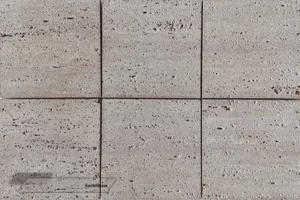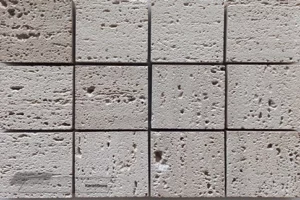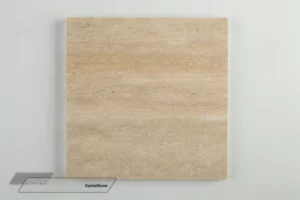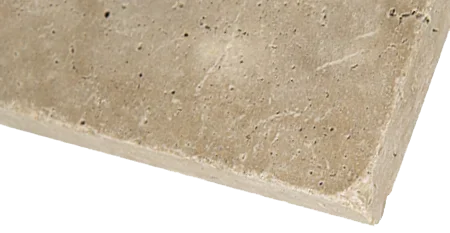
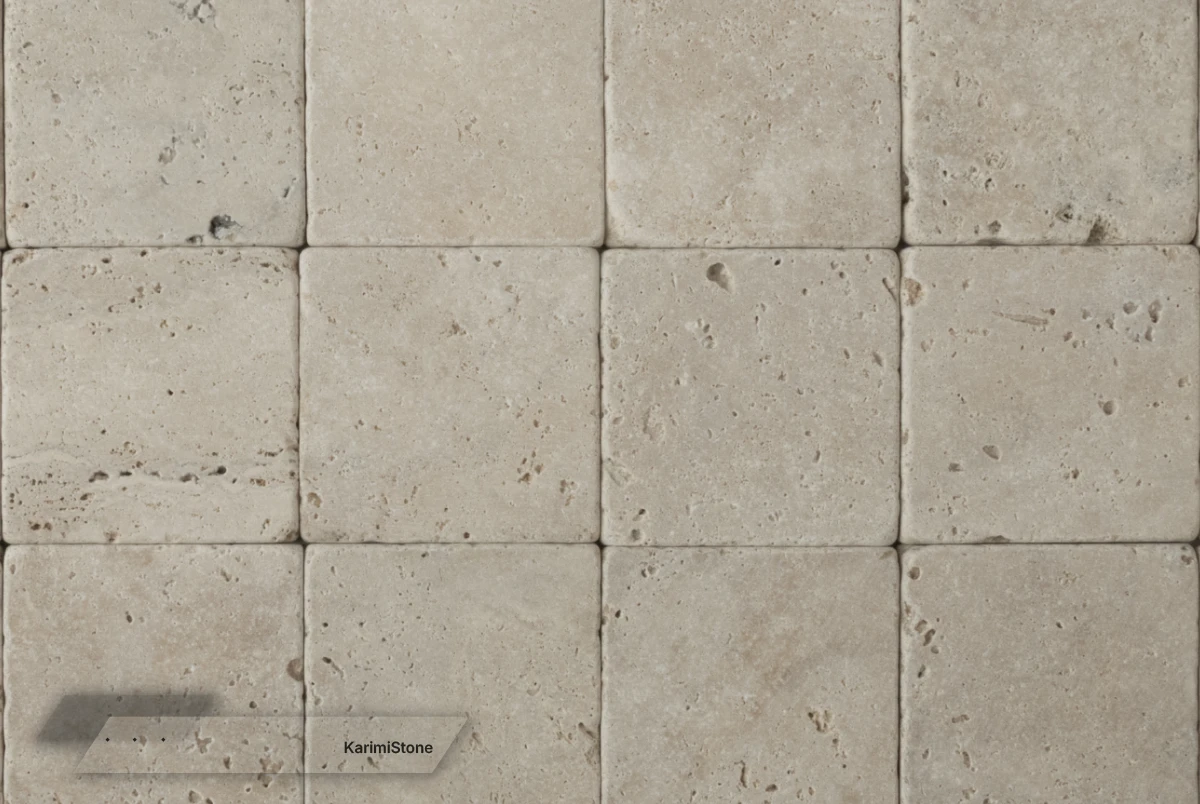
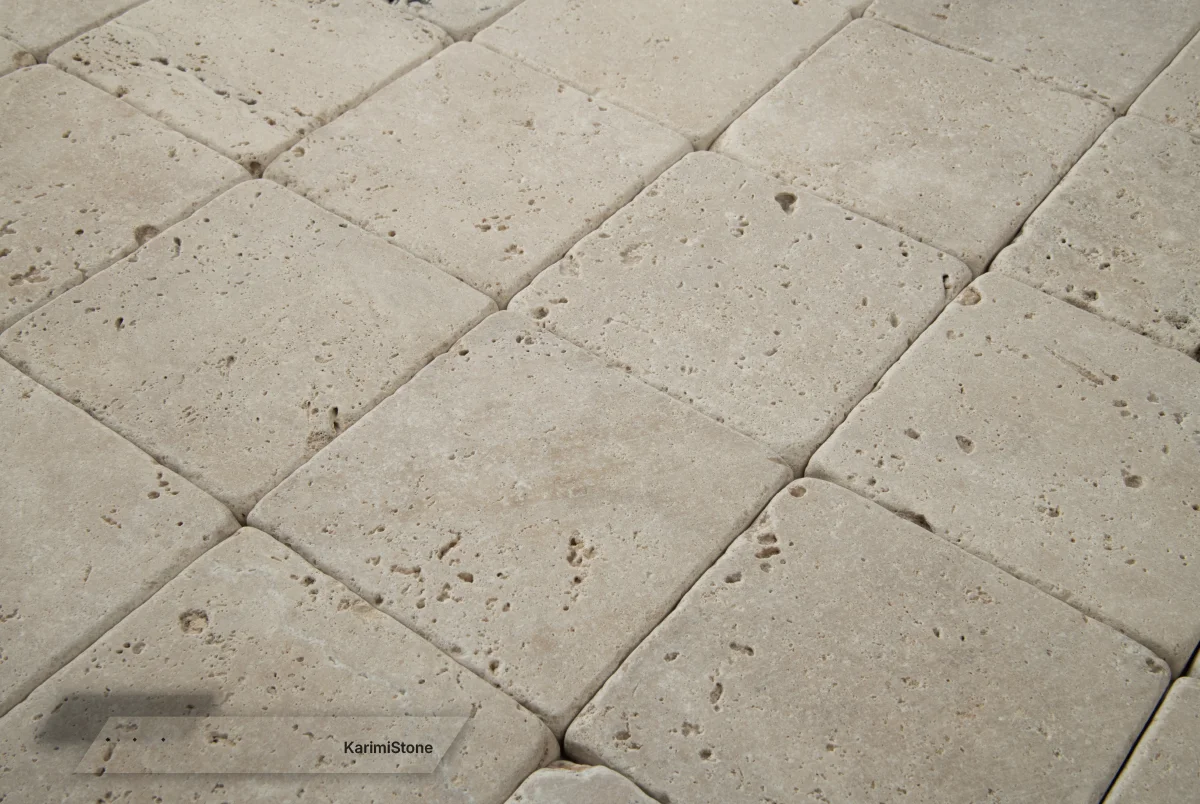
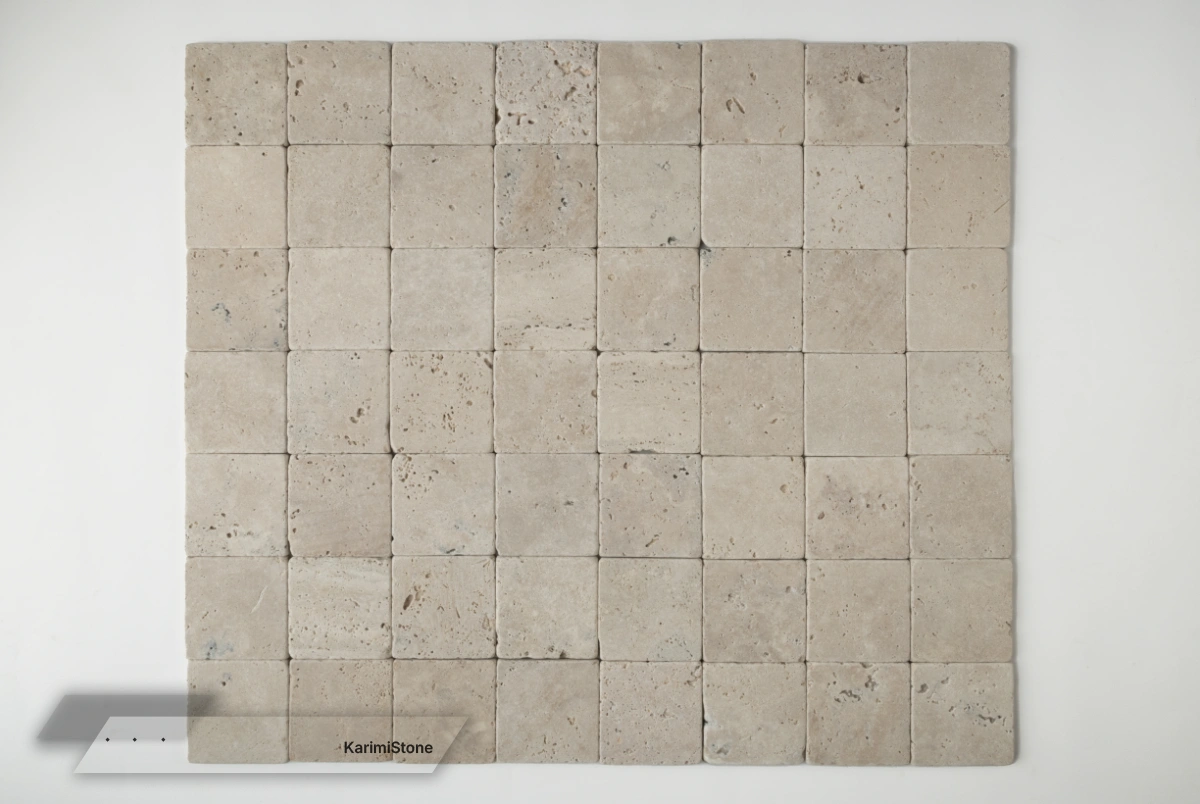
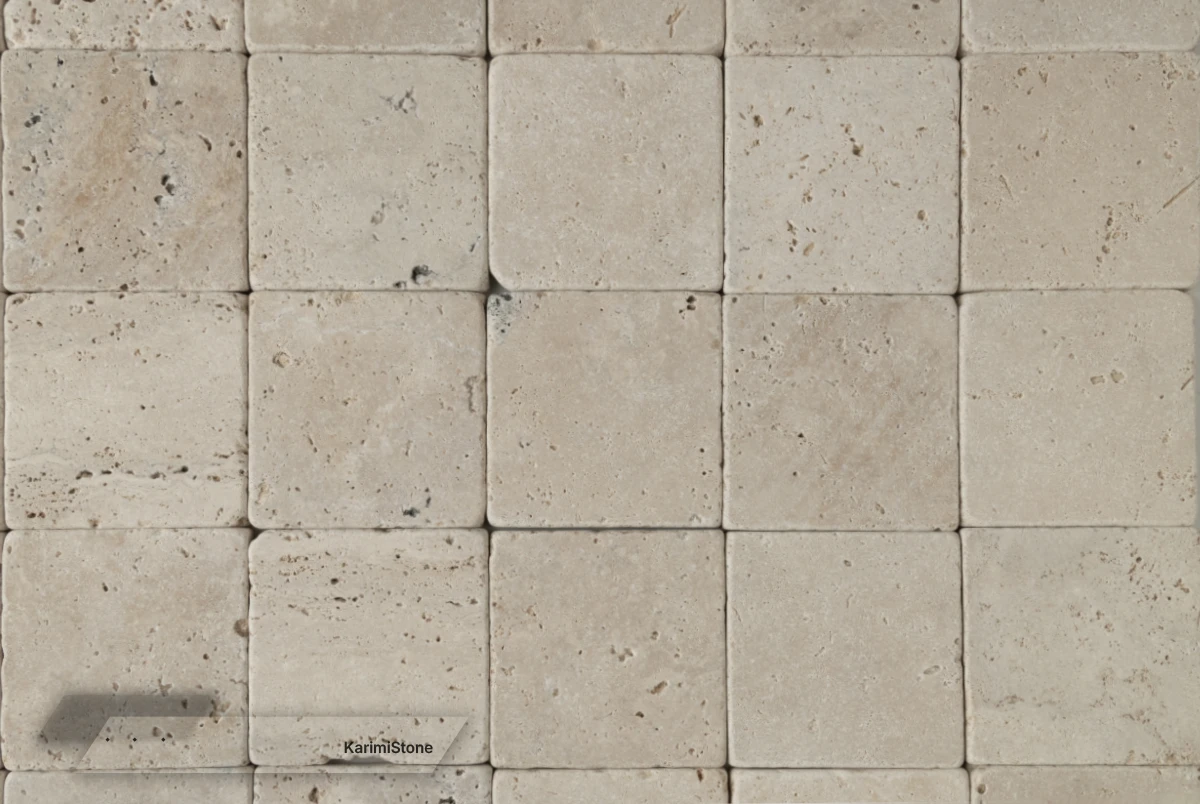
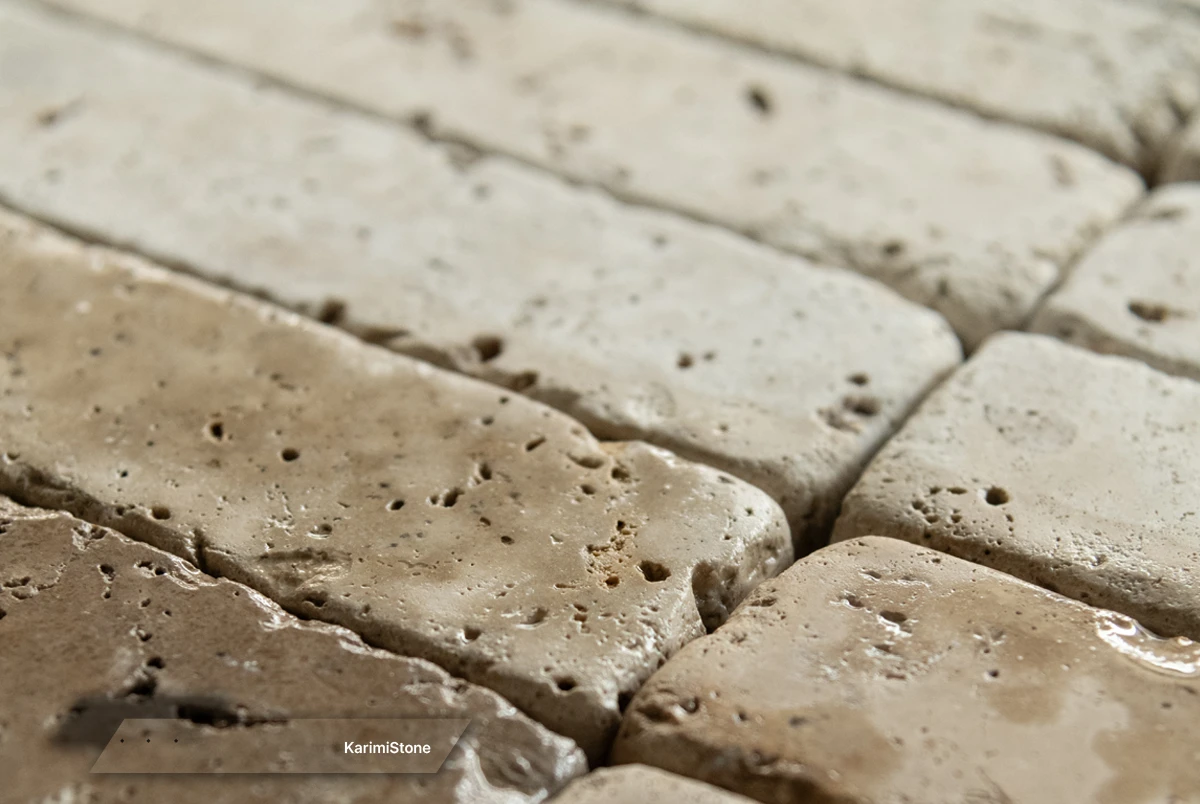
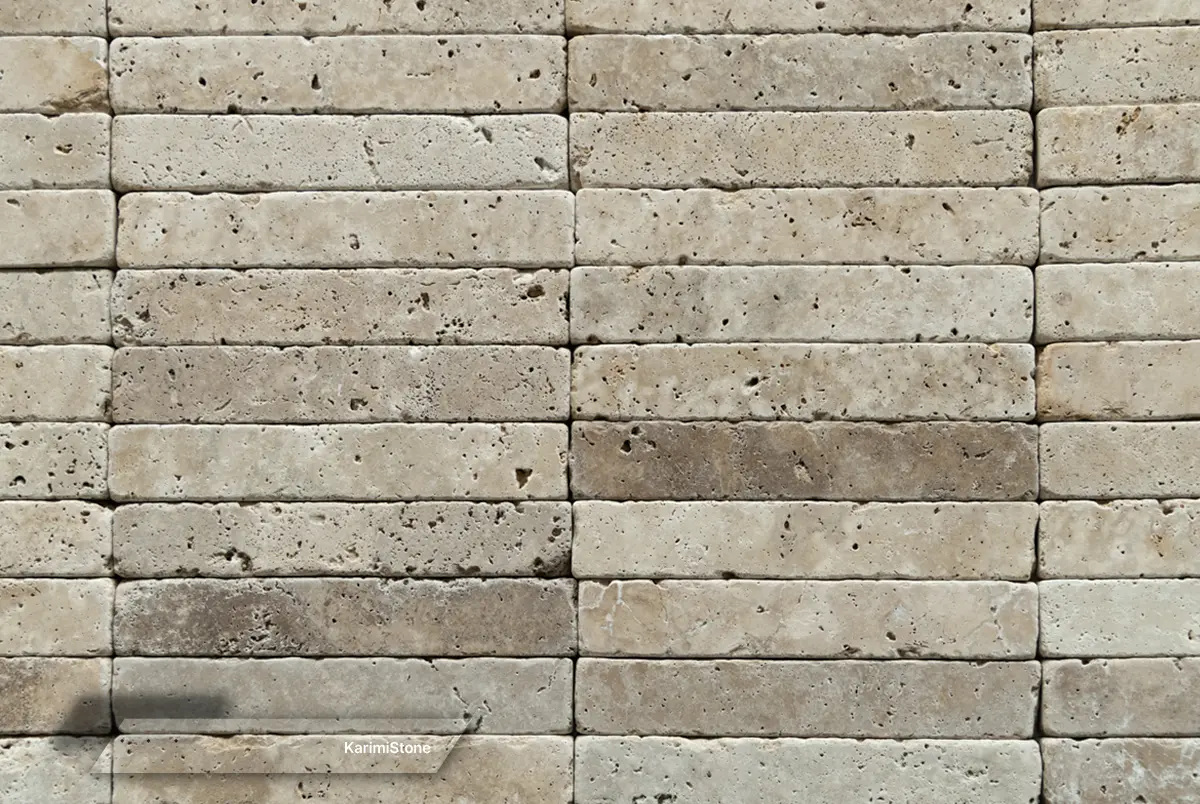
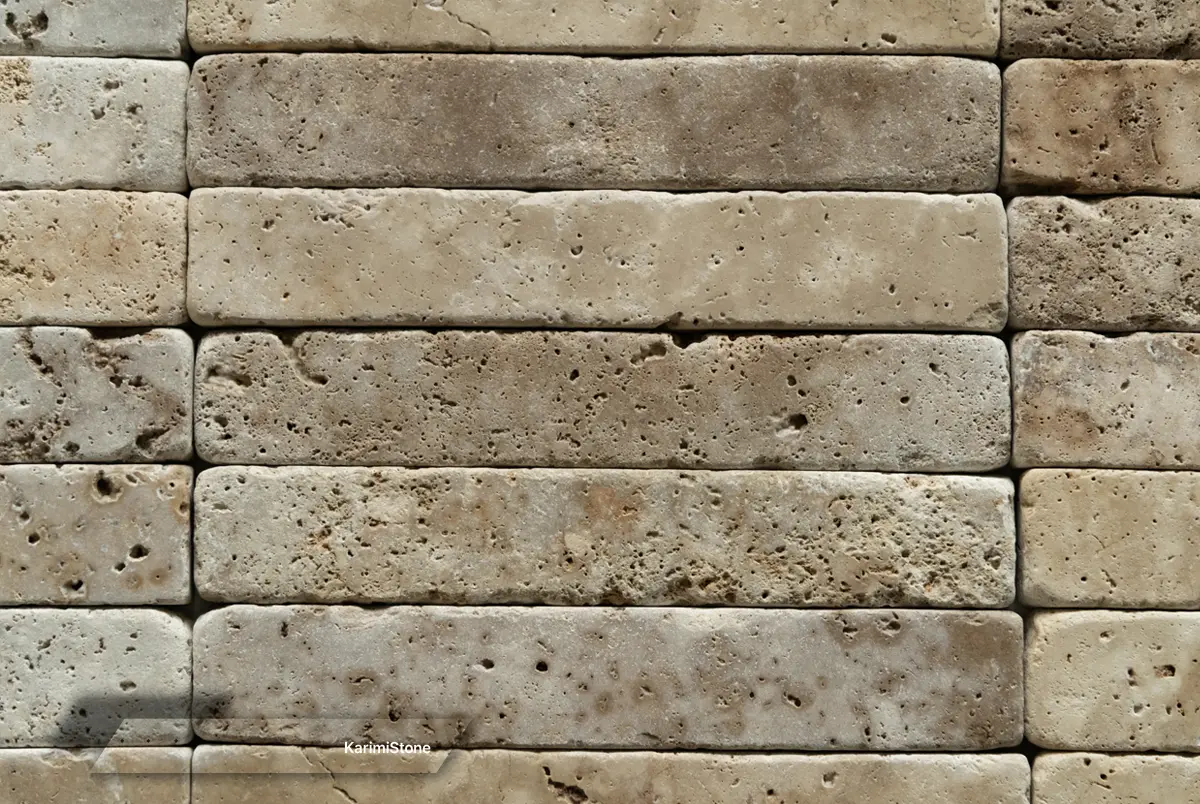
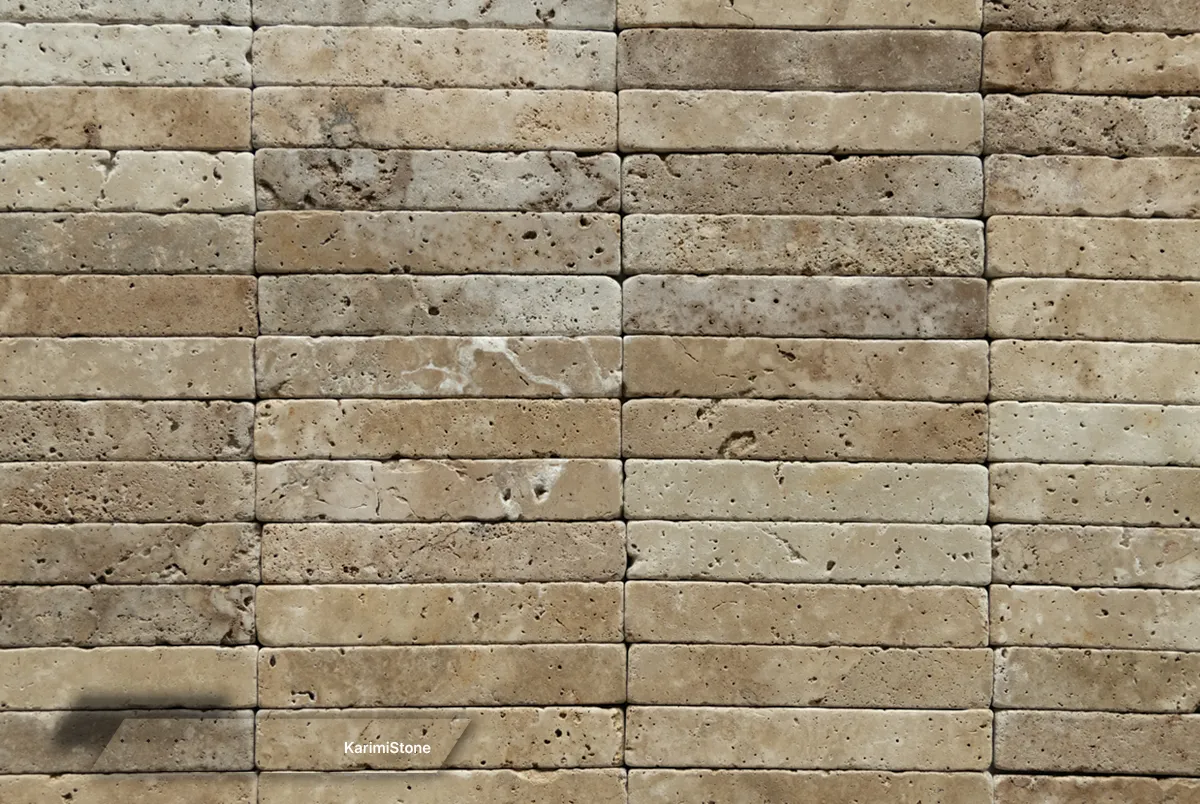
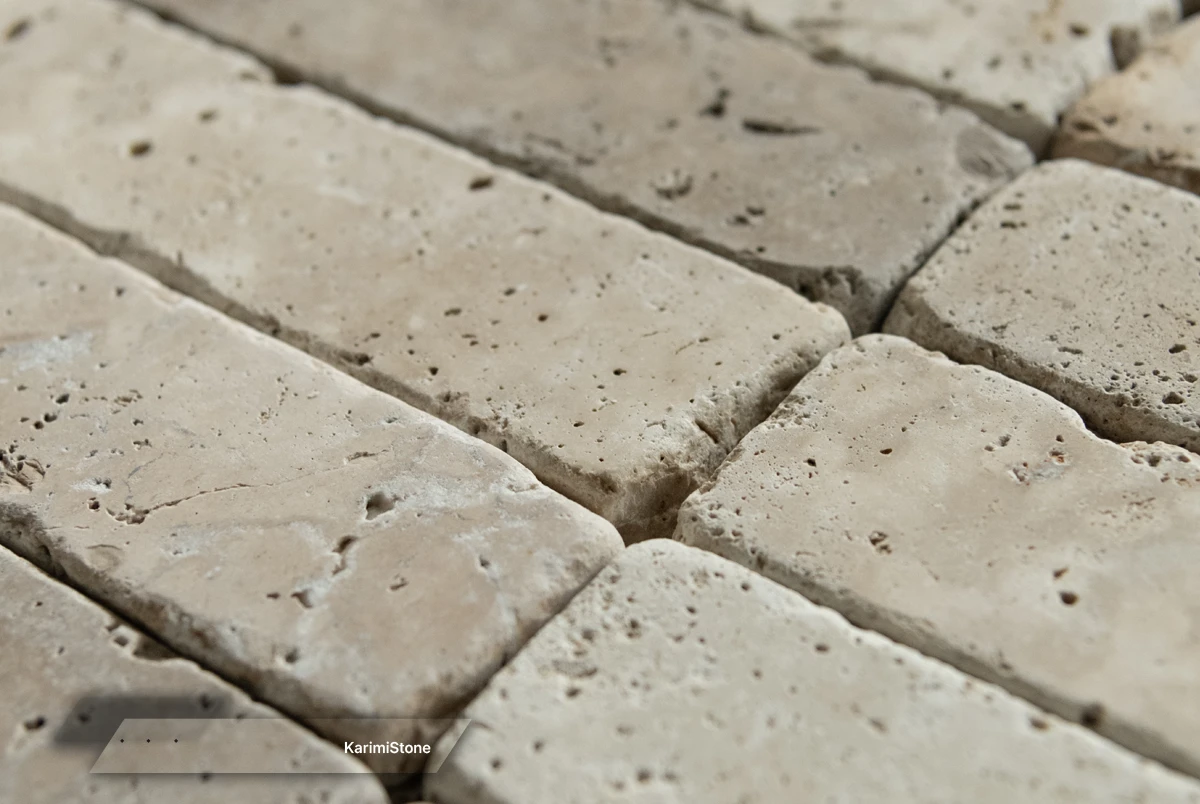
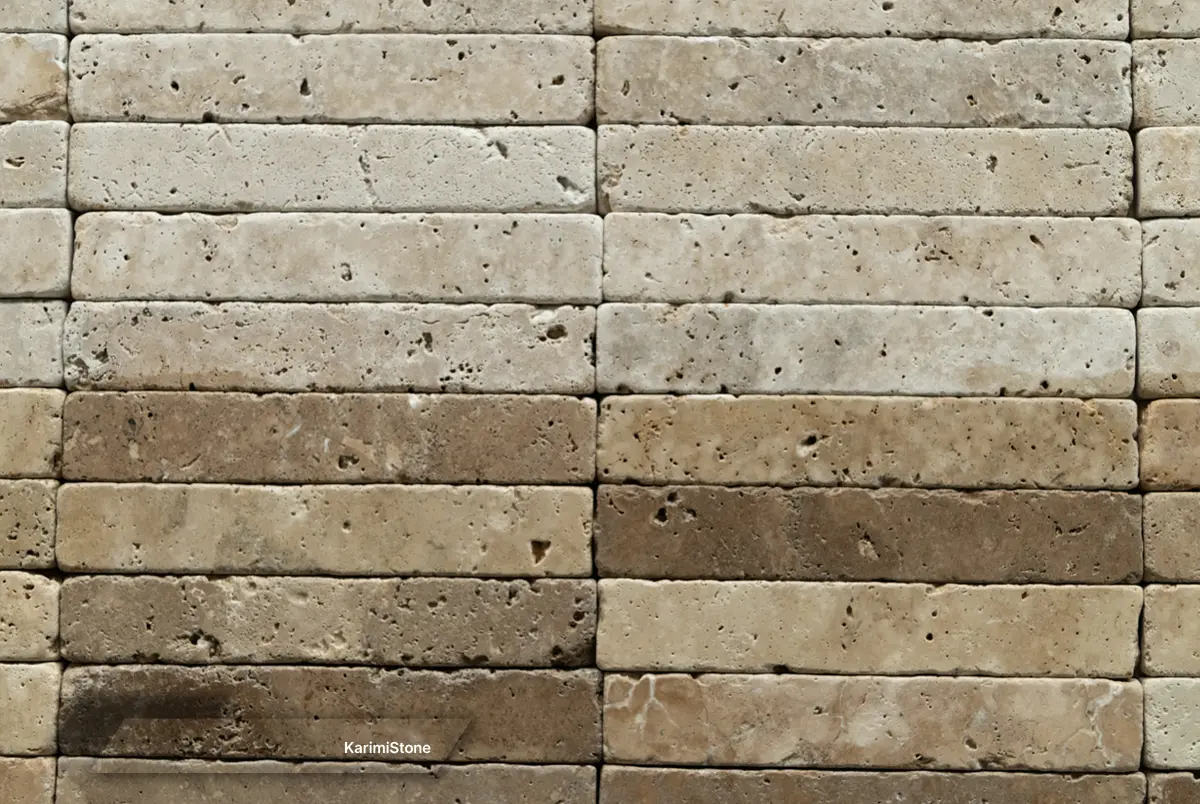
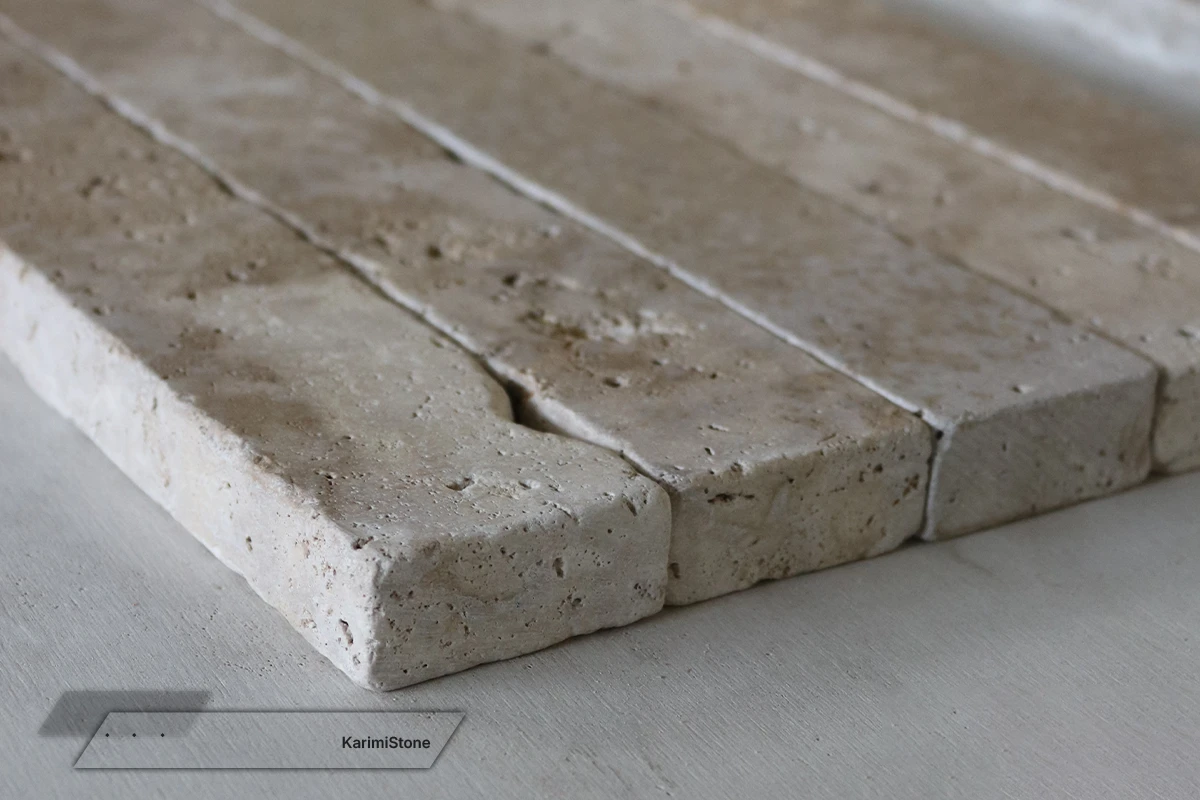
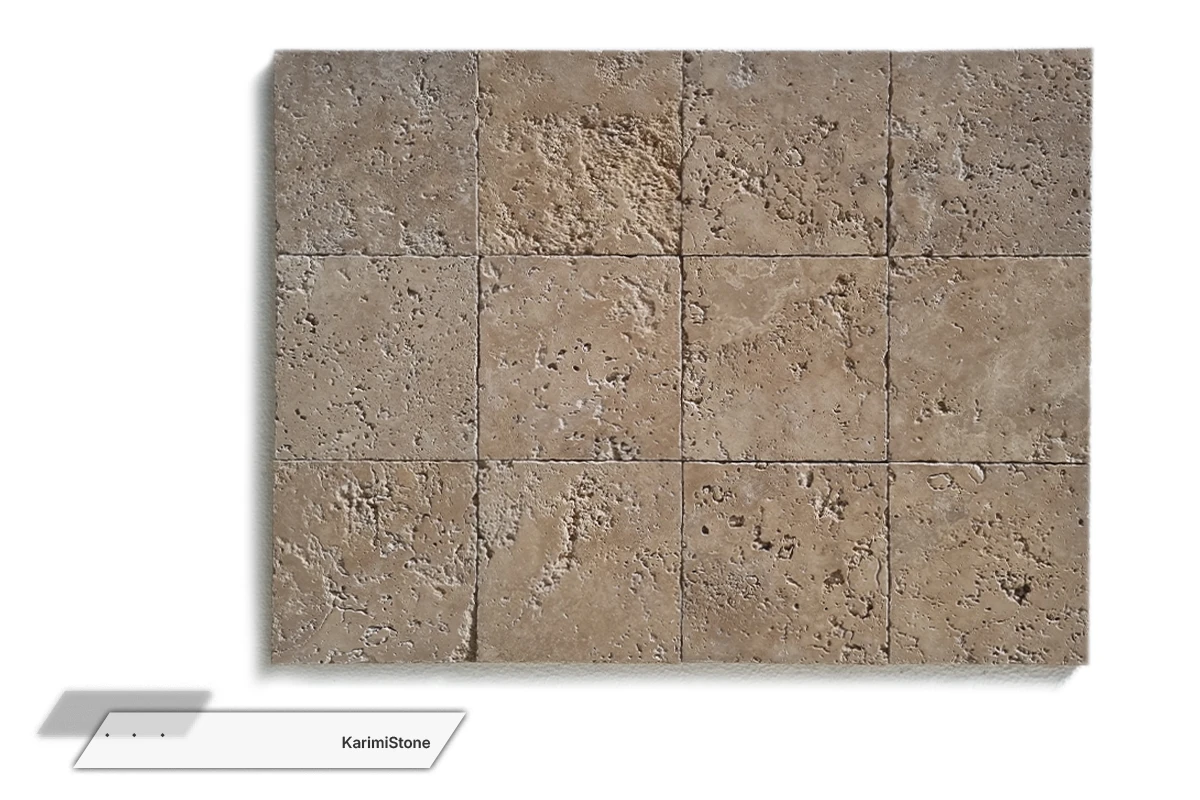
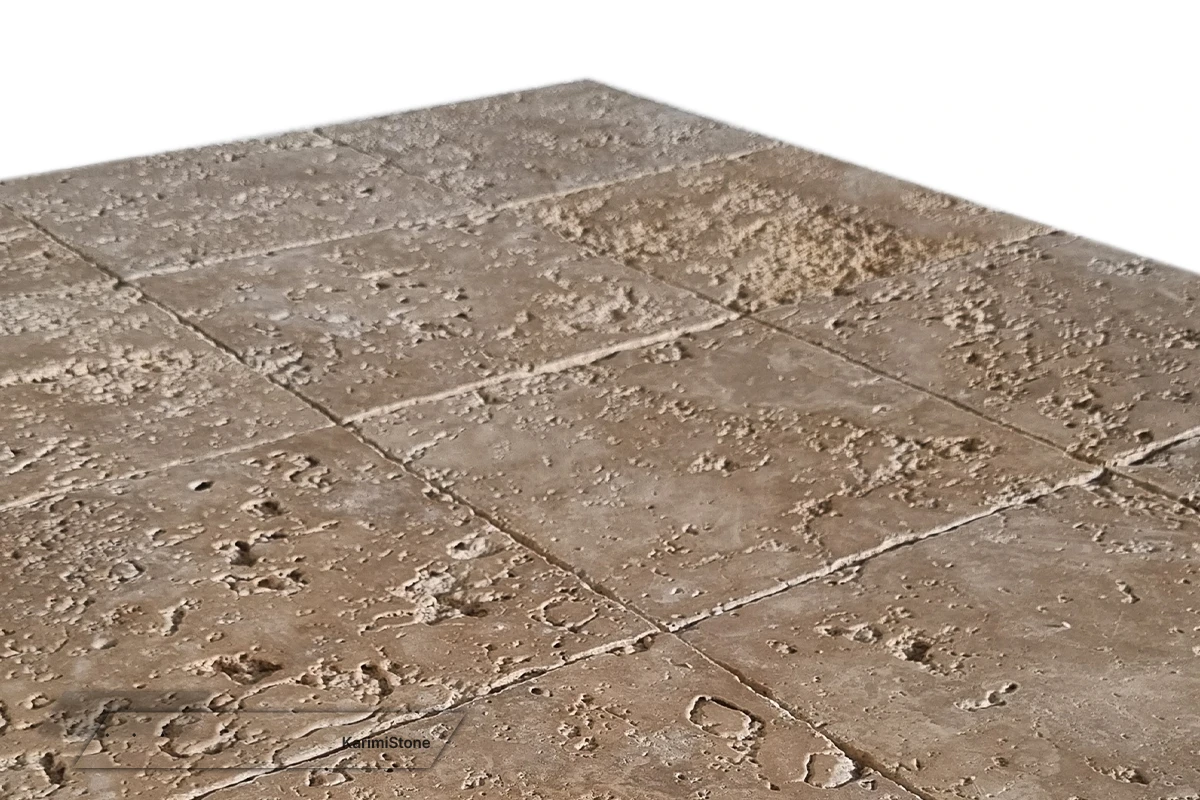
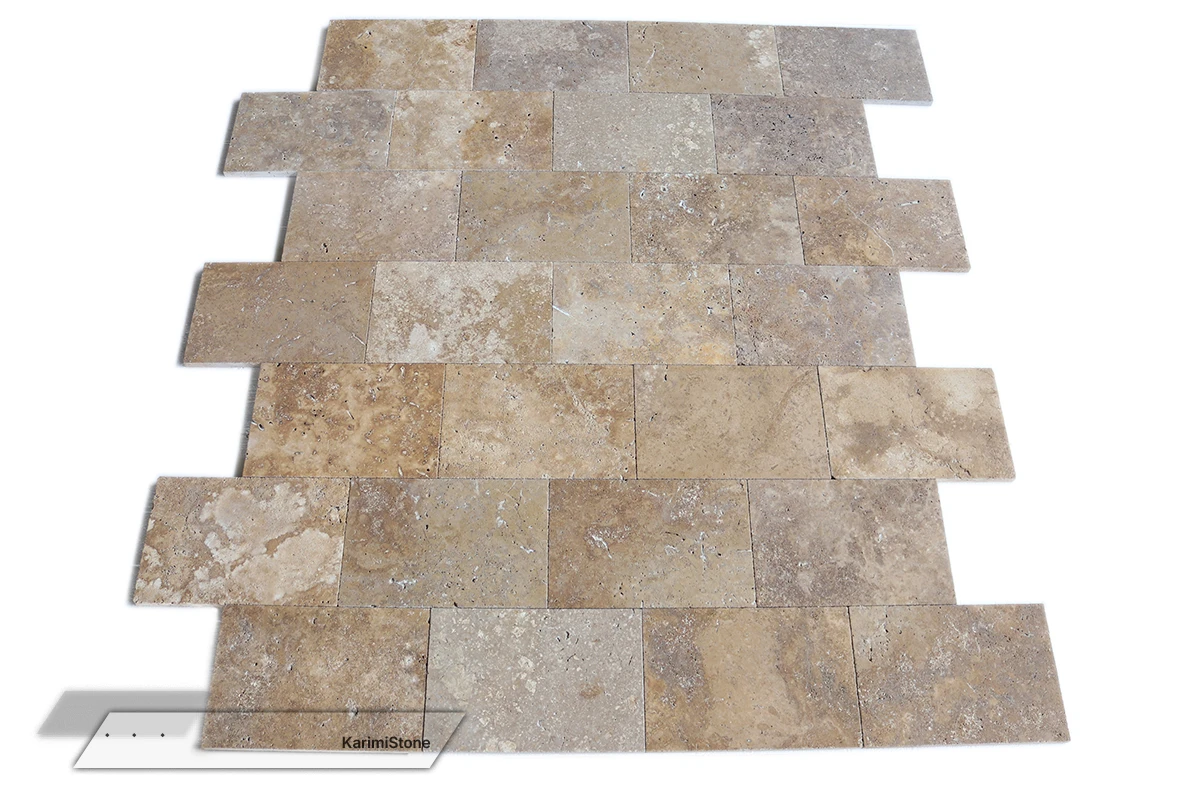
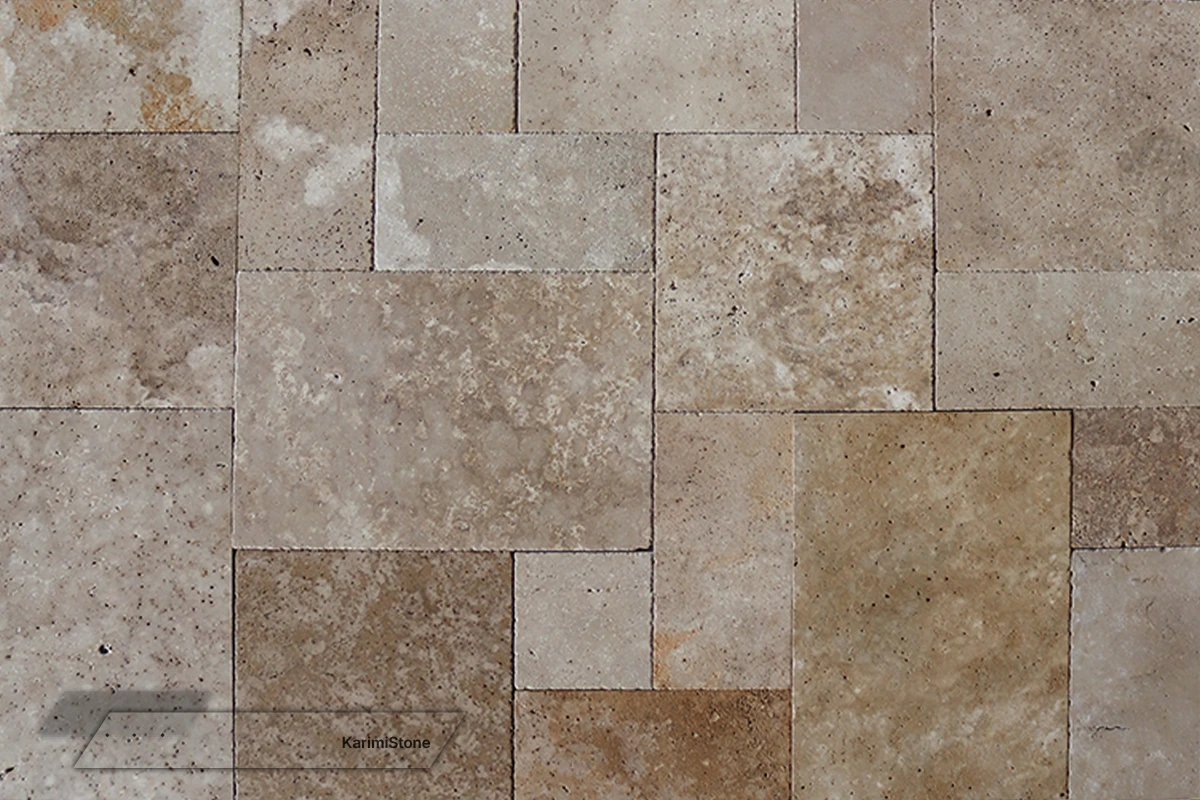
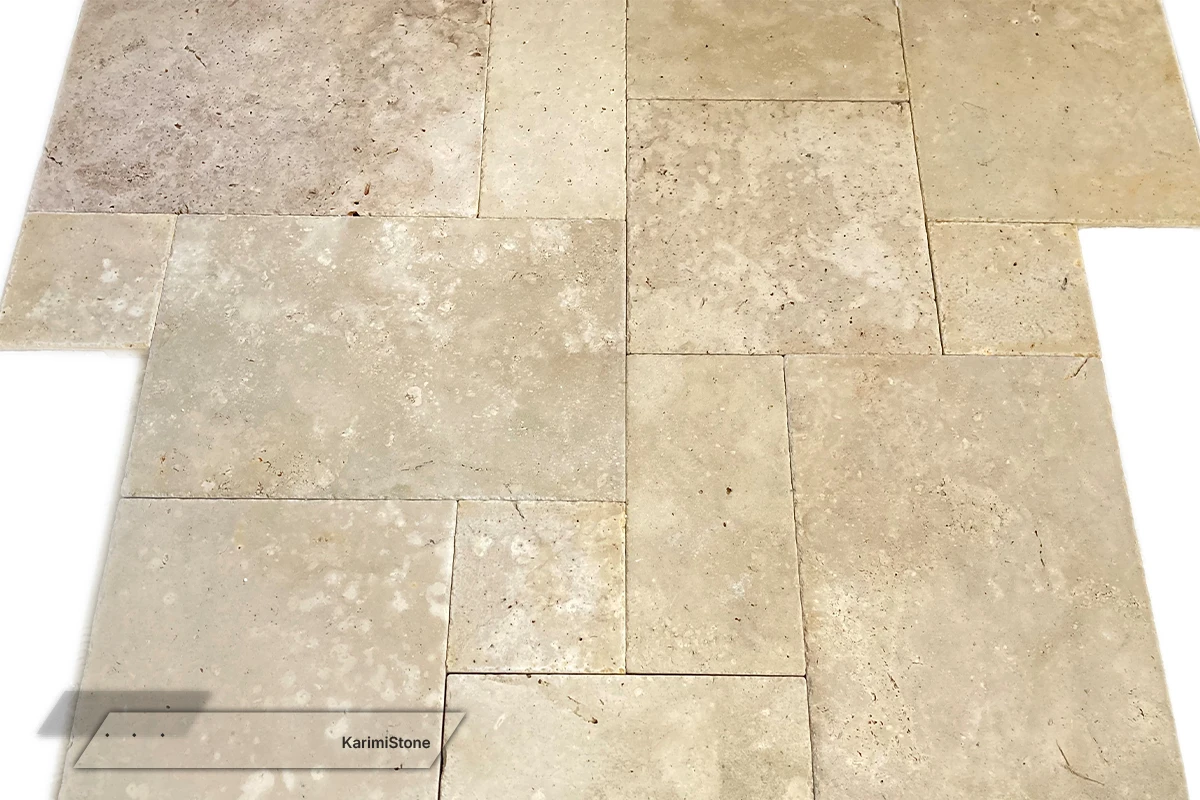
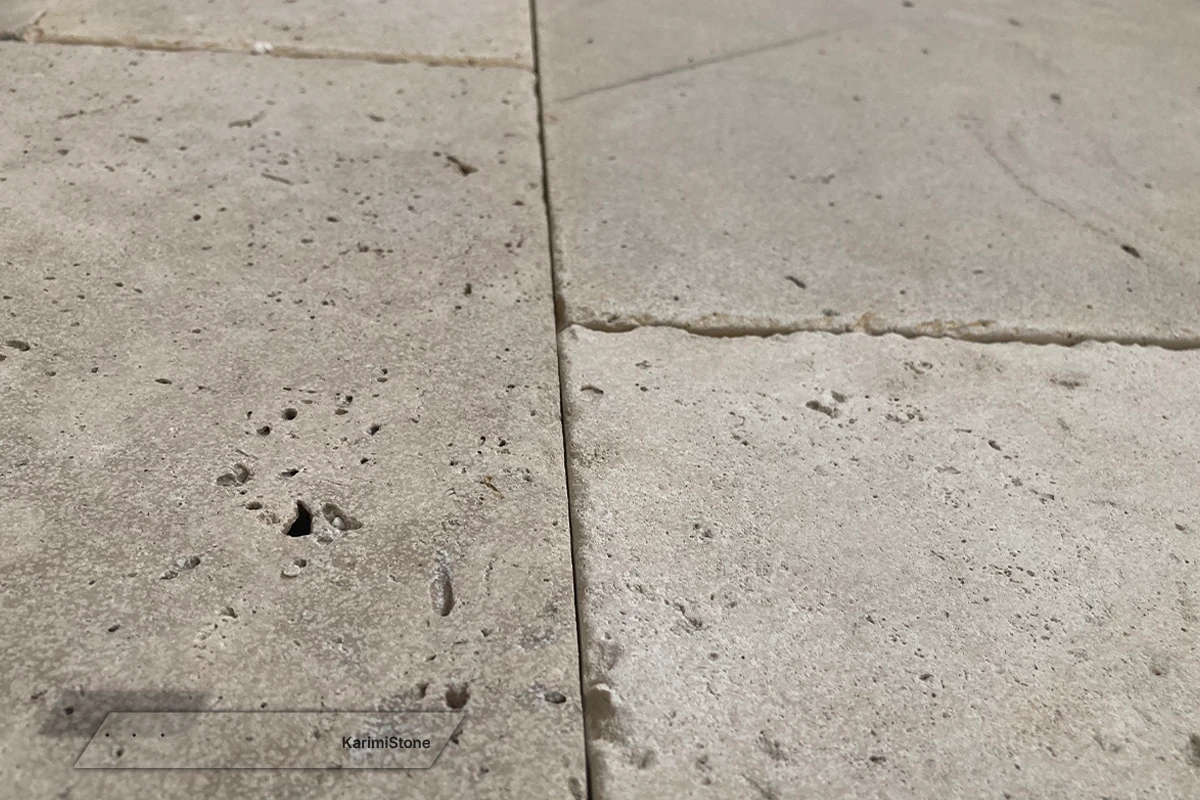
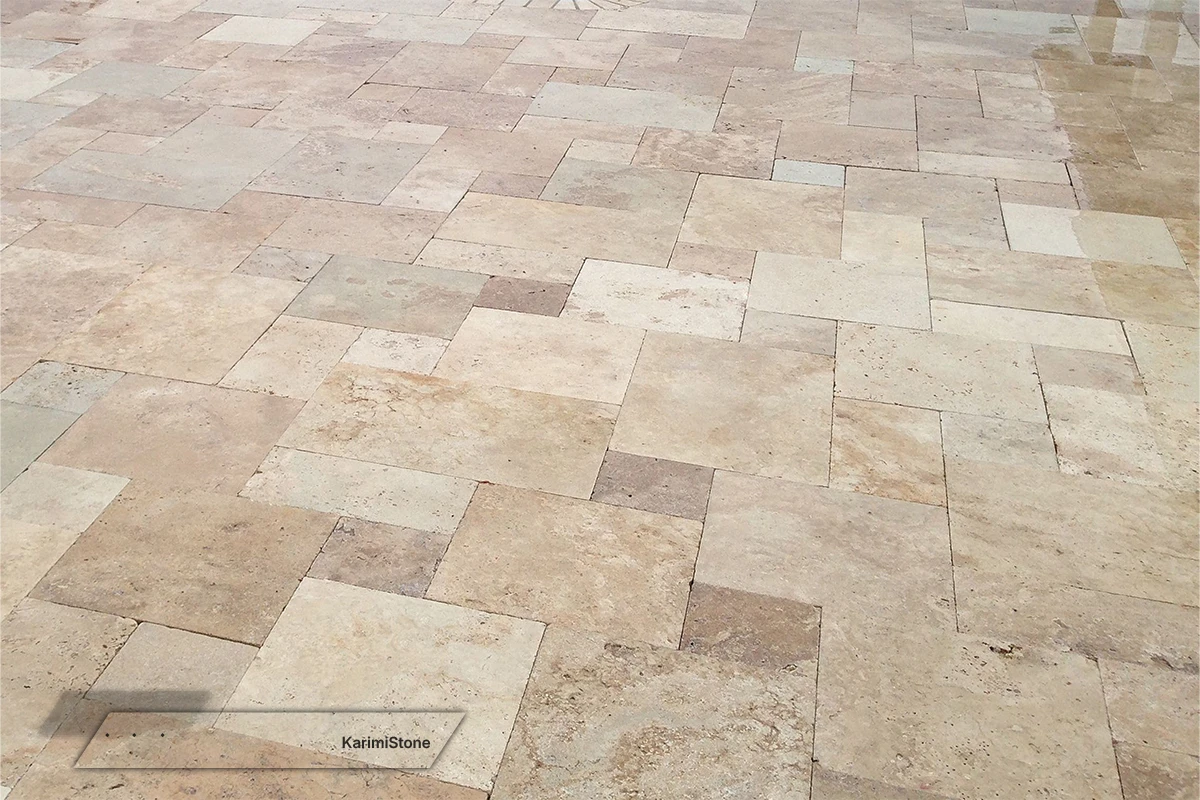
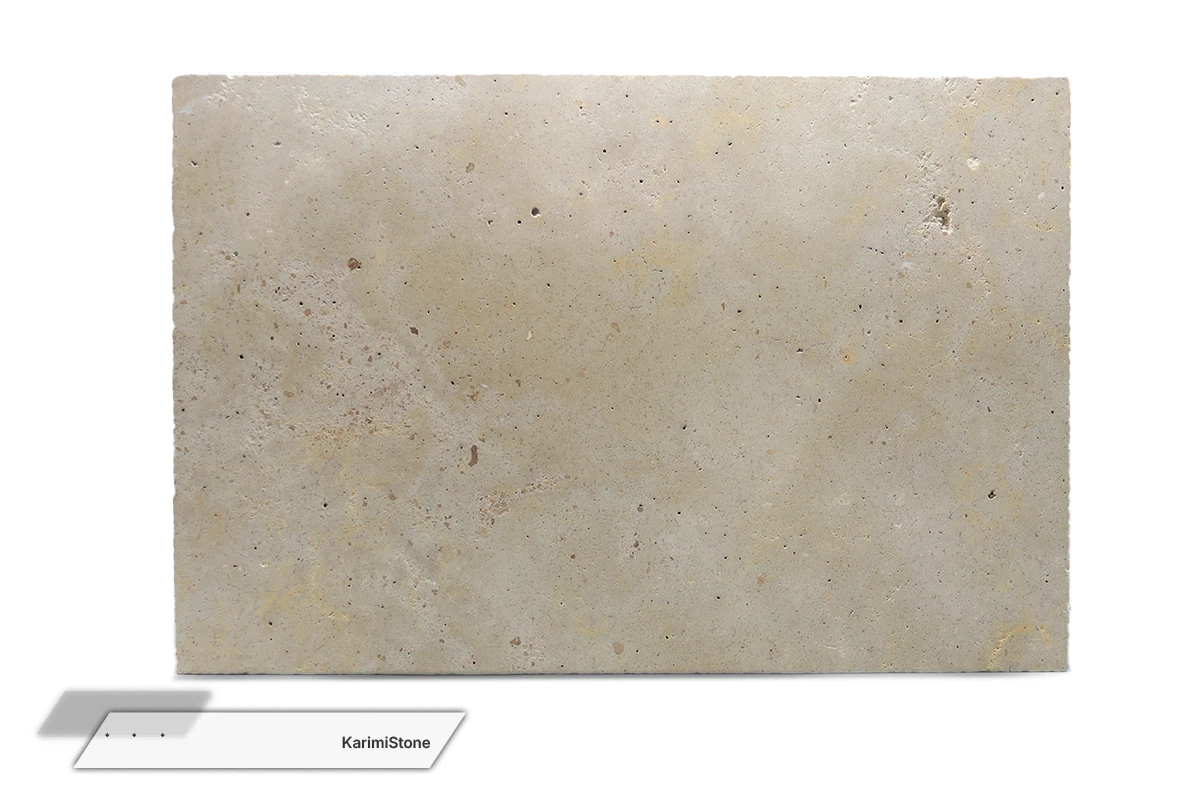
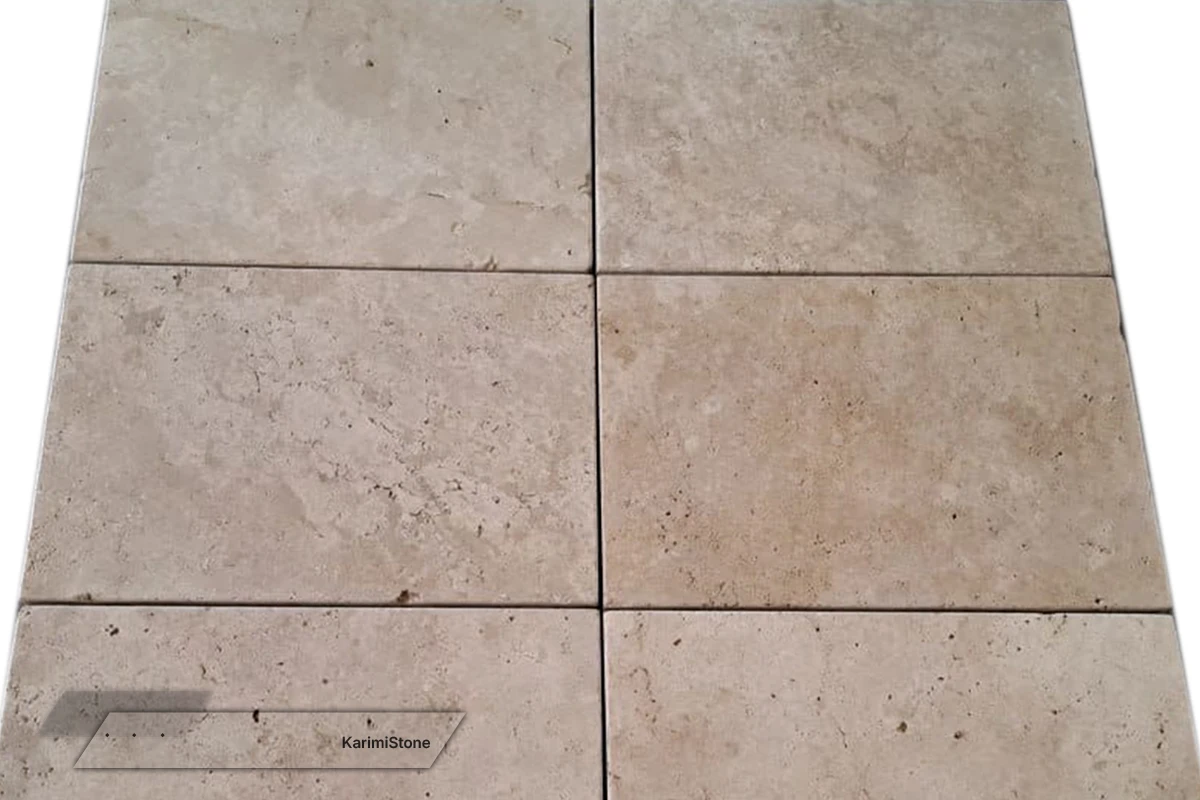
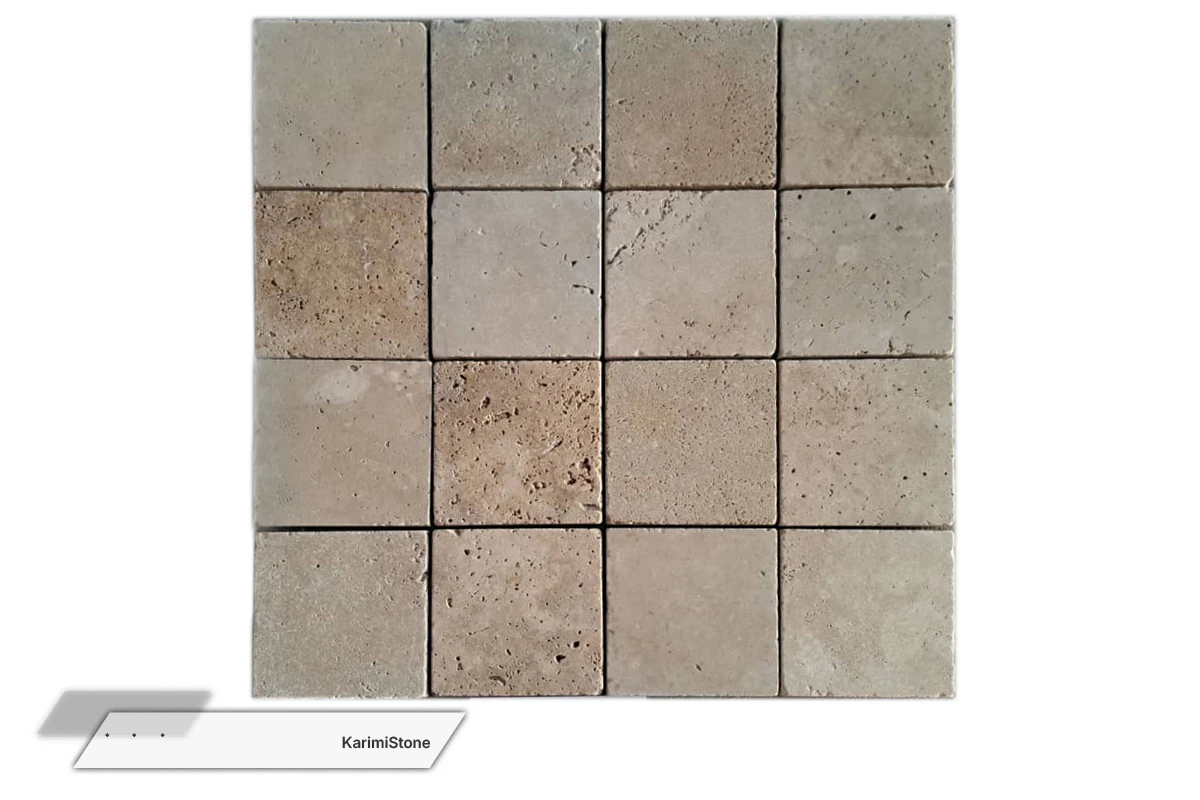
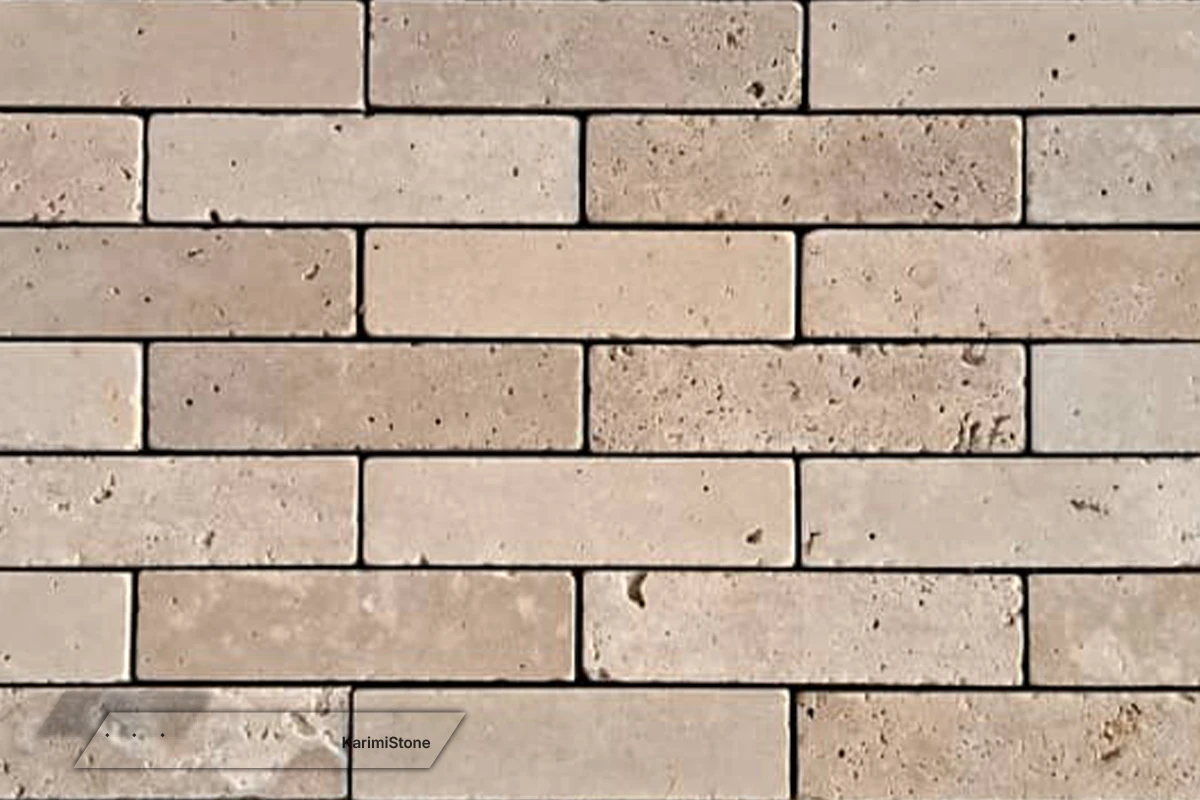
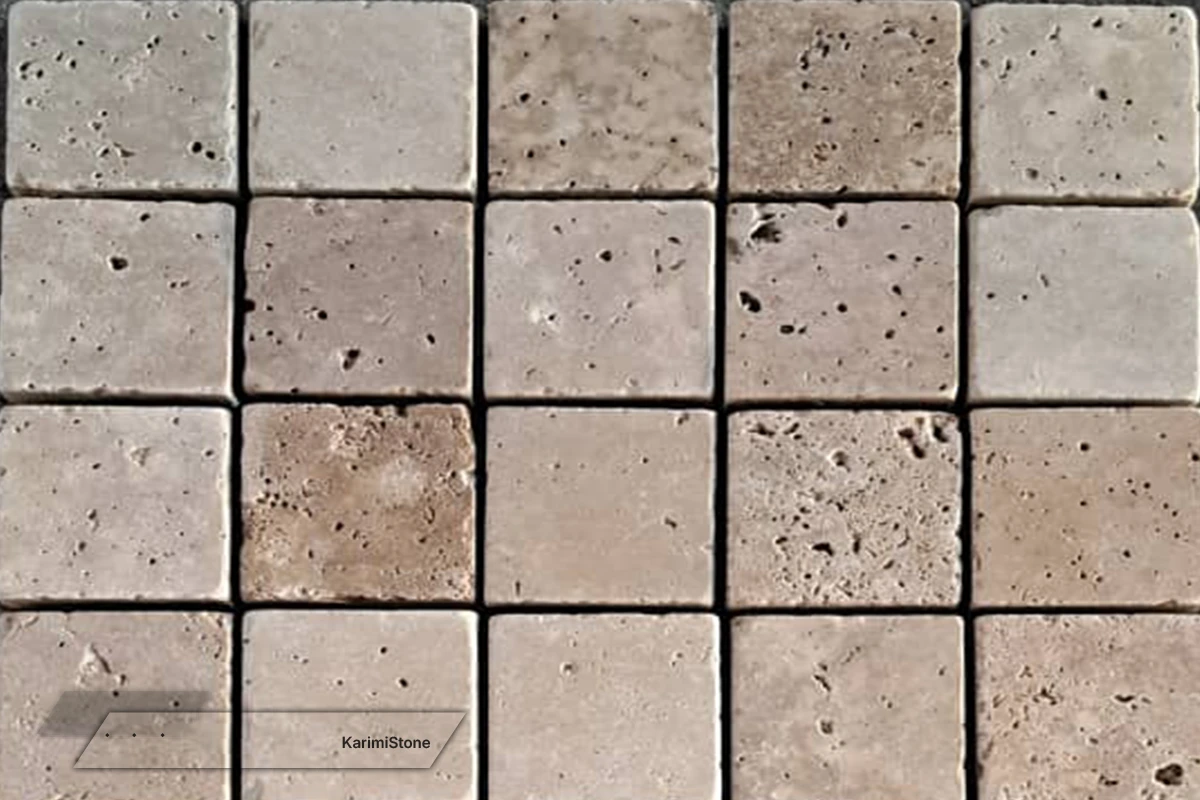
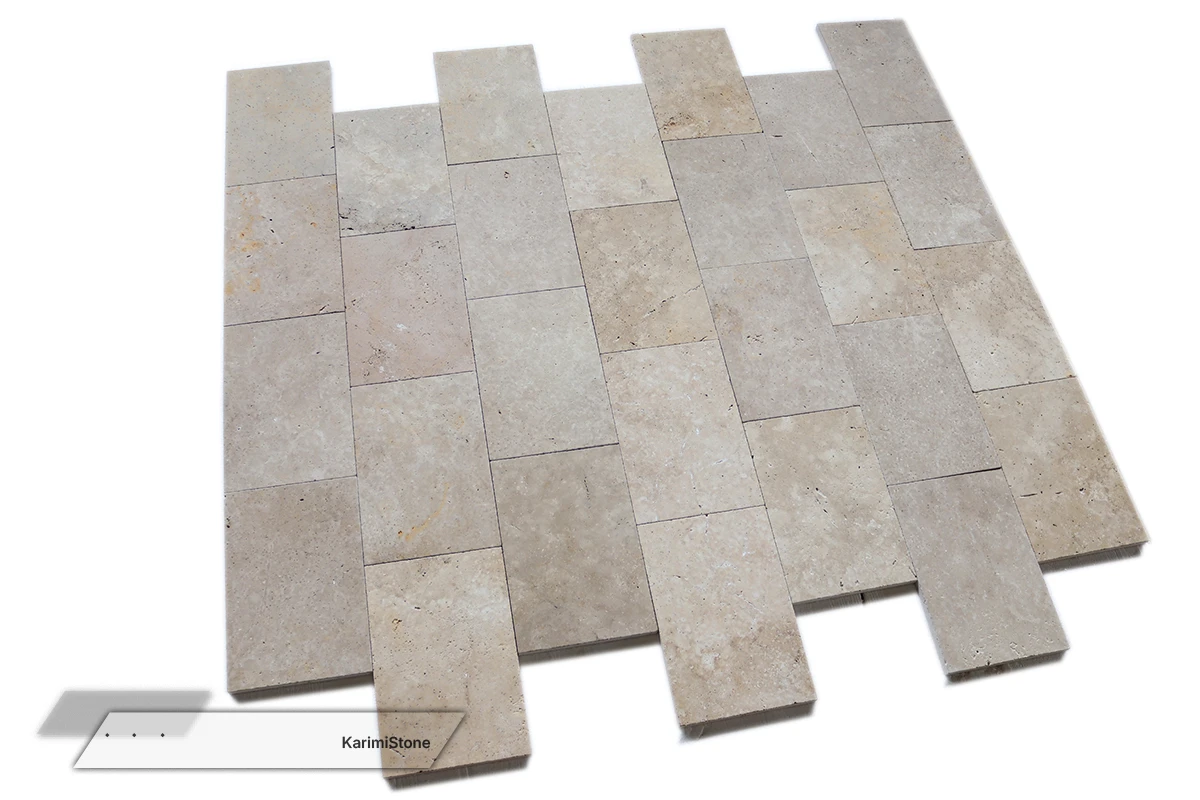
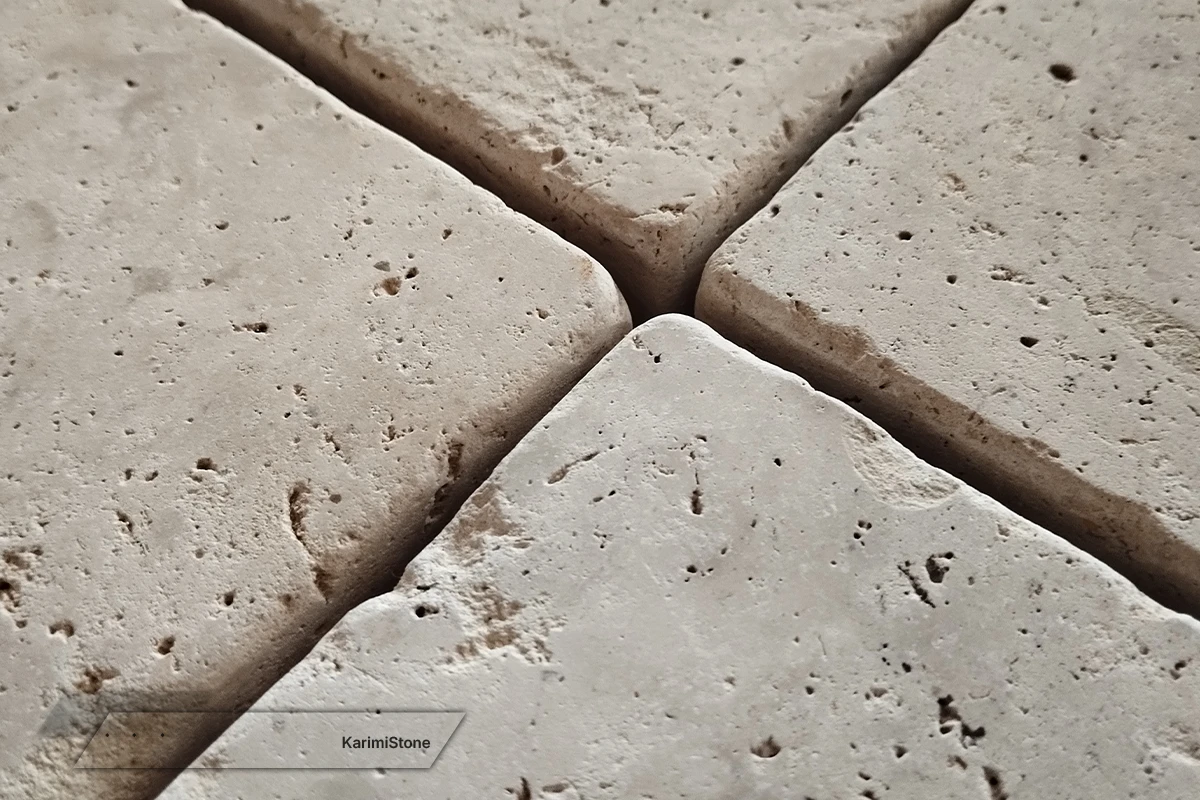
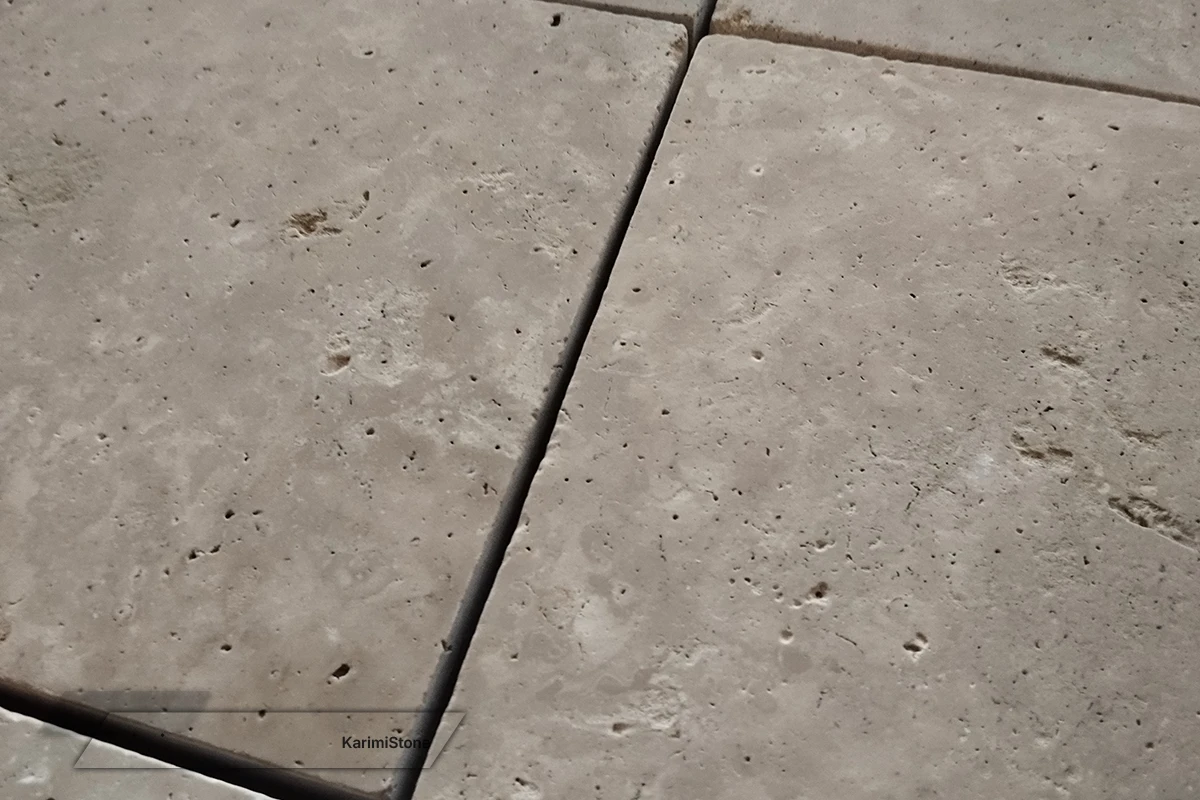
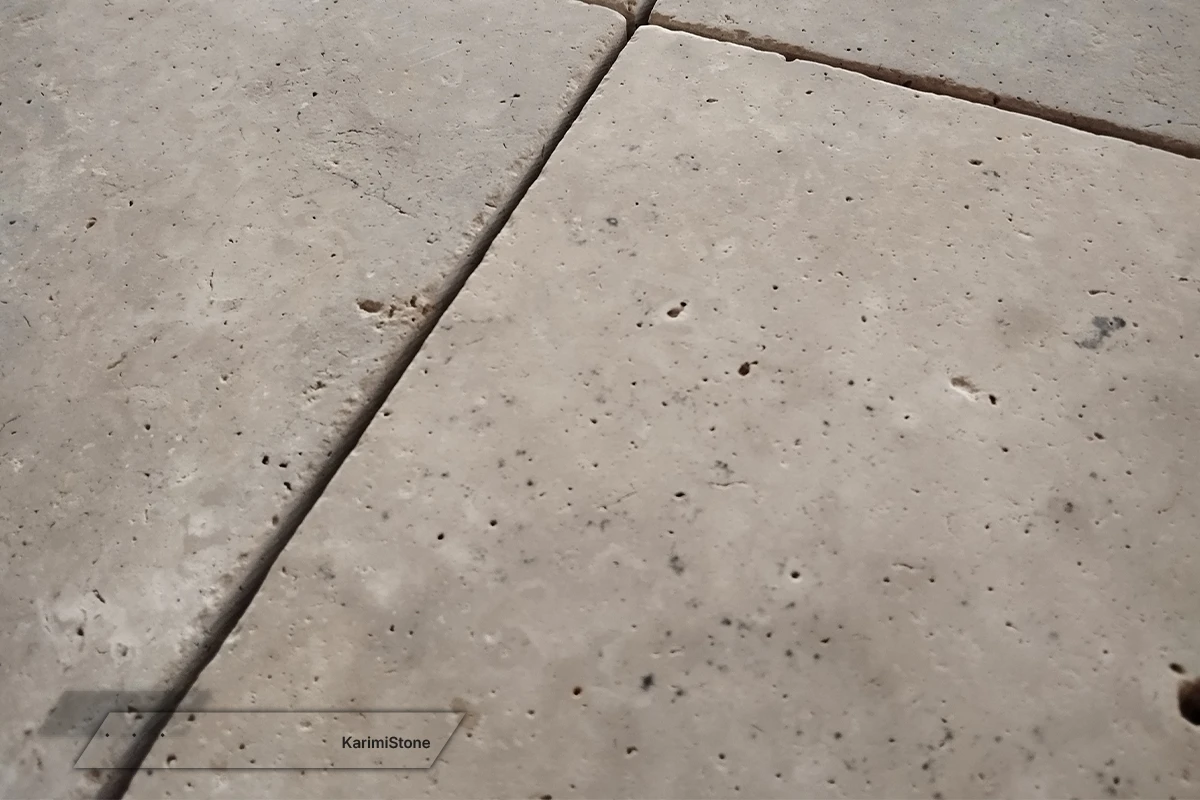
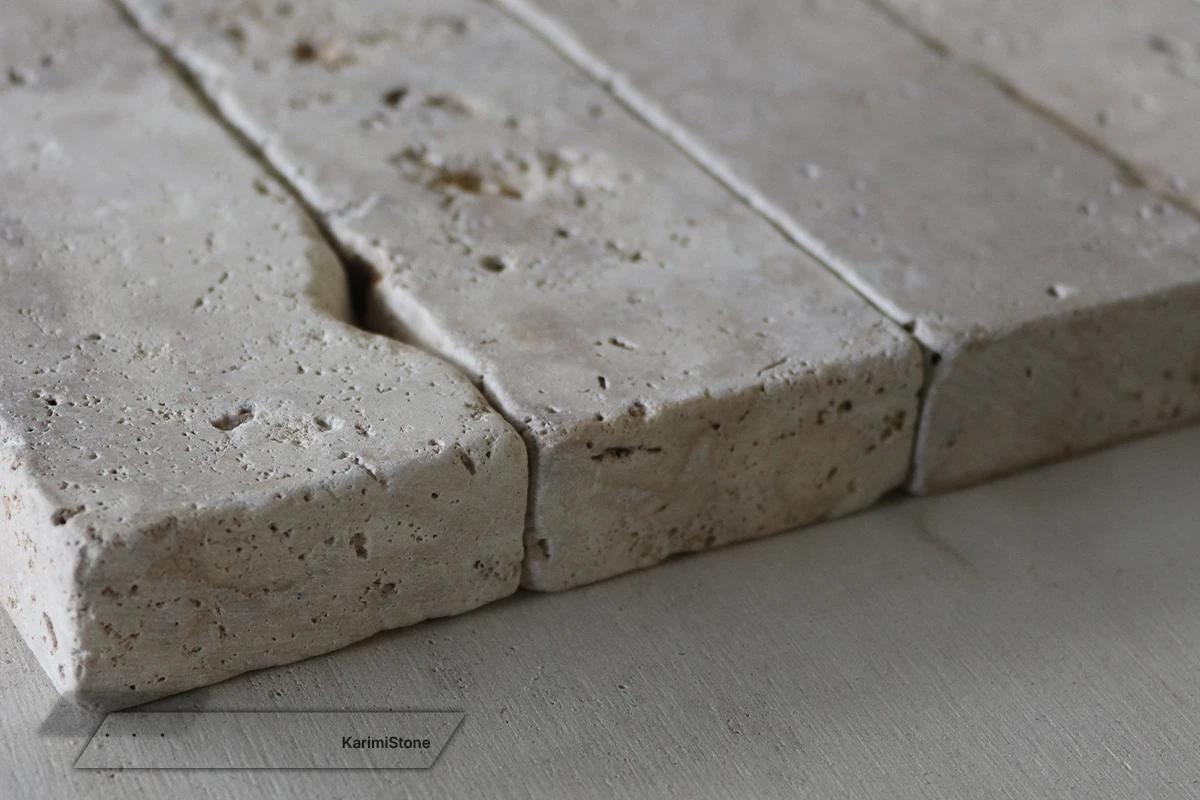
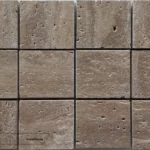
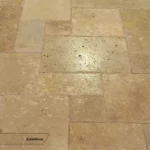
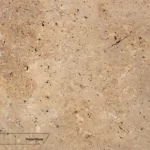
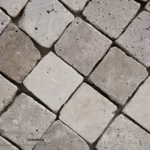
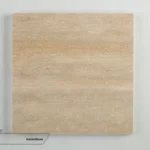
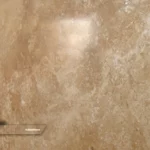
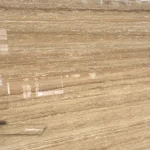
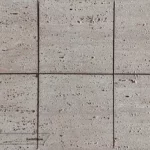
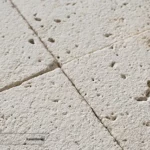
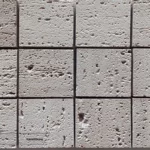
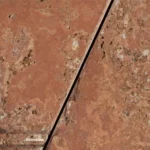
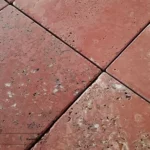
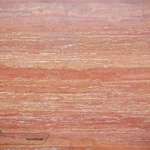
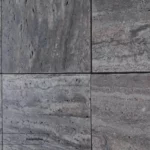
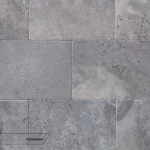
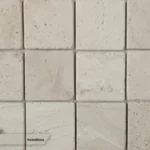
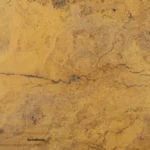










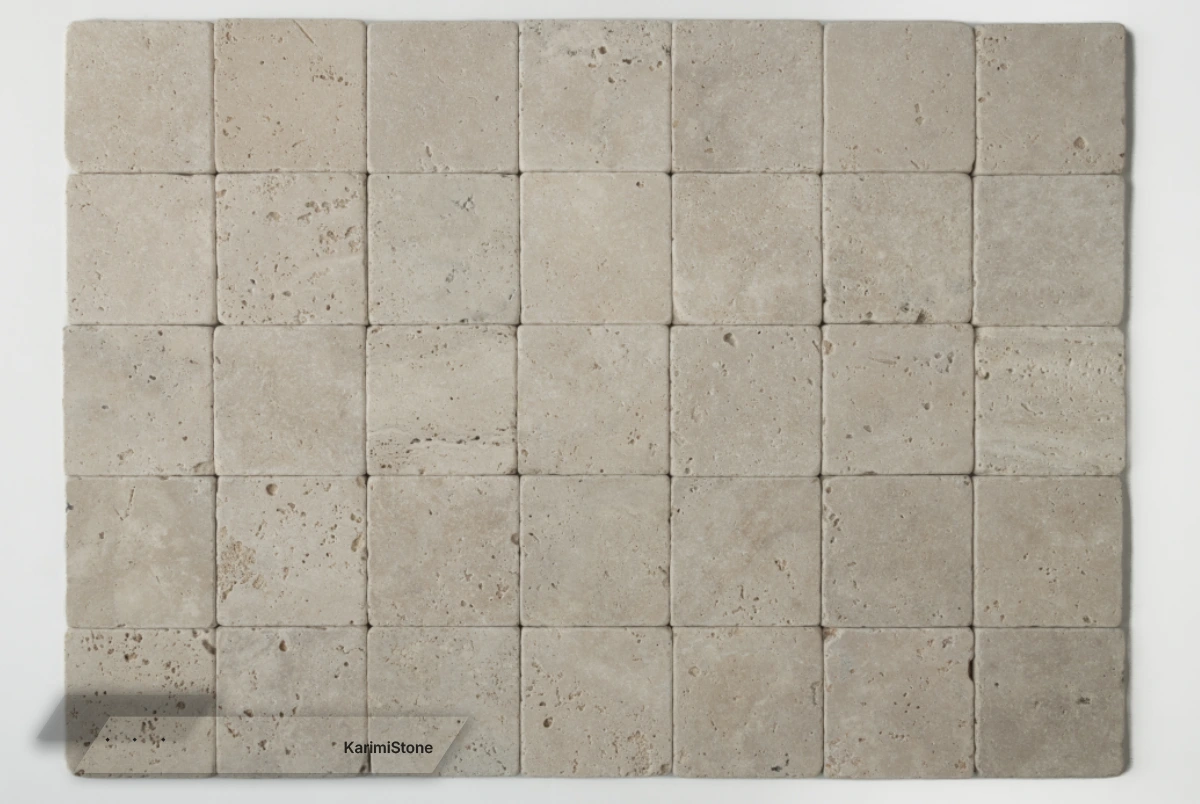
Beige Travertine Honed & Tumbled is an Iranian natural stone combining a smooth, matte honed surface with softly tumbled edges. The honed face creates a clean and controlled appearance, while the tumbled edge reduces sharpness and gives each piece a softer, more natural outline.
This particular product is produced in a Cross-Cut pattern, revealing cloud-like, circular, and flowing mineral movement rather than the long directional bands associated with Vein-Cut travertine.
With its warm cream-to-beige color, natural pores, low-reflection surface, and softened edges, Beige Travertine Honed & Tumbled can be considered for flooring, villa and garden areas, paving, courtyards, walls, bathrooms, pool coping, and other architectural applications.
What Is Beige Travertine Honed & Tumbled?
Beige Travertine Honed & Tumbled combines two different treatments that affect different parts of the stone.
The honed finish is applied to the main face. Controlled abrasive grinding gradually produces a smooth and even surface with a matte or low-sheen appearance.
The tumbled treatment is applied to the edges. Sharp corners are softened and the perimeter develops slight natural irregularity, giving the pieces a more relaxed and gently aged character.
This combination creates a refined upper surface without making the finished installation look excessively formal or machine-perfect.
What Is Beige Travertine?
Beige Travertine is a natural calcium-carbonate stone characterized by warm cream and beige colors, natural pores, mineral movement, and a layered geological structure.
Travertine forms through the precipitation of calcium carbonate from mineral-rich water. The U.S. Geological Survey describes the relationship between carbon-dioxide release, calcium-carbonate precipitation, and the formation of travertine.
This geological process creates many of the characteristics commonly associated with the stone:
- Natural pores and cavities
- Cream and beige background colors
- White or light brown mineral markings
- Soft tonal movement
- Layered natural structure
- Natural variation between pieces
Iranian Beige Travertine is particularly suitable for large architectural areas because its light and neutral appearance can create visual continuity without making a space feel excessively dark or heavy.
Color and Visual Character
Beige Travertine can range from light cream and ivory beige to warmer beige and honey-colored tones.
Depending on quarry source, extraction layer, and material selection, the surface may also contain light brown areas, white mineral movement, and subtle natural variations.
On Beige Travertine Honed & Tumbled, the smooth honed face keeps these colors visually balanced, while the softened edges make each individual piece appear less rigid.
This combination is particularly effective in projects where natural stone should feel warm, simple, and architectural rather than highly decorative.
Other treatments can be compared in Karimi Stone’s guide to natural stone surface finishes.
What Is a Honed Finish?
A honed finish is created through controlled abrasive grinding that gradually smooths and refines the stone surface.
Unlike polished stone, the process stops before a highly reflective gloss develops. The result is a smooth face with a matte or low-sheen appearance.
On Beige Travertine, honing typically provides:
- Smooth surface texture
- Low light reflection
- Soft tactile character
- Clear natural beige color
- Visible mineral movement
- Controlled architectural appearance
The absence of strong glare makes honed stone particularly suitable for large architectural areas such as floors, walls, entrance halls, lobbies, and other controlled surfaces.
For larger orders, consistent honing is important because differences in grinding or finishing may become visible when many pieces are installed together.
What Is a Tumbled Edge?
For this product, tumbling is used specifically as an edge treatment. The main face remains honed and smooth.
Tumbling reduces the sharpness of the perimeter and can create:
- Softer corners
- Less rigid geometry
- Slight edge irregularity
- Natural-looking variations
- A subtle aged appearance
A straight machine-cut edge gives stone a very precise character. A tumbled edge produces a softer transition between neighboring pieces.
This effect can be particularly useful in villa flooring, courtyards, gardens, traditional interiors, natural-style architecture, and pattern-set layouts.
You can view other products using this edge treatment in Karimi Stone’s Tumbled Edge stone collection.
Why Combine Honed and Tumbled?
Honing and tumbling perform different functions.
The honed face provides:
- Smoothness
- Matte appearance
- Low reflection
- Controlled surface quality
The tumbled edge provides:
- Softer corners
- Less formal geometry
- Subtle variations around individual pieces
- A more natural appearance
Together, these characteristics create a product that feels refined without appearing excessively precise.
This balance allows Beige Travertine Honed & Tumbled to work in both contemporary and more traditional architectural concepts.
Cross-Cut Beige Travertine
This product has a Cross-Cut pattern.
In Cross-Cut production, the travertine block is sawn across its natural sedimentary layers rather than parallel to them.
This creates a less directional appearance than Vein-Cut material. Instead of long bands, the surface may display:
- Cloud-like patterns
- Circular mineral movement
- Flowing cream and beige areas
- Honey-colored sections
- White and pale brown markings
The honed surface keeps this natural movement soft and balanced, while the tumbled perimeter gives each individual piece a more relaxed outline.
Natural Pores and Stone Structure
Natural pores are one of the defining characteristics of travertine.
They can vary in:
- Size
- Shape
- Depth
- Frequency
- Distribution
Some Beige Travertine selections have many small pores, while others contain larger but less frequent cavities.
This variation is natural and should be considered as part of the overall stone selection rather than judged independently.
Filling Options
Natural travertine cavities can be filled where required.
Common systems include:
- Resin
- Epoxy
- UV-based filling materials
The required filling level depends on the intended application and visual result.
For example, an interior floor may require a different degree of filling from an exterior wall, landscape application, or decorative installation.
Technical Characteristics
| Property | Indicative Value | Reference |
|---|---|---|
| Density | 2333 kg/m³ | ASTM C97 |
| Water Absorption | 2.33% | ASTM C97 |
| Porosity | 13% | ASTM C97 |
| Compressive Strength | 52 MPa | ASTM C170 |
| Flexural Strength | 9.2 MPa | Product Data |
| Abrasion Resistance | 8.5 mm | EN 14157 |
| Cold Resistance | -15°C | Indicative |
| Heat Resistance | 150°C | Indicative |
These values are indicative and can vary according to quarry source, extraction layer, and production batch. For engineering projects, the technical properties of the actual selected material should be confirmed.
Applications of Beige Travertine Honed & Tumbled
Interior Flooring
The smooth honed face creates a clean and comfortable architectural surface, while the tumbled perimeter gives individual pieces a softer visual definition.
Applications may include residential floors, hotels, lobbies, corridors, entrance halls, restaurants, and villa interiors.
Garden and Villa Flooring
The warm beige color works naturally with vegetation, timber, brick, and other outdoor materials.
Possible applications include villa entrances, covered outdoor areas, courtyards, garden circulation zones, seating areas, and transitional indoor-outdoor spaces.
Paving and Sidewalk Areas
The product can also be considered for residential paving, villa paving, garden paths, courtyard paving, and selected sidewalk applications.
For walking surfaces requiring a specific slip-resistance or load rating, the finished material and installation system should be assessed according to the project requirements.
Explore other materials suitable for natural stone paving.
Interior and Exterior Walls
Suitable Beige Travertine can also be considered for interior wall cladding, entrance walls, villa walls, exterior architectural surfaces, and feature areas.
The neutral color works well over large areas, while the honed finish maintains a calm visual character.
Bathrooms
Beige Travertine Honed & Tumbled can be considered for selected bathroom applications.
Important project factors include filling level, stone thickness, installation method, joints, waterproofing, water exposure, maintenance, and required surface performance.
Pool Coping
The product may also be considered for pool coping where the actual stone, dimensions, edge geometry, water exposure, climate, and required slip performance are appropriate.
Other products for this application can be found in Karimi Stone’s pool coping stone collection.
Sorting and Project Selection
There is no single universal commercial grading system for all Beige Travertine.
Project selection normally considers:
- Background color
- Tone consistency
- Natural mineral movement
- Pore size
- Pore distribution
- Honing quality
- Tumbled edge appearance
- Dimensional consistency
With a tumbled edge, small variations between pieces are expected because the objective is specifically to avoid a completely sharp and identical edge profile.
For large-volume production, the acceptable degree of edge softness should therefore be established through approved samples before production.
Why Choose Beige Travertine Honed & Tumbled?
- Warm natural color: Cream and beige shades complement many architectural styles.
- Smooth matte face: Honing creates a clean surface with low reflection.
- Softened edges: Tumbling reduces sharpness and gives individual pieces a more relaxed appearance.
- Natural stone character: Pores and mineral movement remain visible.
- Cross-Cut pattern: Creates soft, cloud-like mineral movement.
- Versatile applications: Suitable selections can be considered for floors, walls, gardens, paving, bathrooms, and pool coping.
- Project flexibility: Dimensions, filling, color range, edge softness, and sorting can be coordinated according to project requirements.
Frequently Asked Questions
What is Beige Travertine Honed & Tumbled?
It is Beige Travertine with a smooth matte honed face and softly tumbled edges.
Is tumbling applied to the complete surface?
No. For this product, the main face is honed and the tumbled treatment is applied to the edges.
What does a honed surface look like?
A honed surface is smooth, matte, and low in reflection while keeping the natural color and mineral movement visible.
What does Cross-Cut mean?
Cross-Cut means the travertine block is cut across its natural sedimentary layers, creating a softer, cloud-like, and less directional pattern.
What does a tumbled edge look like?
A tumbled edge has softer corners and slight natural irregularities compared with a sharp machine-cut edge.
Can the natural pores be filled?
Yes. The filling level can be selected according to the required surface appearance and architectural application.
Can this stone be used for flooring?
Yes. Suitable material can be considered for interior flooring as well as selected garden and villa flooring applications.
Can it be used outdoors?
Suitable material may be considered for selected exterior walls, gardens, paving, sidewalks, and pool areas when the project specification and technical performance are appropriate.
Can the tumbled edge be customized?
Yes. Edge softness and final appearance can be established through an approved production sample before a large order.
Beige Travertine Honed & Tumbled by Karimi Stone
Karimi Stone produces, processes, supplies, and exports Iranian natural stone for residential, commercial, hospitality, landscape, and architectural projects.
For Beige Travertine Honed & Tumbled projects, stone can be selected according to beige tone, Cross-Cut pattern, pore structure, honing quality, dimensions, thickness, filling level, and required edge softness.
Production can include controlled honing, tumbled-edge processing, custom dimensions, project-based sorting, quality control, export-grade packaging, and international project supply.
With its warm natural colors, smooth matte face, cloud-like Cross-Cut pattern, characteristic pores, and softened edges, Beige Travertine Honed & Tumbled is a versatile Iranian natural stone for flooring, villas, courtyards, walls, paving, bathrooms, pool coping, and landscape projects.