
























Gohare Limestone Honed: Technical Data, Applications and Global Supply
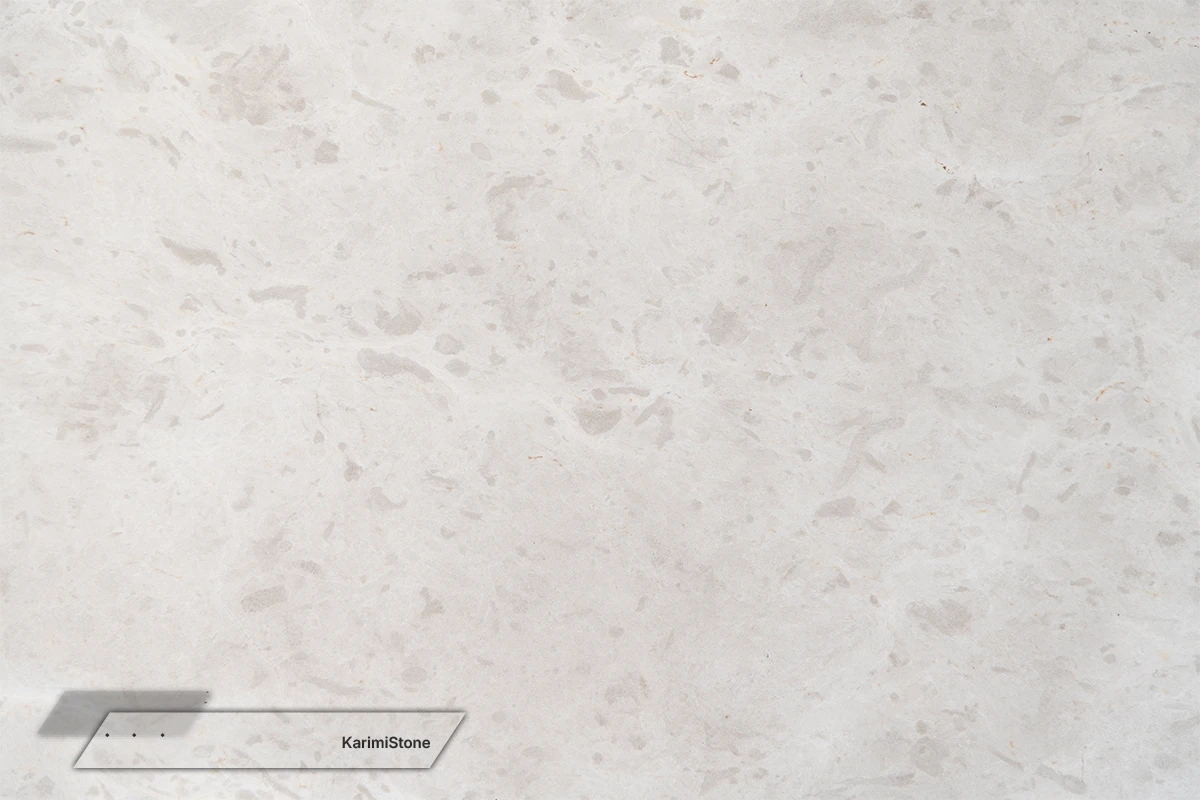
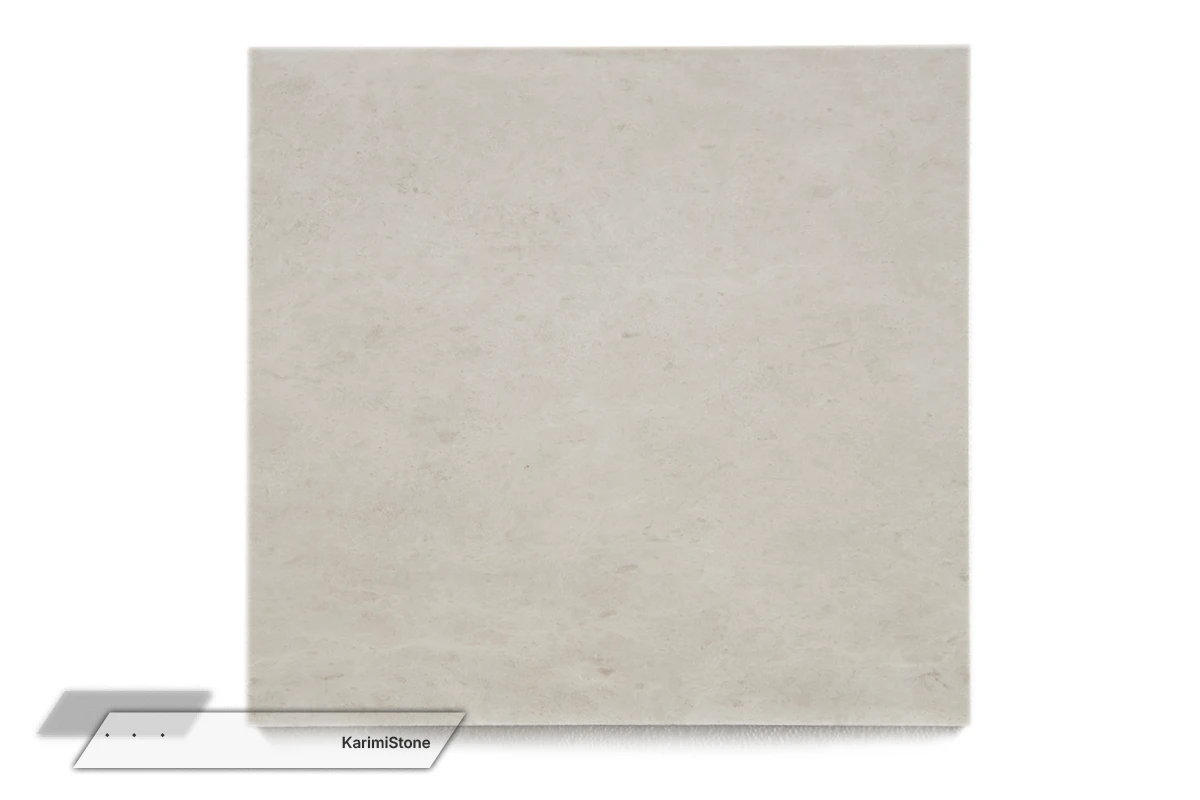
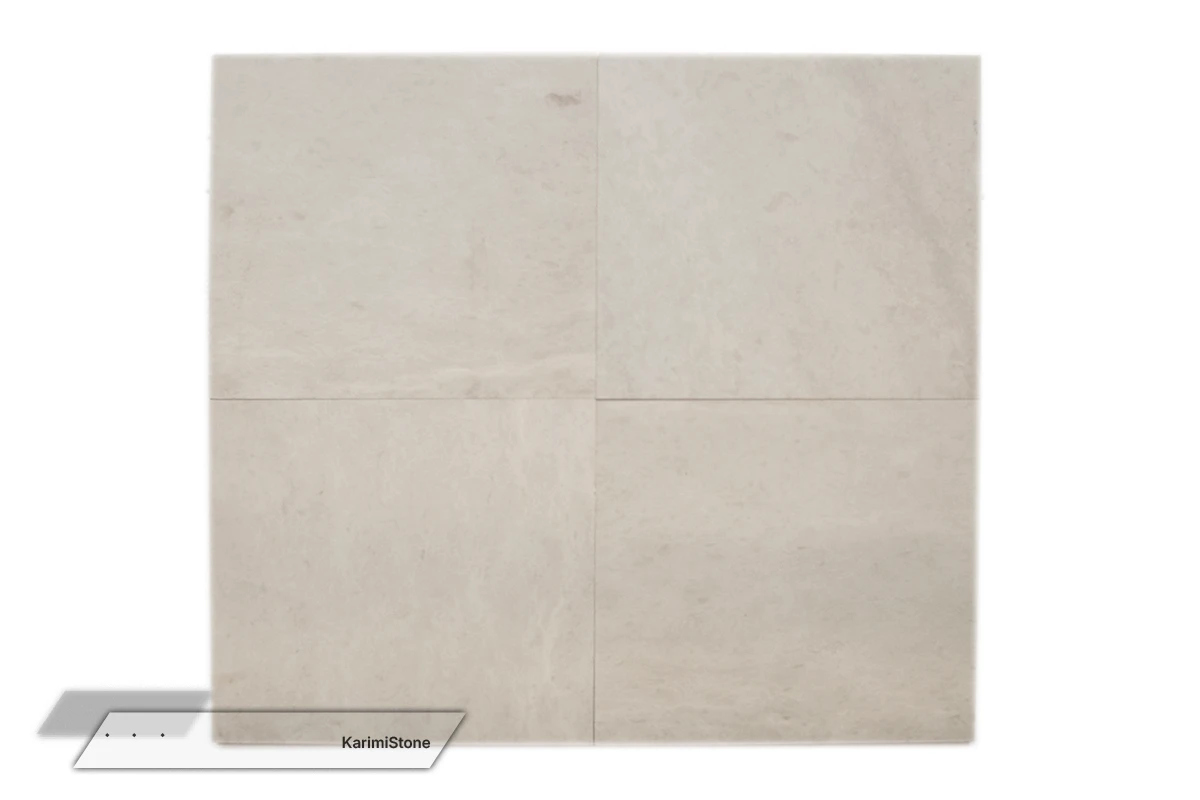
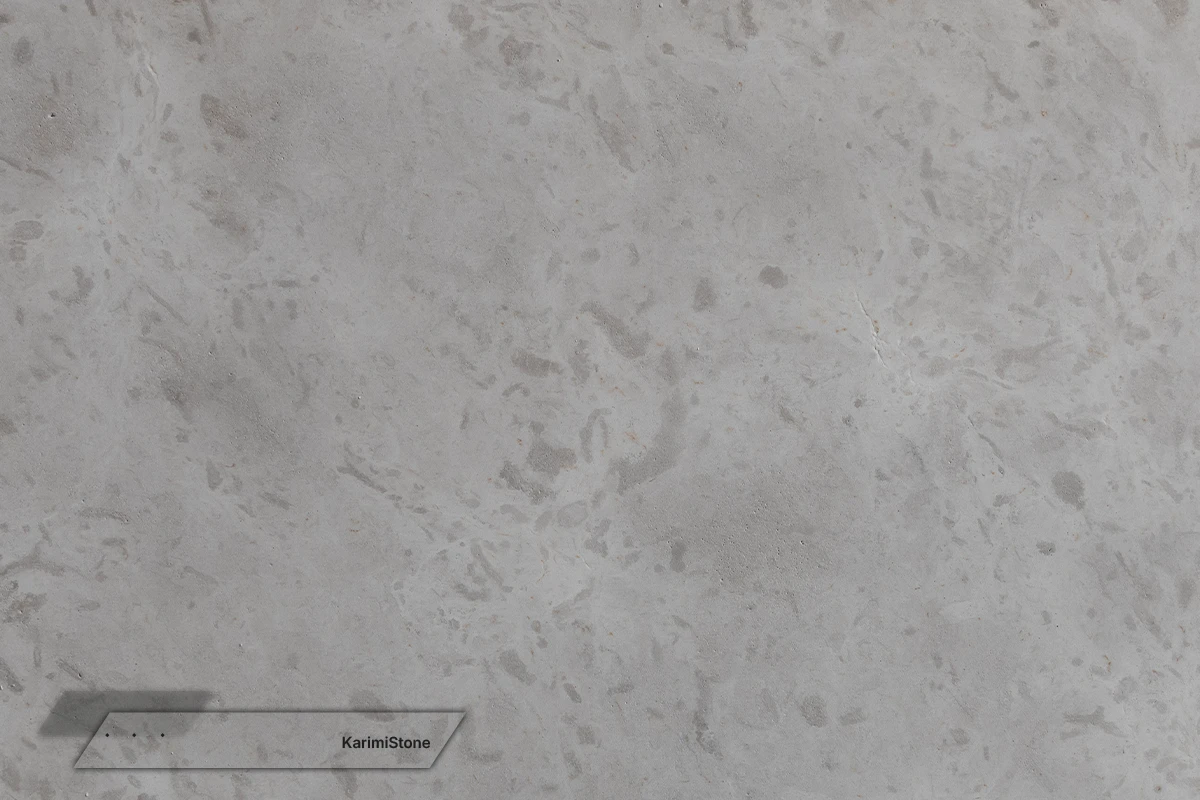
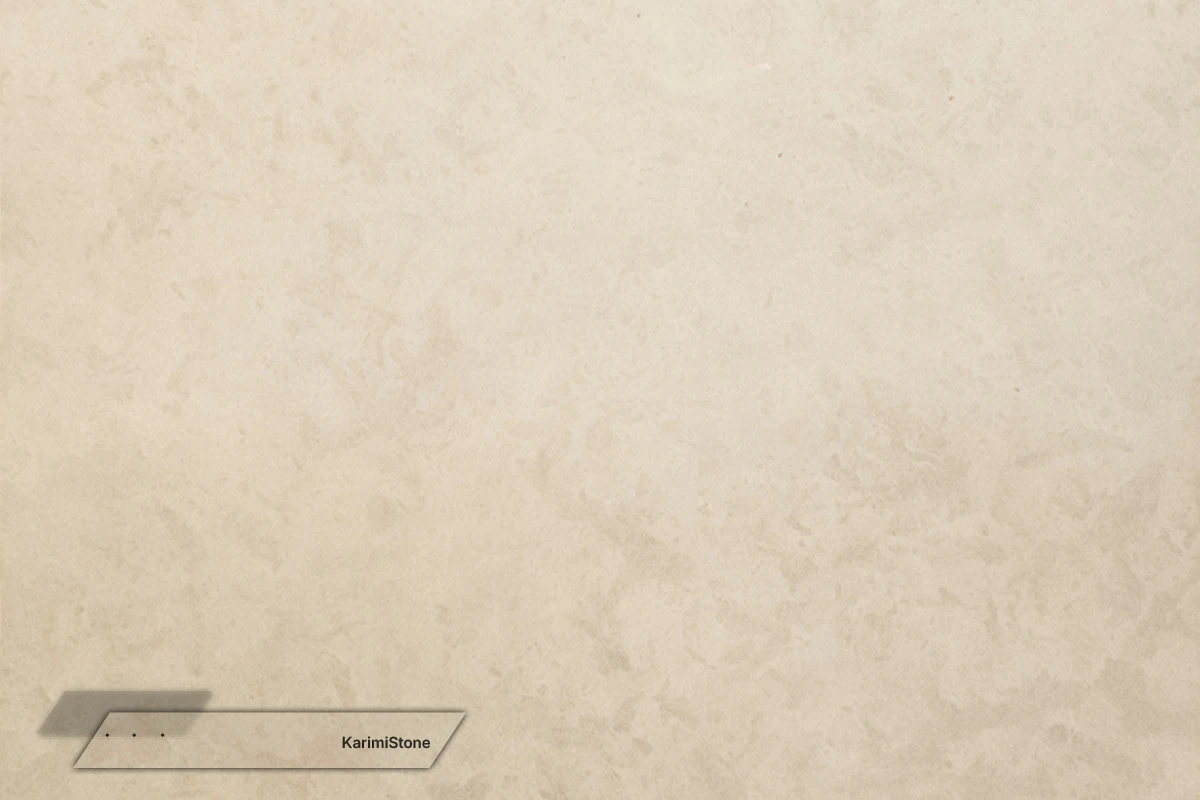
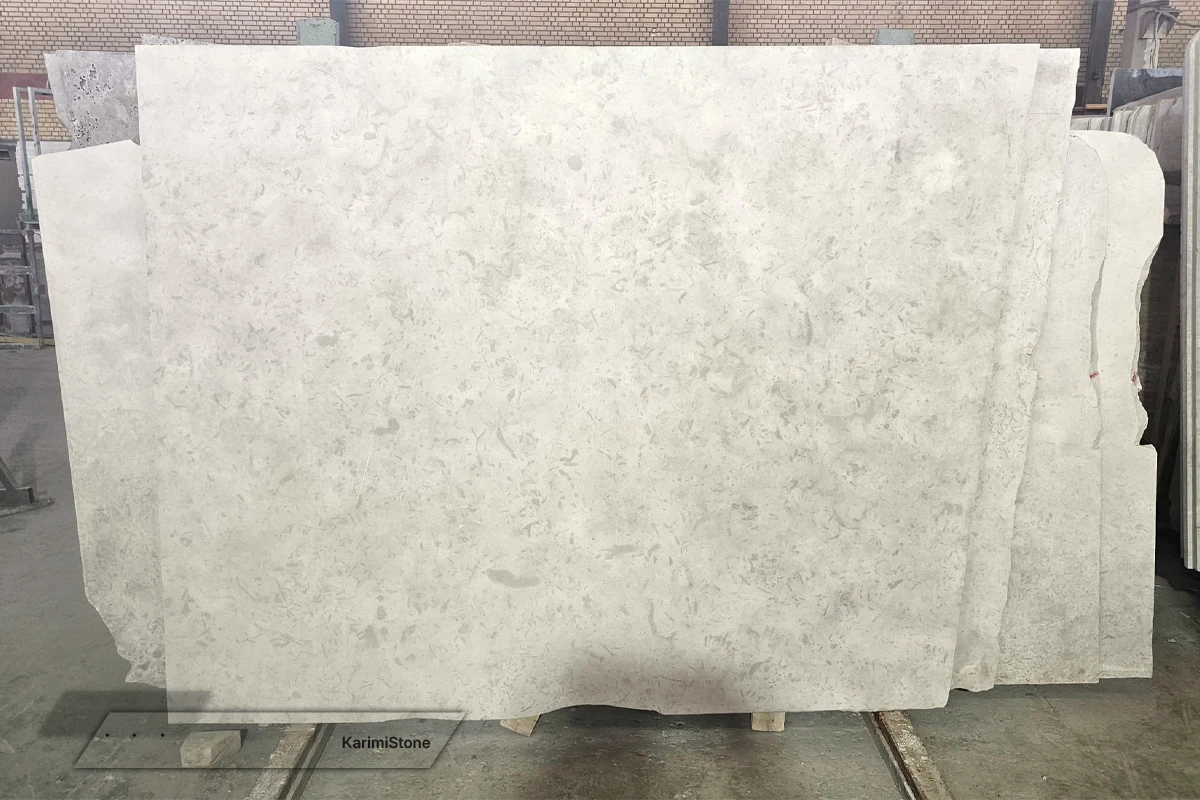
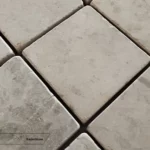
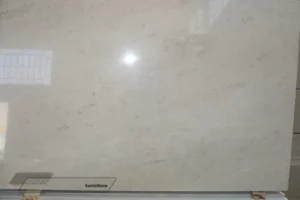
Gohare Limestone Honed is an Iranian natural limestone with a smooth, flat and matte surface. It is quarried near Khorramabad in Lorestan Province and is known for its light-cream background, fine-grained structure and naturally occurring grey fossils.
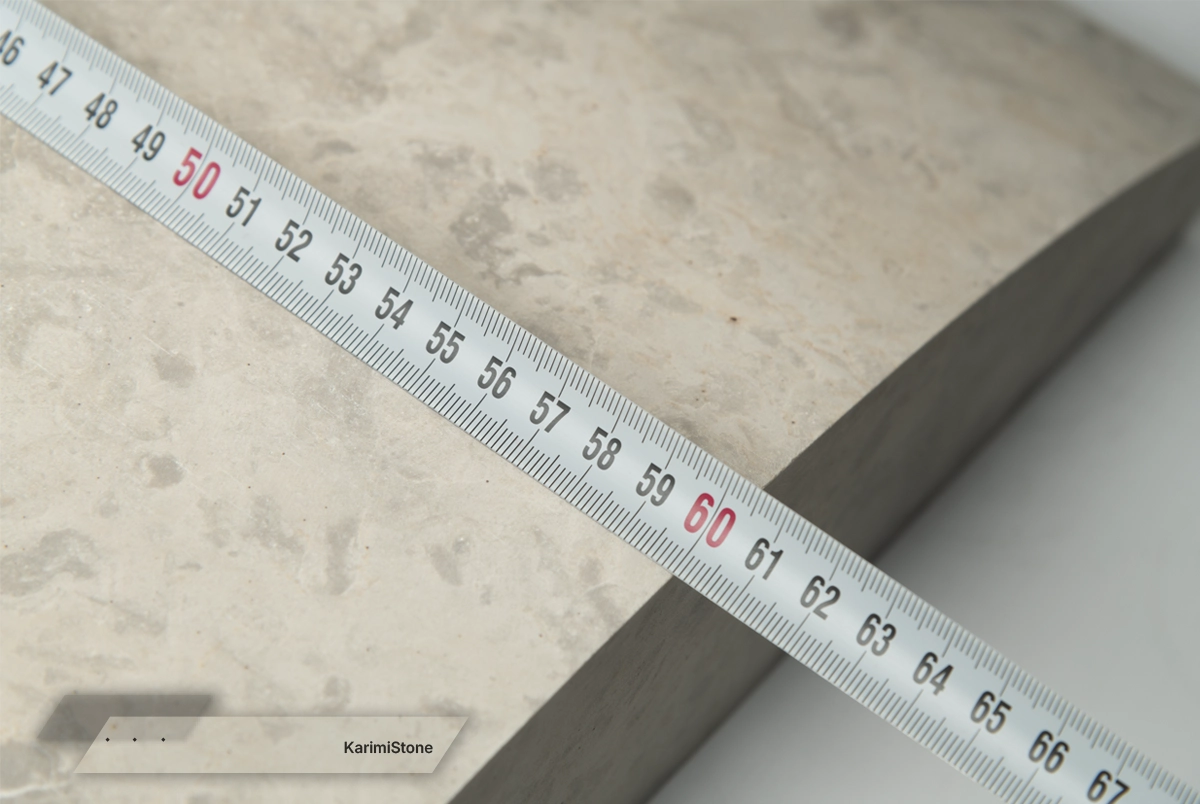
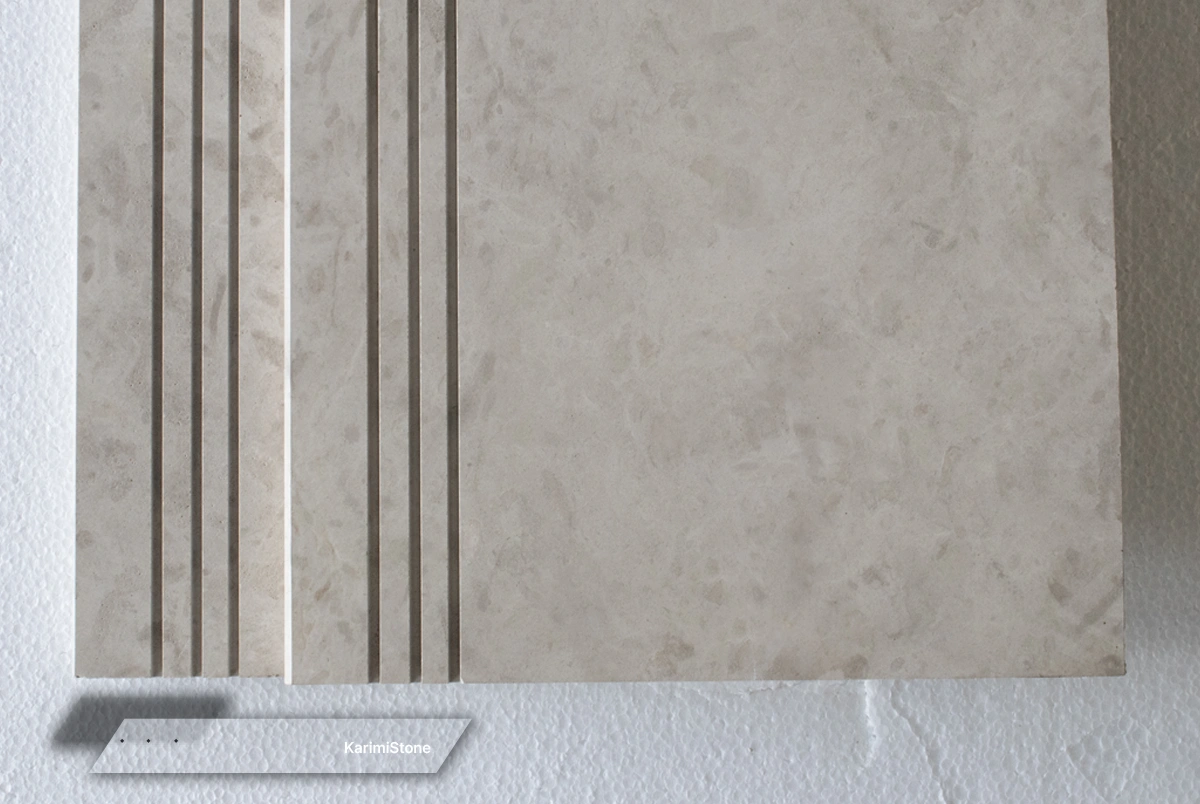
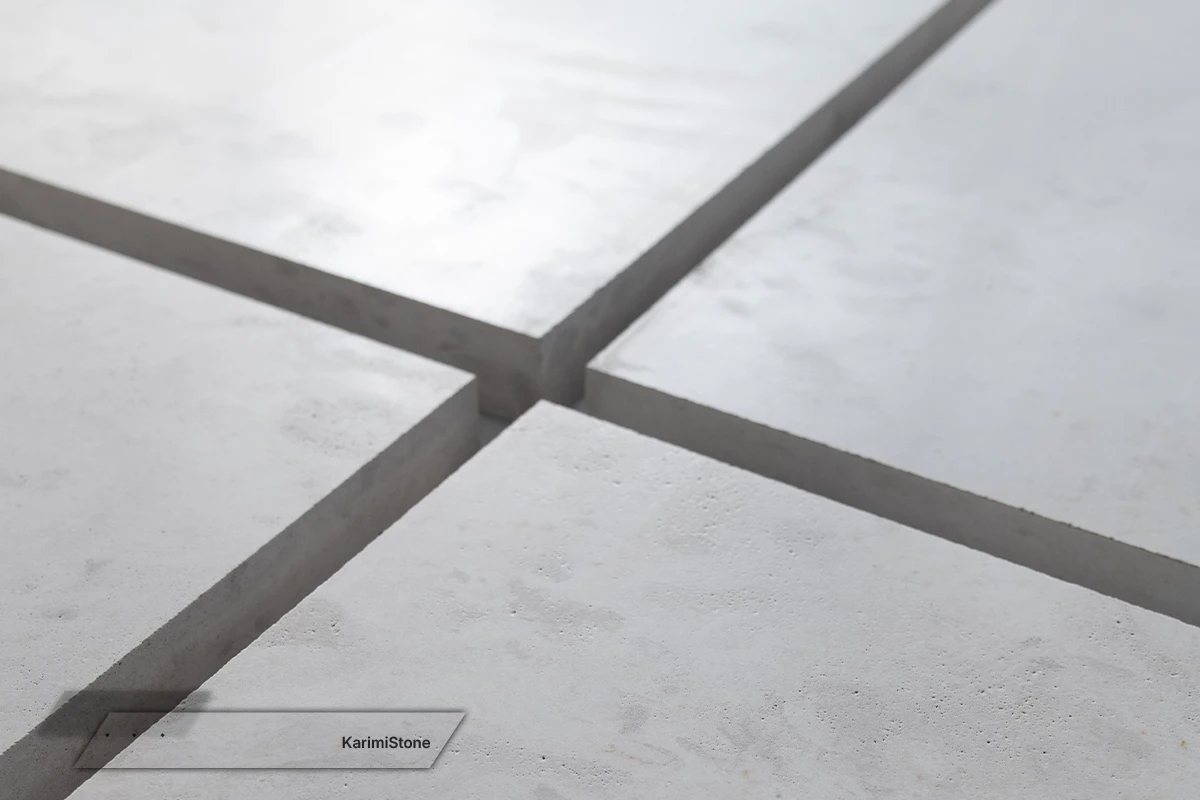
The honed finish removes strong surface reflection without hiding the natural colour or fossil pattern of the stone. This makes the material suitable for façades, interior walls, flooring, stairs and CNC architectural components where a calm, non-reflective surface is required.
Gohare Limestone Honed Product Passport
| Product information | Specification |
|---|---|
| Product name | Gohare Limestone Honed |
| Stone type | Natural limestone |
| Surface finish | Honed, smooth and matte |
| Origin | Iran |
| Quarry location | Khorramabad, Lorestan Province, western Iran |
| Other commercial names | White Gohare Limestone, Gohare Khorramabad Limestone, Lorestan Limestone and Gohare Bonyad |
| Background colour | Off-white, light cream, greyish cream and beige |
| Pattern | Plain to fossil-bearing |
| Extraction history | Approximately 75 years |
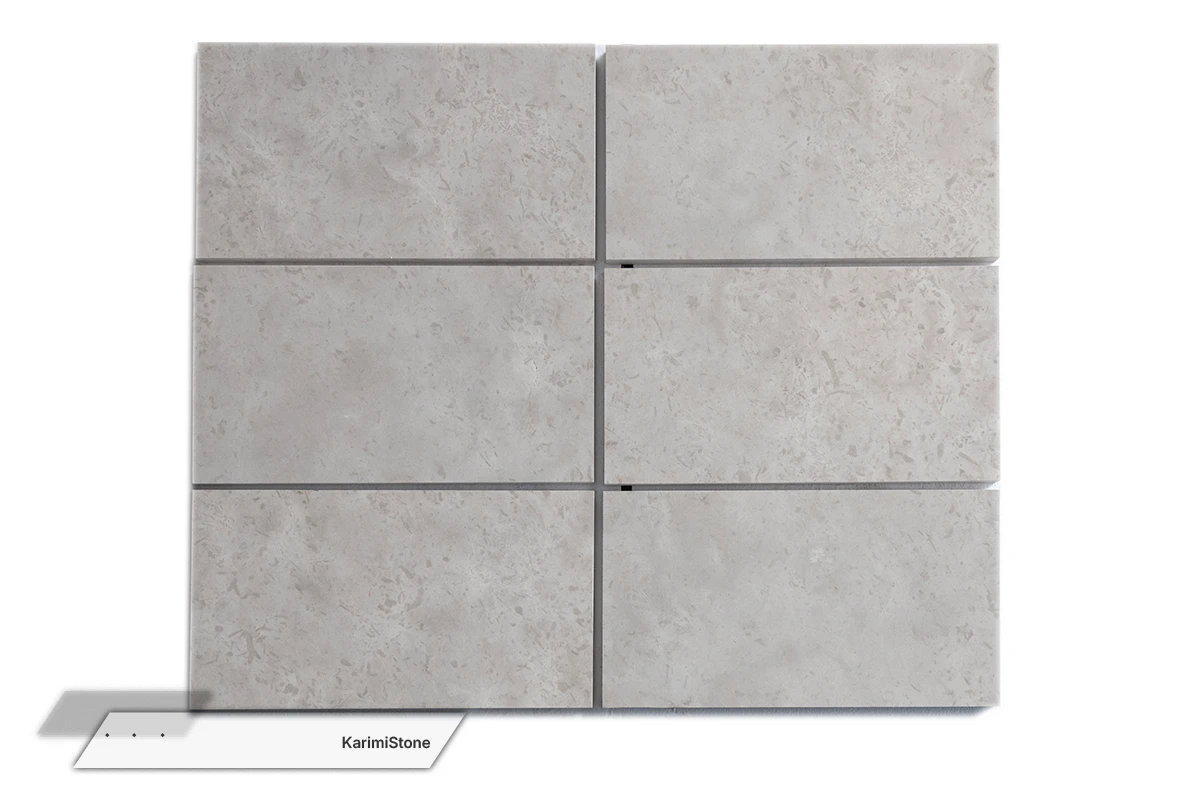
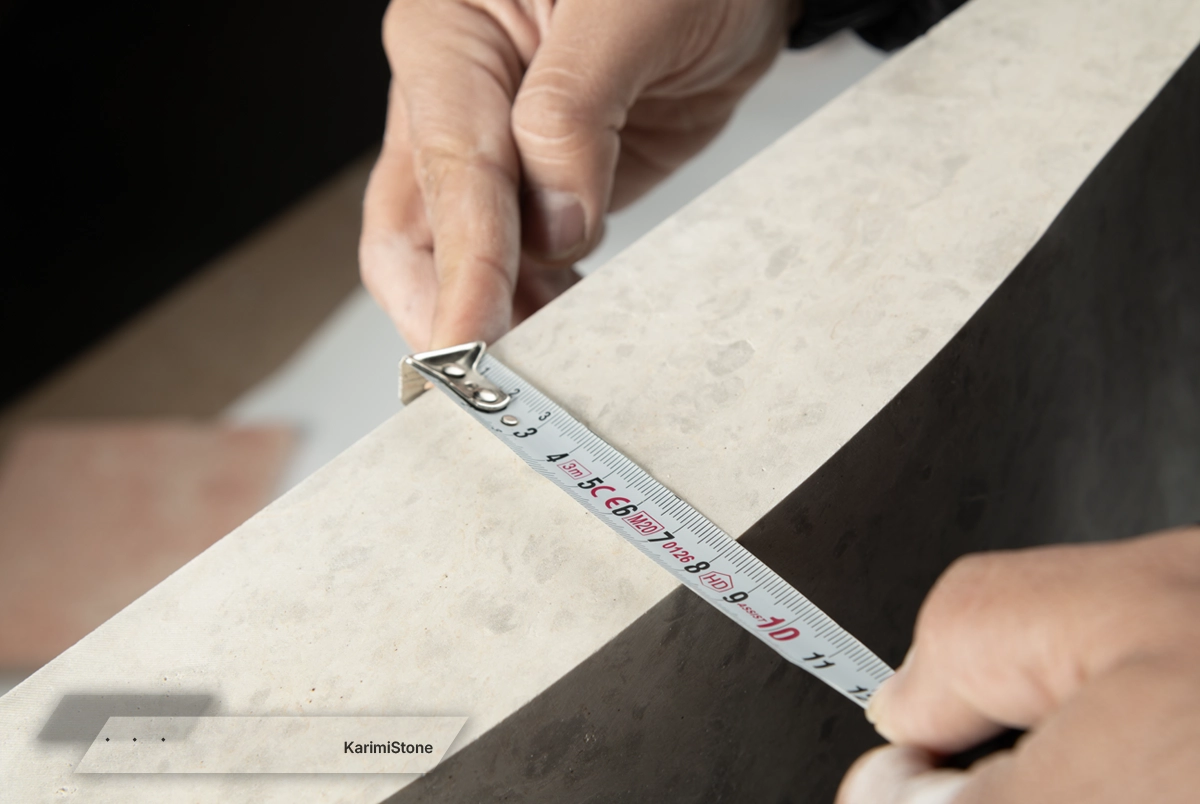
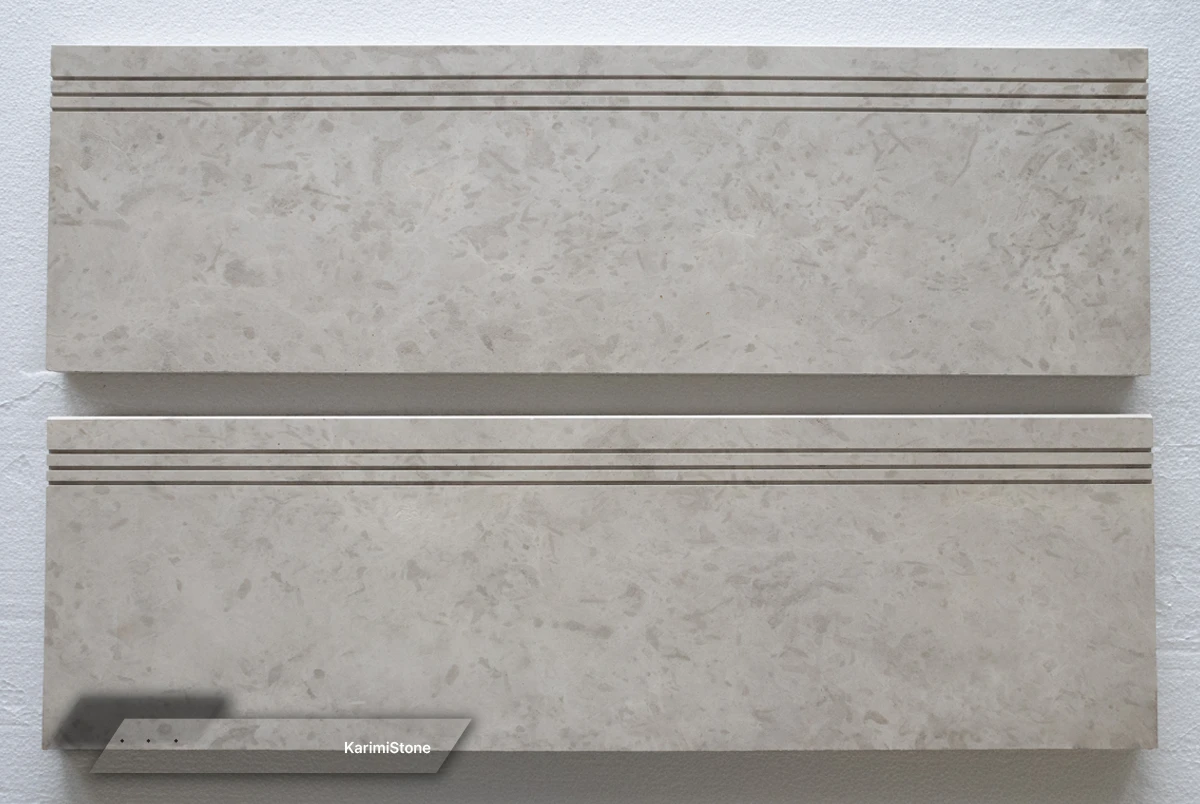
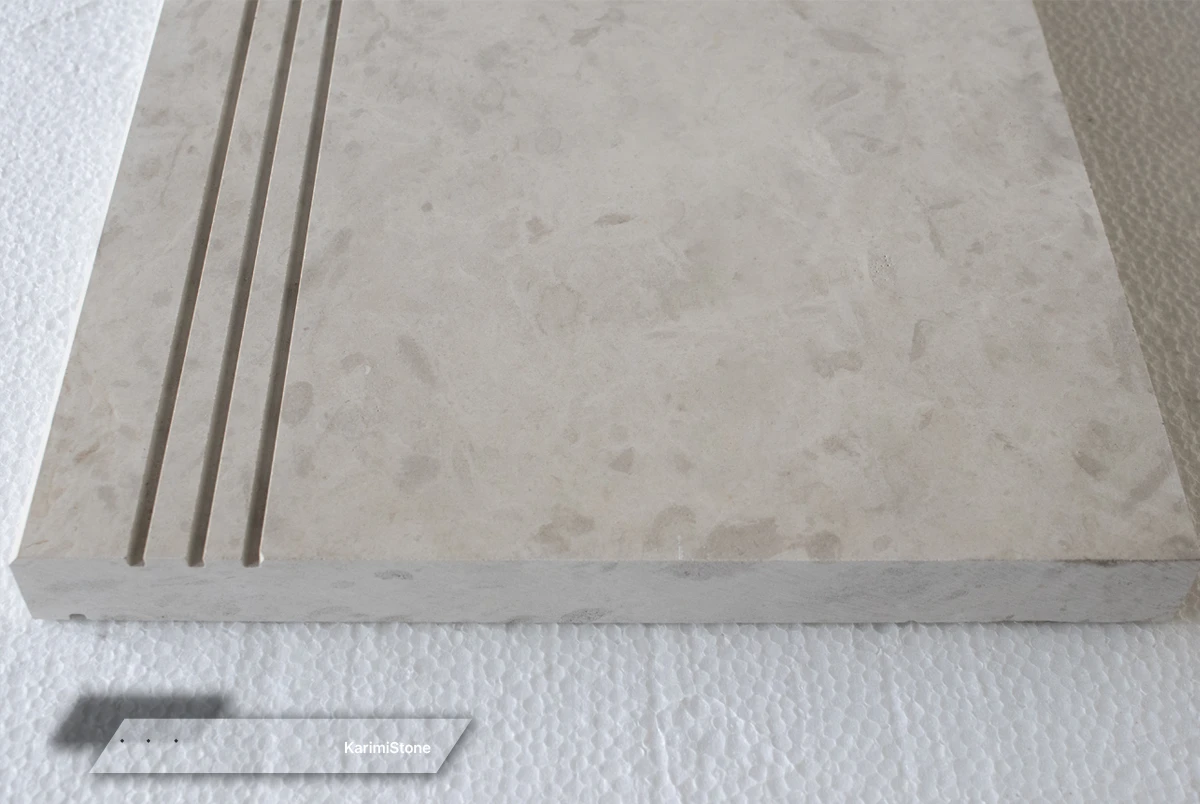
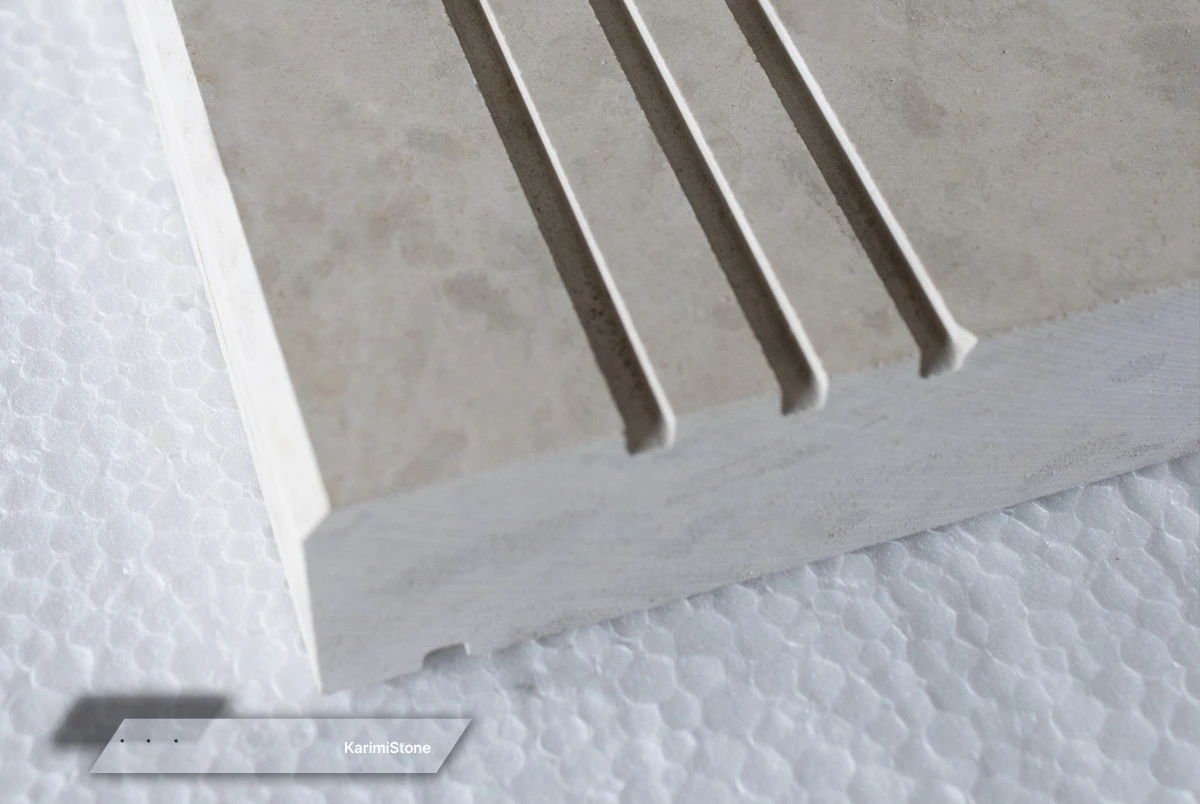
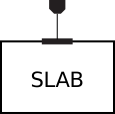
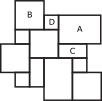
| Available formats | Slab, tile, free length, step, riser, batten, CNC and cut-to-size |
What Is a Honed Finish?
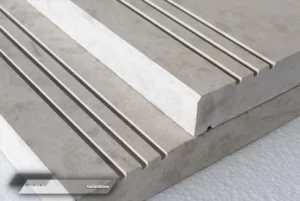
A honed finish is produced through several controlled grinding stages. After the limestone is cut and calibrated, abrasive heads gradually remove saw marks and level the surface. The process is stopped before the final polishing stages that would create a reflective gloss.
The result is a smooth and even surface with low light reflection. Compared with polished limestone, Gohare Limestone Honed has a softer matte appearance and usually shows minor scratches, fingerprints and dust less clearly.
Honing changes the texture and reflection of the surface, but it does not change the geological classification or basic structure of the stone. Performance still depends on the selected block, thickness, installation method, exposure conditions and maintenance.
Colour, Fossils and Sorting
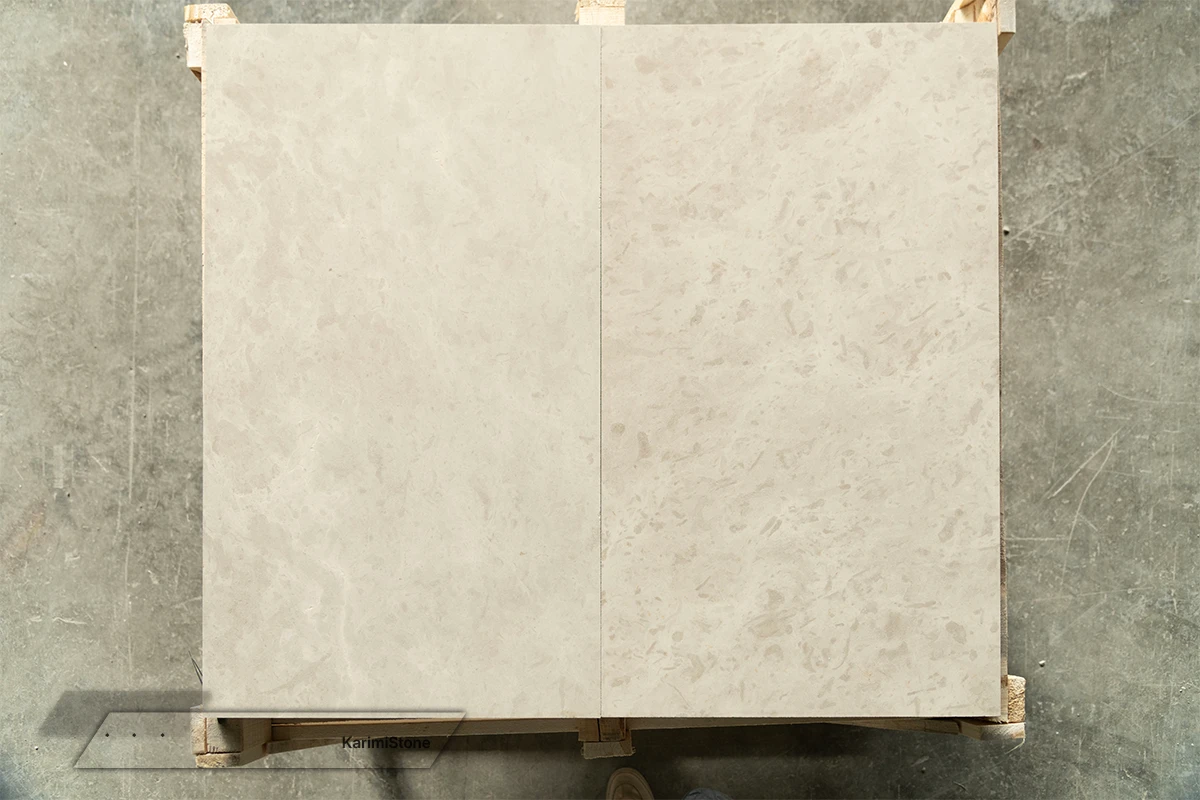
The natural background of Gohare Limestone Honed ranges from off-white and light cream to beige or greyish cream. Some blocks have a cleaner appearance, while others contain visible grey fossils.
The stone is commonly sorted into the following visual groups:
- Low-fossil sort: cleaner background with fewer visible fossils.
- Medium-fossil sort: balanced fossil distribution across the surface.
- High-fossil sort: stronger fossil pattern and more natural movement.
These groups describe the visual character of the stone and do not automatically indicate structural quality. A range sample should be approved before production, especially for large façades, floors and continuous wall areas.
Is Gohare Limestone a Marble?
From a geological perspective, Gohare is a sedimentary limestone, not marble. It may occasionally be compared with marble in commercial markets because of its relatively compact structure and ability to receive a smooth finish.
Its limestone classification is important for specification and maintenance. As a calcium-carbonate stone, it can react with acidic materials. Vinegar, lemon juice, acidic cleaners and aggressive chemicals may etch or discolour the surface.
Main Characteristics
- Fine-grained structure: Suitable for precise cutting and CNC processing.
- Smooth matte surface: Provides a low-reflection architectural finish.
- Light neutral colour: Works with many façade and interior materials.
- Fossil-based sorting: Available with different levels of visible fossils.
- Dimensional production: Can be manufactured in standard and custom sizes.
- Suitable for wall cladding: Available as tiles, free lengths and façade panels.
- Good machining behaviour: Suitable for mouldings, profiles and carved components.
- Project-based performance: Final suitability must be confirmed for the intended environment.
Available Formats
- Large and standard slabs
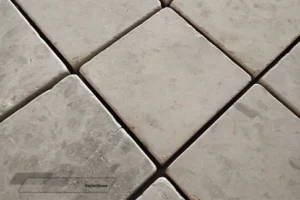
- Standard and custom-sized tiles
- Steps and risers
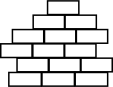
- Batten and brick-format pieces
- Free-length wall pieces
- Cut-to-size façade panels
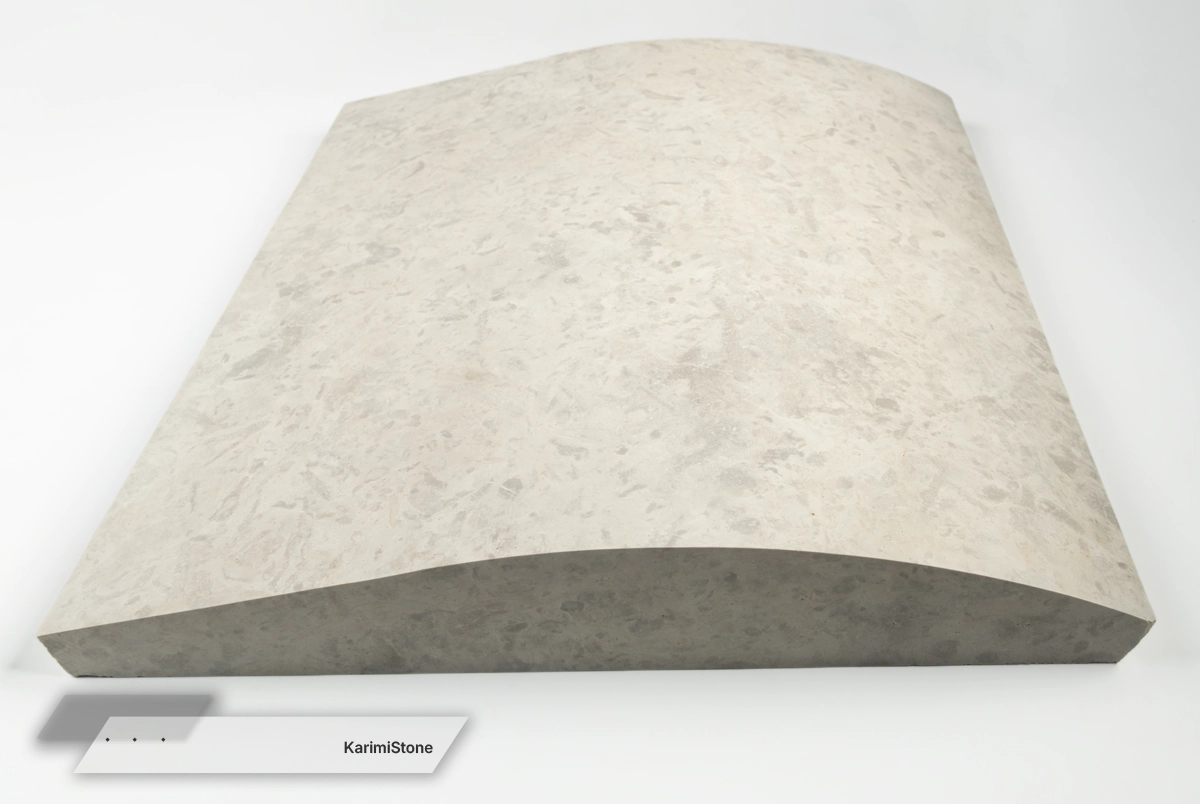
- CNC-carved architectural components
- Columns, balustrades and mouldings
Technical Specifications
| Technical property | Indicative value | Test reference |
|---|---|---|
| Water absorption | 1.8% | ASTM C97 |
| Density | 2661 kg/m³ | ASTM C97 |
| Porosity | 2.59% | Laboratory data |
| Compressive strength | 19.4 MPa | ASTM C170 |
| Flexural strength | 12.4 MPa | Laboratory data |
| Abrasion test result | 59.31 mm | EN 14157 |
Technical note: These figures are indicative and may vary between quarry sections, blocks, thicknesses and production lots. A current laboratory report should be requested before final engineering approval.
ASTM C97 is used to determine absorption and bulk specific gravity, while ASTM C170 covers compressive-strength testing of dimension stone. More information is available from the Natural Stone Institute testing laboratory and ASTM International.
Applications of Gohare Limestone Honed
The smooth matte finish of Gohare Limestone Honed is suitable for several architectural applications:
- Interior wall cladding
- Corridor and staircase walls
- Indoor floors with suitable traffic conditions
- Steps, risers and stair landings
- Mechanically fixed façade panels
- Simple and CNC-designed façades
- Door and window surrounds
- Balustrades and decorative columns
- Architectural mouldings
- Reception walls and elevator cladding
- Selected garden and villa applications after technical assessment
Application recommendations are only a general guide. The thickness, fixing system, exposure, traffic level and local building requirements must be reviewed before specification.
CNC Processing and Architectural Elements
The fine-grained structure of Gohare Limestone Honed makes it suitable for CNC cutting, carving, routing and profiling. It can be manufactured as columns, balustrades, cornices, window surrounds, decorative panels and façade elements.
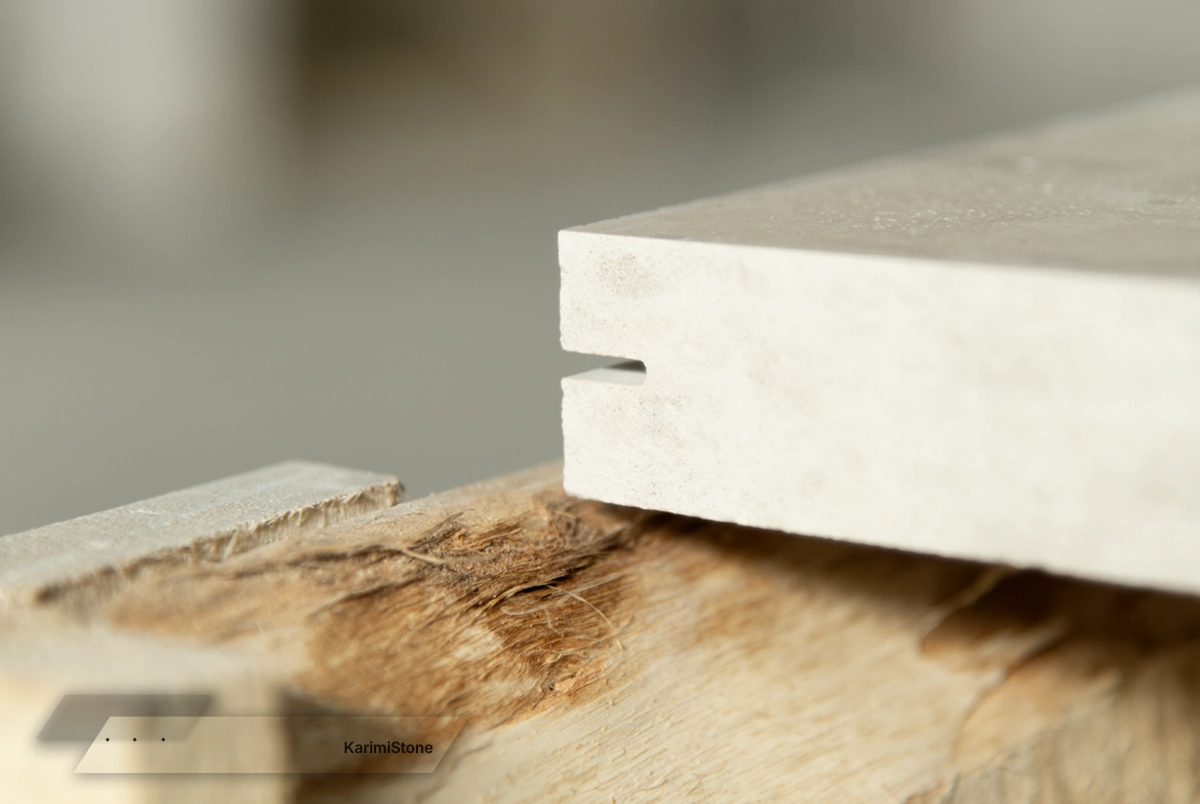
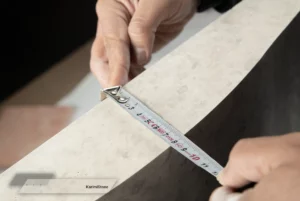
Production drawings should specify dimensions, tolerances, edge profiles, anchoring points and surface finish. Thin sections or deeply carved details require additional inspection to reduce the risk of breakage during production, packing and installation.
Exterior Use and Cold-climate Conditions
Gohare Limestone Honed can be considered for exterior façades and selected landscape applications after assessing the climate, water exposure and installation system.
Repeated freeze-thaw cycles may damage limestone when absorbed water freezes inside the material. A compatible impregnating sealer can reduce water entry, but it does not make the stone or installation completely waterproof.
- Request freeze-thaw test results for cold-climate projects.
- Use calculated mechanical anchoring for elevated façade panels.
- Provide correct flashing, drainage and movement joints.
- Avoid horizontal details that retain water.
- Use a breathable and compatible sealer when specified.
- Inspect exterior installations periodically.
Limitations
- Not recommended for permanently wet commercial floors without testing.
- Not the first choice for restaurant and industrial-kitchen floors.
- Acidic cleaning products can etch the surface.
- Heavy-traffic flooring requires abrasion-performance assessment.
- Severe freeze-thaw climates require laboratory verification.
- Sealing does not replace correct drainage and installation.
Cleaning and Maintenance
- Remove dust and abrasive particles before wet cleaning.
- Use water and a pH-neutral cleaner made for limestone.
- Clean oils and coloured liquids without unnecessary delay.
- Avoid vinegar, acidic cleaners and aggressive chemicals.
- Do not use hard abrasive brushes.
- Use a compatible impregnating sealer only when required.
- Test new cleaning products on a small hidden area first.
Production, Packaging and Export
Negin Sang Karimi (Karimi Stone) is the quarry-license holder, producer, supplier and exporter of Gohare stone. Control of quarry selection and factory processing supports fossil-based sorting, dimensional accuracy and continued project supply.
| Product | Supplier | Exporter | Producer | Quarry-license holder |
|---|---|---|---|---|
| Gohare Limestone Honed | ✓ | ✓ | ✓ | ✓ |
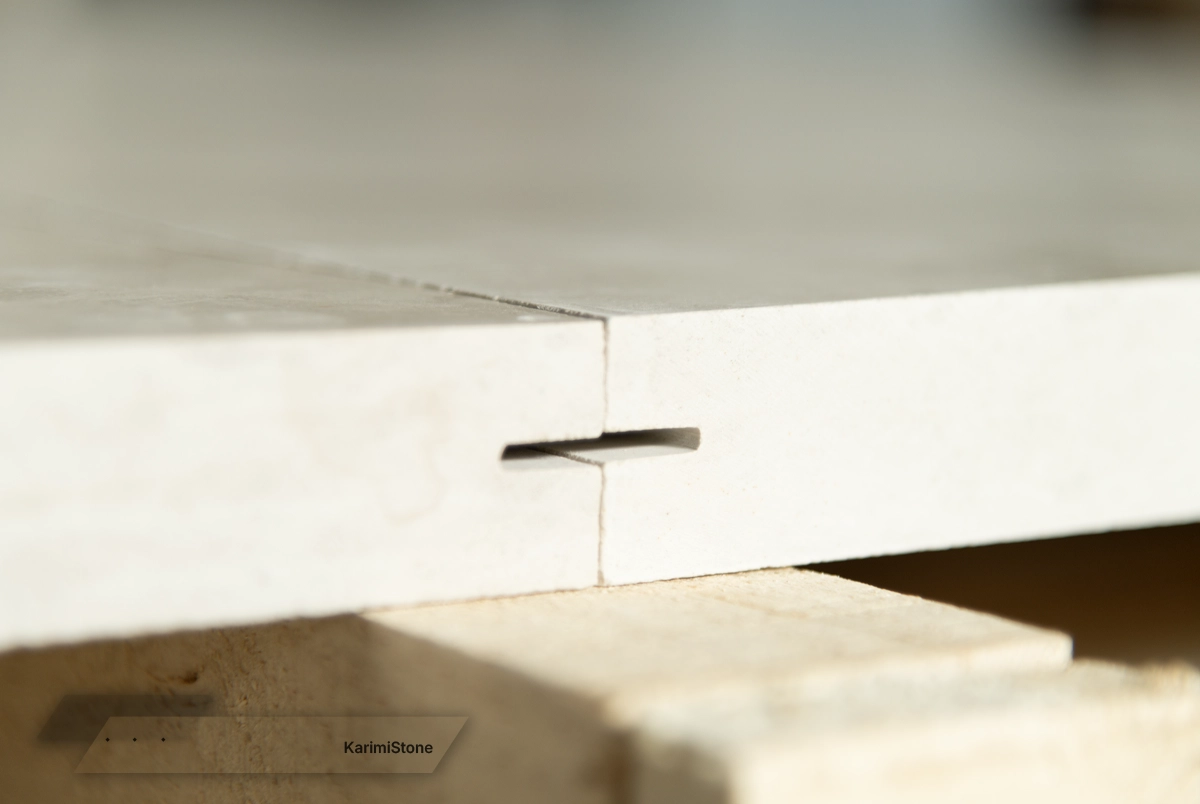
Gohare Limestone Honed can be packed in wooden crates, pallets, wooden bundles or reinforced metal-supported packaging according to the dimensions and weight of the order.
For samples, technical documents, custom dimensions and export information, visit the Gohare Honed product page or contact the Karimi Stone export department.
Frequently Asked Questions
What is Gohare Limestone Honed?
It is Gohare Limestone processed to create a smooth, flat and matte surface without a reflective polish.
Is Gohare Limestone Honed white?
It is commercially known as White Gohare, but its natural colour usually ranges from off-white and light cream to beige or greyish cream.
Is Gohare a marble?
No. It is geologically classified as limestone, although it may sometimes be commercially compared with marble.
Can it be used on exterior façades?
Yes, after evaluating the climate, stone thickness, mechanical anchoring, drainage and relevant laboratory tests.
Is it suitable for CNC processing?
Yes. Its fine-grained structure is suitable for many CNC-carved and profiled architectural elements.










One Response
Это отличный доломит для фасада. Ваша фабрика очень хорошо выполняет распил. Продолжайте в том же духе!