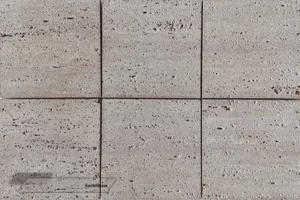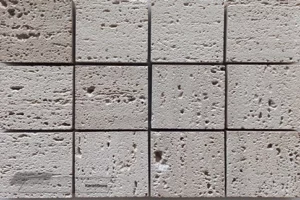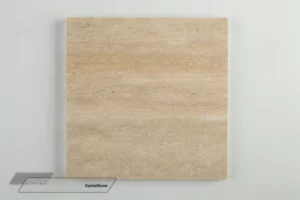
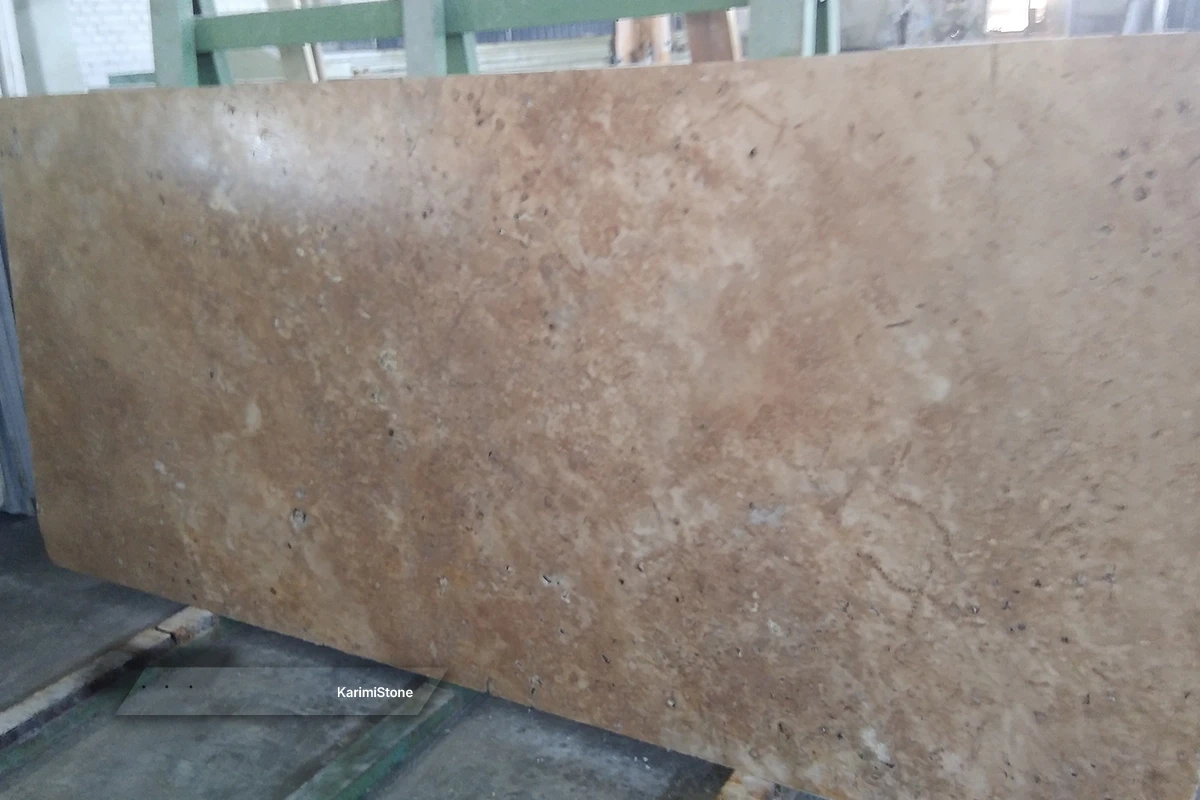
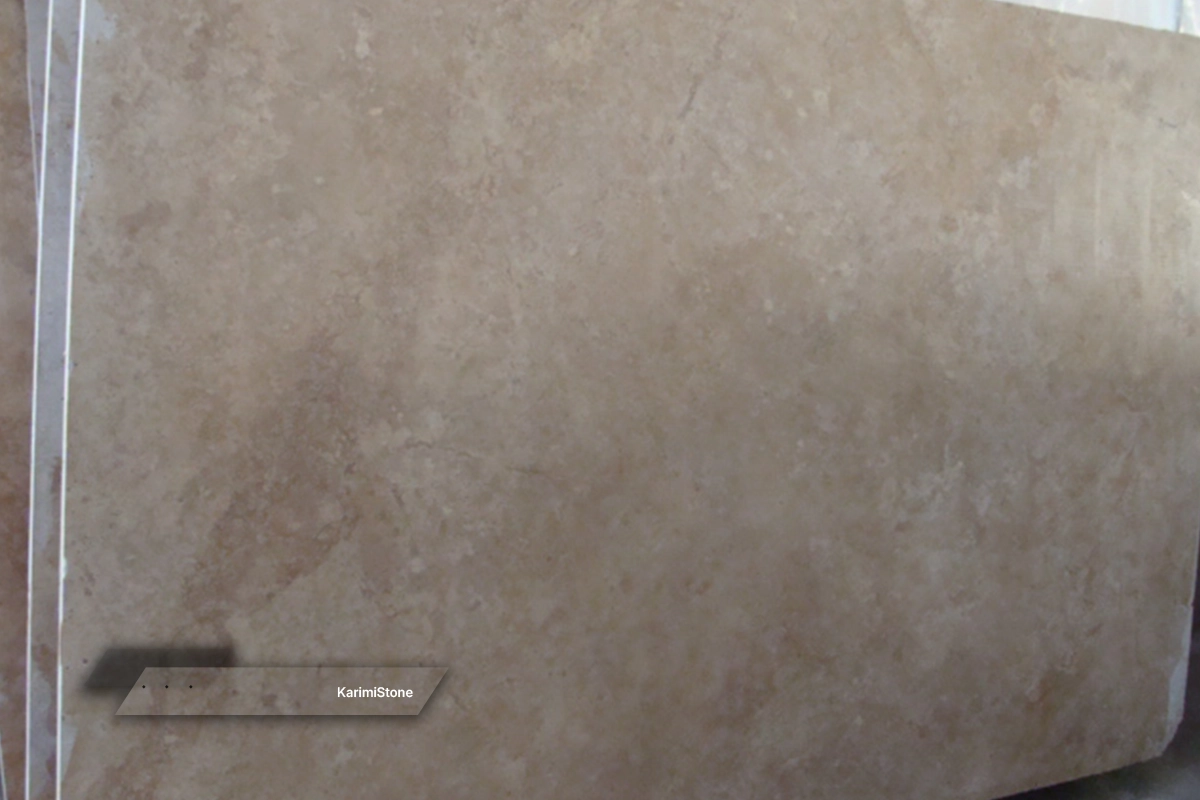
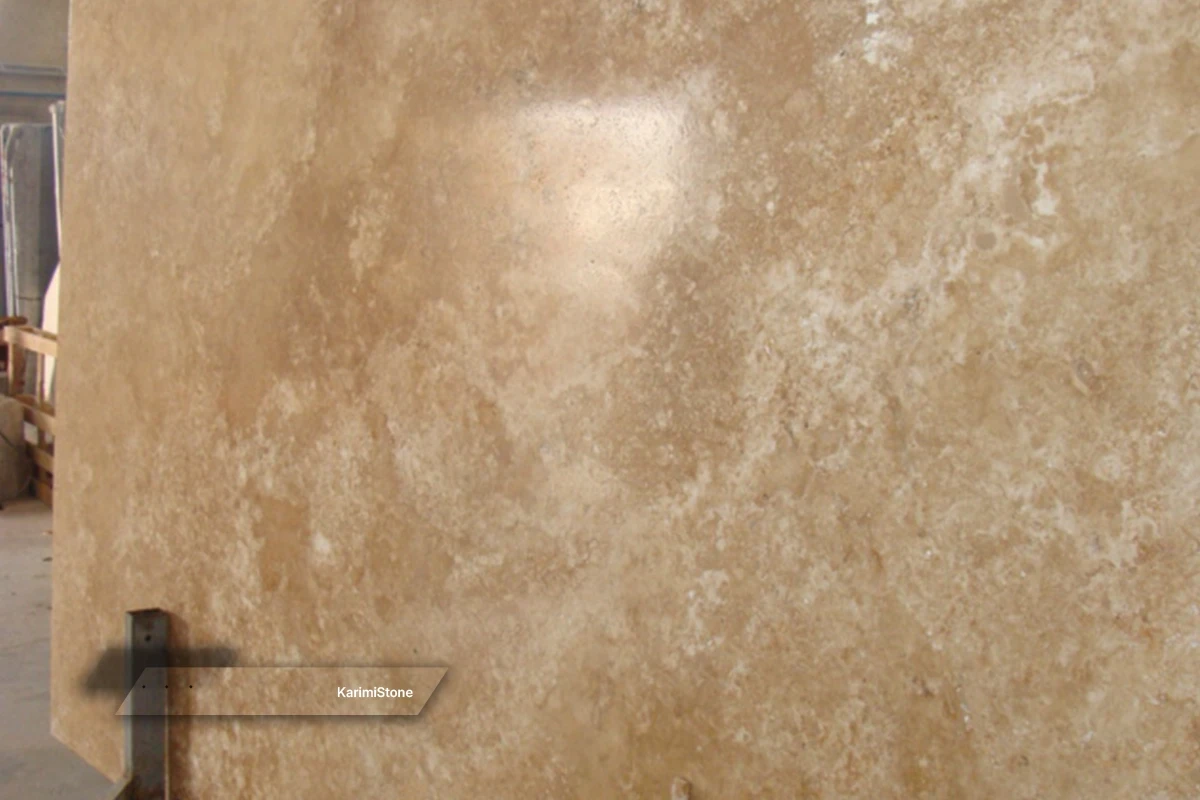
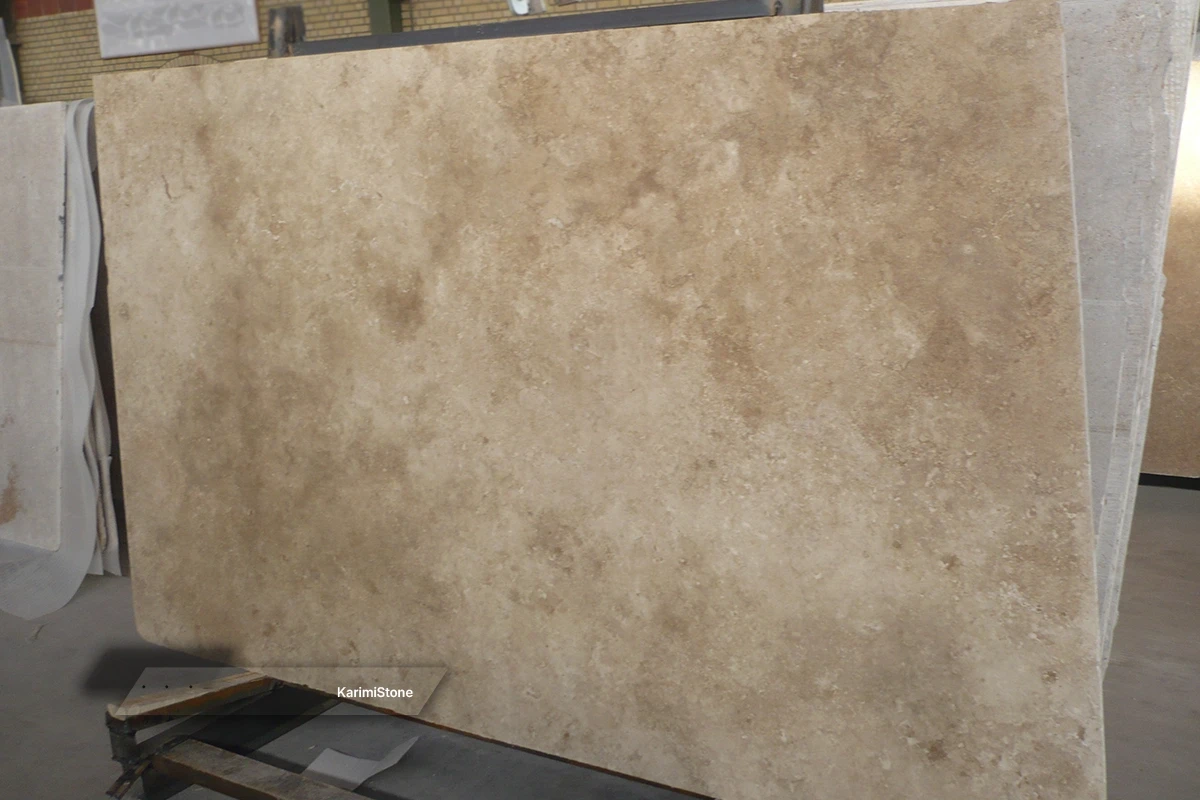

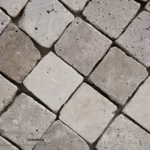

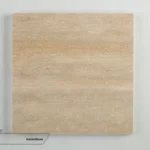
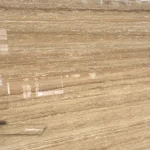
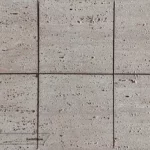
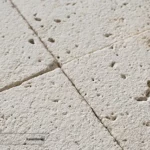
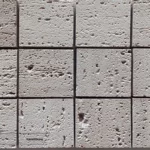

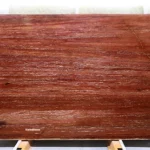
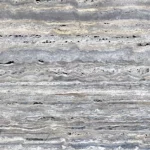
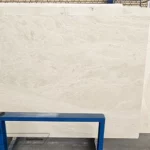
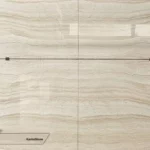
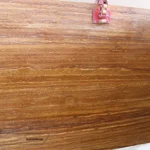













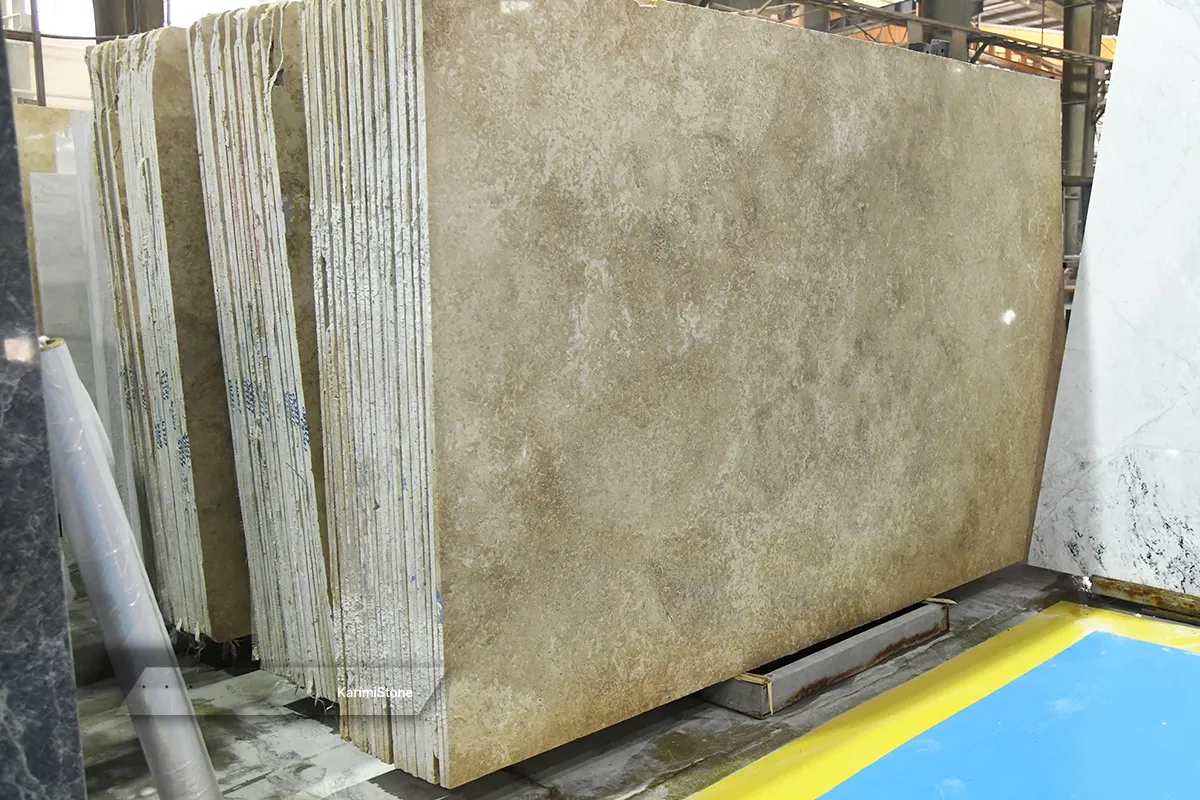
Beige Travertine Polished Cross-Cut is an Iranian natural stone characterized by warm cream-to-beige colors, natural pores, a smooth reflective surface, and a soft non-directional mineral pattern. The combination of Cross-Cut production and a polished finish enhances the natural depth of the stone while maintaining the calm and balanced appearance associated with Beige Travertine.
Cross-Cut production reveals the natural structure of travertine as cloudy, rounded, flowing, and irregular mineral patterns rather than long directional bands. Polishing refines the face of the stone and increases reflection, making cream, beige, honey, white, and light brown details appear deeper and more defined.
With its elegant surface and neutral color palette, Beige Travertine Polished Cross-Cut is particularly suitable for interior wall cladding, hotel lobbies, reception areas, villas, residential interiors, commercial spaces, decorative architectural elements, and selected interior flooring applications.
What Is Beige Travertine Polished Cross-Cut?
Beige Travertine Polished Cross-Cut is natural Beige Travertine cut across its sedimentary layers and progressively polished to create a smooth and reflective surface.
These two production choices influence the appearance in different ways. Cross-Cut creates a softer and less directional mineral pattern, while polishing increases surface clarity, color depth, and reflection.
The finished stone combines the natural porous identity of travertine with a more refined architectural appearance suitable for controlled interior environments.
What Is Beige Travertine?
Beige Travertine is a natural calcium-carbonate stone formed through mineral deposition from mineral-rich water.
During geological formation, calcium-rich water deposits minerals over time, forming the layers, natural pores, cavities, and tonal variations associated with travertine. The U.S. Geological Survey (USGS) describes travertine as calcium-carbonate material formed through precipitation from mineral-rich waters.
Typical characteristics of Beige Travertine include:
- Cream to beige background colors
- Natural pores and cavities
- White, honey, or light brown mineral movement
- Layered geological structure
- Warm visual character
- Natural tonal variation
- Ability to accept different surface treatments
These natural variations mean that each piece has its own geological character while remaining part of the same overall material family.
Color and Natural Appearance
Beige Travertine is valued for its calm and adaptable color range.
Depending on quarry source, extraction layer, and stone selection, the background may include:
- Light cream
- Ivory
- Pale beige
- Warm beige
- Honey-beige
- Soft brown areas
- White mineral markings
These differences are normally subtle rather than highly contrasting, allowing Beige Travertine to cover large architectural surfaces without creating excessive visual complexity.
After polishing, cream and beige colors appear deeper and more defined, while white, honey, and light brown mineral details become easier to see.
Explore other Iranian travertines in the Karimi Stone Travertine collection.
What Is a Polished Finish?
A polished finish is produced by progressively refining the stone surface with increasingly fine abrasives until a smooth and reflective face is achieved.
Polishing reduces surface roughness and increases visual depth. On Beige Travertine, this can make natural colors richer and mineral patterns more distinct.
A well-produced polished surface can create:
- A smooth and refined face
- Higher surface reflection
- Deeper-looking beige tones
- More visible mineral patterns
- Greater distinction between light and dark areas
- Stronger interaction with architectural lighting
Polished Beige Travertine is therefore particularly suitable for decorative interiors where the appearance of the natural material is an important part of the design.
To compare Polished with Honed, Brushed, Sandblasted, and other finishes, visit the Natural Stone Surface Finishes section.
How Polishing Changes Beige Travertine
Polishing affects both the physical appearance of the surface and the way the stone responds to light.
Important production factors include:
- Abrasive sequence
- Final polishing level
- Machine pressure
- Processing speed
- Natural stone structure
- Quality and color of pore filling
For large architectural orders, consistency of gloss is important. Different polishing levels between tiles or slabs may become clearly visible after installation.
Professional production should therefore maintain a consistent degree of reflection across the complete project order.
What Is Cross-Cut Beige Travertine?
In Cross-Cut production, the travertine block is sawn across its natural sedimentary layers.
This cutting direction produces a softer and less directional appearance than Vein-Cut.
Instead of long parallel mineral bands, Cross-Cut Beige Travertine may display:
- Cloud-like patterns
- Rounded mineral formations
- Flowing natural movement
- Irregular cream and beige areas
- Honey-colored details
- White and light brown mineral markings
Once polished, these natural forms become clearer and develop greater visual depth while maintaining the balanced appearance of Beige Travertine.
Polished Cross-Cut vs. Honed Cross-Cut
Both products use the same Cross-Cut direction, but the surface finish creates a significantly different architectural effect.
Polished Cross-Cut has higher reflection, deeper-looking color, and stronger definition of mineral details.
Honed Cross-Cut has a smoother matte appearance with less reflection and a softer visual character.
Polished material is generally preferred where richness, reflection, and decorative impact are important, while Honed material is often selected when a more restrained and low-reflection surface is required.
Natural Pores in Beige Travertine
Natural pores and cavities are characteristic features of travertine.
They can vary in:
- Size
- Depth
- Shape
- Frequency
- Distribution
Some selections contain smaller and more evenly distributed pores, while others show larger cavities.
For polished products, pore treatment is particularly important because the refined reflective surface makes differences and imperfections easier to see.
Filling Beige Travertine
Natural pores can be filled before final polishing when a more continuous surface is required.
Common filling systems include:
- Resin
- Epoxy
- UV-based fillers
The amount and color of filling should be selected carefully.
A highly filled surface can create a cleaner visual appearance, while retaining part of the natural pore structure can preserve more of the traditional travertine character.
On a polished surface, poorly matched filler may become more visible because reflection emphasizes differences in color and texture.
Lighting and the Polished Surface
One of the distinctive characteristics of Beige Travertine Polished Cross-Cut is its interaction with light.
Polishing can emphasize:
- Fine mineral changes
- Cream-to-beige transitions
- Honey-colored areas
- White mineral details
- Natural cloudy patterns
- Subtle tonal variation
Direct architectural lighting can increase reflection, while softer natural light may emphasize tonal depth and mineral movement.
Lighting should therefore be considered when polished travertine is specified for large walls, hotel interiors, lobbies, and floors.
Applications of Beige Travertine Polished Cross-Cut
Interior Wall Cladding
Interior wall cladding is one of the most suitable applications for this material.
Possible uses include:
- Hotel lobby walls
- Reception areas
- Residential feature walls
- Commercial interiors
- Office entrances
- Decorative panels
- Interior columns
The polished surface adds visual depth, while the warm beige background maintains a balanced architectural character.
Hotels and Hospitality Projects
Beige Travertine works particularly well in hospitality interiors because its neutral colors combine naturally with wood, glass, metal, dark marble, light natural stone, and decorative lighting.
Typical applications include hotel entrances, lobby walls, reception areas, corridors, and decorative architectural features.
Residential Interiors
Beige Travertine Polished Cross-Cut can create an elegant natural-stone surface in residential architecture.
Possible uses include living-room feature walls, entrance areas, fireplace surrounds, interior wall panels, decorative frames, stair walls, and villa interiors.
Interior Flooring
Suitable material can also be considered for selected indoor flooring applications, including residential floors, hotel interiors, lobby floors, commercial interiors, corridors, and entrance halls.
Because a polished surface is relatively smooth, projects with specific slip-resistance requirements should evaluate the actual finished product rather than assuming performance from the finish name.
Decorative Architectural Elements
Polishing is particularly effective on decorative products because it enhances natural color and mineral movement.
Possible products include:
- Fireplace surrounds
- Decorative wall pieces
- Columns
- Architectural frames
- Borders
- Custom stone panels
- Interior architectural details
Sorting and Material Selection
There is no single universal visual grading system for all Beige Travertine.
Project selection commonly considers:
- Background color
- Tone consistency
- Natural Cross-Cut pattern
- Pore size
- Pore distribution
- Filling quality
- Polishing consistency
- Surface reflection
- Overall visual compatibility
For polished stone, consistency of gloss is particularly important because differences in reflection can be as noticeable as variations in color.
For larger projects, an approved representative visual range should therefore be established before full production.
Why Choose Beige Travertine Polished Cross-Cut?
- Warm natural colors: Cream and beige tones complement many interior styles.
- Refined polished surface: Creates a smooth and reflective appearance.
- Enhanced color depth: Polishing makes natural tones and mineral movement more pronounced.
- Soft Cross-Cut pattern: Creates a cloud-like and non-directional appearance.
- Natural stone identity: Pores and mineral variation remain part of the stone.
- Suitable for large surfaces: The balanced pattern works particularly well on interior walls.
- Architectural versatility: Suitable for hotels, villas, commercial interiors, residences, and decorative elements.
- Project selection: Tone, pattern, pore range, filling, and polishing level can be coordinated before production.
Frequently Asked Questions
What is Beige Travertine Polished Cross-Cut?
It is natural Beige Travertine cut across its geological layers and polished to create a smooth reflective face with a soft, non-directional mineral pattern.
What does polishing do to Beige Travertine?
Polishing creates a smoother and more reflective surface while increasing the visual depth of natural colors and mineral patterns.
What does Cross-Cut mean?
Cross-Cut means the travertine block is sawn across its sedimentary layers, producing cloud-like, rounded, and less directional patterns.
What is the difference between Polished and Honed Beige Travertine?
Polished Travertine is more reflective and gives colors greater visual depth, while Honed Travertine has a smoother matte appearance with lower reflection.
Does Beige Travertine naturally contain pores?
Yes. Natural pores and cavities are defining characteristics of travertine.
Can the pores be filled?
Yes. Resin, epoxy, or other suitable filling materials can be used before final polishing according to the required appearance.
Can polished Beige Travertine be used for walls?
Yes. It is particularly suitable for interior walls, hotel lobbies, reception areas, villas, residential interiors, and decorative wall applications.
Can it be used for flooring?
Yes, suitable material can be considered for selected indoor floors. Where slip resistance is important, the actual finished product should be tested according to the project requirements.
Is polished travertine suitable for exterior paving?
Polished finishes are generally better suited to controlled interior environments. Exterior paving should be specified according to climate, friction requirements, installation conditions, and technical performance.
Beige Travertine Polished Cross-Cut by Karimi Stone
Karimi Stone produces, processes, supplies, and exports Iranian natural stone for residential, commercial, hospitality, and architectural projects.
For Beige Travertine Polished Cross-Cut orders, material can be selected according to beige tone, natural Cross-Cut pattern, pore structure, filling quality, dimensions, thickness, and required polishing level.
Production can include controlled polishing, Cross-Cut processing, project-based sorting, custom dimensions and thicknesses, surface-quality inspection, quality control, export-grade packaging, and international project supply.
With its warm beige colors, natural pores, reflective polished surface, and balanced Cross-Cut movement, Beige Travertine Polished Cross-Cut offers a refined Iranian natural stone solution for interior walls, hotels, villas, commercial interiors, decorative architectural elements, and selected flooring applications.