













Red Travertine Polished
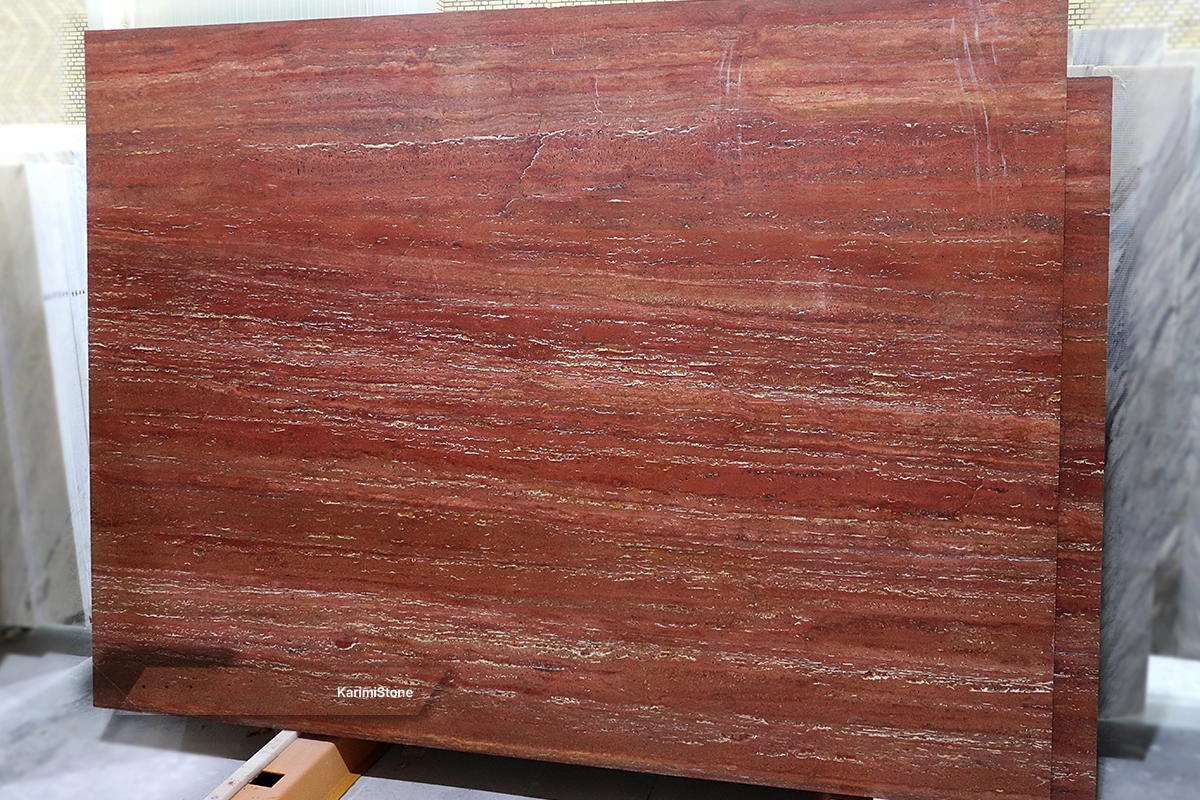
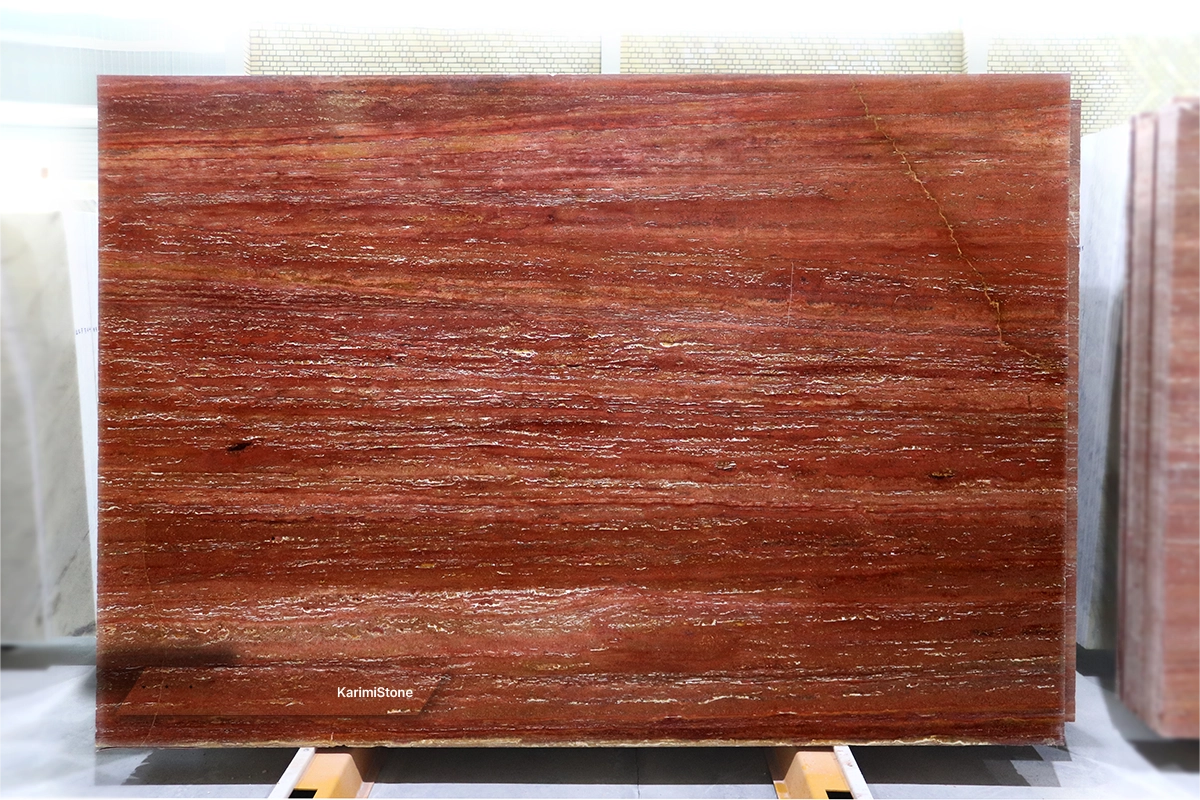
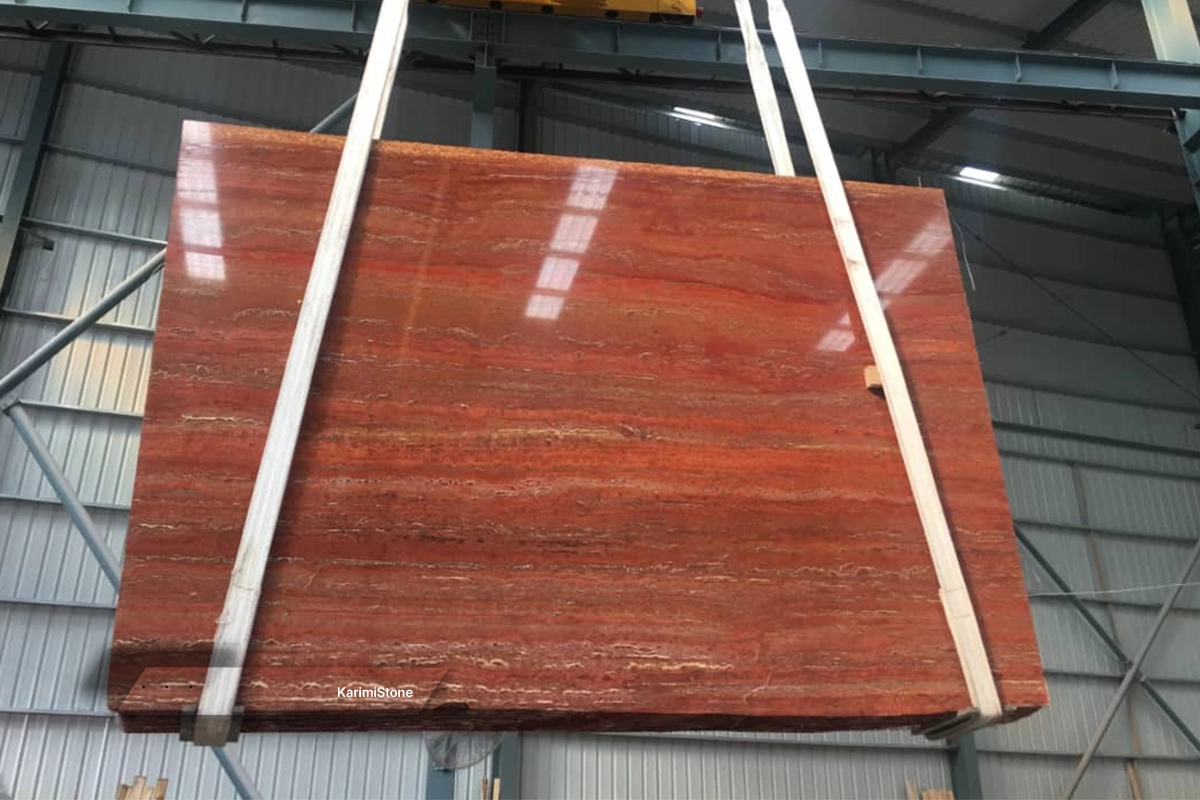
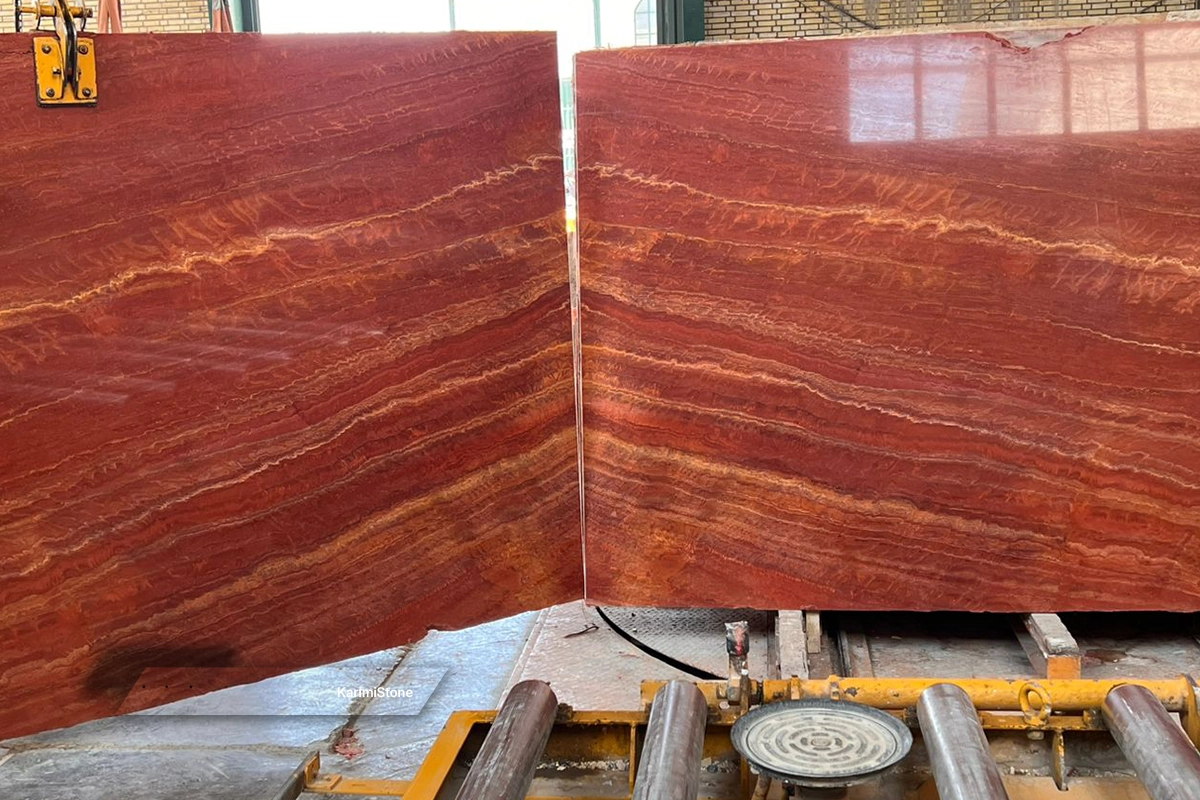
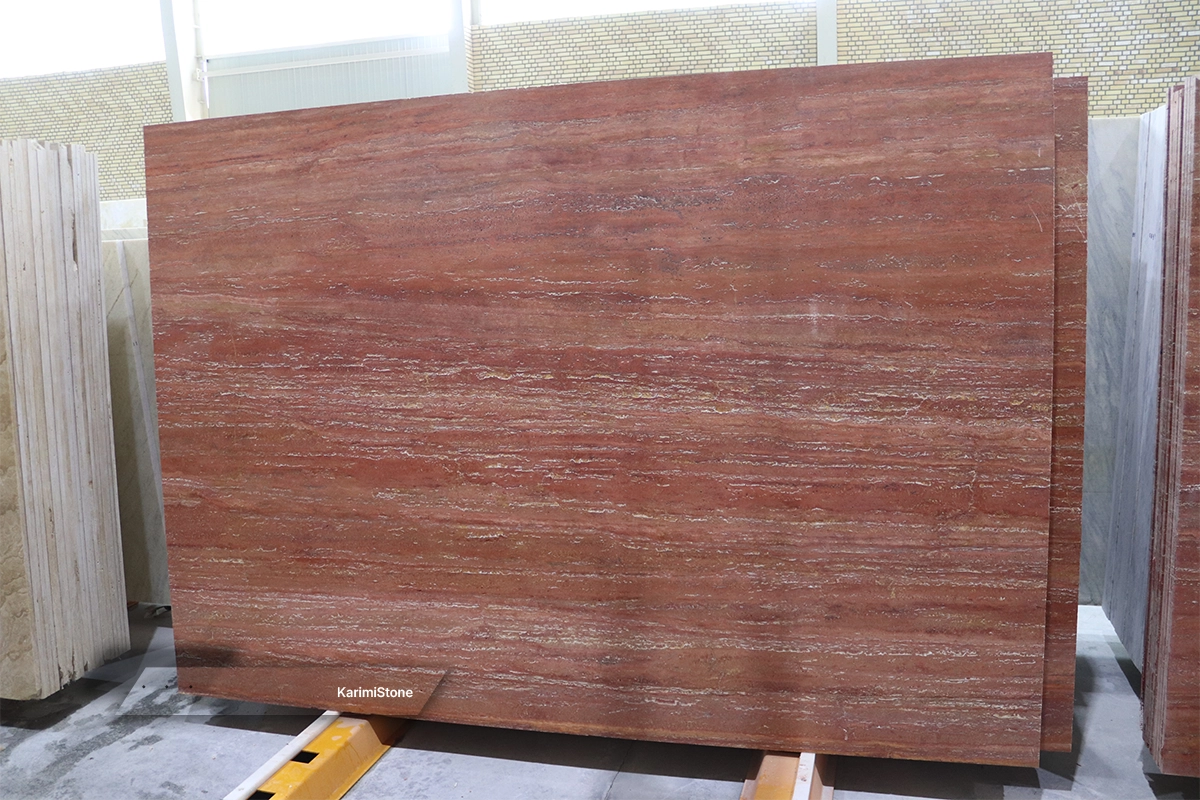
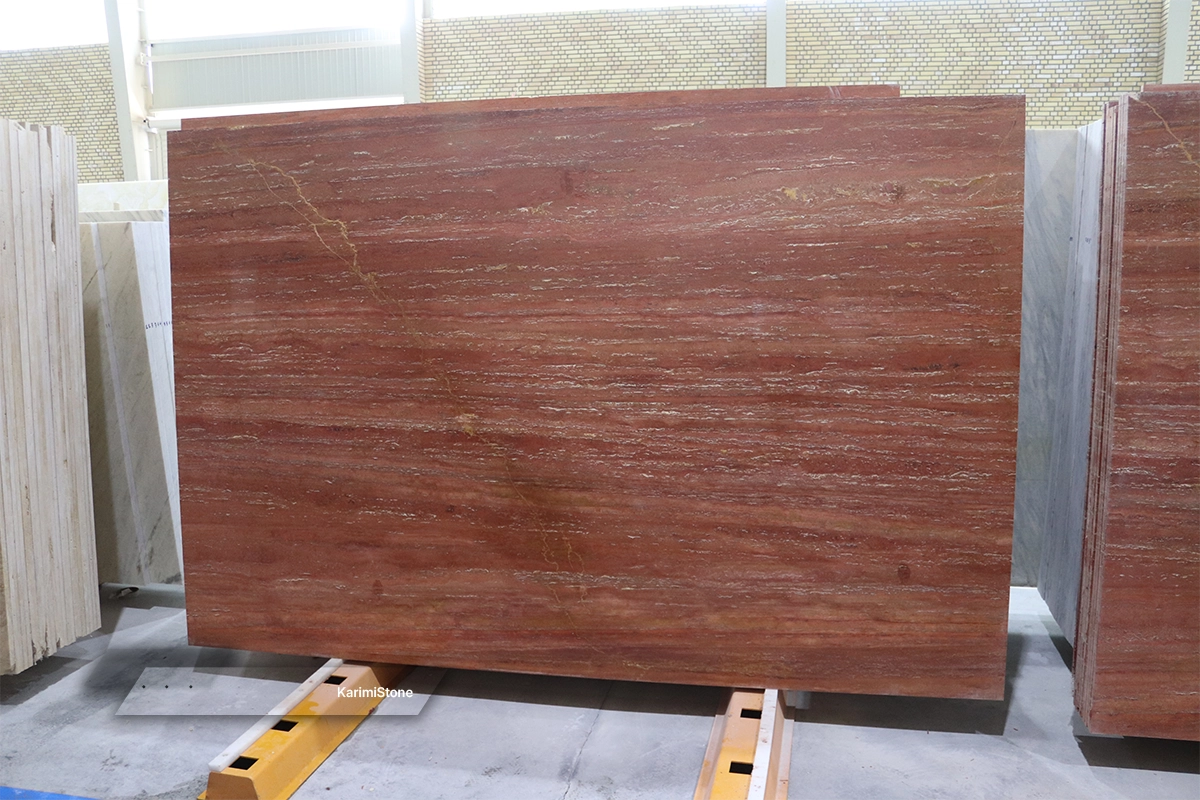
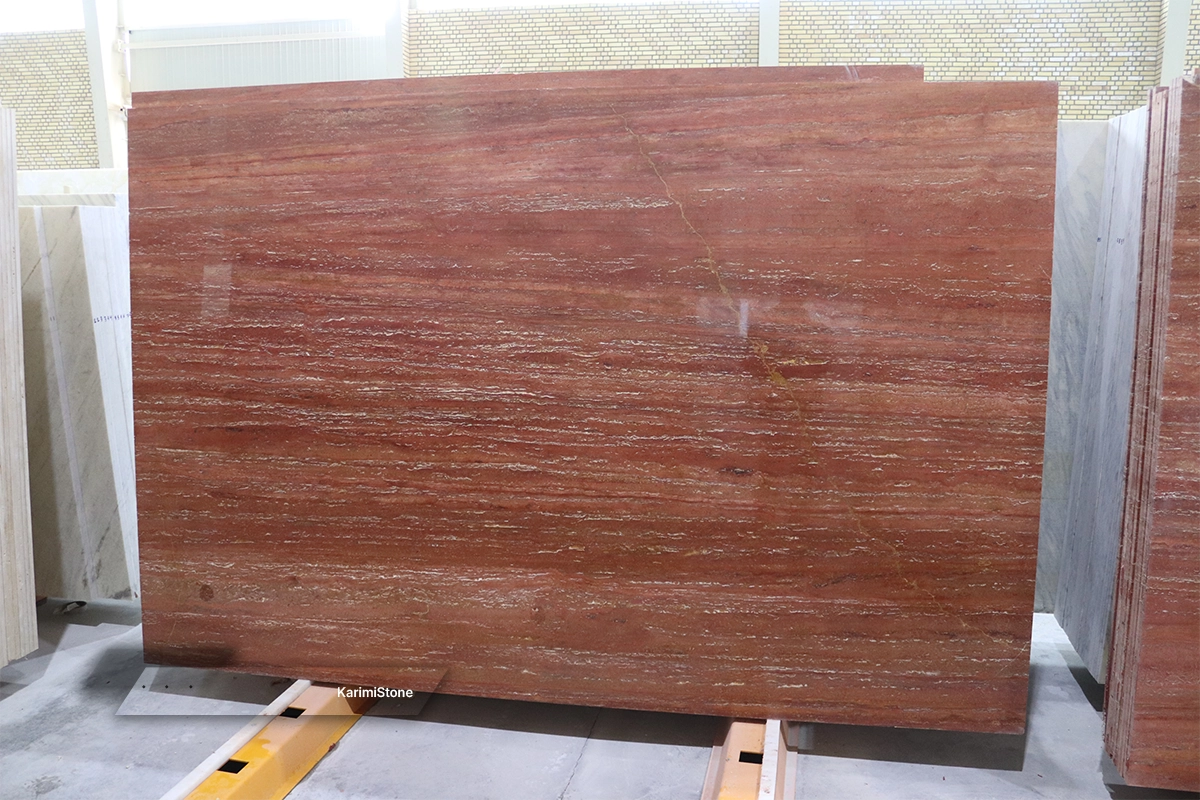
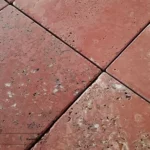
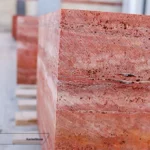
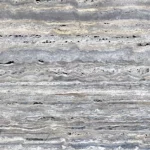
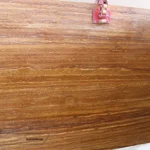
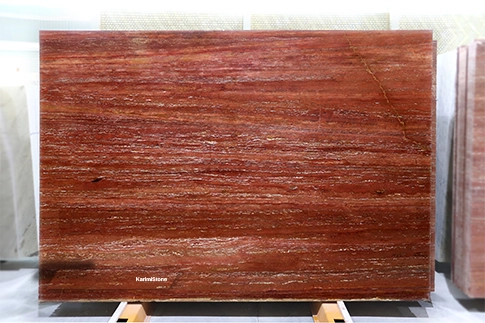
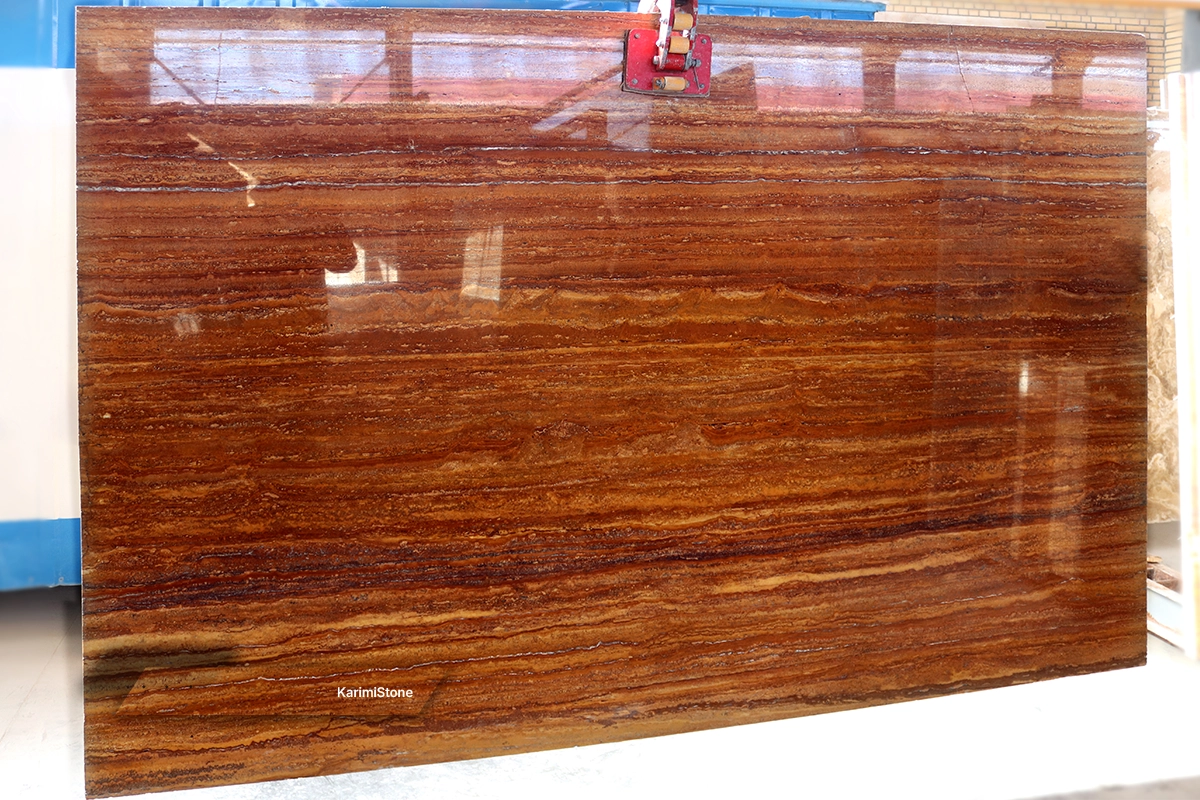
Red Travertine Polished is an Iranian natural stone with a rich red background, contrasting mineral veins and a smooth reflective surface. Filling and polishing bring out the red, orange, white, cream, grey and brown tones within the stone while creating a surface suitable mainly for interior architectural applications.
Iranian Red Travertine is primarily associated with quarrying regions such as Azarshahr in East Azerbaijan Province. Its distinctive color is linked to naturally occurring iron compounds within its calcium-carbonate structure.
Natural Characteristics of Red Travertine Polished
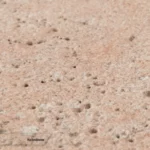
Red Travertine is a sedimentary natural stone formed through the deposition of calcium-carbonate minerals. Its open pores, layered structure and variations in color are natural characteristics of travertine.
- Natural red color: tones may range from brick red to darker red and brown.
- Mineral veins: white, cream, grey and brown bands may appear across the surface.
- Natural pores: the cavities are normally filled before polishing.
- Reflective surface: polishing increases light reflection and color contrast.
- Different cutting patterns: the stone can be produced in vein-cut or cross-cut form.
- Multiple production formats: slabs, tiles, wall panels, steps and custom pieces are available.
How Is the Polished Finish Produced?
The production of Red Travertine Polished requires controlled filling, grinding and polishing. The main stages normally include:
- Block selection: checking color, cracks, bedding and structural condition.
- Primary sawing: producing slabs or strips in vein-cut or cross-cut direction.
- Drying and inspection: preparing the surface for filling and identifying open pores.
- Filling: applying compatible resin- or cement-based material to selected cavities.
- Grinding: flattening and calibrating the surface with abrasive tools.
- Polishing: using progressively finer abrasives to create the required reflection.
- Final inspection: checking gloss, filling, dimensions, cracks, edges and color range.
The filling material and its color should be approved through a physical sample. The filler must be compatible with the stone and intended application.
Vein-Cut and Cross-Cut Patterns
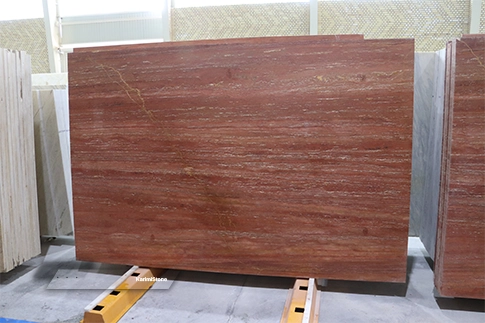
Vein-cut Red Travertine
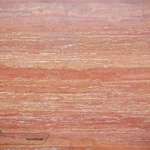
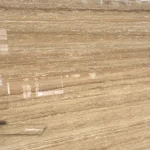
In vein-cut production, the block is sawn parallel to its natural bedding. This creates long and relatively parallel mineral bands. The polished surface increases the contrast between the red background and lighter veins.
Cross-cut Red Travertine
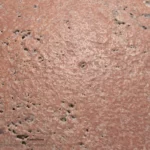
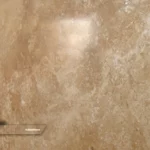
In cross-cut production, the block is cut across its natural layers. This normally creates cloudy, circular and irregular patterns. Cross-cut pieces are suitable for projects where a less directional pattern is required.
Advantages of Red Travertine Polished
- Displays deeper color and stronger contrast than matte finishes
- Provides a smooth surface that is easy to wipe clean
- Reflects light in interior spaces
- Works as a primary stone or a contrasting architectural element
- Can be matched with cream, beige, grey, white and black stones
- Can be produced in book-matched arrangements when suitable slabs are available
Applications
Red Travertine Polished is generally recommended for interior and protected areas:
- Interior wall cladding
- Hotel lobbies and reception areas
- Decorative wall panels
- Columns and architectural details
- Fireplace surrounds
- Elevator floors and walls
- Residential flooring in suitable low- or medium-traffic areas
- Interior steps and risers
- Countertops and vanity tops with appropriate sealing and maintenance
A polished surface can become slippery when wet. For wet floors, entrances or exterior paving, another finish and project-specific slip testing should be considered.
Installation and Sealing
- Use a white or suitable light-colored adhesive when required to avoid changing the stone’s appearance.
- Use mortar, adhesive and grout compatible with calcareous natural stone.
- Apply a compatible penetrating sealer in areas exposed to moisture or staining.
- Remember that sealing reduces absorption but does not make travertine waterproof.
- Use mechanical anchors for large wall panels when required by engineering calculations.
- Test filler, adhesive, grout and sealer on a sample before full installation.
- Protect the polished surface during installation and nearby construction work.
Cleaning and Maintenance
Clean Red Travertine Polished with a soft cloth and a pH-neutral cleaner intended for limestone or travertine. Do not use vinegar, acidic cleaners, abrasive powders or rough cleaning pads. Remove spills promptly and renew the sealer when required by use and product instructions.
Additional care guidance is available from the Natural Stone Institute.
Available Production Formats
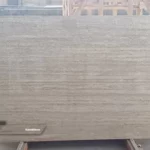
- Polished slabs
- Standard and custom tiles
- Free-length strips
- Wall panels
- Steps and risers
- Skirting and decorative borders
- Custom cut-to-size components
Production and Export by Karimi Stone
Negin Sang Karimi (Karimi Stone) produces, supplies and exports Iranian natural stone. Production control includes block selection, sawing, filling, polishing, dimensional cutting, visual sorting and export packaging.
Each batch of Red Travertine Polished is checked for dimensions, thickness, gloss level, filling quality, visible cracks, edge condition and approved color range. Export orders are protected with suitable separators and reinforced wooden crates.
For samples, technical information or a quotation for Red Travertine Polished, visit the Karimi Stone contact page.
Frequently Asked Questions
Is Red Travertine Polished suitable for outdoor paving?
It is generally not the preferred finish for exposed or wet paving because the reflective surface can become slippery. A textured finish may be more suitable.
Are the natural pores filled?
Most polished travertine is filled before polishing. The filler type, color and percentage of open pores should be specified in the order.
Is it available in vein-cut and cross-cut patterns?
Yes. Availability depends on the selected blocks, required dimensions and current production stock.
Does polished Red Travertine require sealing?
Sealing is recommended where the stone may contact water, food, oil, cosmetics or staining substances.