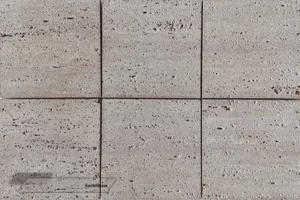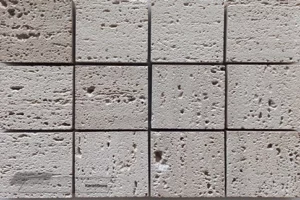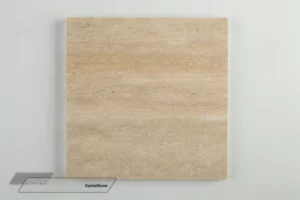
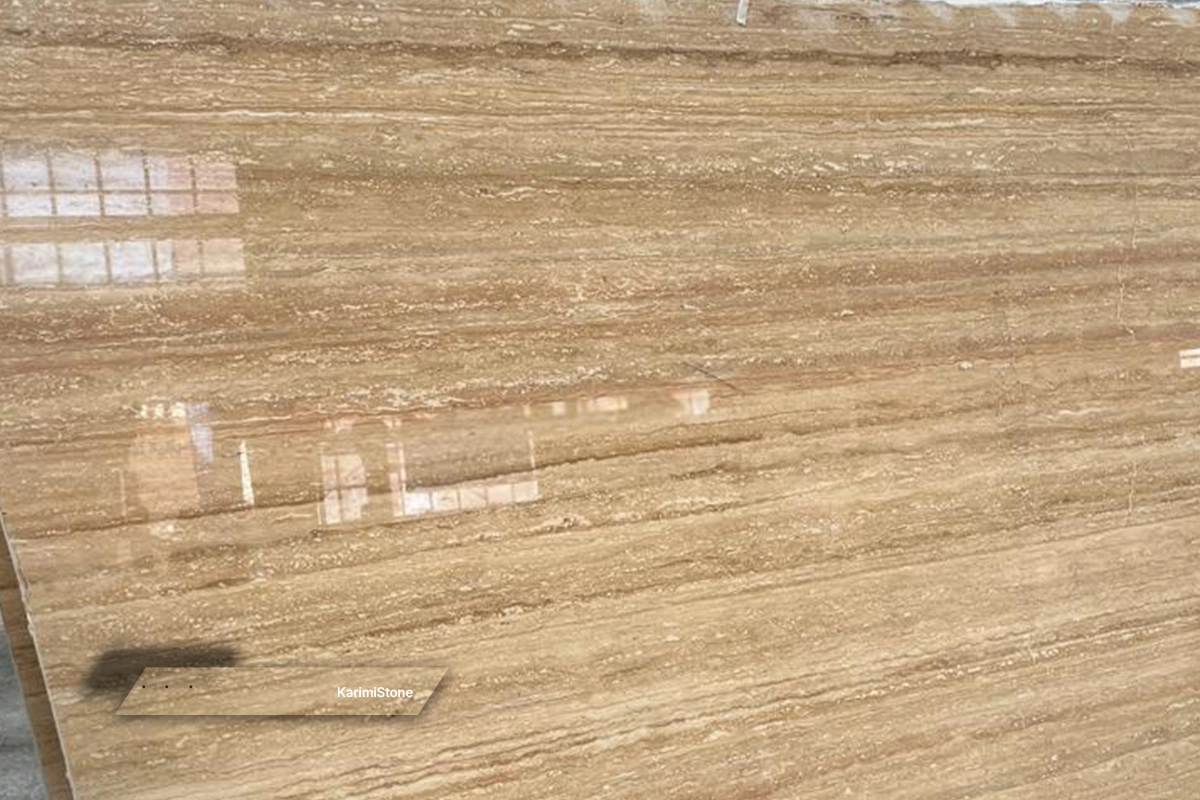
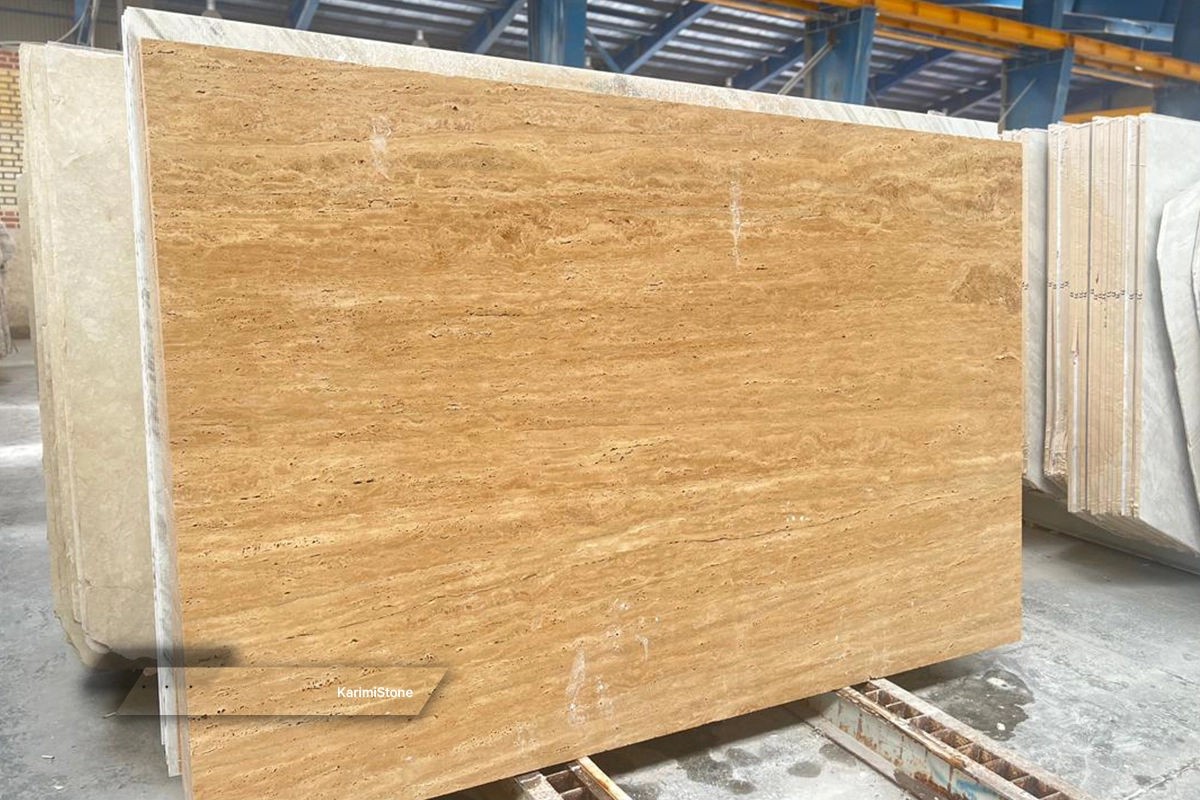
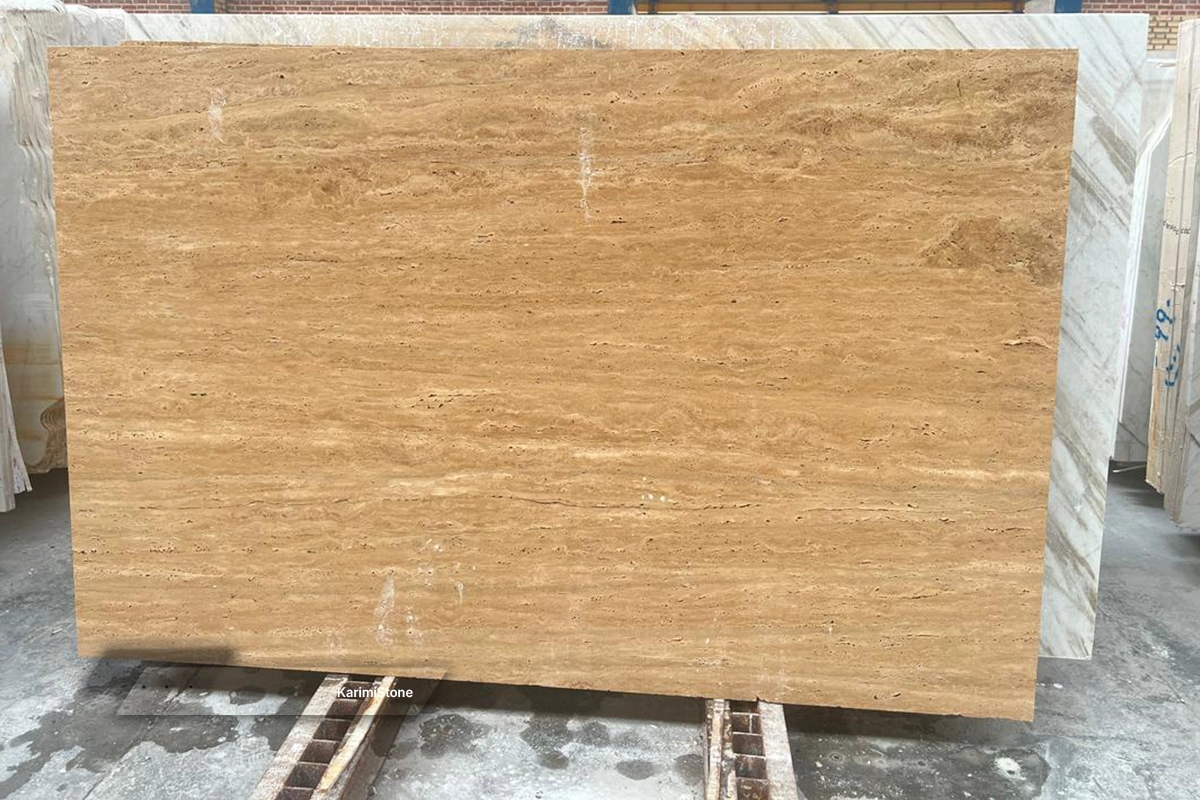
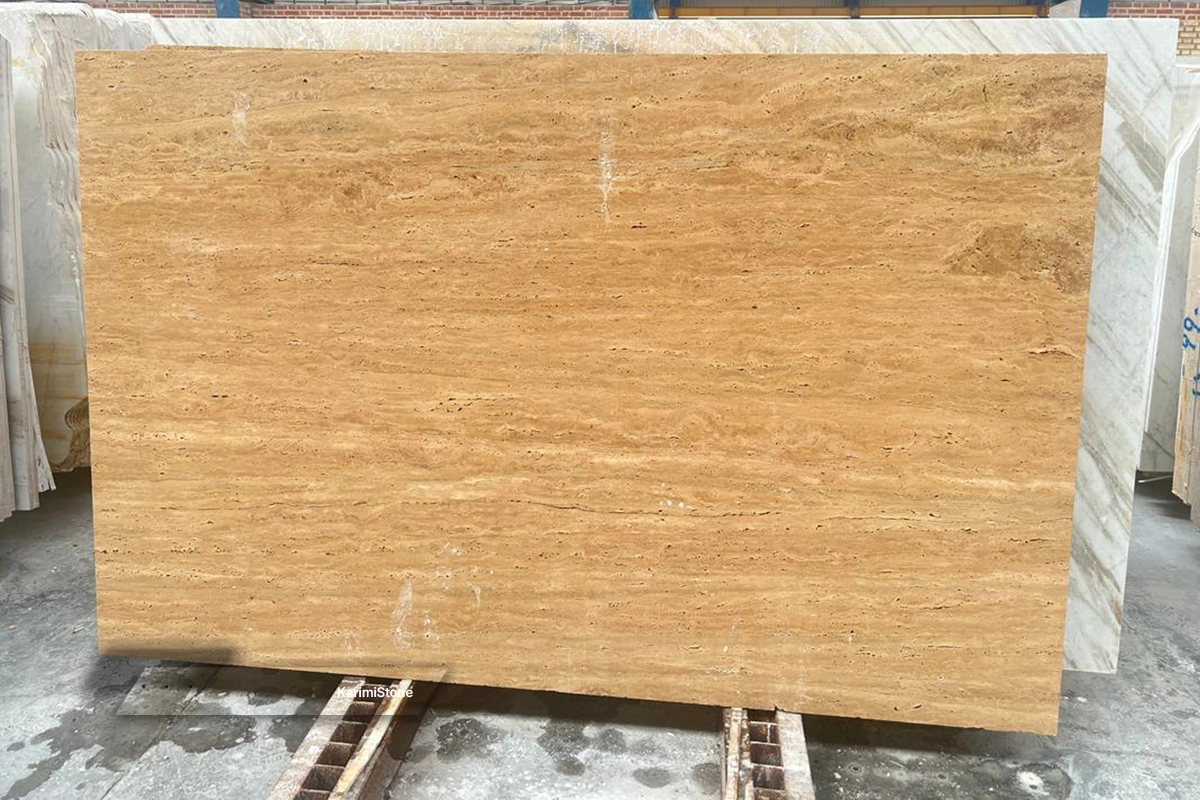
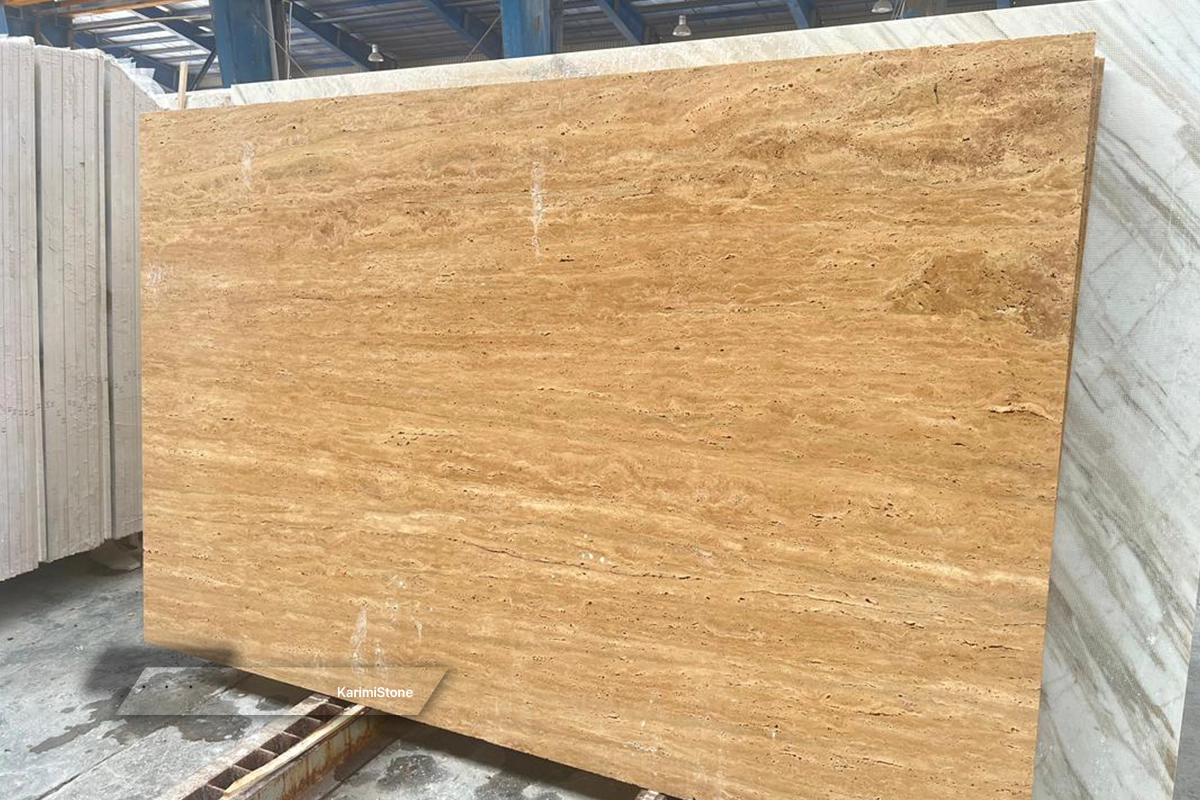
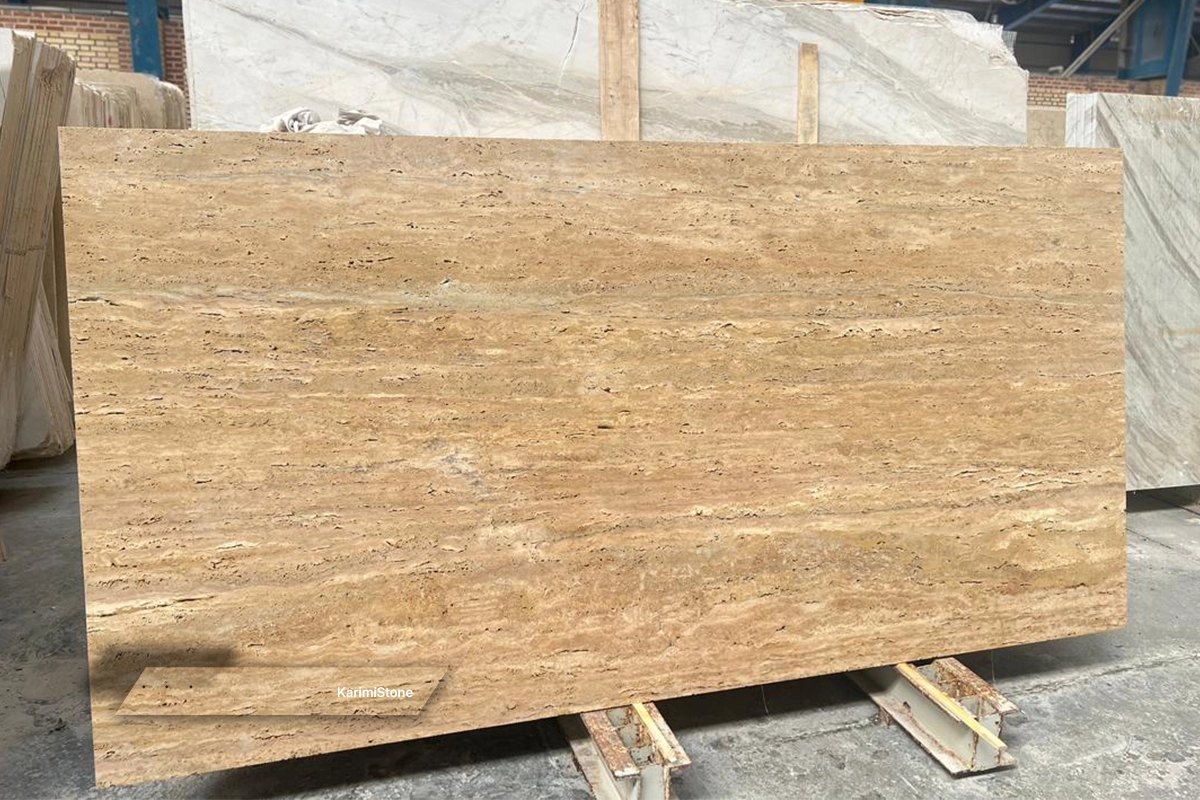
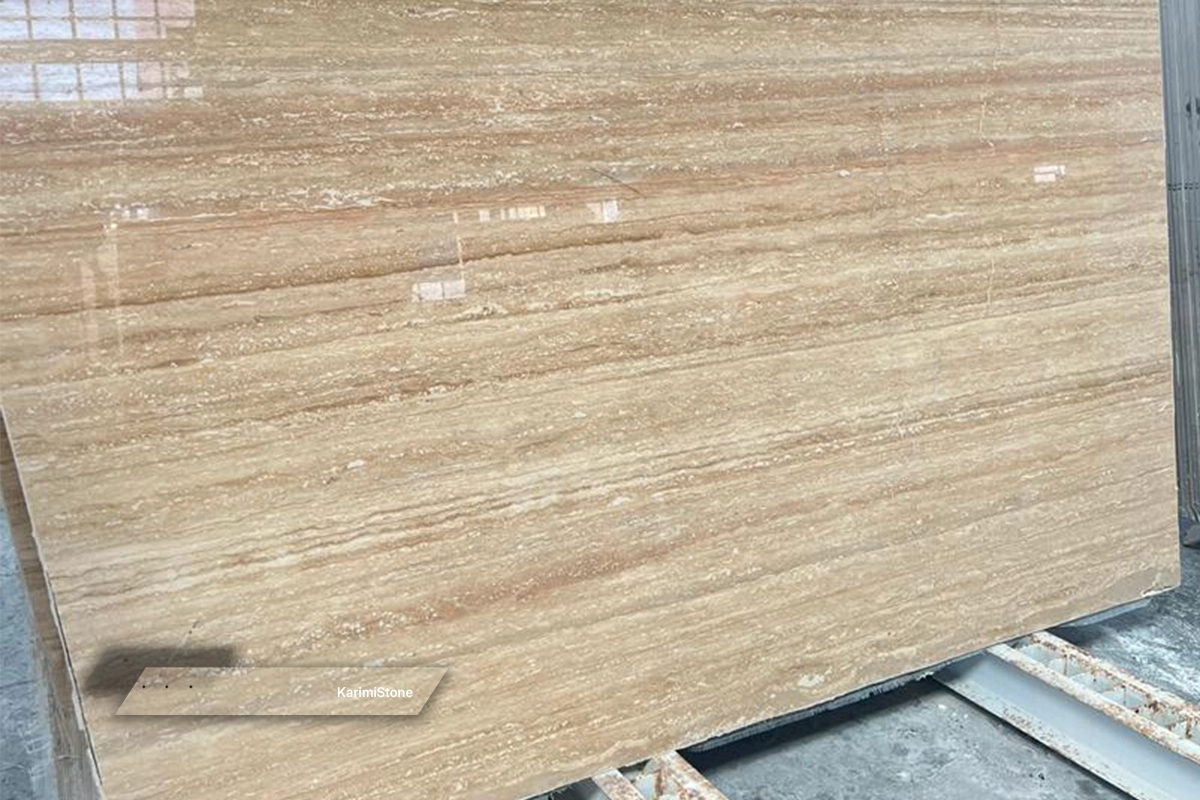

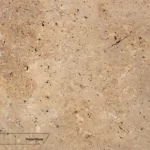
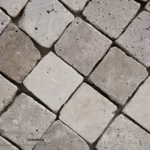

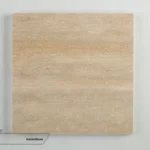
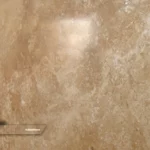
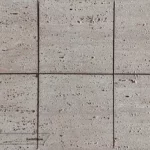
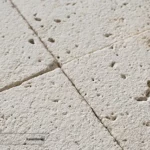
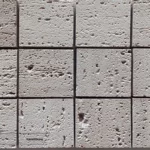

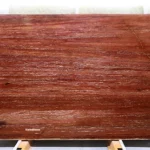
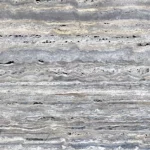
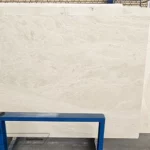
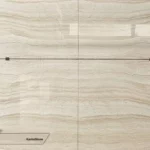
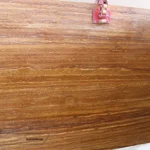














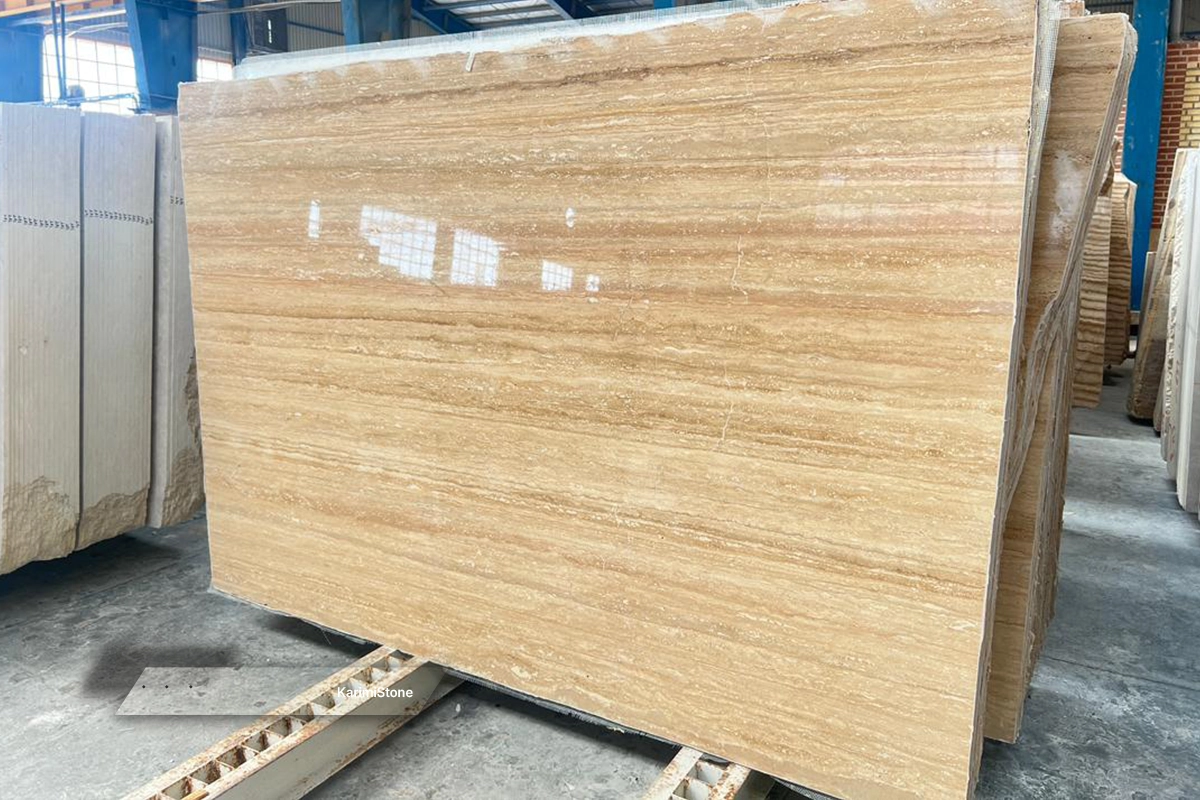
Beige Travertine Polished Vein-Cut is an Iranian natural stone characterized by warm cream and beige colors, natural pores, long directional mineral bands, and a smooth reflective surface. The combination of a Vein-Cut pattern and polished finish emphasizes the natural layered structure of the travertine while giving the stone greater color depth and a refined architectural appearance.
In Vein-Cut production, the stone is cut in a direction that exposes its natural bedding and mineral structure as long, relatively continuous bands. These lines may appear in cream, beige, white, honey, and light brown tones. Polishing makes the bands clearer and more visually pronounced by increasing surface reflection and enhancing the natural colors of the stone.
With its linear pattern and elegant polished face, Beige Travertine Polished Vein-Cut is particularly suitable for interior walls, hotel lobbies, reception areas, villas, decorative panels, staircases, elevator walls, selected interior flooring, and architectural projects where the direction of the natural stone pattern is part of the design.
What Is Beige Travertine Polished Vein-Cut?
Beige Travertine Polished Vein-Cut is natural Beige Travertine processed to combine a directional mineral pattern with a smooth and glossy surface.
The Vein-Cut direction exposes the stone’s layered geological structure as long natural bands. The polishing process then progressively refines the exposed face until the surface becomes smooth and reflective.
Together, these processes create a material with a strong linear identity, enhanced color depth, visible natural pores, and an elegant architectural finish.
What Is Beige Travertine?
Beige Travertine is a natural calcium-carbonate stone formed through mineral precipitation from water.
During geological formation, mineral-rich water gradually deposits calcium-carbonate material, creating layers, natural pores, cavities, and variations in density and color.
The U.S. Geological Survey (USGS) describes travertine as calcium-carbonate material associated with precipitation from mineral-rich water.
Typical characteristics of Iranian Beige Travertine include:
- Light cream to beige background colors
- White, honey, and light brown mineral bands
- Natural pores and cavities
- Layered geological structure
- Warm and neutral architectural character
- Natural tonal variation
- Ability to accept different surface treatments
Its neutral color allows the stone to work across large architectural surfaces without creating the visual heaviness associated with many darker natural stones.
Color and Natural Appearance
Beige Travertine normally has a soft and balanced natural palette.
Depending on quarry source, geological layer, and material selection, the stone may contain:
- Light cream
- Ivory beige
- Pale beige
- Warm beige
- Honey tones
- Light brown mineral bands
- White mineral lines
These natural colors become more visually pronounced after polishing. Beige tones can appear deeper, white mineral lines become easier to recognize, and subtle differences between individual geological layers become clearer.
Other Iranian travertines can be explored in the Karimi Stone Travertine collection.
What Is a Polished Finish?
A polished finish is created by progressively refining the stone surface with increasingly fine abrasives until a smooth, glossy, and reflective face is achieved.
Polishing affects more than surface shine. By changing how light interacts with the stone, it can increase the visual depth of the natural colors and mineral structure.
On Beige Travertine, polishing can create:
- A smooth and refined surface
- Higher light reflection
- Deeper-looking beige tones
- More visible white and brown mineral lines
- Greater definition between geological layers
- A more elegant architectural appearance
For comparison with Honed, Brushed, Sandblasted, and other treatments, see Karimi Stone’s Natural Stone Surface Finishes.
How Polishing Affects Beige Travertine
Polishing changes both the physical smoothness and the visual character of Beige Travertine.
The final appearance depends on several production factors:
- Abrasive sequence
- Final polishing level
- Machine pressure
- Processing speed
- Natural stone structure
- Pore-filling quality
For large architectural projects, polishing consistency is particularly important. If individual slabs or tiles have different gloss levels, variations in reflection may become clearly visible after installation.
What Is Vein-Cut Beige Travertine?
Vein-Cut is a cutting direction that exposes the natural layered and veined structure of travertine as long linear bands.
In Beige Travertine, these natural bands may appear in:
- Cream
- Beige
- White
- Honey
- Light brown
The result is a much more directional visual appearance than Cross-Cut Travertine.
Where Cross-Cut creates cloudy and relatively non-directional mineral movement, Vein-Cut produces long lines that can become an important part of the architectural composition.
Why Vein-Cut Works Well with a Polished Finish
The Vein-Cut pattern and polished finish complement each other particularly well when a strong architectural rhythm is required.
Vein-Cut provides clear natural direction, while polishing increases the visibility and depth of the mineral bands.
The finished stone can show:
- Long natural mineral lines
- Greater depth of beige and honey tones
- Clearly visible geological layering
- Higher surface reflection
- Stronger visual continuity
- An elegant architectural character
The direction of the veins can also be coordinated during installation.
Horizontal placement can emphasize width and continuity, while vertical placement can emphasize height and create a stronger upward visual movement.
Polished Vein-Cut vs. Polished Cross-Cut
Both products use the same Beige Travertine and polished surface treatment, but the cutting direction creates a very different appearance.
Polished Vein-Cut displays long directional mineral bands and a strong linear architectural rhythm.
Polished Cross-Cut displays softer, cloud-like, circular, and irregular mineral patterns without a dominant direction.
Vein-Cut is therefore particularly suitable when architects want the natural stone pattern to create a visible direction across walls, panels, stairs, or other large surfaces.
Natural Pores in Travertine
Natural pores and cavities are characteristic features of travertine.
They develop during the geological formation of the stone and can vary significantly between quarry layers and individual blocks.
Pores may differ in:
- Size
- Shape
- Depth
- Distribution
- Frequency
The presence of pores is part of the natural identity of travertine rather than automatically an indication of poor material.
Filling Natural Pores
For polished products, pore treatment is especially important because the final surface is expected to be relatively smooth and visually controlled.
Natural cavities may be filled using suitable materials such as:
- Resin
- Epoxy
- UV-based filling systems
A more extensively filled surface creates a cleaner and more continuous polished face.
Other projects may intentionally retain some natural pores to preserve more of the characteristic travertine structure.
Filler color should also be selected carefully because mismatched filling can become more visible on a reflective polished surface.
Lighting and Surface Reflection
Architectural lighting has a noticeable effect on polished Beige Travertine.
Strong artificial lighting can emphasize the reflective character of the surface and make mineral bands more dramatic.
Softer natural light can reveal tonal depth with less glare.
For this reason, lighting should be considered when polished Vein-Cut Travertine is used across large interior walls, hotel lobbies, reception areas, or decorative panels.
Applications of Beige Travertine Polished Vein-Cut
Interior Wall Cladding
Interior walls are one of the strongest applications for this product.
Typical uses include:
- Hotel lobby walls
- Reception areas
- Residential feature walls
- Commercial interiors
- Office entrances
- Decorative panels
- Interior columns
- Elevator wall panels
The long natural veins create architectural direction, while the polished finish adds greater visual depth.
Hotels and Hospitality Projects
Beige Travertine Polished Vein-Cut works particularly well in hospitality environments where natural stone is expected to provide both elegance and visual continuity.
It can be combined with wood, glass, metal, dark marble, light-colored stone, and architectural lighting.
Residential and Villa Interiors
Possible applications include living-room feature walls, entrance areas, fireplace surrounds, decorative wall panels, stair walls, villa interiors, and architectural frames.
Interior Flooring
Suitable material may also be considered for selected interior floors such as hotel lobbies, residential interiors, corridors, entrance halls, and commercial spaces.
Because polished stone is relatively smooth, projects with defined slip-resistance requirements should assess the actual finished material according to the applicable project standard.
Staircases
Beige Travertine can be fabricated into stair treads, risers, landings, entrance steps, and other staircase elements.
For Vein-Cut stone, vein direction can be coordinated between adjoining pieces to create a more continuous design.
Decorative Architectural Elements
The linear mineral pattern makes this material particularly suitable for:
- Fireplace surrounds
- Decorative wall panels
- Architectural frames
- Columns
- Borders
- Custom stone features
Sorting and Selection for Vein-Cut Projects
For Vein-Cut Beige Travertine, selection should consider both the natural color and the direction of the mineral bands.
Important project criteria include:
- Background color
- Beige tone consistency
- Vein direction
- Vein regularity
- Vein color
- Pore distribution
- Filling quality
- Polishing consistency
- Surface reflection
- Visual continuity between pieces
For large walls, facades, or panel systems, representative samples and the intended vein direction should ideally be approved before full production begins.
Why Choose Beige Travertine Polished Vein-Cut?
- Warm natural colors: Cream and beige tones suit modern and classical interiors.
- Reflective polished surface: Creates a refined architectural appearance.
- Strong linear pattern: Vein-Cut produces long natural mineral bands.
- Enhanced color depth: Polishing emphasizes beige, honey, white, and brown details.
- Natural stone identity: Pores and geological layering remain visible.
- Excellent for large surfaces: The directional pattern works particularly well on walls and panels.
- Flexible installation direction: Veins can be arranged horizontally or vertically.
- Project-based selection: Color, vein direction, filling, and polishing can be coordinated before production.
Frequently Asked Questions
What is Beige Travertine Polished Vein-Cut?
It is natural Beige Travertine cut to reveal long directional mineral bands and polished to produce a smooth, glossy, reflective surface.
What does Vein-Cut mean?
Vein-Cut exposes the layered geological structure of travertine as long and relatively continuous natural bands.
What is the difference between Vein-Cut and Cross-Cut?
Vein-Cut creates long directional lines, while Cross-Cut creates softer, cloudy, rounded, and less directional patterns.
What does polishing do to Beige Travertine?
Polishing makes the surface smoother and more reflective and increases the visual depth of the natural colors and mineral patterns.
Does Beige Travertine naturally contain pores?
Yes. Natural pores and cavities are characteristic features of travertine.
Can the natural pores be filled?
Yes. Resin, epoxy, and suitable stone fillers may be used according to the project requirements.
Can Beige Travertine Polished Vein-Cut be used for walls?
Yes. Interior walls, hotel lobbies, reception areas, feature walls, villas, and decorative panels are among its strongest applications.
Can it be used for flooring?
Suitable material can be considered for selected interior floors. Slip-performance requirements should be evaluated using the actual finished material.
Can the vein direction be controlled for a project?
Yes. Material can be sorted and arranged according to the required horizontal or vertical vein direction and desired visual continuity.
Beige Travertine Polished Vein-Cut by Karimi Stone
Karimi Stone produces, processes, supplies, and exports Iranian natural stone for residential, commercial, hospitality, and architectural projects.
For Beige Travertine Polished Vein-Cut orders, material can be selected according to beige tone, vein structure, vein direction, pore appearance, filling quality, dimensions, thickness, and required polishing level.
Project production can include controlled polishing, Vein-Cut processing, vein-oriented sorting, custom dimensions and thicknesses, surface-quality inspection, quality control, export-grade packaging, and international supply.
With its warm beige colors, natural pores, reflective polished surface, and long directional mineral bands, Beige Travertine Polished Vein-Cut offers a refined Iranian natural stone solution for walls, hotels, villas, stairs, decorative elements, selected floors, and premium architectural projects.