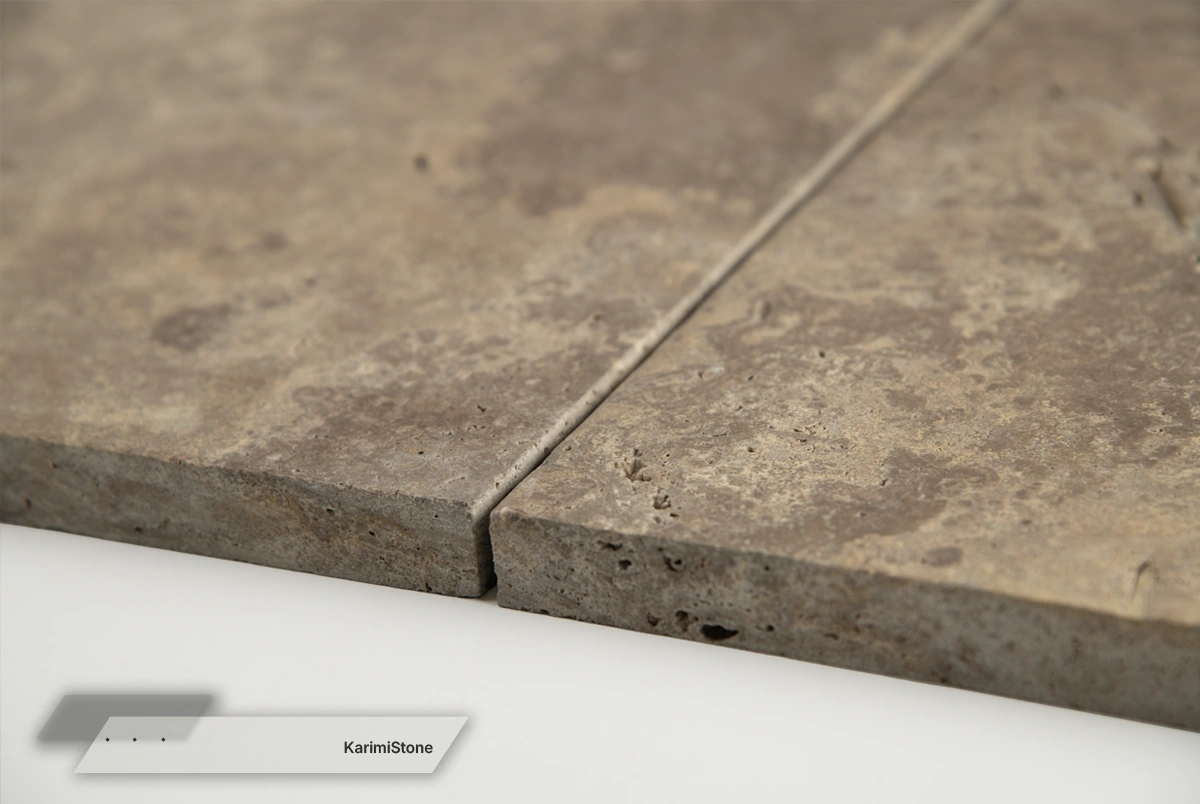
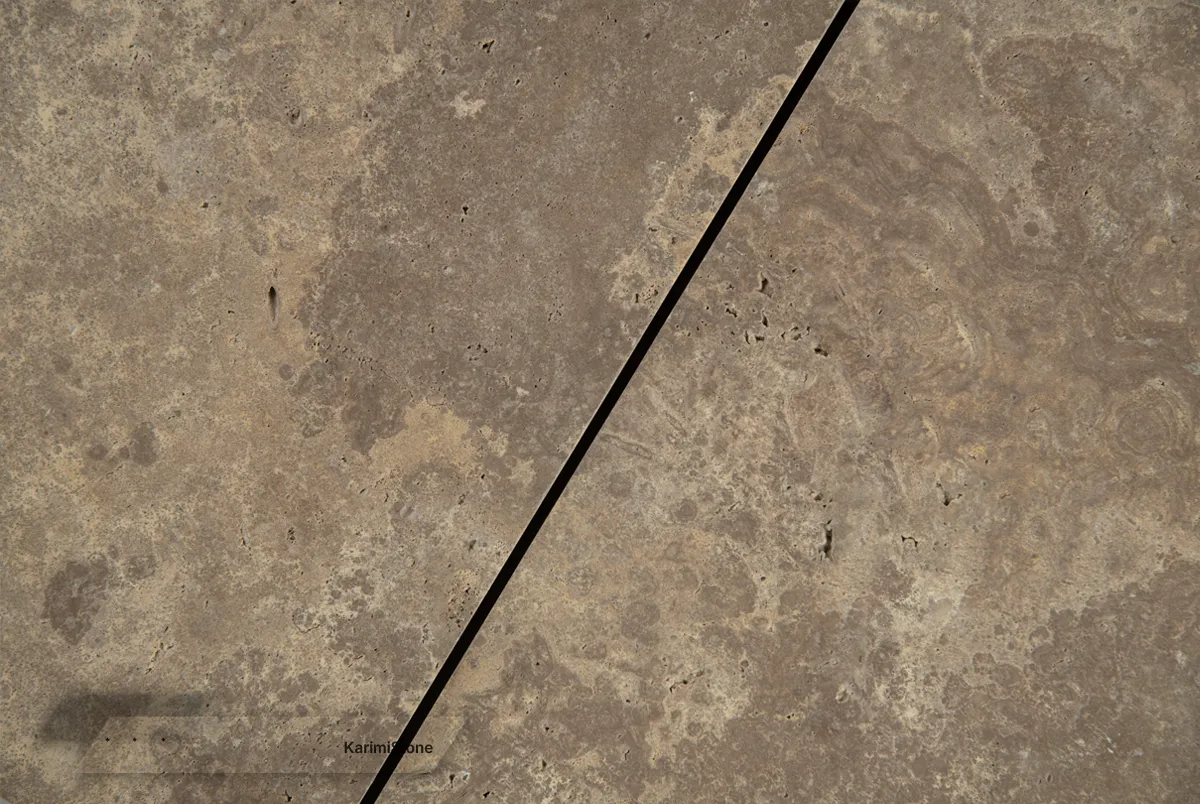

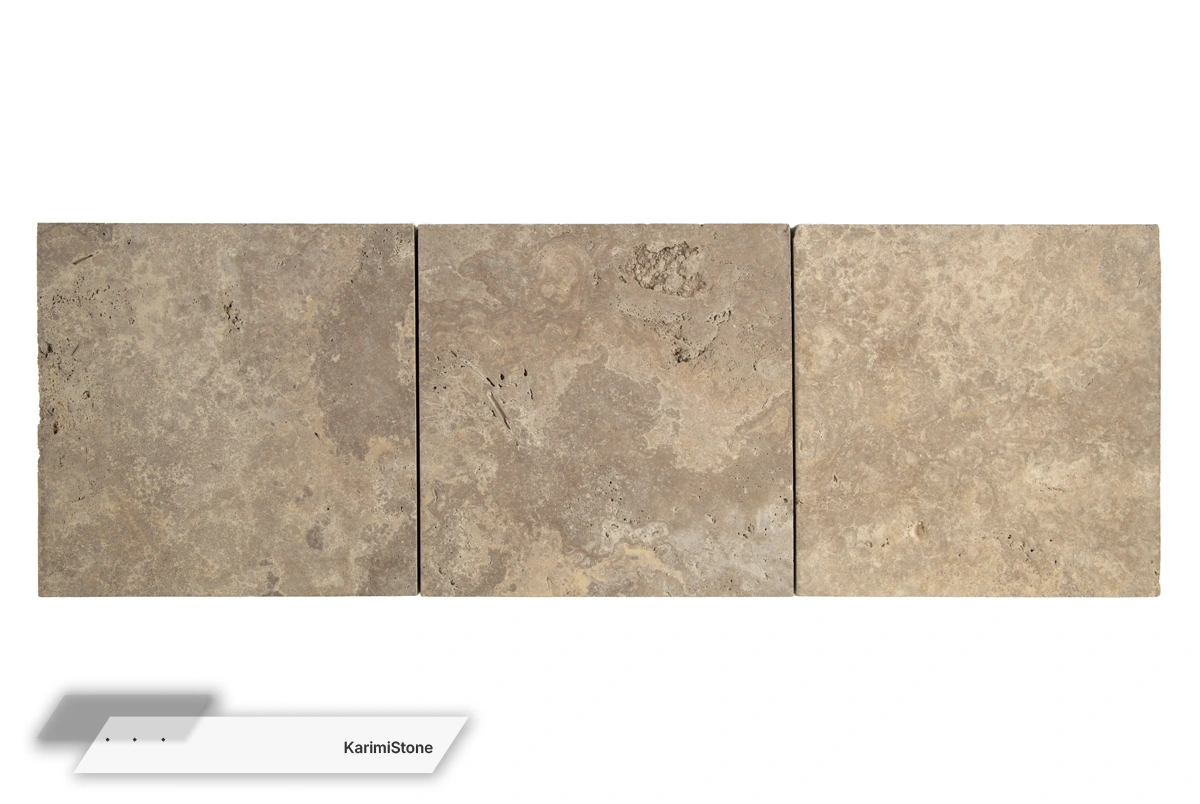
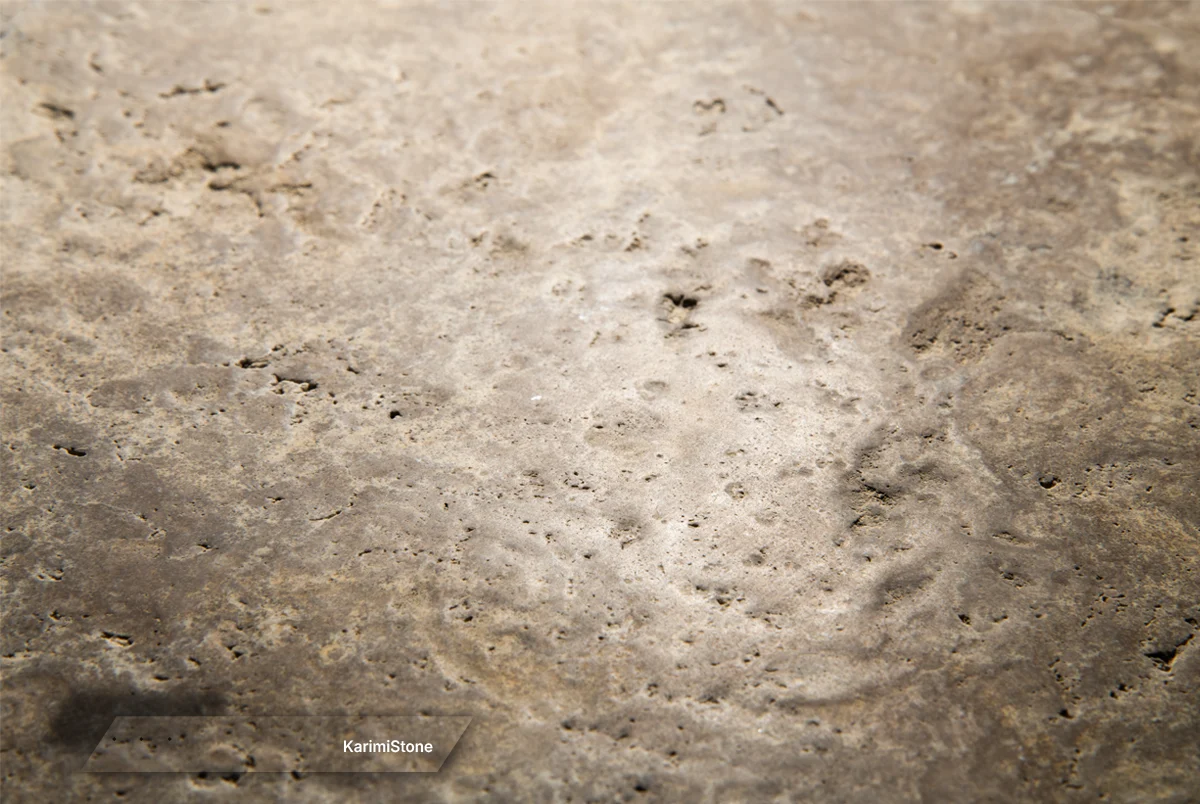
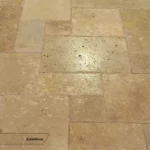
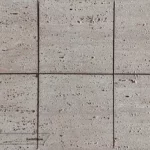
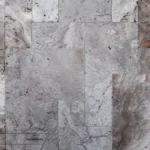
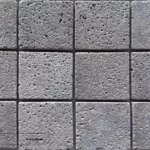
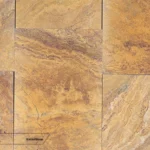








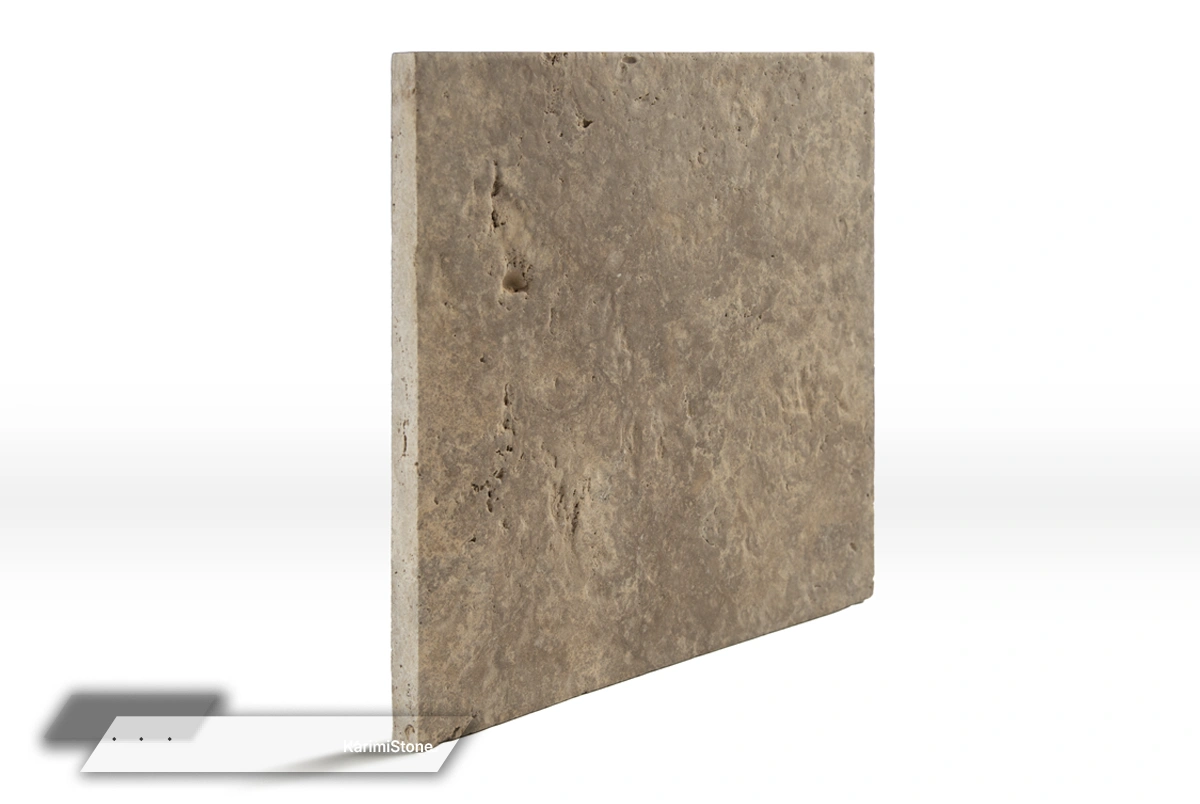
Brown Travertine Brushed Vein-Cut is an Iranian natural stone distinguished by warm brown and coffee tones, natural pores, long directional mineral bands, and a softly textured matte surface. The combination of a Brushed finish and Vein-Cut pattern creates a natural architectural material with low reflection, tactile character, and strong linear movement.
The brushed finish gently works the surface with abrasive brushes, reducing excessive shine while revealing the natural texture of the travertine. The Vein-Cut pattern exposes the geological layers of the stone as long and relatively continuous bands in brown, coffee, beige-brown, honey, cream, and darker chocolate tones.
Brown Travertine Brushed Vein-Cut can be considered for exterior facades, interior walls, floors, staircases, villas, courtyards, landscape projects, fireplaces, columns, architectural details, and selected outdoor areas.
What Is Brown Travertine Brushed Vein-Cut?
Brown Travertine Brushed Vein-Cut is natural Iranian travertine processed to combine a directional geological pattern with a soft, low-reflection surface.
Vein-Cut reveals the sedimentary layers as long mineral bands, while brushing gently develops the natural face of the stone without creating the strong reflection associated with polishing.
The result is a material that combines warm natural color, visible pores, linear movement, and a tactile architectural surface.
What Is Brown Travertine?
Brown Travertine is a natural calcium-carbonate stone formed through mineral deposition from mineral-rich water.
During geological formation, layers gradually develop and natural cavities remain within the stone, producing the pores that are characteristic of travertine.
The U.S. Geological Survey (USGS) describes travertine formation as a process associated with calcium-carbonate precipitation from mineral-rich waters.
Brown Travertine commonly displays:
- Light brown tones
- Coffee colors
- Beige-brown areas
- Honey tones
- Dark chocolate bands
- Cream or beige mineral lines
- Natural pores and cavities
The warm brown coloration is associated with naturally occurring mineral content, including iron-bearing minerals within the stone.
Iranian Brown Travertine Sources
Iran has several quarry regions associated with Brown Travertine.
Important sources include:
- Kashan
- Yazd
- Takab
- Targh
- Vartoon near Isfahan
Material from different quarry regions can vary in background color, intensity of brown tones, vein structure, pore distribution, and overall visual appearance.
For architectural orders, selection should therefore be based on the actual approved material range rather than quarry name alone.
Color and Natural Appearance
One of the main characteristics of Brown Travertine is its warm and natural palette.
Common tones include:
- Light brown
- Coffee brown
- Beige-brown
- Honey
- Chocolate brown
- Cream mineral movement
The contrast is usually natural rather than excessive. Cream and beige lines can break up darker brown areas and add depth to the surface.
Brown Travertine combines especially well with timber, black metal, bronze finishes, warm lighting, concrete, beige stone, and neutral architectural colors.
What Is a Brushed Finish?
A brushed finish is produced by working the stone surface with specialized abrasive brushes after initial preparation.
The brushes gently affect softer areas of the stone and reveal its natural physical texture.
A brushed Brown Travertine surface generally provides:
- Matte or low-sheen appearance
- Soft tactile texture
- Visible natural pores
- Subtle surface relief
- Reduced direct reflection
- Natural mineral definition
- A relaxed architectural character
Unlike a polished surface, Brushed Travertine is not intended to create strong gloss or mirror-like reflection.
Explore other materials with this treatment in the Karimi Stone Brushed Natural Stone collection.
Why Brushing Works Well with Brown Travertine
Brown Travertine already has strong natural color variation and visible geological movement.
A highly reflective surface can make these differences appear stronger, while a brushed finish reduces glare and gives the stone a softer overall character.
The combination can create:
- Rich warm color
- Soft natural texture
- Low reflection
- Visible pores
- Balanced mineral movement
- A natural and less formal appearance
This makes the finish suitable for projects where natural stone should feel warm and tactile rather than highly polished.
What Is Vein-Cut Brown Travertine?
This product has a Vein-Cut pattern.
Vein-Cut reveals the sedimentary structure of travertine as long and directional mineral bands.
In Brown Travertine, these bands may appear in:
- Brown
- Coffee
- Chocolate
- Honey
- Beige
- Cream
The strong linear pattern provides more visual direction than Cross-Cut Travertine, where geological movement appears more cloudy and irregular.
Why Vein-Cut Works Well with a Brushed Surface
Vein-Cut creates clear architectural direction, while brushing reduces excessive surface reflection.
This allows the long natural bands to remain visible without making the surface appear overly glossy or visually busy.
During installation, the direction of the natural bands can also be coordinated.
Horizontal installation can emphasize width and continuity, while vertical placement can visually increase height.
Natural Pores and Stone Structure
Natural pores are a defining feature of travertine.
They can vary in:
- Size
- Shape
- Depth
- Number
- Distribution
The pore structure varies between quarry regions, geological layers, and individual blocks.
On a brushed surface, some natural pores may remain visible and become part of the overall architectural character of the stone.
Filling Options
Natural travertine cavities can be filled where required.
Common filling systems include:
- Resin
- Epoxy
- UV-based stone fillers
The amount of filling should be selected according to the intended application and desired appearance.
A highly filled surface can appear more controlled, while leaving some pores visible preserves more of the characteristic natural identity of travertine.
Architectural Applications
Exterior Facades
Suitable Brown Travertine can be considered for villa facades, entrance walls, exterior architectural features, columns, frames, and selected modern or classical facades.
The warm brown color creates a stronger visual presence than light beige travertine and works particularly well with neutral architectural materials.
Interior Walls
Brown Travertine Brushed is particularly effective for feature walls, hotel interiors, entrance areas, commercial spaces, villa walls, fireplace walls, and decorative panels.
The brushed surface keeps the dark natural color from becoming excessively reflective.
Interior Flooring
Suitable material can be considered for residential floors, commercial interiors, villas, hotels, corridors, and entrance areas.
Where specific slip-resistance performance is required, the actual finished material should be tested according to the applicable project standard.
Staircases
Brown Travertine can be fabricated into stair treads, risers, landings, entrance steps, and custom staircase components.
Vein direction can be coordinated between adjoining pieces for a more continuous visual result.
Courtyards and Patios
Suitable selections can be considered for courtyards, patios, covered outdoor spaces, villa areas, and selected landscape flooring.
Landscape Architecture
The warm brown color combines naturally with plants, timber, brick, concrete, water, and other stone materials.
Possible applications include garden walls, landscape elements, pathways, villa gardens, decorative features, and outdoor architectural details.
Fireplaces and Decorative Elements
Brown Travertine Brushed is well suited to fireplace surrounds, architectural frames, columns, decorative wall pieces, stone benches, and other custom products.
Available Formats
Depending on project requirements, Brown Travertine Brushed can be supplied in formats such as:
- Tiles
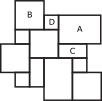
- Slabs
- Free-length pieces
- Pattern sets
- Steps and risers
- Skirting
- Copings
- Architectural details
- Custom-cut stone pieces
Maintenance and Care
Natural Travertine should be maintained using cleaning products compatible with calcium-carbonate stone.
Strong acidic cleaners should be avoided because acids can react with and damage the stone surface.
Regular cleaning with water and an appropriate mild stone cleaner is generally sufficient for routine maintenance.
Where sealing is specified, the sealer should be suitable for natural travertine and compatible with the required appearance and installation conditions.
Sorting and Project Selection
For Brown Travertine Brushed Vein-Cut, project selection may consider:
- Background brown tone
- Coffee or chocolate intensity
- Vein direction
- Vein regularity
- Cream and beige mineral movement
- Pore distribution
- Brushed texture consistency
- Dimensions and thickness
- Overall visual continuity
For large projects, representative samples and an acceptable visual range should ideally be established before full production.
Why Choose Brown Travertine Brushed Vein-Cut?
- Warm natural color: Brown, coffee, honey, and chocolate tones create architectural warmth.
- Soft brushed texture: Provides tactile character without strong gloss.
- Low reflection: The matte surface works well under natural and artificial light.
- Linear Vein-Cut pattern: Long geological bands create clear architectural direction.
- Natural pores: The characteristic travertine structure remains visible.
- Wide application range: Suitable selections can be considered for walls, facades, floors, stairs, villas, and landscapes.
- Project flexibility: Tone, veins, pores, texture, dimensions, and thickness can be coordinated before production.
Frequently Asked Questions
What is Brown Travertine Brushed Vein-Cut?
It is Iranian Brown Travertine with a softly textured brushed surface and long directional natural mineral bands.
What colors can Brown Travertine have?
Typical colors include light brown, coffee, beige-brown, honey, chocolate, cream, and darker brown tones.
What does Vein-Cut mean?
Vein-Cut reveals the natural geological layers of travertine as long directional mineral bands.
What does brushing do to the stone?
Brushing reduces surface shine, gently develops the natural texture, and creates a softer tactile finish.
Does Brown Travertine naturally contain pores?
Yes. Natural pores and cavities are normal characteristics of travertine.
Can the pores be filled?
Yes. Resin, epoxy, or suitable stone fillers can be used according to the project requirements.
Can Brown Travertine Brushed be used for facades?
Suitable material can be considered for exterior facades when thickness, stone properties, fixing system, climate, and engineering requirements are appropriate.
Can it be used for flooring?
Yes. Suitable selections can be considered for residential, commercial, hotel, and villa flooring applications.
How should Brown Travertine be cleaned?
Use water and suitable mild cleaners for natural stone. Strong acidic cleaners should be avoided.
Brown Travertine Brushed Vein-Cut by Karimi Stone
Karimi Stone produces, processes, supplies, and exports Iranian natural stone for residential, commercial, hospitality, landscape, and architectural projects.
For Brown Travertine Brushed Vein-Cut orders, material can be selected according to brown tone, vein direction, pore structure, dimensions, thickness, and required brushed texture.
Production can include controlled brushing, Vein-Cut selection, project-based sorting, custom dimensions, quality control, export-grade packaging, and international project supply.
With its warm brown color, natural pores, long directional bands, and softly textured matte surface, Brown Travertine Brushed Vein-Cut offers a distinctive Iranian natural stone solution for facades, walls, floors, stairs, villas, hotels, and landscape architecture.