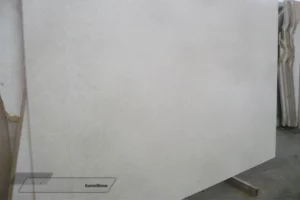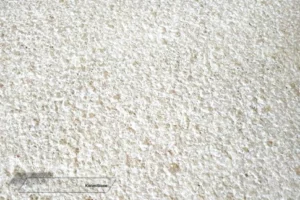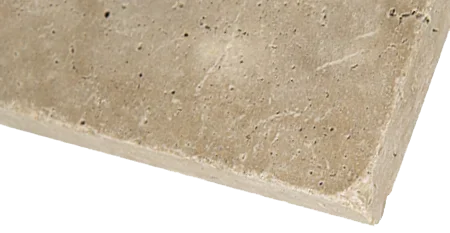
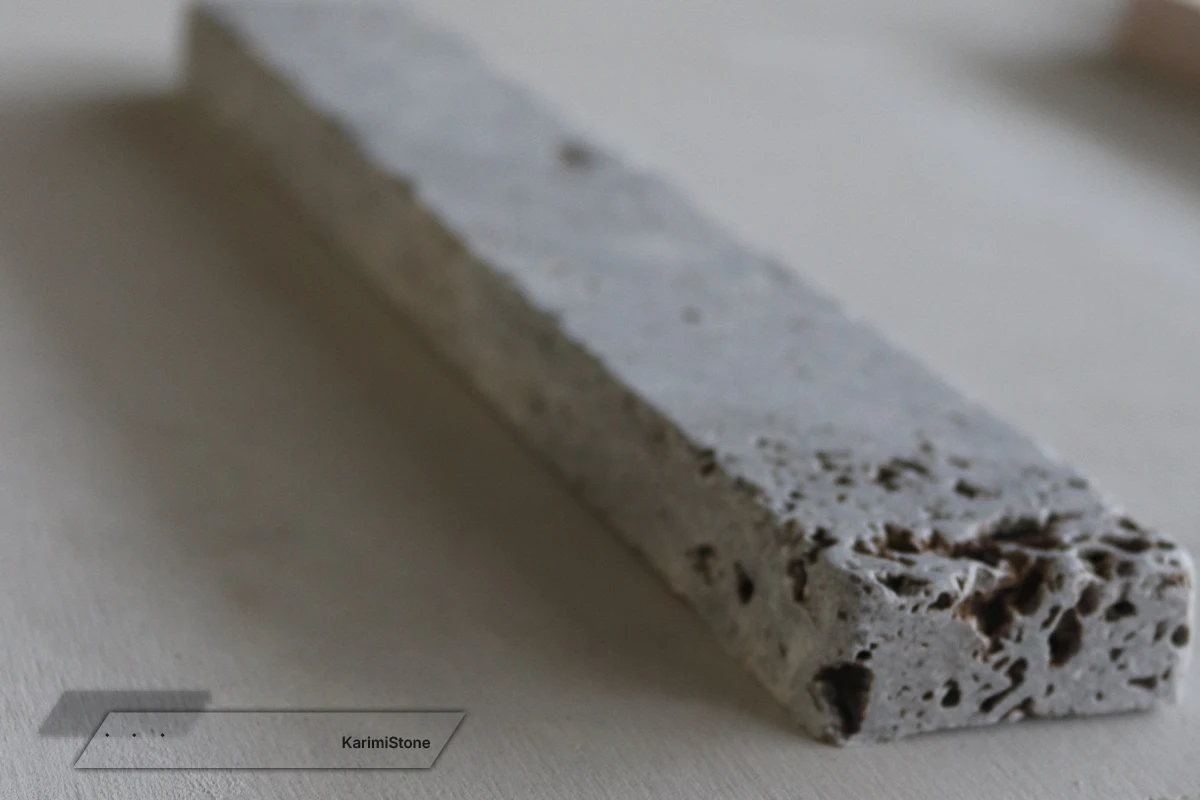
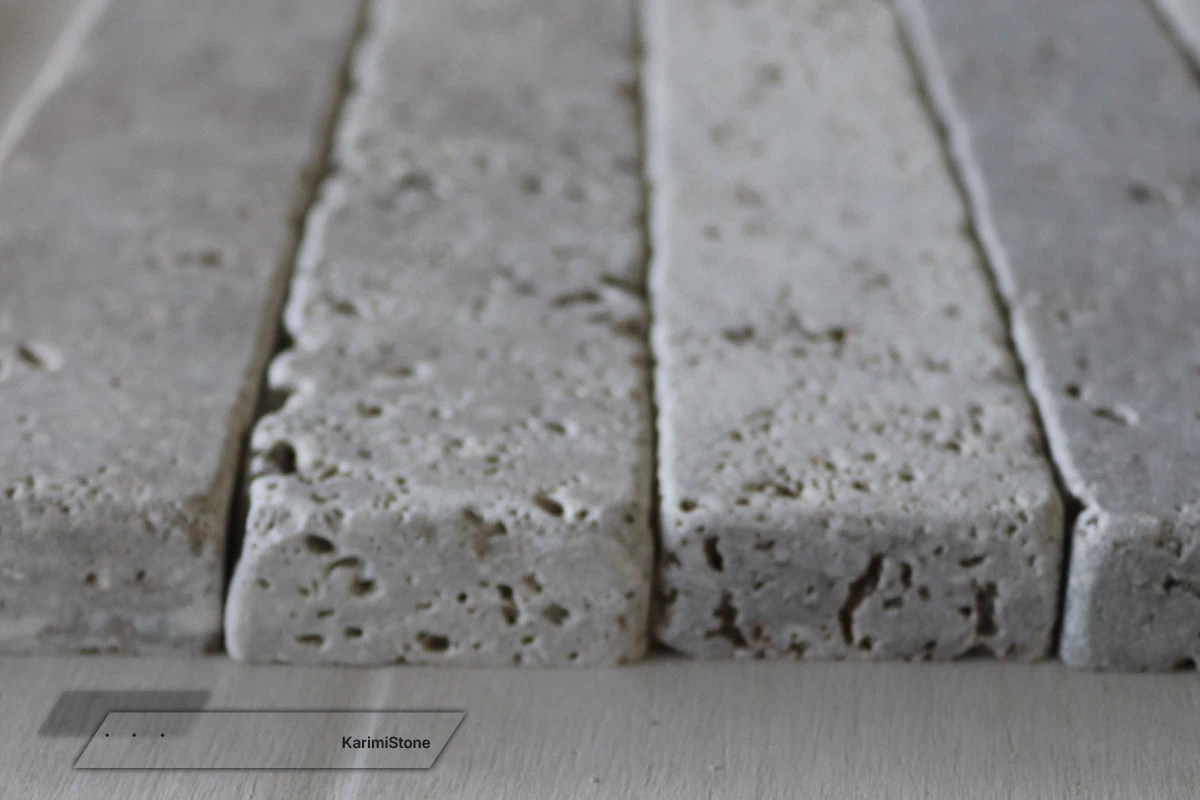
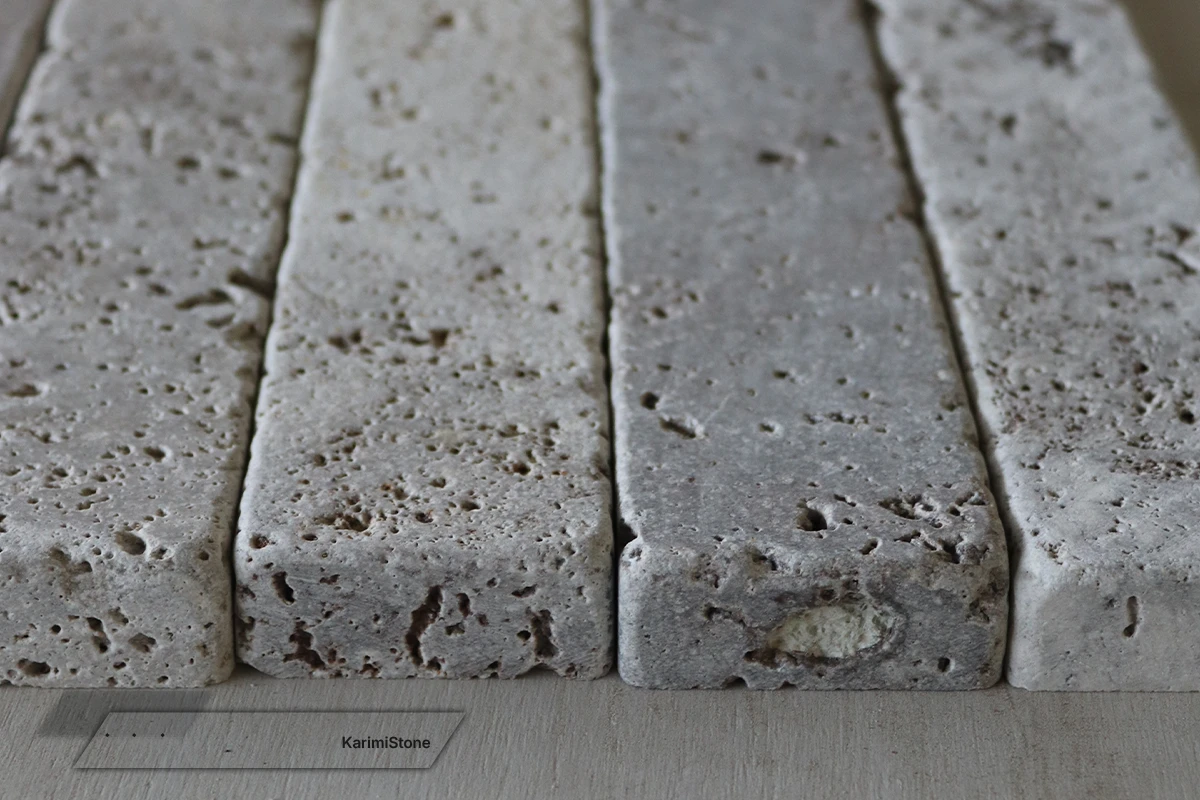
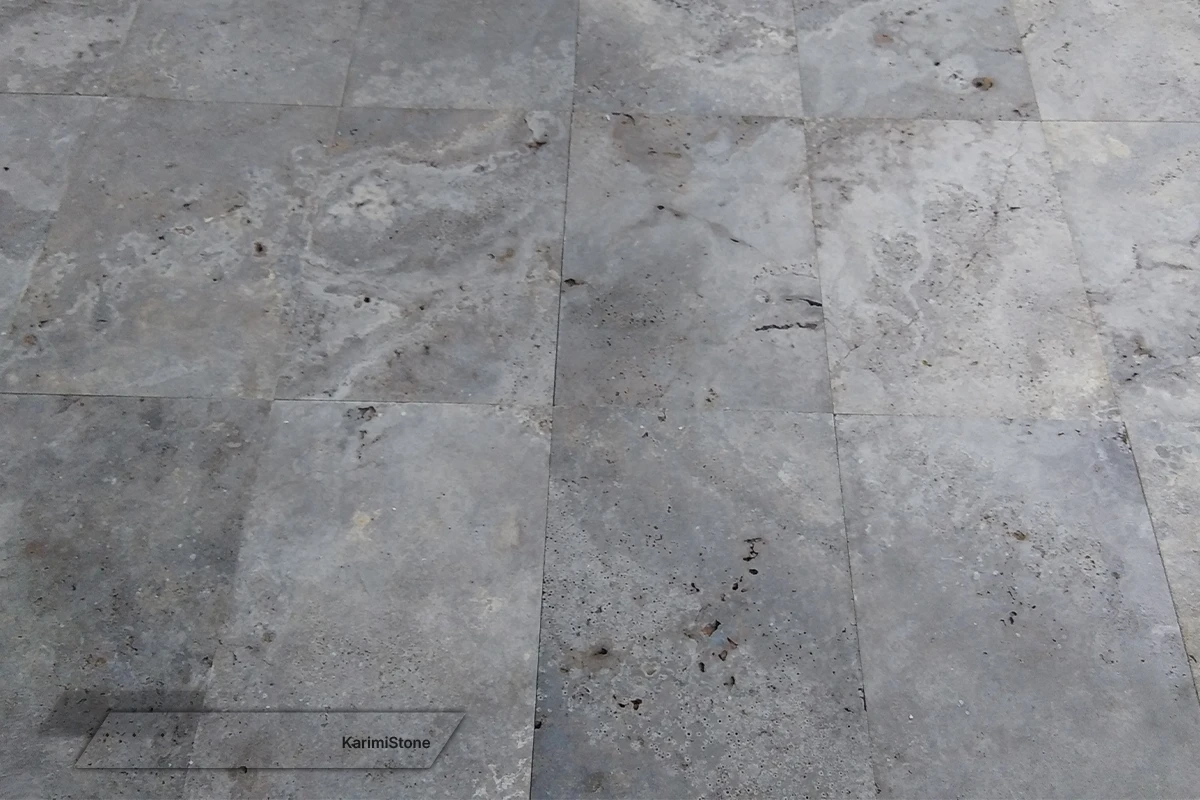
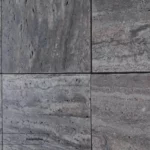
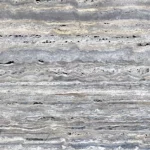
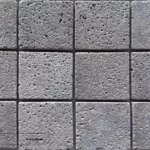
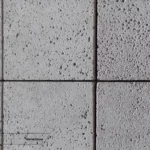
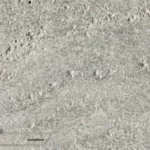
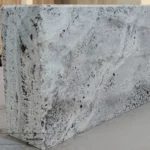
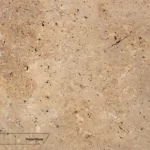
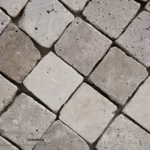
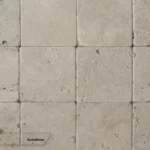
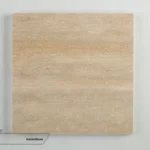
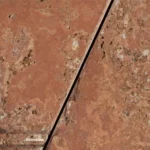
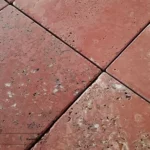
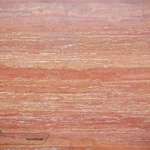
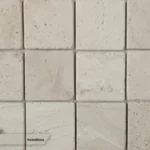
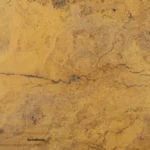











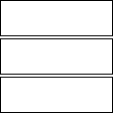
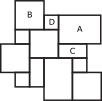
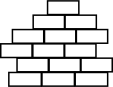
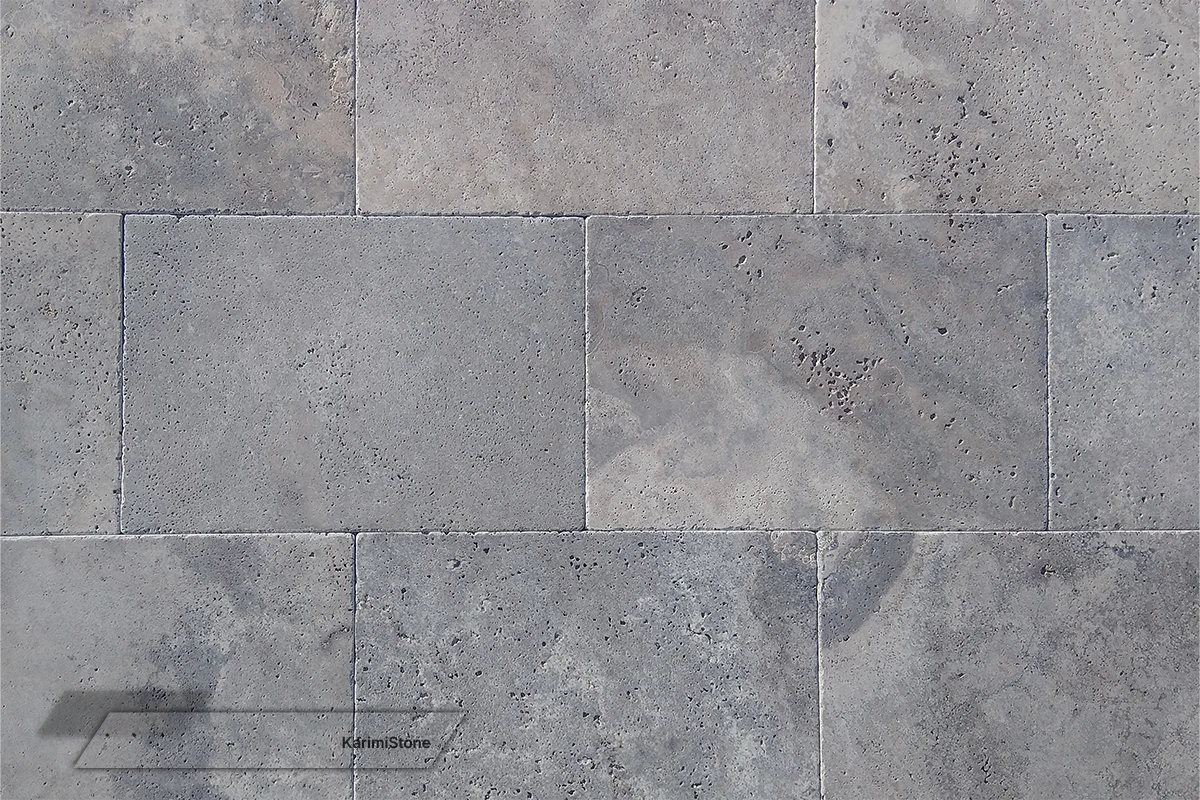
Silver Travertine Honed & Tumbled is an Iranian natural travertine with silver-grey and smoky tones, warm brown mineral movement, natural pores, a smooth matte Honed face, and softly rounded Tumbled edges. This product is produced in a Cross-Cut pattern, giving the stone a less directional and more cloud-like natural appearance than traditional Vein-Cut travertine.
The two treatments perform different functions. Honing is the surface finish: the main stone face is progressively ground until it becomes smooth, flat and matte without developing a strong polished shine. Tumbling is the edge finish: the edges and corners are gently worn and softened, producing a more natural and slightly aged profile.
The combination creates a calm, tactile and understated architectural stone suitable for interior flooring, wall cladding, bathrooms, entrances, stair areas, courtyards, patios, villa projects, decorative surfaces and other residential or commercial applications.
What Is Silver Travertine?
Silver Travertine is a natural calcium-carbonate stone formed through mineral deposition around mineral-rich water sources.
Its natural appearance can include:
- Light silver-grey areas
- Medium and smoky grey tones
- Warm brown mineral movement
- Beige areas
- White or pale mineral markings
- Natural pores and cavities
- Subtle tonal variation
Different Iranian quarry selections can produce different balances of grey, brown and white.
For independent information about travertine as a natural stone, see the Natural Stone Institute guide to Travertine and Limestone.
You can also explore the Karimi Stone Silver Natural Stone collection.
What Does Cross-Cut Mean?
Travertine naturally develops in geological layers.
In a Cross-Cut, the block is cut across those layers rather than parallel to them.
This cutting direction usually produces:
- Less linear movement
- Cloud-like natural patterns
- Circular and irregular mineral forms
- More distributed silver, grey and brown areas
- A softer and more organic visual character
Cross-Cut is especially useful where designers want the natural character of travertine without strong horizontal or longitudinal bands.
Cross-Cut vs. Vein-Cut
| Characteristic | Cross-Cut | Vein-Cut |
|---|---|---|
| Cut direction | Across natural layers | Parallel to natural layers |
| Pattern | Cloud-like and irregular | Linear and directional |
| Color movement | Distributed | Banded |
| Architectural effect | Organic and calm | Structured and rhythmic |
What Is a Honed Finish?
Honing is the primary surface finish of this product.
The stone face is progressively ground and refined until it becomes flat and smooth, but the process stops before the high-gloss stages used for Polished stone.
A Honed Silver Travertine surface generally provides:
- A smooth face
- Matte appearance
- Low direct light reflection
- Soft visual contrast
- Natural color visibility
- A calm architectural character
Honing can make the natural silver, grey and brown tones appear more balanced and less reflective.
What Is a Tumbled Edge?
Tumbling should be distinguished from Honing.
For this product, Tumbled is the edge finish, not a second main surface finish.
After Honing, individual stone pieces are mechanically tumbled so controlled abrasive contact gradually softens the perimeter.
The process can:
- Round sharp edges
- Soften corners
- Reduce rigid machine-cut geometry
- Create slight natural irregularity
- Produce a subtly aged appearance
You can explore other products with this treatment in the Karimi Stone Tumbled Edge collection.
Honed Surface vs. Tumbled Edge
| Processing | Main Area | Result |
|---|---|---|
| Honed | Main stone face | Smooth, matte and low-reflection |
| Tumbled | Edges and corners | Softened and gently rounded |
| Honed & Tumbled | Face + perimeter | Matte stone with softer geometry |
The correct product configuration is therefore Surface Finish: Honed and Edge Finish: Tumbled.
Why Combine Honing and Tumbling?
The combination changes both the visual character of the face and the geometry of the perimeter.
Honing creates a smooth, understated surface while Tumbling reduces the sharpness of cut edges.
Together they create:
- A smooth matte face
- Reduced glare
- Softened corners
- Natural edge variation
- A slightly aged character
- A more relaxed architectural appearance
Natural Color and Visual Character
Silver Travertine can vary significantly between selections.
Possible colors include:
- Light silver
- Medium grey
- Smoky grey
- Warm brown
- Beige
- White mineral markings
Cross-Cutting distributes these colors across the surface in a softer and less directional pattern.
The Honed finish then reduces strong reflection, while the Tumbled edge gives individual modules a more natural perimeter.
Iranian Silver Travertine Selections
Important Iranian Silver Travertine trade names include:
- Takab Silver Travertine
- Azarshahr Silver Travertine
- Tafresh Silver Travertine
- Kashan Silver Travertine
Each quarry selection can differ in color balance, pore structure, mineral movement and technical properties.
Technical Characteristics
Silver Travertine products currently listed by Karimi Stone use indicative technical data including:
| Property | Indicative Value |
|---|---|
| Porosity | 13% |
| Density | 2333 kg/m³ |
| Water Absorption | 2.33% |
| Compressive Strength | 52 MPa |
| Abrasion Resistance | 8.5 mm |
| Flexural Strength | 9.2 MPa |
Natural stone values can change according to quarry, extraction layer, individual block, thickness and production lot. Where a project has engineering requirements, the test certificates for the actual material being supplied should be reviewed.
Applications of Silver Travertine Honed & Tumbled
Interior Flooring
The combination of a matte surface and softened edges can create a natural and relaxed floor appearance.
Possible applications include:
- Residential interiors
- Villa flooring
- Entrance halls
- Hotel spaces
- Selected commercial interiors
- Corridors
Interior Wall Cladding
The Cross-Cut pattern can create gentle movement across wall surfaces without strong directional lines.
Possible applications include:
- Feature walls
- Entrance walls
- Hotel interiors
- Reception areas
- Residential walls
- Decorative stone sections
Staircases
Suitable material can be fabricated for:
- Stair treads
- Risers
- Landings
- Entrance steps
Thickness, edge geometry and required walking-surface performance should be defined according to the specific project.
Courtyards and Patios
The natural grey-brown palette and softer edge profile work well in villa, courtyard and covered patio architecture.
For exterior horizontal applications, drainage, substrate, thickness, climate, freeze-thaw exposure and technical suitability should be checked before specification.
Bathrooms
The matte appearance works naturally in bathroom interiors.
Suitable applications may include wall cladding, vanity areas and selected flooring.
Waterproofing, drainage, joints, sealing and required slip performance should be considered as part of the complete system.
Entrance Areas
The soft Cross-Cut pattern and matte finish can create an understated entrance surface for residential, hospitality and commercial projects.
Slip Resistance
A Honed face may provide a different tactile character from a highly Polished stone.
However, Honed & Tumbled should not automatically be described as slip-resistant.
Tumbling mainly changes the perimeter of each piece rather than the complete walking face.
If a project requires a defined P-rating, Wet Pendulum result, coefficient of friction or other classification, the actual finished stone should be tested.
Joint Appearance and Installation
Tumbled edges produce a softer and more visible transition between adjacent modules than sharp Sawn edges.
For modular flooring, the project should ideally define:
- Tile dimensions
- Joint width
- Grout color
- Tumbling intensity
- Corner profile
- Installation pattern
- Acceptable stone color range
Project Sorting and Approved Samples
An approved sample is especially useful because the final appearance depends on both natural stone variation and processing.
The project sample can define:
- Silver-grey color range
- Brown movement
- Cross-Cut pattern intensity
- Natural pore character
- Honed surface level
- Tumbled edge softness
Cleaning and Maintenance
Travertine is calcium-carbonate based and can be sensitive to acidic substances. For independent care guidance, see the Natural Stone Institute Care & Cleaning guide.
- Use cleaners suitable for natural travertine
- Prefer mild or pH-neutral products
- Avoid vinegar, lemon and strong acidic cleaners
- Remove spills promptly
- Remove abrasive dirt and grit regularly
- Test sealers on a representative sample before full application
Available Formats
Depending on project requirements, Silver Travertine Honed & Tumbled can be produced as:
- Tiles
- Pattern Sets
- Brick formats
- Free-Length pieces where suitable
- Custom project dimensions
Why Choose Silver Travertine Honed & Tumbled?
- Natural silver palette: Silver-grey, smoky grey, brown, beige and white.
- Cross-Cut pattern: Softer and less directional visual movement.
- Honed face: Smooth matte surface with reduced glare.
- Tumbled edges: Soft corners and a more natural perimeter.
- Natural pores: The geological identity of travertine remains visible.
- Versatile architecture: Suitable for interiors, stairs, bathrooms, entrances, courtyards and selected exterior areas.
- Project customization: Color, surface, edge character and dimensions can be selected according to project requirements.
Frequently Asked Questions
What is Silver Travertine Honed & Tumbled?
It is Iranian Silver Travertine with a smooth matte Honed face and softened Tumbled edges and corners.
Is Tumbled a surface finish on this product?
No. Honed is the main surface finish, while Tumbled is the edge finish.
What does Cross-Cut mean?
Cross-Cut means the block is cut across its natural layers, producing a more cloud-like and less directional pattern.
Is the surface shiny?
No. Honing creates a smooth but matte and low-reflection surface.
What does Tumbling do?
Tumbling softens and gently rounds the edges and corners of individual stone pieces.
Can it be used for flooring?
Yes, for suitable projects. Required slip performance should be evaluated separately.
Is Honed & Tumbled automatically non-slip?
No. Any required slip-resistance classification should be confirmed through testing of the actual finished material.
Silver Travertine Honed & Tumbled by Karimi Stone
Karimi Stone processes and supplies Iranian Silver Travertine for residential, commercial, hospitality and architectural projects.
For Silver Travertine Honed & Tumbled, material can be selected according to silver-grey and brown color range, Cross-Cut pattern, natural pore structure, Honed surface consistency, Tumbled edge softness, dimensions and project requirements.
Project supply can include stone selection, precision cutting, controlled Honing, edge Tumbling, project sorting, dimensional inspection, quality control, export-grade packaging and international supply.