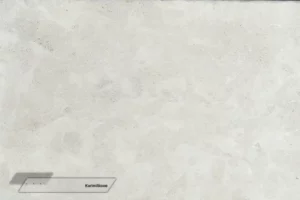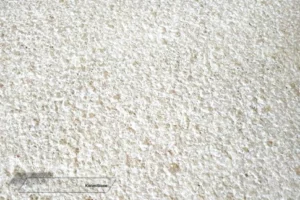
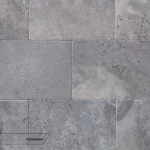
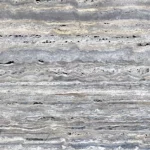
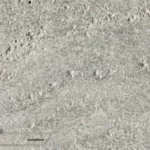
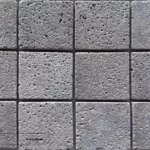
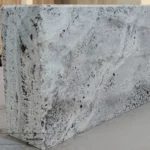
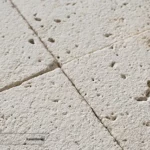
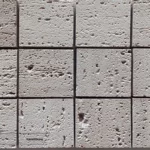
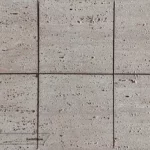
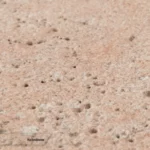
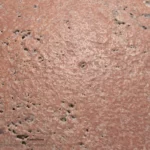



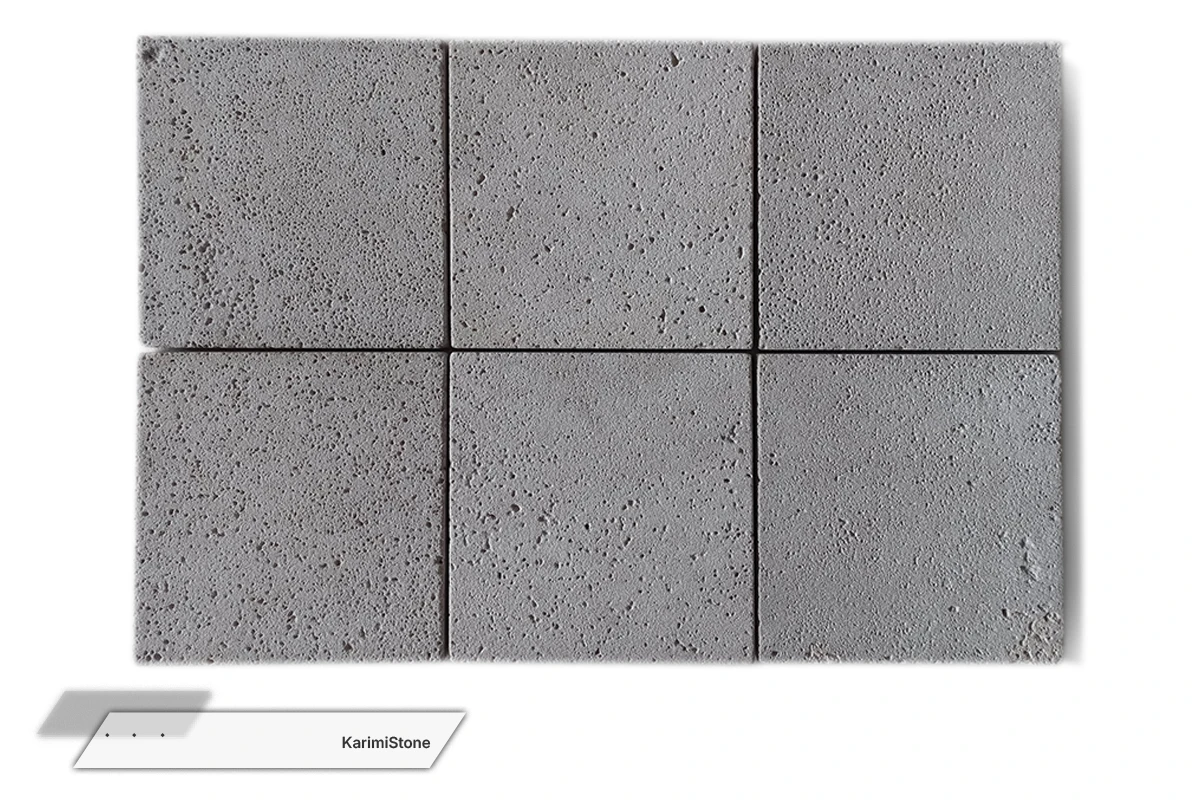
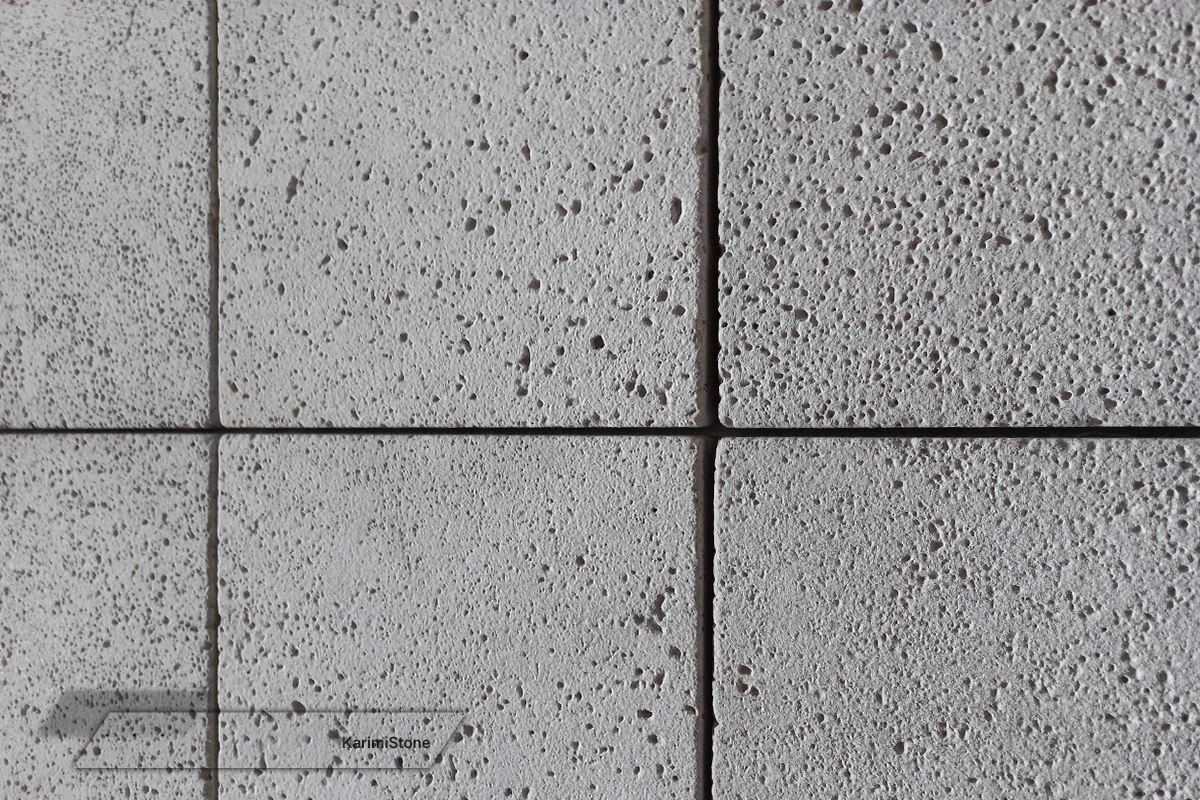
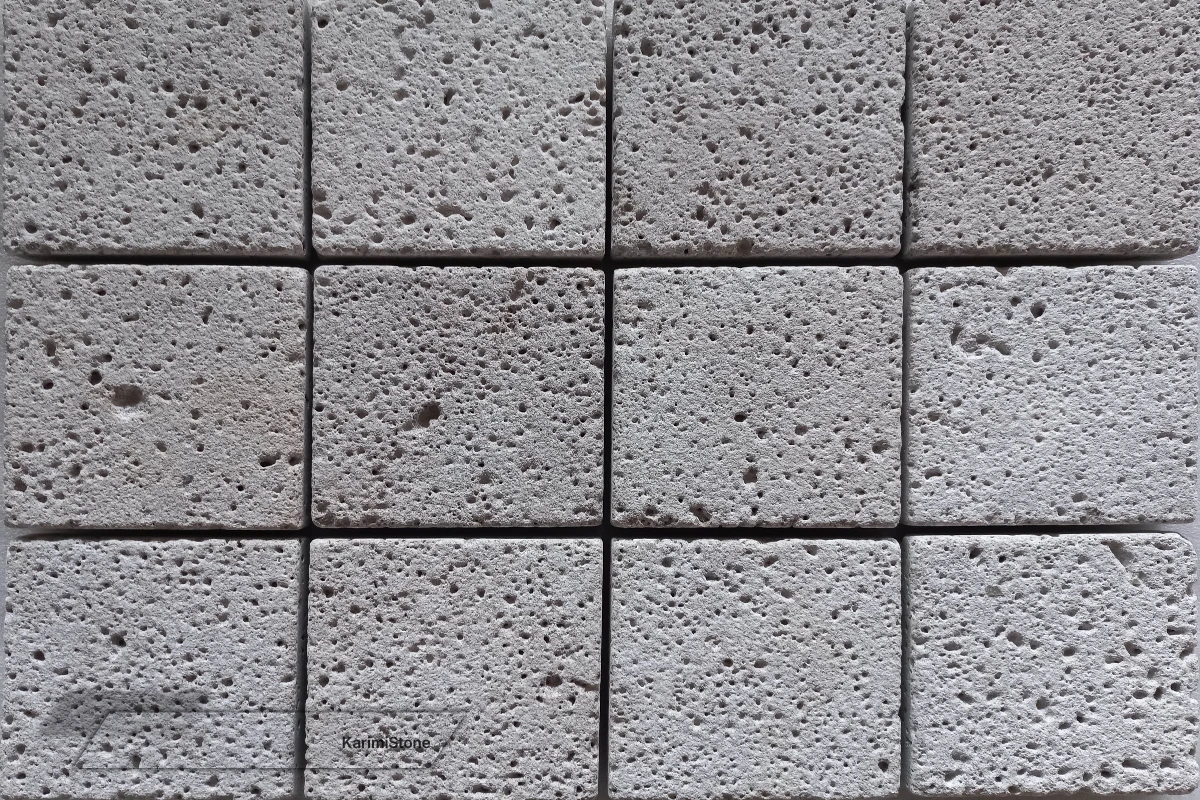
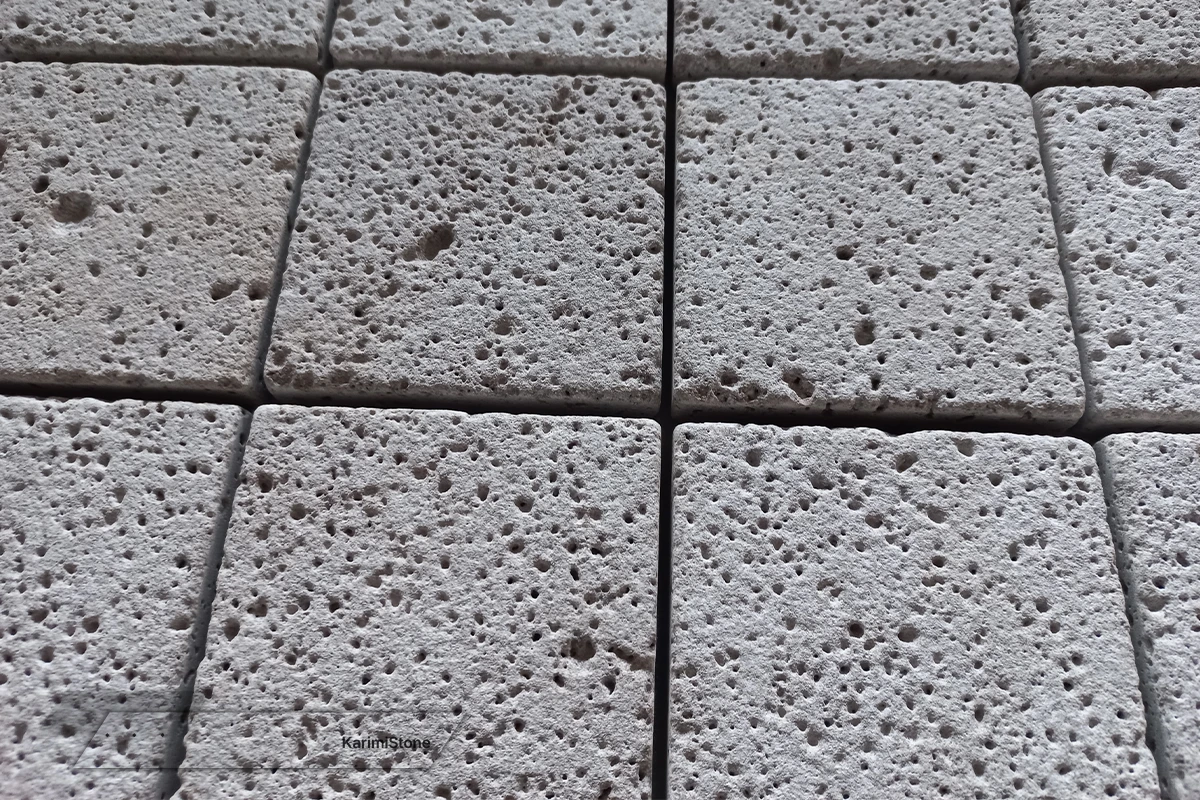
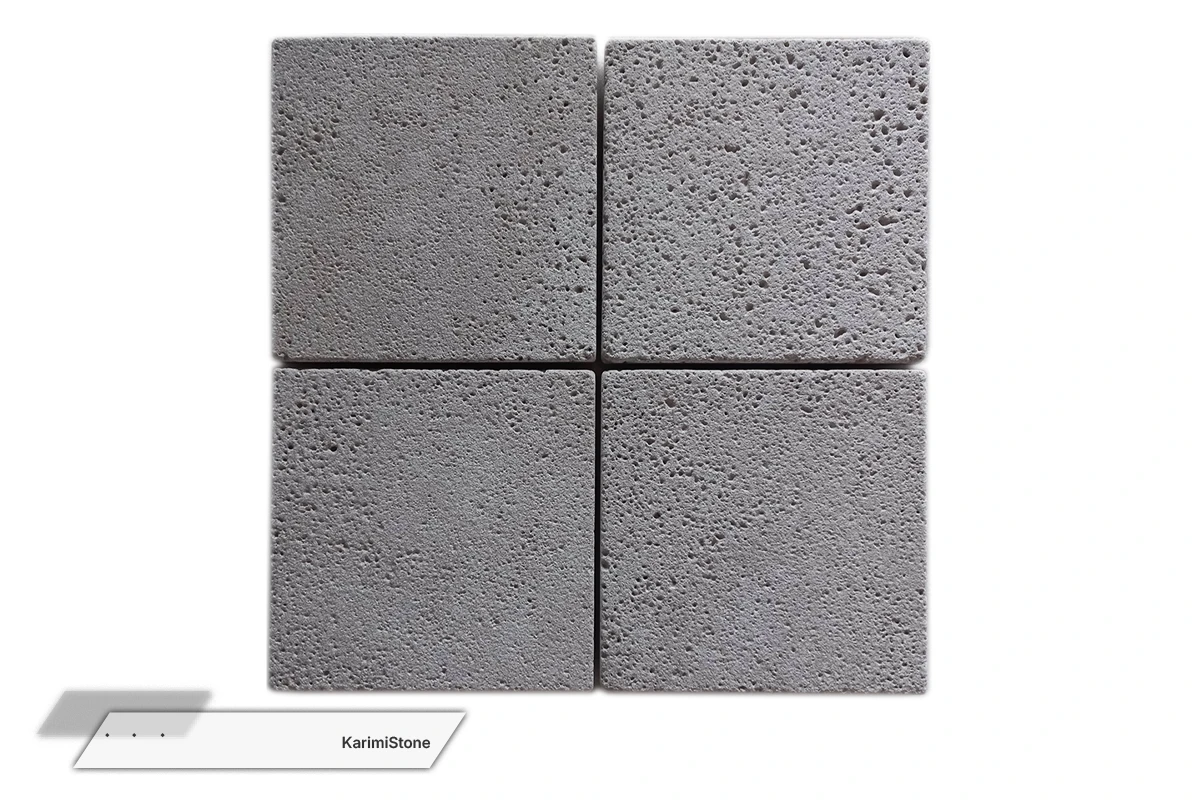
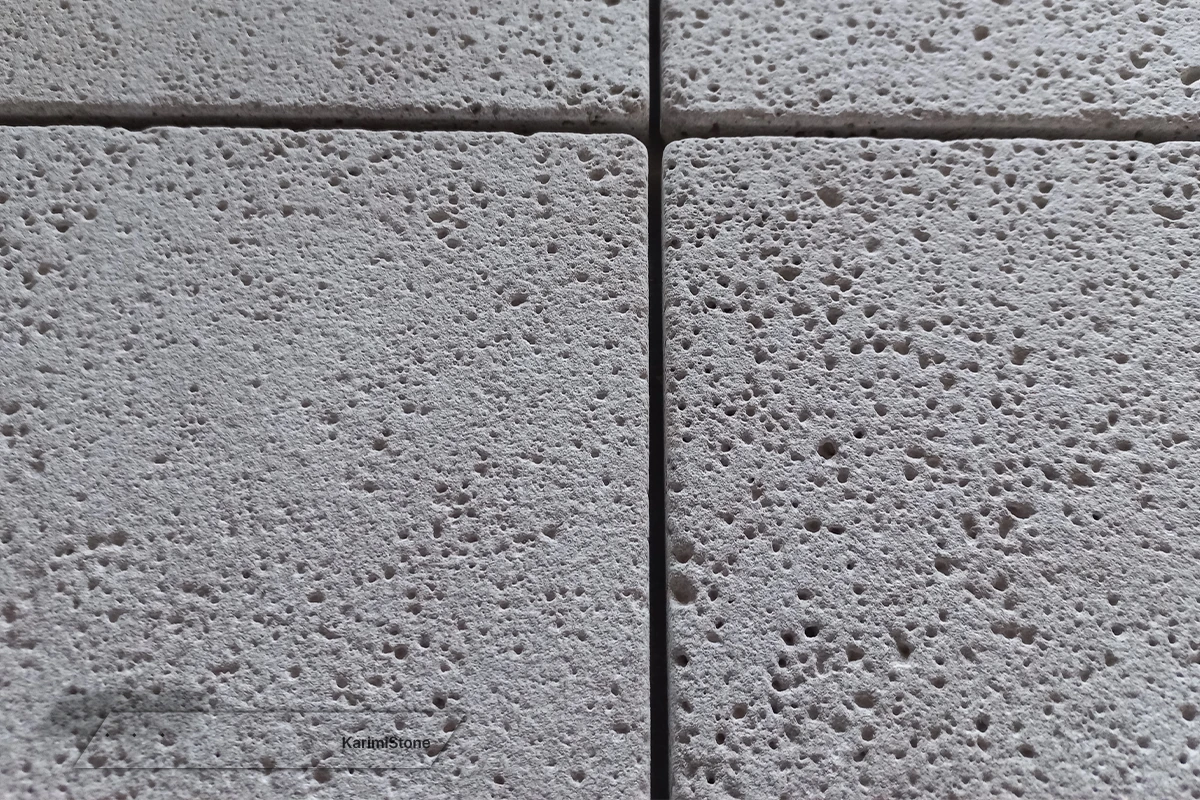


Silver Travertine Sandblasted is an Iranian natural travertine with silver-grey and smoky tones, warm brown mineral movement, lighter veins, natural pores, and a finely textured matte surface. This product is produced in a Cross-Cut pattern, giving the stone a softer, less directional and more cloud-like natural appearance than Vein-Cut travertine.
The Sandblasted finish is created by directing abrasive media onto the stone under controlled pressure. This treatment develops a fine and relatively uniform texture, reduces strong surface reflection, and preserves the natural silver, grey and brown character of the travertine.
Silver Travertine Sandblasted can be considered for exterior and interior wall cladding, garden and villa flooring, paving, sidewalks, courtyards, entrances, pool coping and other architectural applications where a matte textured natural-stone surface is preferred.

What Is Silver Travertine?
Silver Travertine is a natural calcium-carbonate stone formed through mineral deposition from mineral-rich water. During its geological formation, layers, pores, cavities and mineral variations develop inside the stone.
Typical natural characteristics can include:
- Light silver-grey areas
- Medium and smoky grey tones
- Warm brown movement
- Beige mineral zones
- White or pale veins
- Natural pores and cavities
- Visible tonal variation
This combination of cool silver tones and warmer brown movement gives Silver Travertine a neutral but visually active architectural character.
For independent information about travertine and limestone, see the Natural Stone Institute guide to Limestone and Travertine.
You can also explore other silver-colored stones in the Karimi Stone Silver Natural Stone collection.
What Does Cross-Cut Mean?
Travertine naturally forms in mineral layers.
In a Cross-Cut, the block is cut across these layers rather than parallel to them.
This cutting direction normally produces:
- Less linear movement
- Cloud-like mineral forms
- Circular or irregular patterns
- More distributed silver and brown tones
- A softer overall visual flow
The Cross-Cut pattern can be particularly effective across larger paving areas and architectural surfaces where a strong directional stripe is not required.
Cross-Cut vs. Vein-Cut
| Characteristic | Cross-Cut | Vein-Cut |
|---|---|---|
| Cut direction | Across natural layers | Parallel to natural layers |
| Pattern | Cloudy and irregular | Linear and directional |
| Color movement | Distributed | Banded |
| Architectural character | Organic and balanced | Structured and rhythmic |
What Is a Sandblasted Finish?
Sandblasting is a mechanical surface treatment where abrasive particles are directed toward the stone face under controlled pressure.
A very small amount of the upper stone surface is affected, creating a fine granular texture.
On Silver Travertine, Sandblasting can create:
- A matte appearance
- Fine surface roughness
- Low direct reflection
- A more structured tactile surface
- Visible natural pores
- Diffuse silver-grey coloration
To compare this treatment with other architectural stone finishes, see the Karimi Stone Natural Stone Surface Finishes guide.
How Sandblasting Changes Silver Travertine
A smooth or Polished Silver Travertine interacts strongly with light. Sandblasting changes this behavior by creating thousands of small surface irregularities that diffuse incoming light.
This generally results in:
- Reduced glare
- A more matte color appearance
- Greater tactile texture
- More visible natural pores
- Small light-and-shadow effects across the surface
The final texture depends on production variables including abrasive type, particle size, blasting pressure, distance from the stone, machine speed and number of passes.
Natural Color Character
Silver Travertine is not a completely uniform grey stone.
Depending on quarry and selection, individual pieces may contain:
- Silver-grey backgrounds
- Smoky-grey mineral movement
- Warm brown areas
- Beige tones
- White mineral lines
- Natural pore patterns
Cross-Cutting distributes these colors more freely across the face, while Sandblasting gives the palette a softer and less reflective appearance.
Iranian Silver Travertine Selections
Important Iranian regional trade selections include:
- Takab Silver Travertine
- Azarshahr Silver Travertine
- Tafresh Silver Travertine
- Kashan Silver Travertine
Individual quarry sources can differ in color balance, pore structure, pattern and technical performance. Project orders should therefore be selected using the actual material range intended for production.
Technical Characteristics
| Property | Current Product Value | Reference |
|---|---|---|
| Porosity | 13% | ASTM C97 |
| Density | 2333 kg/m³ | ASTM C97 |
| Water Absorption | 2.33% | ASTM C97 |
| Compressive Strength | 52 MPa | ASTM C170 |
| Abrasion Resistance | 8.5 mm | EN 14157 |
| Flexural Strength | 9.1 MPa | Product Data |
| Cold Resistance | -20°C | Product Data |
| Heat Resistance | 200°C | Product Data |
These values are the current indicative specifications for this product. Natural stone properties can vary between quarry layers, blocks and production lots. For technical projects, certificates for the actual supplied material should be reviewed.
Applications of Silver Travertine Sandblasted
Exterior Wall Cladding
The matte silver-grey appearance can work naturally with concrete, glass, metal, timber and landscape materials.
Possible applications include:
- Building facades
- Exterior wall cladding
- Entrance walls
- Landscape walls
- Architectural frames
- Feature facade areas
Exterior suitability depends on stone selection, thickness, fixing system, climate, drainage and engineering requirements.
Interior Walls
The Cross-Cut pattern can introduce natural movement without creating strong directional lines.
Possible interior applications include:
- Entrance walls
- Feature walls
- Reception areas
- Commercial interiors
- Hospitality spaces
Garden and Villa Flooring
Sandblasted Silver Travertine can be considered for selected garden and villa flooring where a textured matte stone surface is desired.
Typical applications may include:
- Villa entrances
- Courtyards
- Covered outdoor areas
- Garden circulation areas
- Interior-to-exterior transitions
Paving
Suitable material can be considered for architectural paving and pedestrian areas.
For paving projects, stone thickness, substrate, drainage, traffic level and climate should be defined before production.
Sidewalk Paving
The current product configuration also includes sidewalk paving.
Public walking areas require appropriate thickness, installation, drainage and verified surface-performance requirements.
Pool Coping
Pool coping is included among the current suggested applications.
The textured surface may provide more physical grip than a highly Polished surface, but the term Sandblasted alone does not guarantee a particular slip-resistance class.
Where a project requires a defined P-rating, Wet Pendulum result, coefficient of friction or equivalent standard, the actual finished stone should be tested.
Sandblasted Surface and Slip Resistance
Sandblasting creates a physically textured surface and can improve grip compared with a very smooth Polished finish.
However, surface finish names should not be used as substitutes for project-specific slip testing.
Actual performance can be affected by:
- Sandblasting depth
- Stone structure
- Surface contamination
- Water
- Cleaning products
- Wear over time
Texture Control for Project Orders
For larger architectural projects, Sandblasting should be controlled using an approved physical sample.
The reference sample can establish:
- Required roughness
- Matte level
- Color appearance
- Visible pore character
- Cross-Cut pattern range
- Acceptable tonal variation
Cleaning and Maintenance
Travertine is calcium-carbonate based and can be sensitive to acidic cleaning products. For independent care guidance, see the Natural Stone Institute Care & Cleaning guide.
- Use cleaners suitable for natural travertine
- Prefer mild or pH-neutral cleaning products
- Avoid vinegar, lemon and strong acidic cleaners
- Regularly remove sand and abrasive grit
- Avoid unnecessarily aggressive brushes
- Test sealers on a representative sample before full application
Available Formats
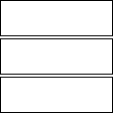
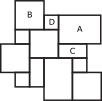
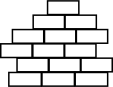
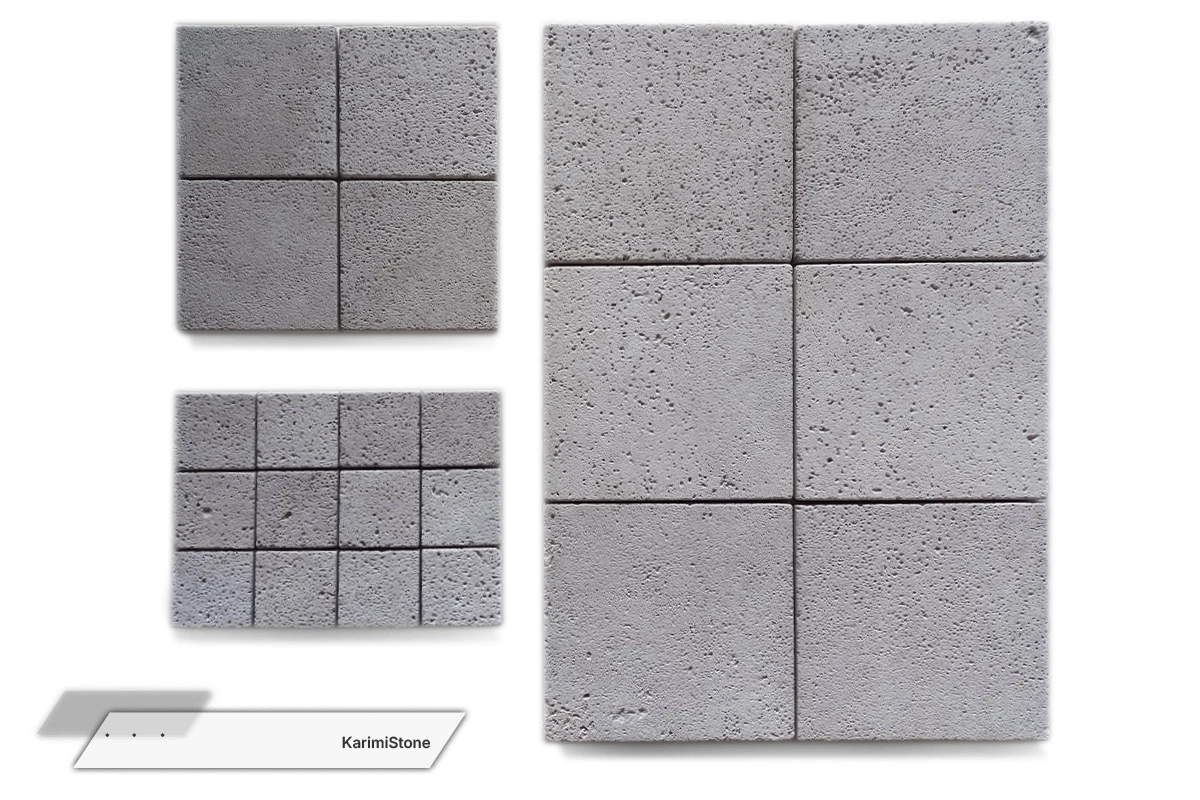
The current product configuration includes:
- Tiles
- Pattern Sets
- Free-Length pieces
- Brick formats
- Custom dimensions according to project requirements
Why Choose Silver Travertine Sandblasted?
- Silver-grey natural palette: Neutral color suitable for contemporary architecture.
- Cross-Cut pattern: Softer and less directional natural movement.
- Matte surface: Sandblasting reduces strong reflection.
- Fine texture: Creates tactile depth across the stone face.
- Natural pores: The geological identity of travertine remains visible.
- Outdoor potential: Suitable selections can be considered for paving, facades and landscape applications.
- Project control: Texture intensity, color range and dimensions can be approved before production.
Frequently Asked Questions
What is Silver Travertine Sandblasted?
It is Iranian Silver Travertine treated with controlled abrasive blasting to create a matte, finely textured surface.
What does Cross-Cut mean?
Cross-Cut means the stone is cut across its natural geological layers, creating a more irregular and less directional pattern.
What color is Silver Travertine?
It commonly combines silver-grey, smoky grey, warm brown, beige and white mineral tones.
What does Sandblasting do?
Sandblasting reduces surface shine and creates fine physical texture across the stone face.
Can it be used outdoors?
Suitable selections can be considered for exterior walls, paving, garden areas and related applications when the complete project specification is appropriate.
Can it be used around a pool?
Pool coping is one of the current suggested applications, but installation, drainage and required slip performance should be verified.
Is Sandblasted Travertine automatically non-slip?
No. If a specific slip rating is required, the actual finished product should be tested.
Silver Travertine Sandblasted by Karimi Stone
Karimi Stone processes and supplies Iranian Silver Travertine for residential, commercial, landscape and architectural projects.
For Silver Travertine Sandblasted, material can be selected according to silver-grey and brown color range, Cross-Cut pattern, natural pore character, Sandblasting intensity, dimensions, thickness and project requirements.
Project production can include stone selection, precision cutting, controlled Sandblasting, project sorting, dimensional inspection, quality control, export-grade packaging and international supply.