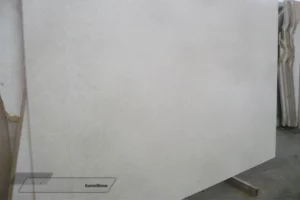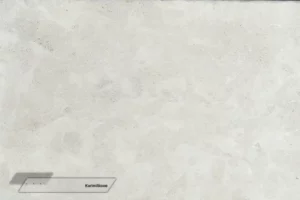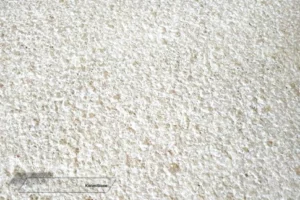
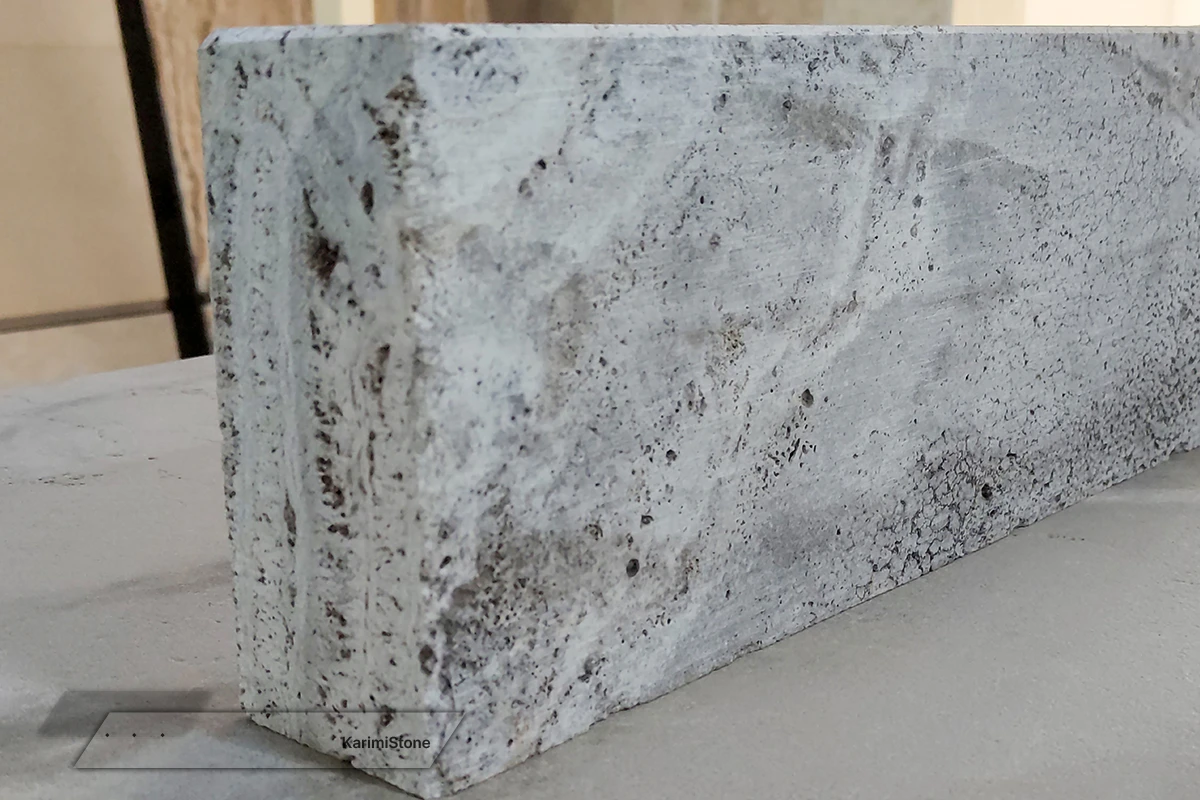
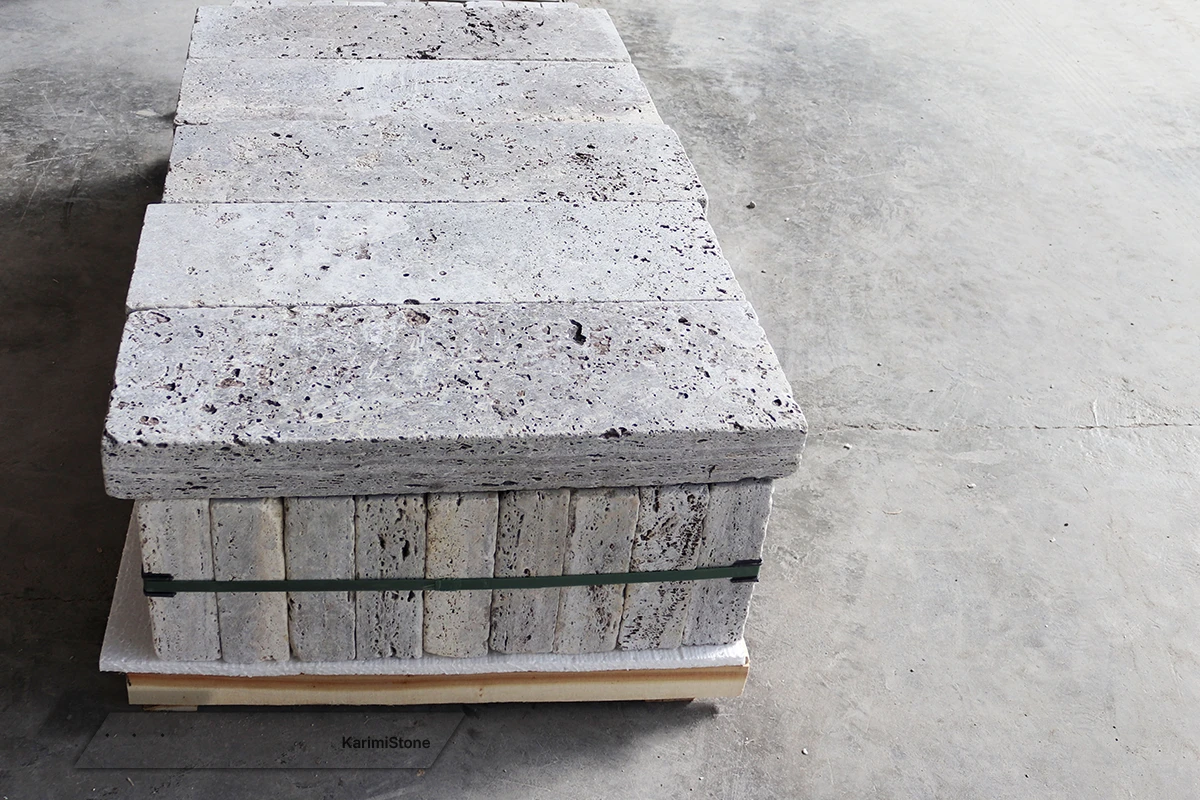
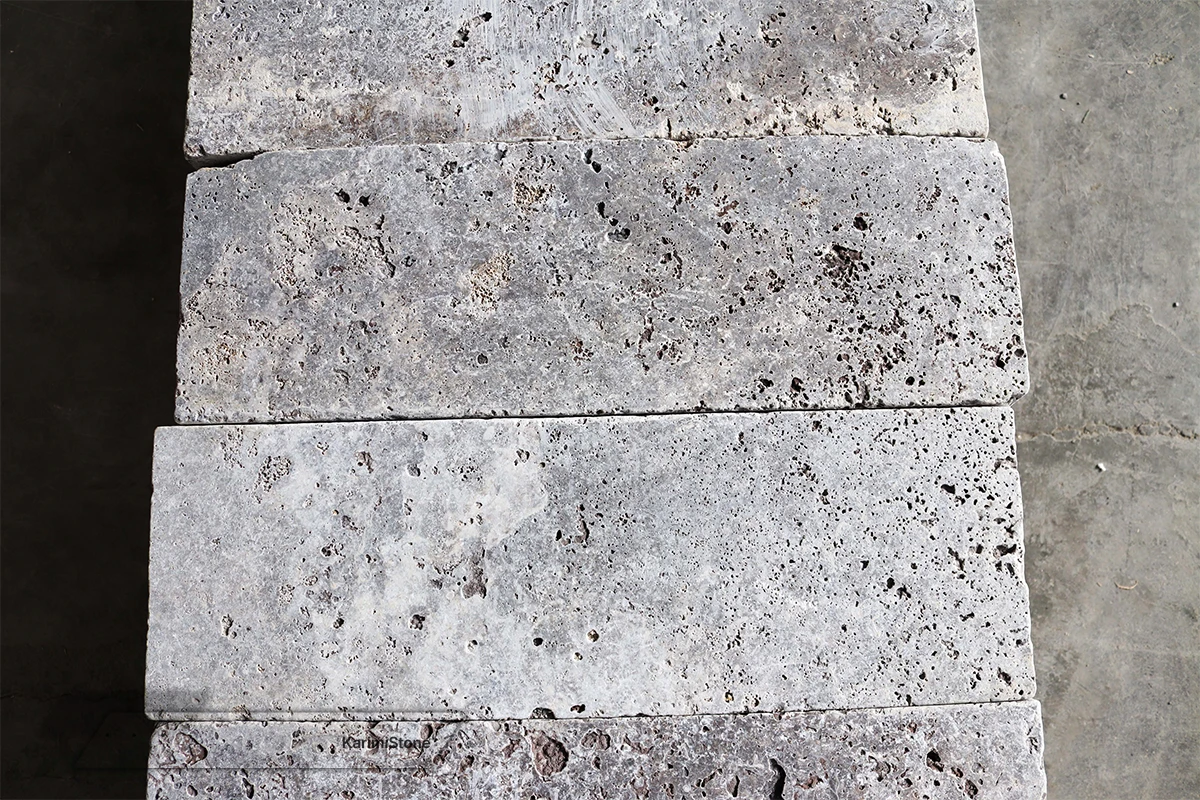
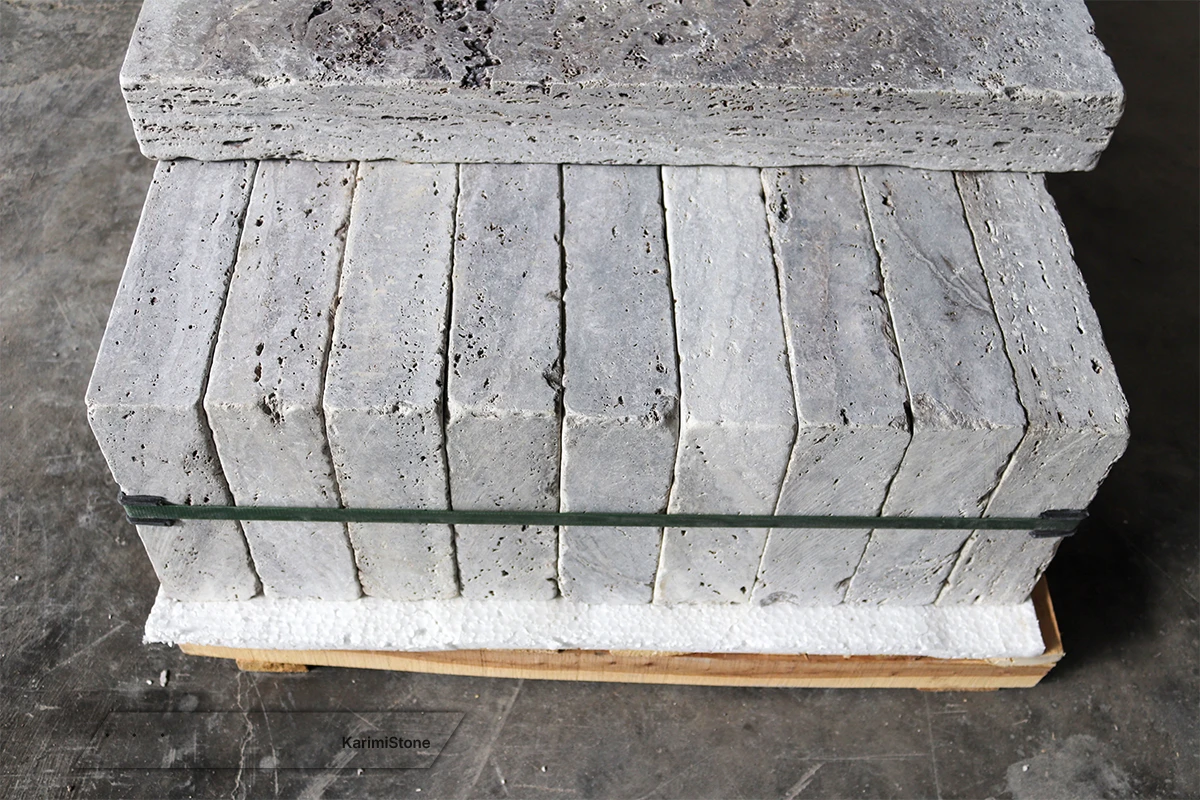
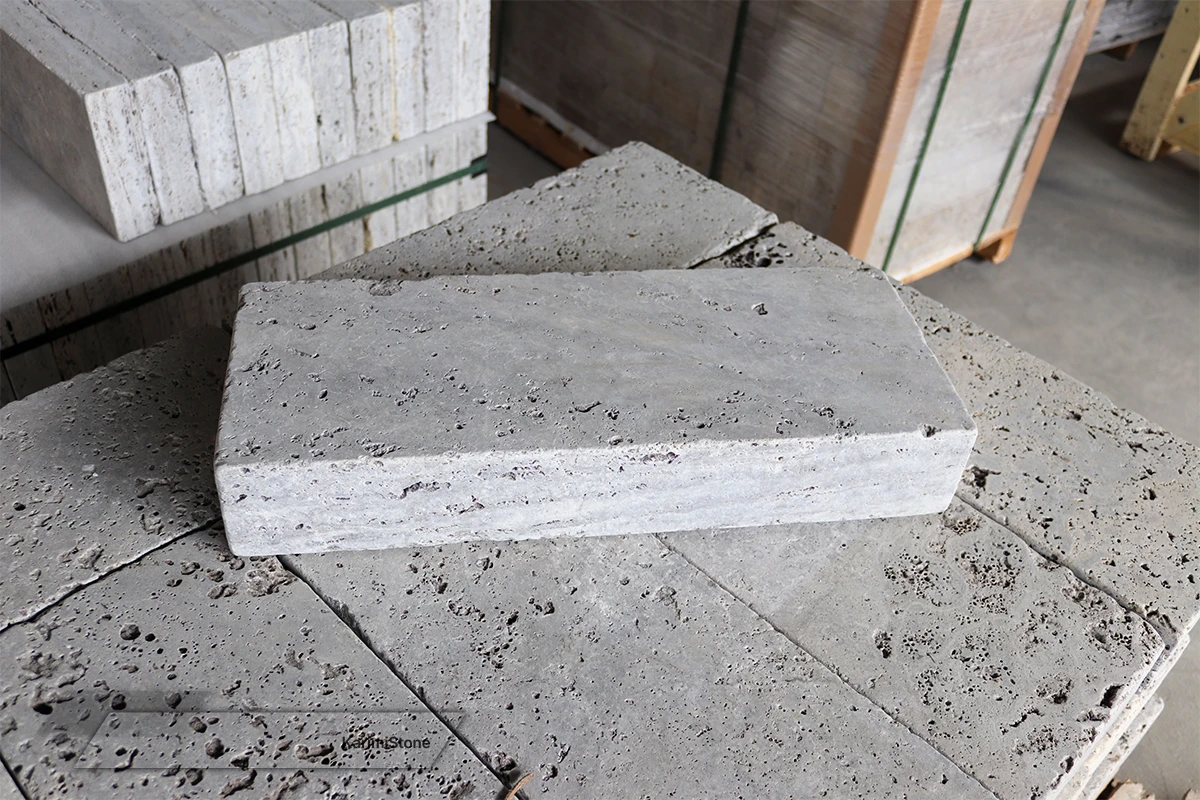
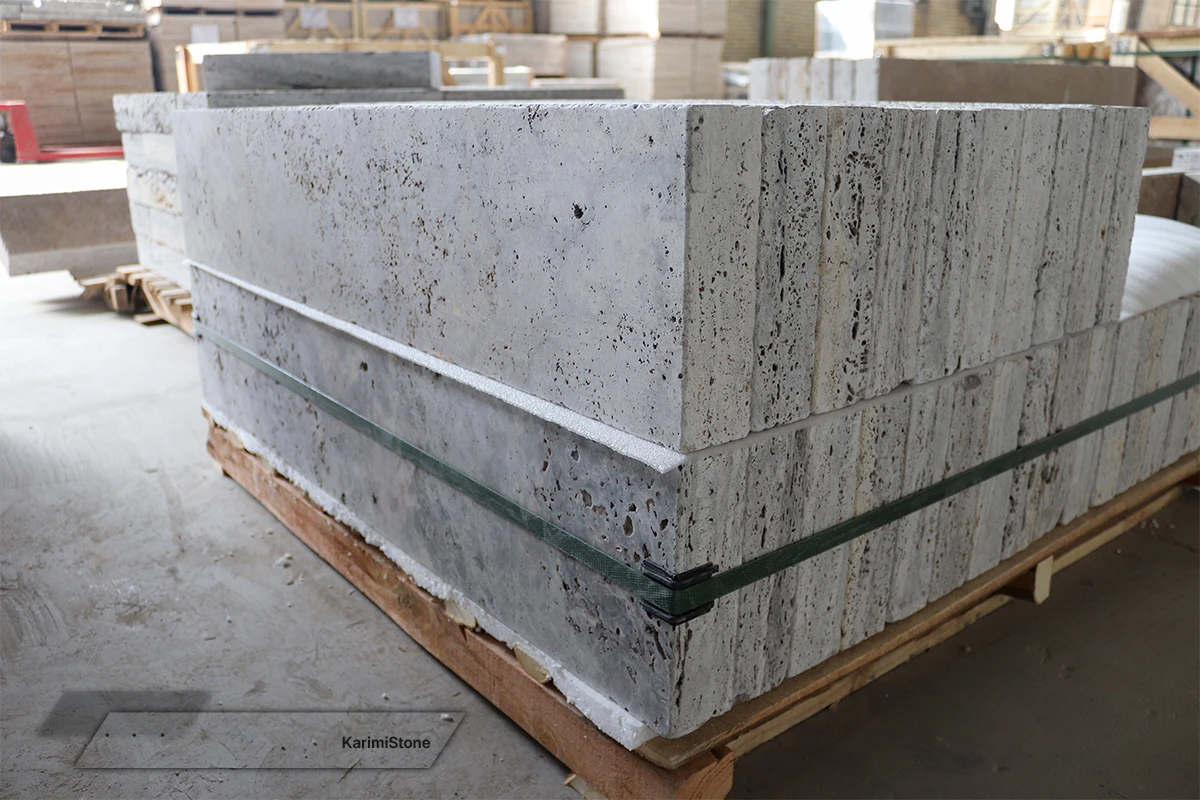
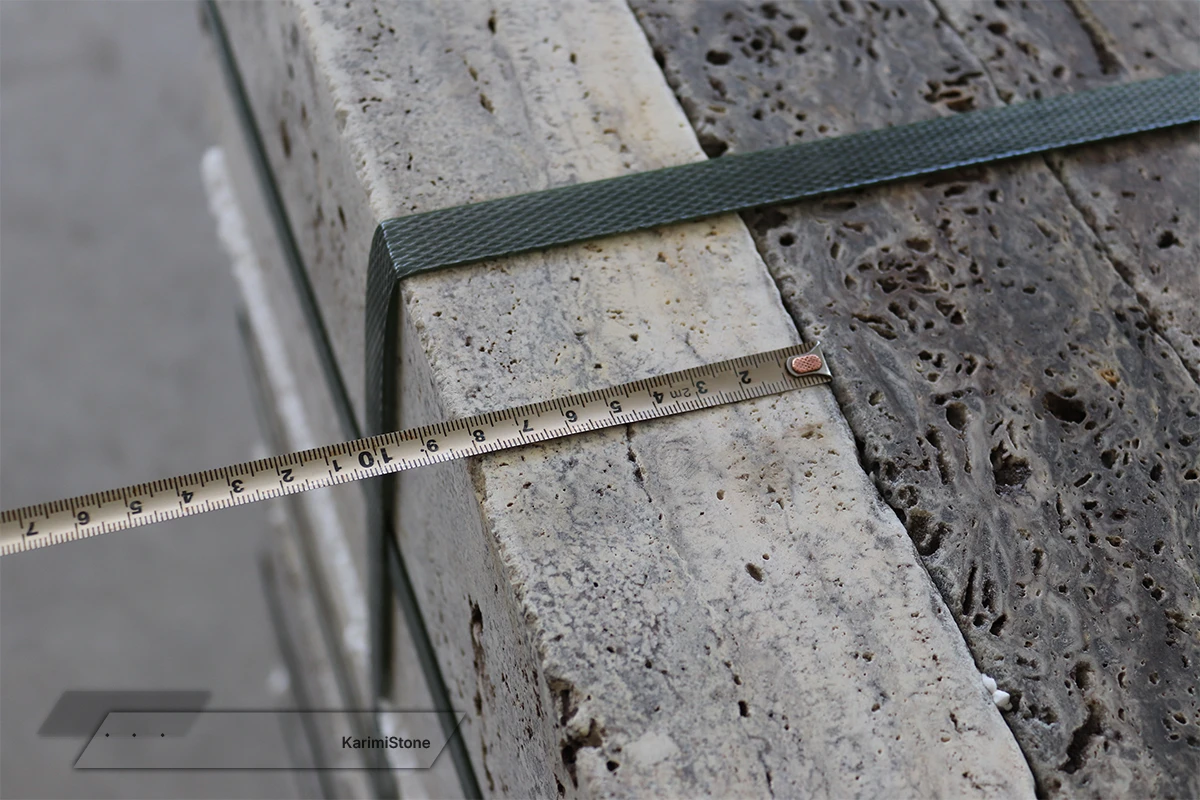
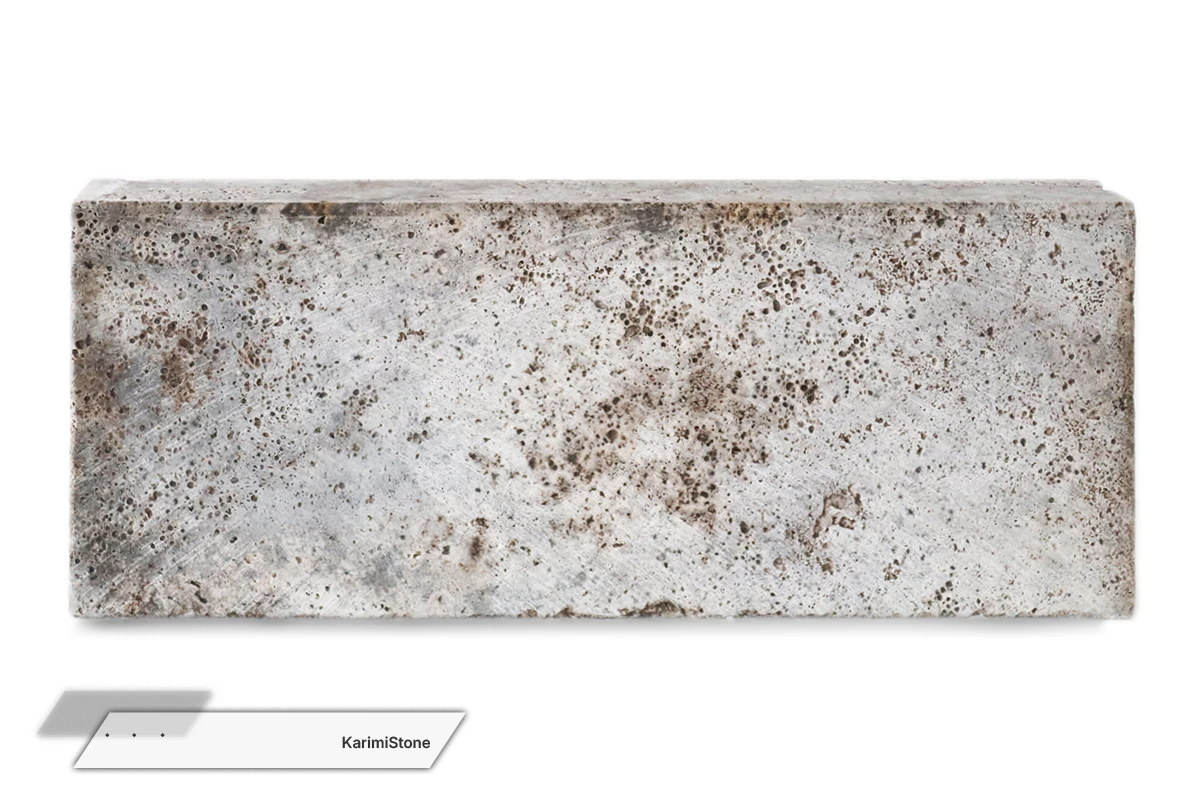
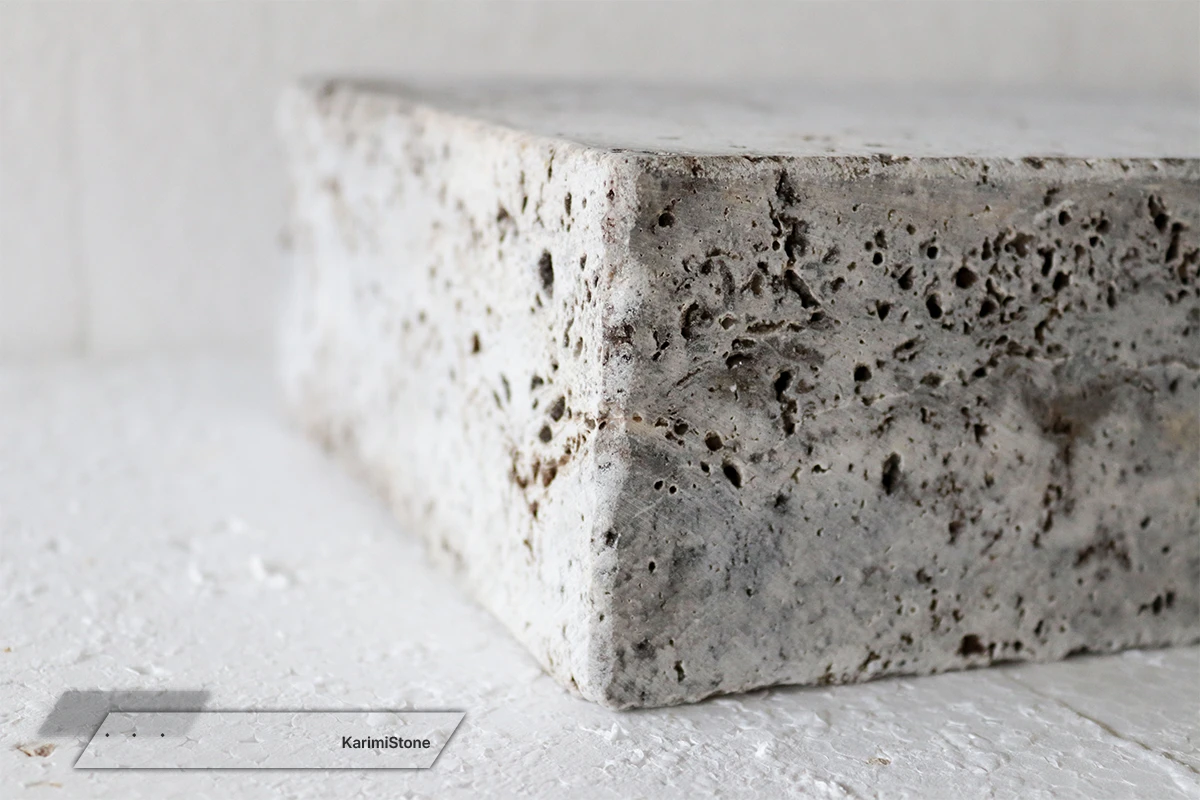
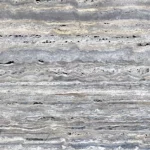
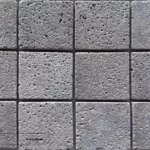
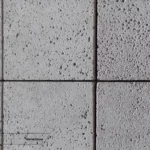
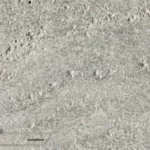
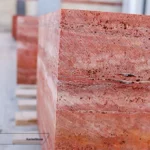





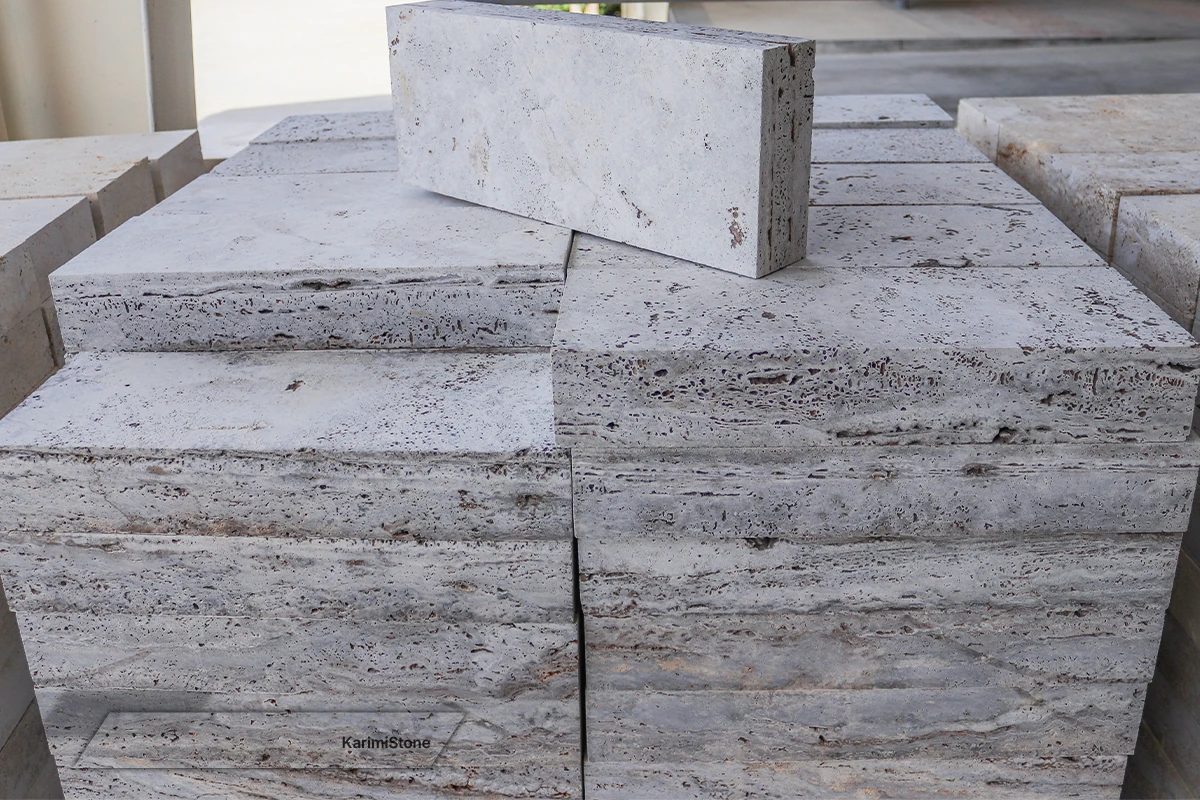
Silver Travertine Sawn-Cut Cross-Cut is an Iranian natural travertine with silver-grey and smoky tones, warm brown mineral movement, lighter natural areas, visible pores, and an authentic machine-cut surface. The stone is produced in a Cross-Cut pattern, creating a softer, less directional and more cloud-like appearance than Vein-Cut travertine.
The Sawn-Cut finish preserves the stone close to its condition immediately after cutting. No Polishing, Honing, Sandblasting or Brushing is applied to create a decorative secondary texture. Fine saw marks remain visible on the face, producing a simple, raw and architectural appearance.
Silver Travertine Sawn-Cut Cross-Cut is particularly suitable for projects that require a natural, understated and minimally processed stone surface, including exterior wall cladding, architectural facades, landscape walls, feature walls, custom Cut-to-Size elements and selected paving or architectural applications.
What Is Silver Travertine?
Silver Travertine is a natural calcium-carbonate stone formed through mineral deposition from mineral-rich water. During its geological formation, the material develops layers, pores, cavities and variations in mineral concentration.
Its natural color range can include:
- Light silver-grey
- Medium grey
- Smoky grey
- Warm brown mineral areas
- Beige tones
- White or pale natural veins
- Natural pores and cavities
These variations give Silver Travertine a naturally complex appearance that works well in contemporary, minimalist and landscape architecture.
For independent information about travertine and its geological family, see the Natural Stone Institute guide to Limestone and Travertine.
You can also explore other materials in the Karimi Stone Silver Natural Stone collection.
What Does Cross-Cut Mean?
Travertine develops naturally in geological layers.
In a Cross-Cut, the block is cut across these natural layers rather than parallel to them.
This cutting direction normally produces:
- Less linear movement
- Cloud-like mineral patterns
- Circular and irregular forms
- More distributed silver and brown tones
- A softer and more organic appearance
Compared with Vein-Cut travertine, Cross-Cut generally has less obvious directional movement, making it easier to use in layouts where a strong horizontal or vertical line is not desired.
Cross-Cut vs. Vein-Cut Silver Travertine
| Characteristic | Cross-Cut | Vein-Cut |
|---|---|---|
| Cut direction | Across natural layers | Parallel to natural layers |
| Pattern | Cloud-like and irregular | Linear and directional |
| Color movement | Distributed | Banded |
| Architectural character | Organic and balanced | Structured and rhythmic |
What Is a Sawn-Cut Finish?
A Sawn-Cut surface is the natural face created when the stone is cut by industrial stone-processing equipment.
Unlike Polished, Honed, Sandblasted or Brushed finishes, the surface does not receive a decorative secondary treatment.
The result normally includes:
- Visible fine saw marks
- A flat surface
- Slight physical texture
- Very low surface shine
- A raw architectural appearance
- Natural stone colors without polishing enhancement
Depending on production requirements, pieces may be calibrated to achieve consistent thickness. A very light refining pass may also be used to reduce excessively sharp cutting marks without creating a polished appearance.
You can compare Sawn-Cut with other treatments in the Karimi Stone Natural Stone Surface Finishes guide.
Sawn-Cut Surface vs. Sawn Edge
The terms Sawn-Cut and Sawn describe two different product attributes.
| Term | Area | Meaning |
|---|---|---|
| Sawn-Cut | Main surface | Machine-cut face with visible saw texture |
| Sawn | Edges | Clean mechanically cut perimeter |
For this product, Sawn-Cut describes the main surface. If the product data also lists Sawn as the Edge Finish, that refers specifically to the perimeter of the tile or slab.
How Sawn-Cut Changes the Appearance of Silver Travertine
Because the surface is not progressively refined through Honing or Polishing, the stone maintains a more direct and natural visual relationship with the original cut block.
This can create:
- Muted silver-grey tones
- Low light reflection
- Subtle saw-line texture
- Visible natural pores
- Less intensified color contrast
- A raw and honest material character
The Cross-Cut pattern further softens the visual movement because the natural geological layers appear as distributed forms instead of long linear veins.
Natural Color and Pattern
Silver Travertine Sawn-Cut Cross-Cut may contain a combination of:
- Silver-grey background areas
- Smoky-grey mineral movement
- Brown and warm-grey zones
- Beige areas
- Light mineral markings
- Natural pores
The unfinished character of Sawn-Cut means these colors are normally more subdued than on a Polished surface.
Iranian Silver Travertine
Important Iranian commercial selections of Silver Travertine are associated with quarry regions such as:
- Takab
- Azarshahr
- Tafresh
- Kashan
Different quarry sections and blocks can vary in tone, pore structure, mineral movement and technical performance.
Why Architects Use Sawn-Cut Stone
Sawn-Cut surfaces are often selected when the design concept favors material authenticity rather than decorative finishing.
The finish works particularly well in:
- Minimalist architecture
- Contemporary facades
- Raw-material interiors
- Landscape architecture
- Large monolithic wall surfaces
- Projects combining stone with exposed concrete or metal
Fine saw marks create a technical visual texture without adding the stronger relief associated with Sandblasting or Bush-Hammering.
Applications of Silver Travertine Sawn-Cut Cross-Cut
Exterior Wall Cladding
The understated matte appearance can be used on contemporary exterior walls and facade sections.
Possible applications include:
- Building facades
- Exterior walls
- Entrance walls
- Architectural frames
- Landscape walls
- Feature facade sections
Exterior suitability depends on the actual stone selection, thickness, fixing method, climate, drainage and engineering design.
Architectural Feature Walls
Cross-Cut Silver Travertine can create broad natural movement without strong directional stripes.
The Sawn-Cut surface adds a restrained industrial quality suitable for feature walls and large architectural panels.
Landscape Projects
Silver-grey, brown and beige tones combine naturally with:
- Concrete
- Timber
- Black steel
- Weathered metal
- Glass
- Vegetation
- Water features
Custom Cut-to-Size Elements
Sawn-Cut is particularly practical for custom project fabrication because the stone can remain in its machine-cut state before installation or be used as a base for additional processing where required.
Paving and Horizontal Applications
Suitable material can be considered for selected paving or horizontal architectural elements.
For these applications, thickness, substrate, load, drainage, freeze-thaw exposure and required slip performance must be evaluated for the actual project.
Sawn-Cut and Slip Resistance
A Sawn-Cut surface generally has more physical texture than a highly Polished surface.
However, visible saw marks do not automatically establish a particular slip-resistance rating.
If a project requires a defined P-rating, Wet Pendulum result, coefficient of friction or other regulatory classification, the actual finished stone should be tested.
Technical Performance and Project Testing
The supplied source describes the material qualitatively but does not provide a dedicated numerical laboratory table for this exact Cross-Cut Sawn-Cut product.
For that reason, numerical values from another Silver Travertine finish should not automatically be copied to this product.
For engineering projects, the actual material may be tested for:
- Density
- Porosity
- Water absorption
- Compressive strength
- Flexural strength
- Abrasion resistance
- Freeze-thaw performance where required
Surface and Thickness Control
Because Sawn-Cut deliberately retains the cutting character, production consistency depends on controlled fabrication.
Important factors include:
- Saw type
- Blade or wire condition
- Cutting speed
- Surface flatness
- Thickness calibration
- Saw-mark consistency
- Edge accuracy
Project Sorting
For project supply, material should be sorted according to:
- Silver-grey tone
- Brown intensity
- Cross-Cut pattern
- Natural pore character
- Saw-mark appearance
- Surface flatness
- Thickness consistency
- Compatibility between adjoining pieces
An approved visual range or physical sample is recommended for large architectural orders.
Cleaning and Maintenance
Travertine is calcium-carbonate based and can be sensitive to acidic products. For independent maintenance information, see the Natural Stone Institute Care & Cleaning guide.
- Use cleaners suitable for natural travertine
- Prefer mild or pH-neutral products
- Avoid vinegar, lemon and strong acidic cleaners
- Remove dirt and abrasive grit regularly
- Avoid aggressive cleaning methods that could alter the saw texture
- Test sealers on a representative sample before full application
Available Formats
Depending on quarry block dimensions and project requirements, Silver Travertine Sawn-Cut Cross-Cut can be processed as:
- Slabs
- Tiles
- Free-Length pieces
- Pattern Sets
- Architectural panels
- Custom Cut-to-Size elements
- CNC-prepared components
Why Choose Silver Travertine Sawn-Cut Cross-Cut?
- Cross-Cut pattern: Natural cloud-like movement without strong directional lines.
- Authentic Sawn-Cut surface: Preserves the original machine-cut character.
- Low reflection: No high-gloss finishing process.
- Natural pores: Geological character remains visible.
- Minimal architectural appearance: Suitable for raw and contemporary concepts.
- Fabrication flexibility: Can be supplied as a finished raw surface or used as a basis for additional processing.
- Project sorting: Tone, pattern, surface character and dimensions can be coordinated before production.
Frequently Asked Questions
What is Silver Travertine Sawn-Cut Cross-Cut?
It is Iranian Silver Travertine cut across its natural geological layers and supplied with a machine-cut surface that retains fine saw marks.
What does Cross-Cut mean?
Cross-Cut means the block is cut across the natural bedding layers, producing a more cloud-like and less directional pattern.
What does Sawn-Cut mean?
Sawn-Cut means the main stone surface is left close to its condition after mechanical cutting, without Polishing or decorative texturing.
Is Sawn-Cut the same as a Sawn edge?
No. Sawn-Cut describes the main surface, while Sawn Edge describes the mechanically cut perimeter of the stone piece.
Is the surface shiny?
No. A Sawn-Cut surface normally has very low shine and retains a natural machine-cut character.
Can it be used outdoors?
Suitable selections can be considered for exterior walls and other architectural applications when stone thickness, installation and engineering requirements are correctly specified.
Is Sawn-Cut automatically non-slip?
No. Any required slip-resistance classification must be confirmed by testing the actual finished stone.
Silver Travertine Sawn-Cut Cross-Cut by Karimi Stone
Karimi Stone processes and supplies Iranian Silver Travertine for residential, commercial, landscape and architectural projects.
For Silver Travertine Sawn-Cut Cross-Cut, material can be selected according to silver-grey and brown tone, Cross-Cut pattern, natural pore structure, saw-mark appearance, dimensions, thickness and project requirements.
Project production can include block selection, Cross-Cutting, thickness calibration, custom fabrication, project sorting, dimensional inspection, quality control, export-grade packaging and international supply.