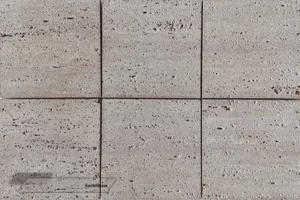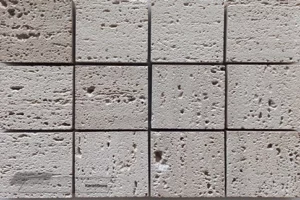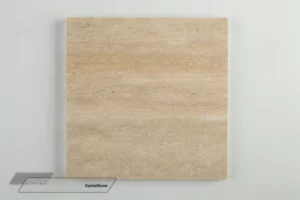
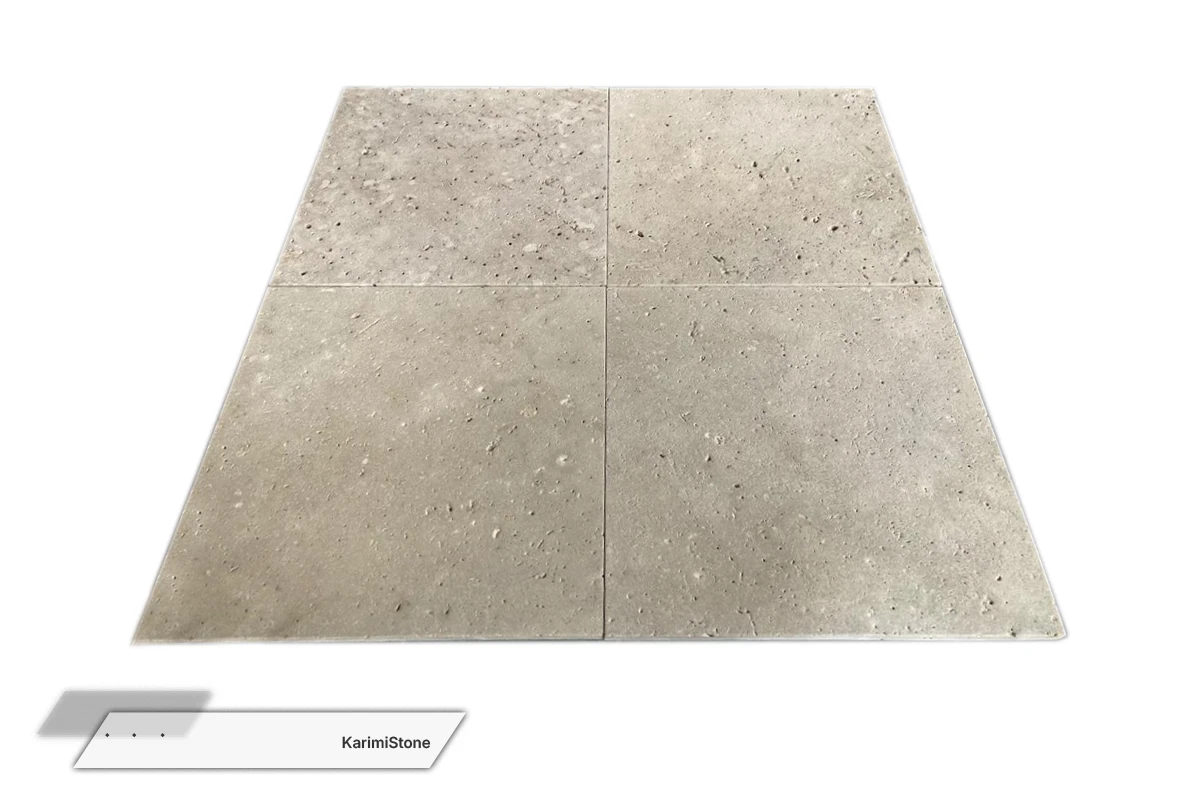
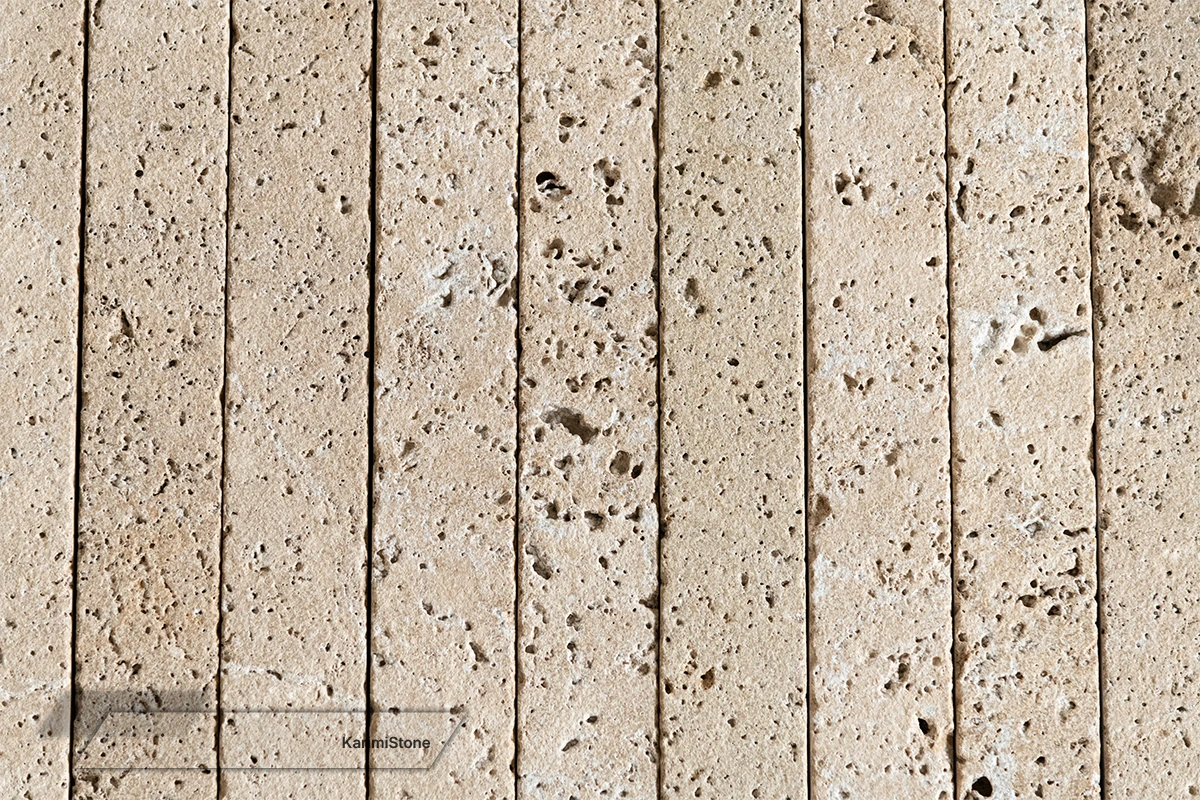
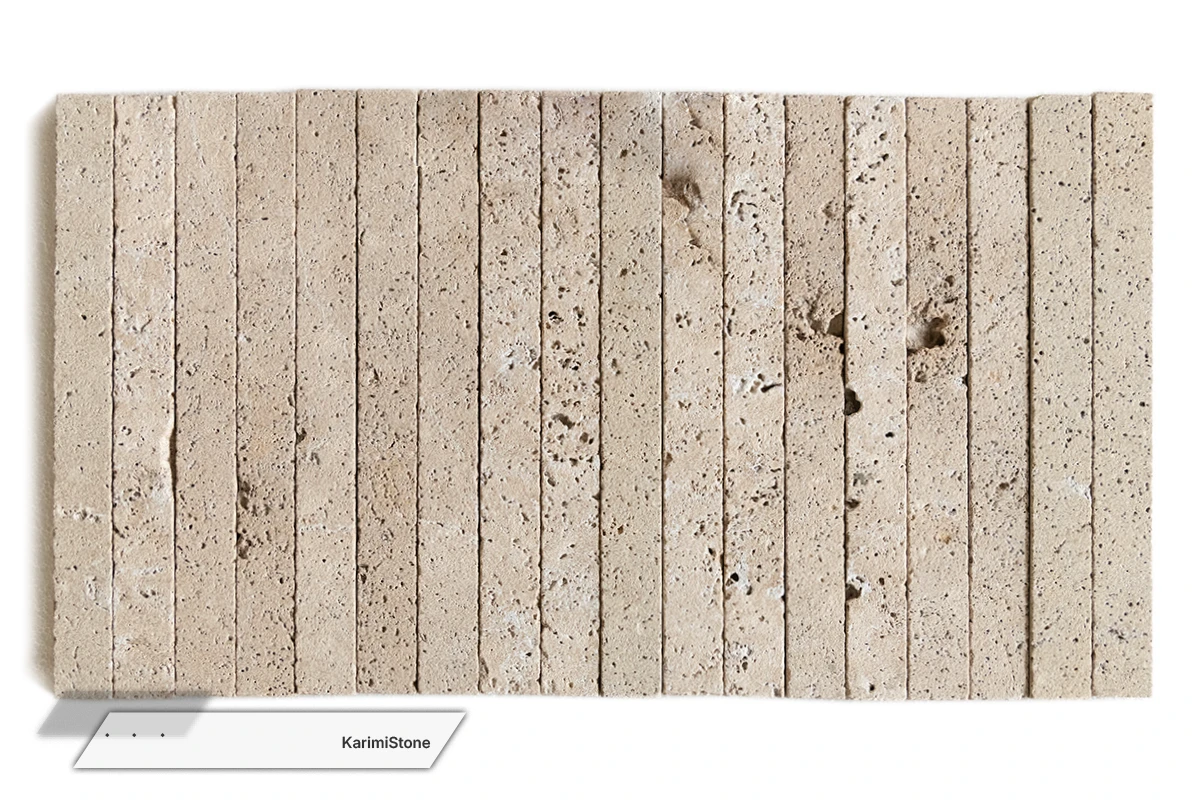
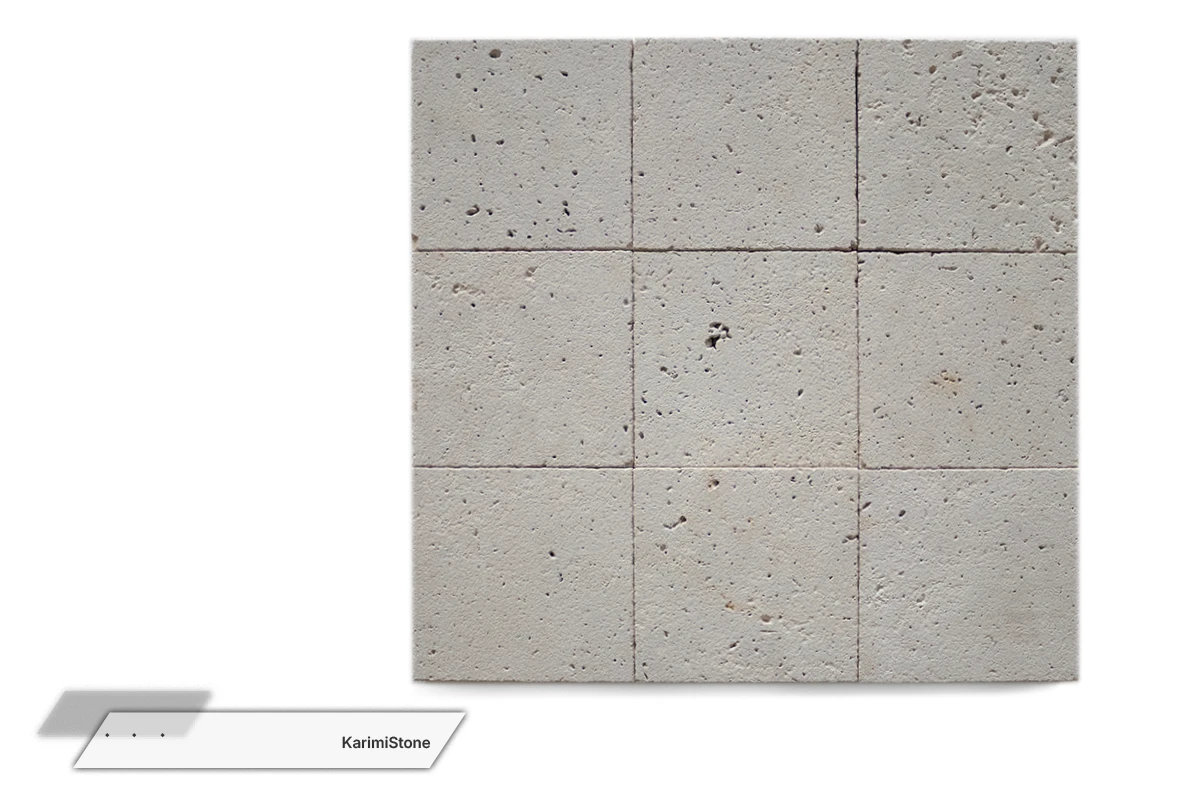
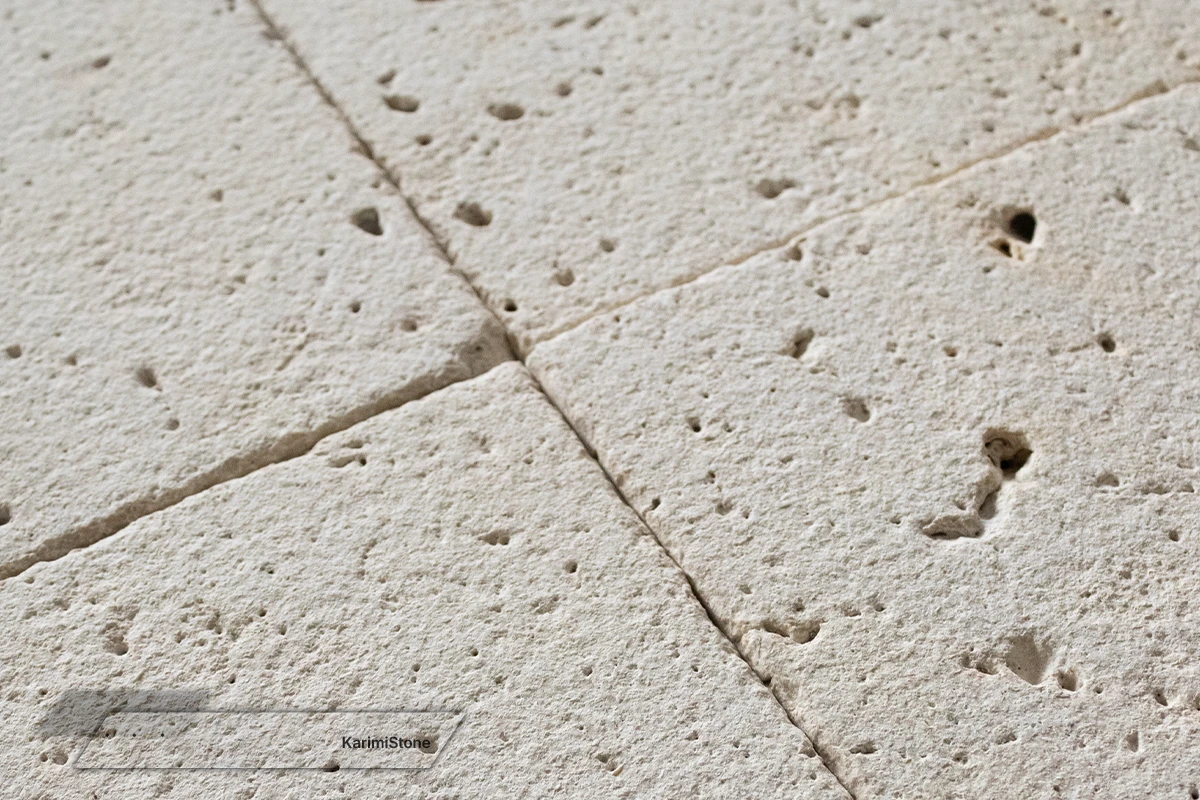
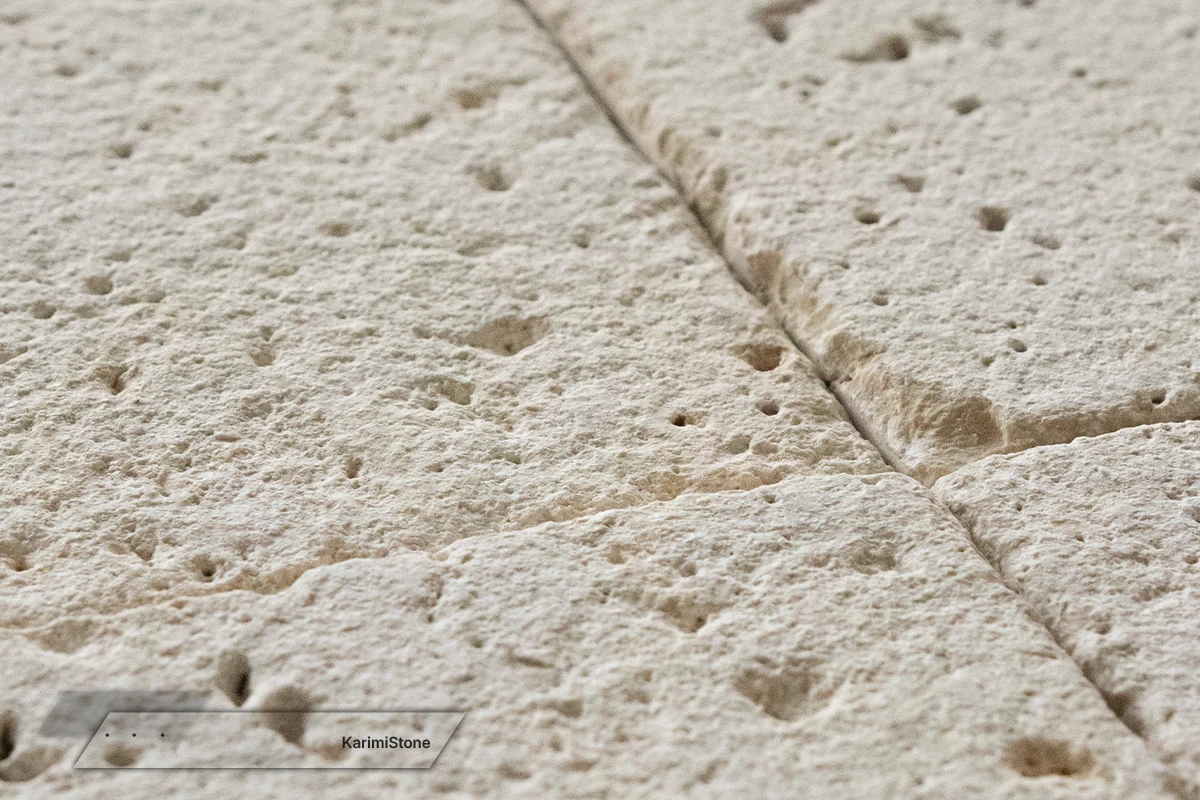
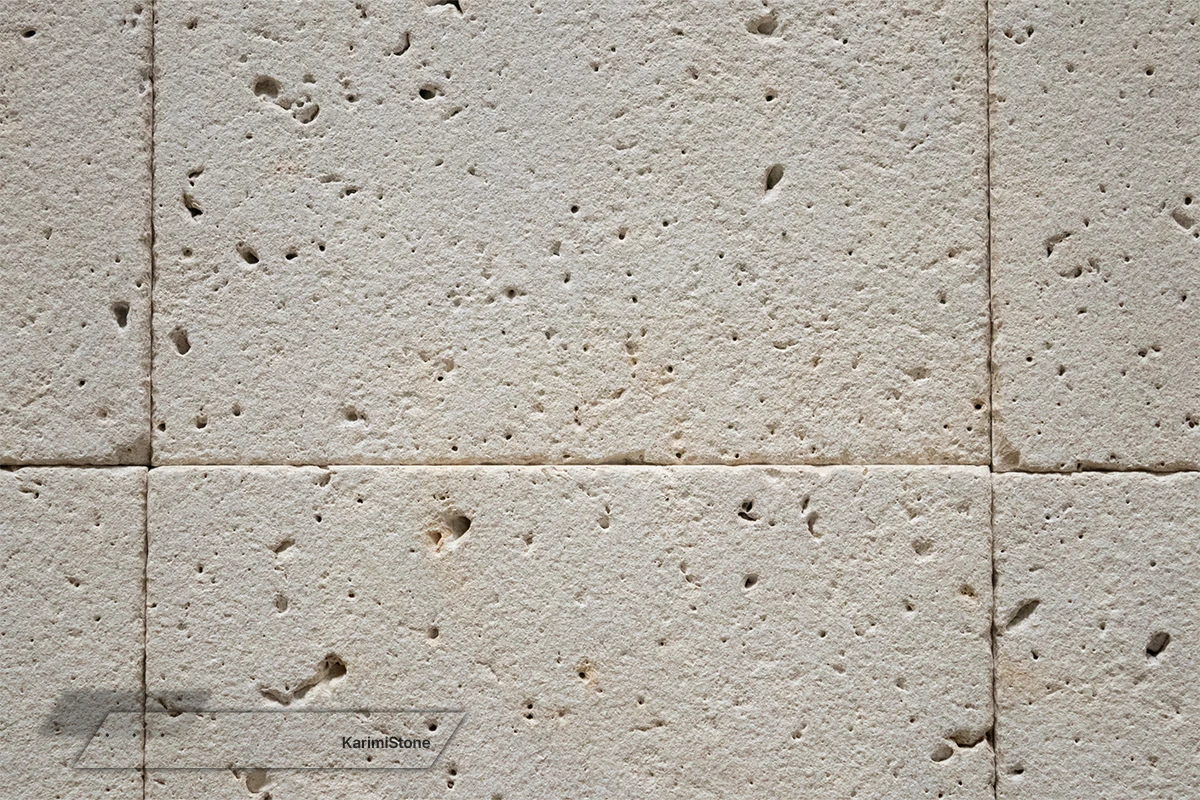
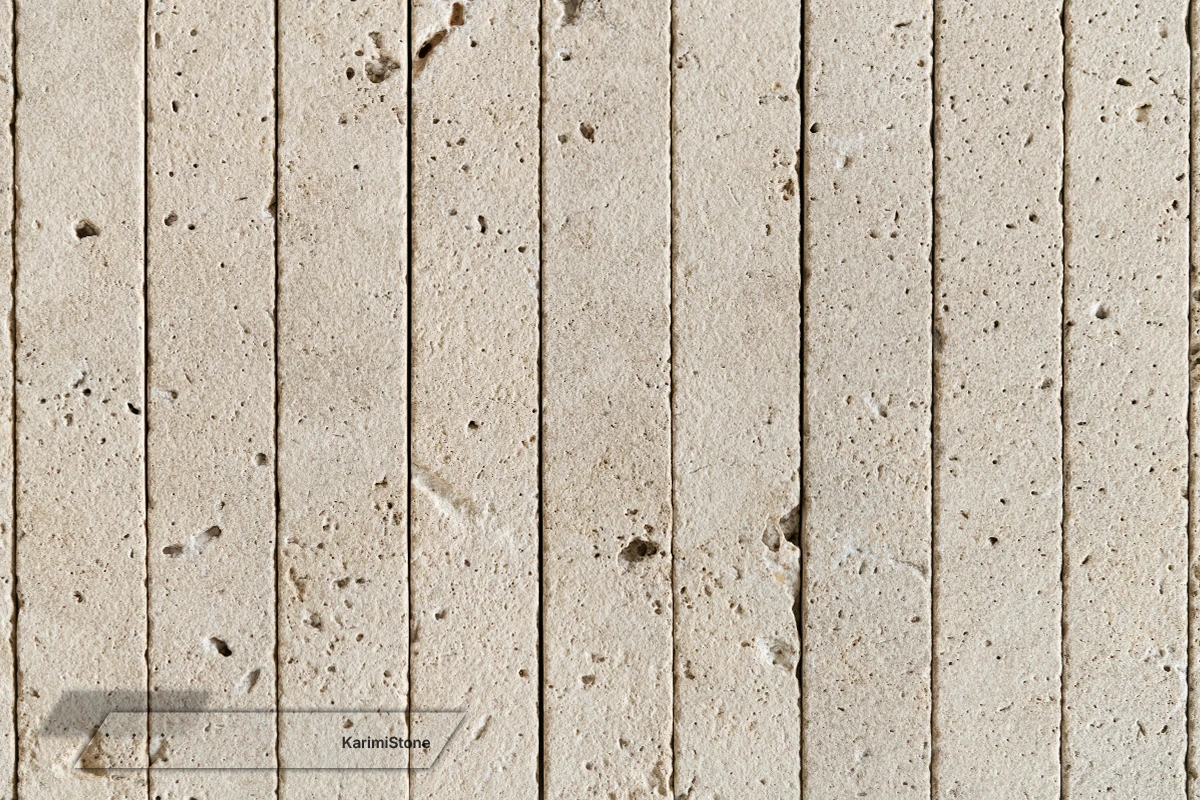
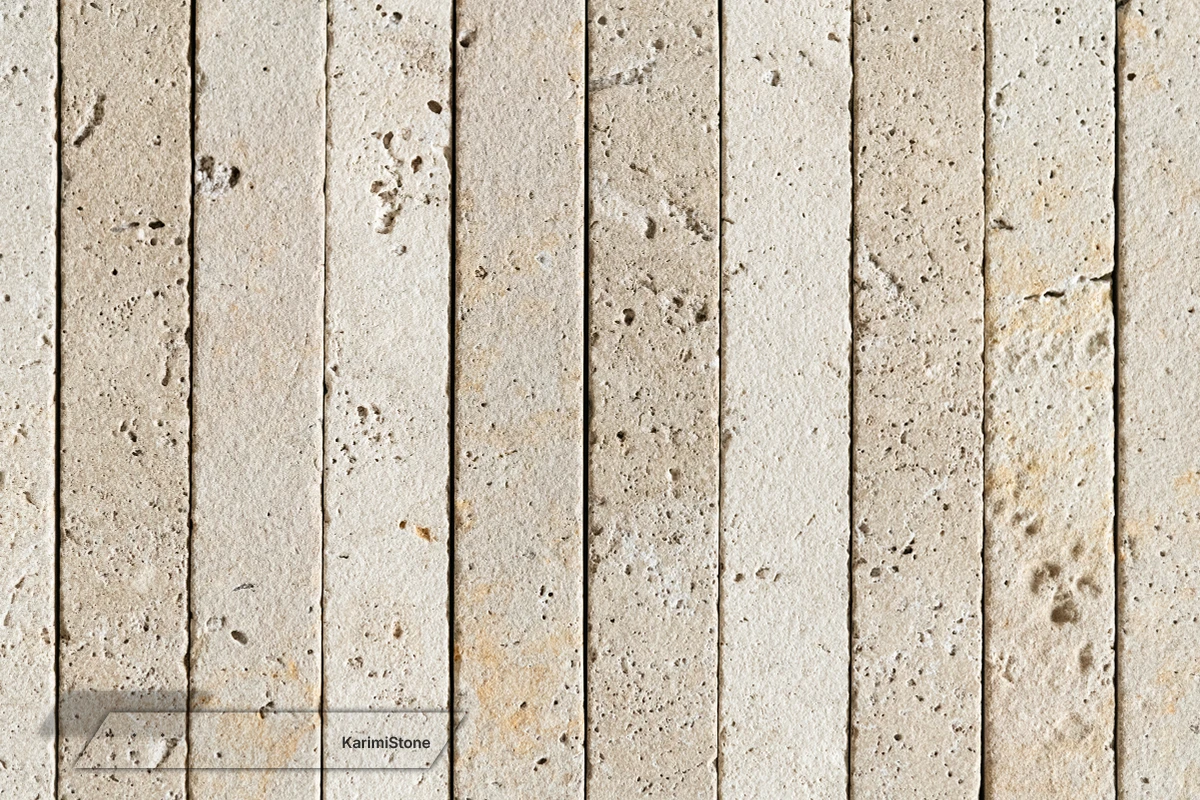
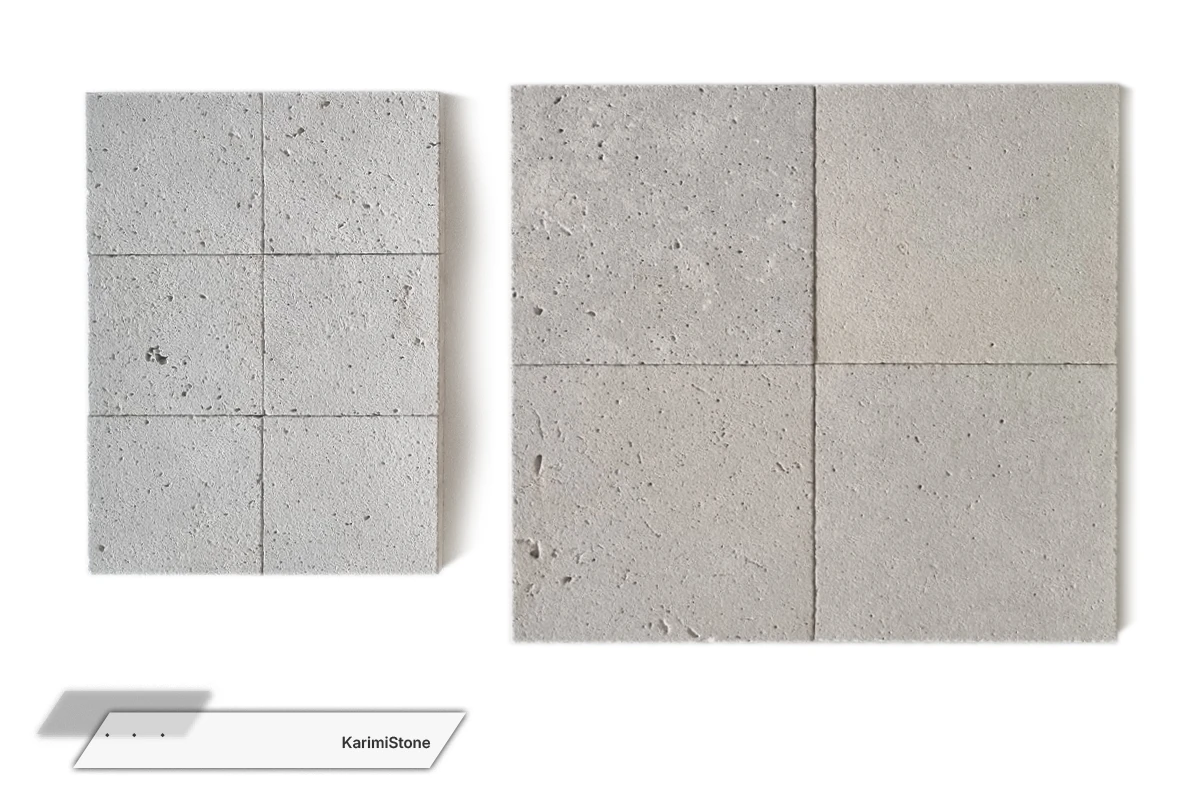
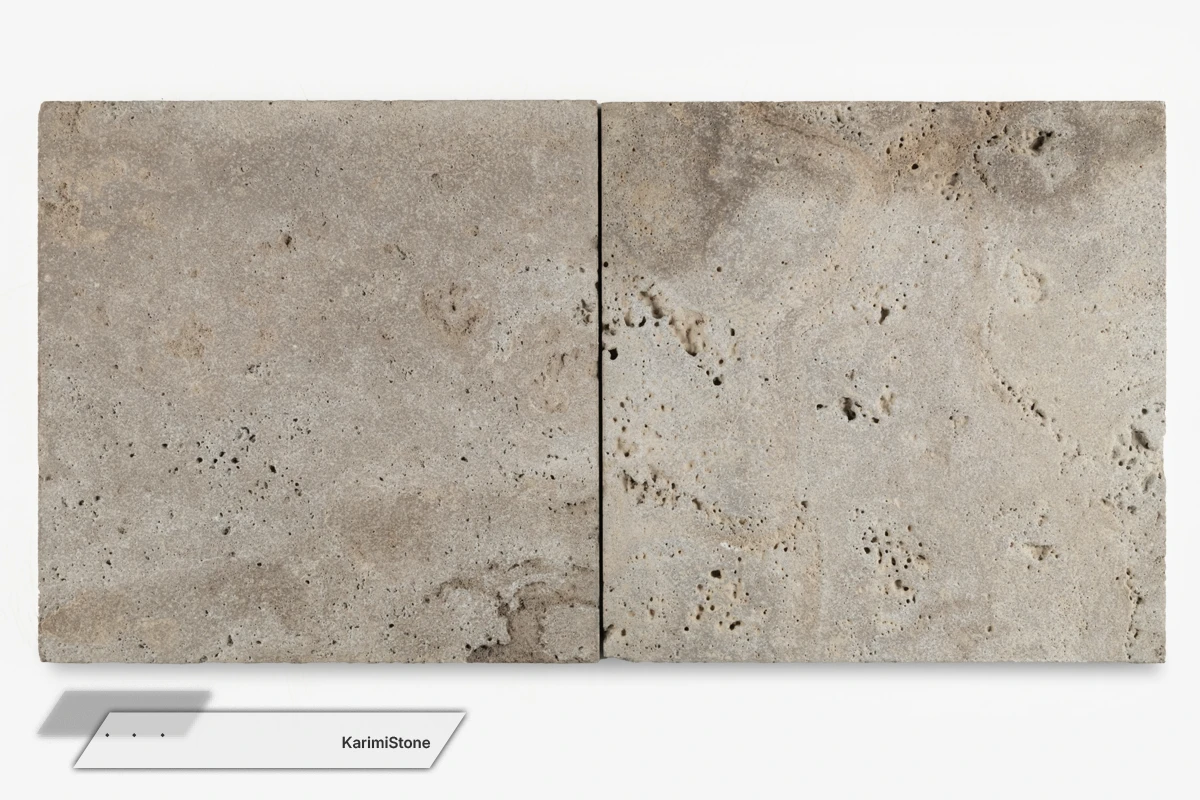
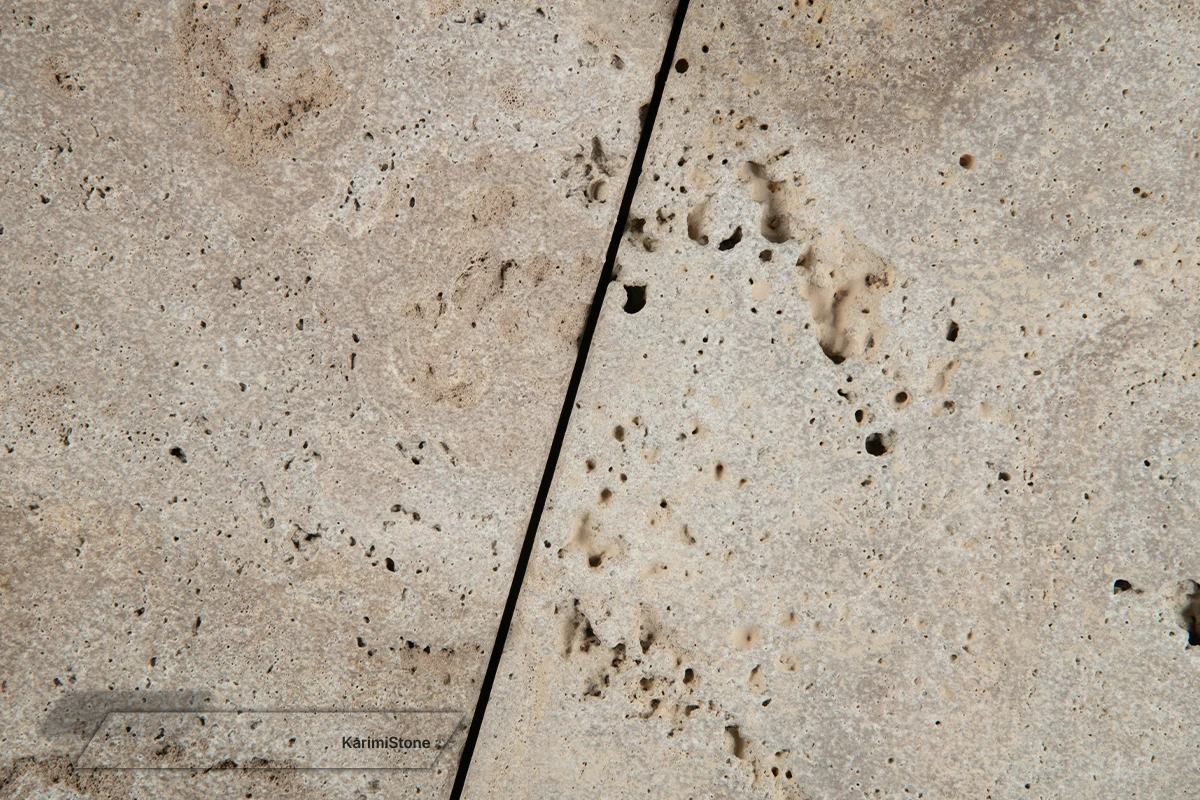
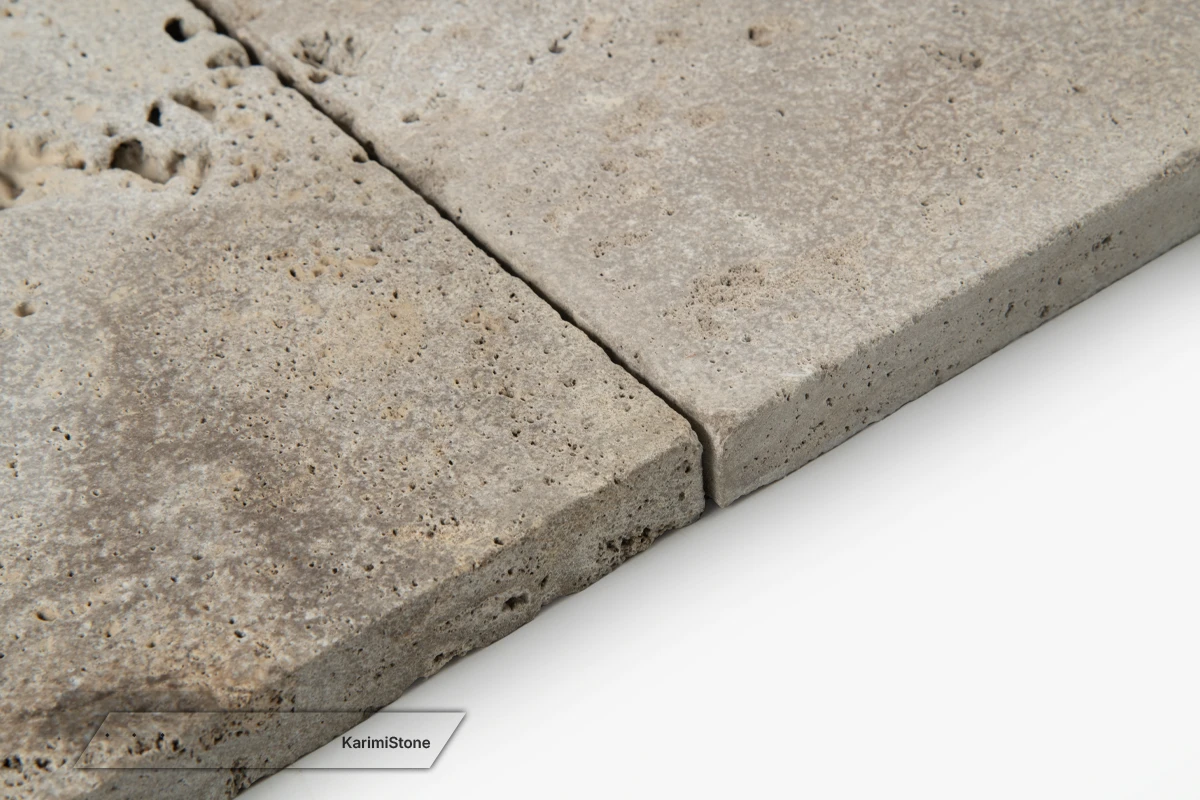
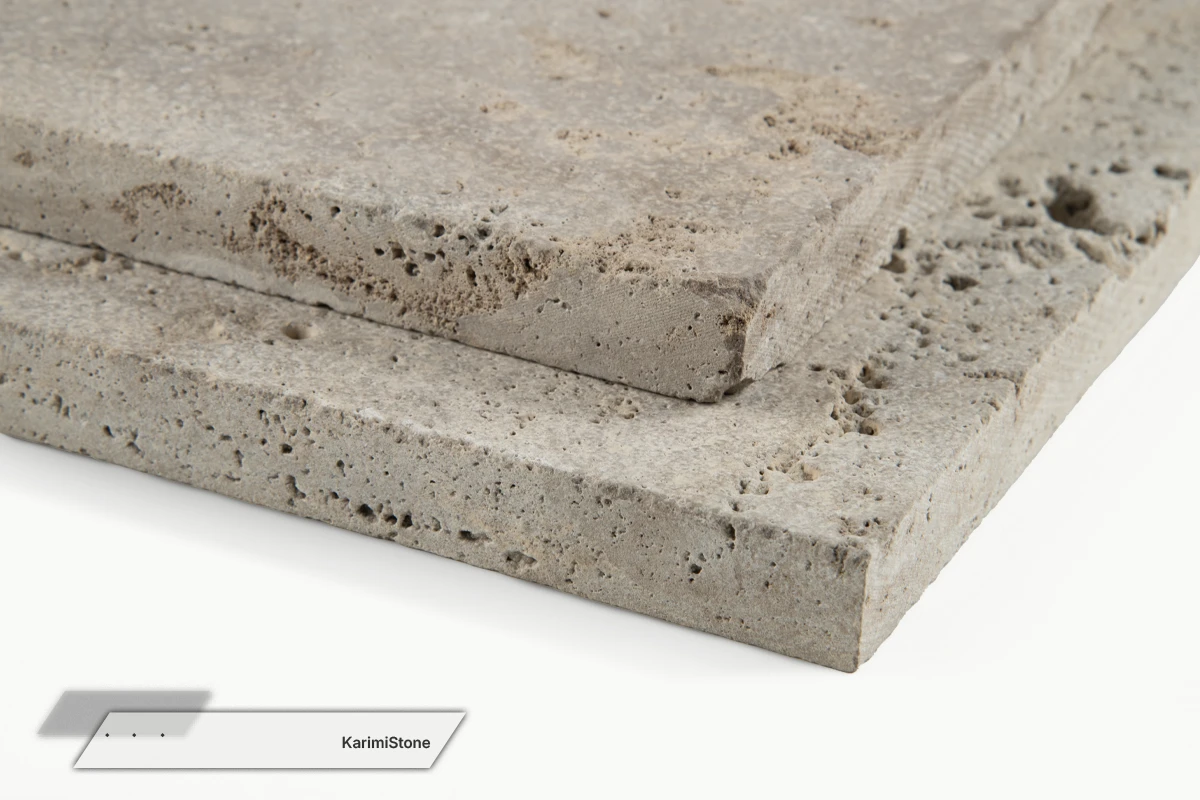
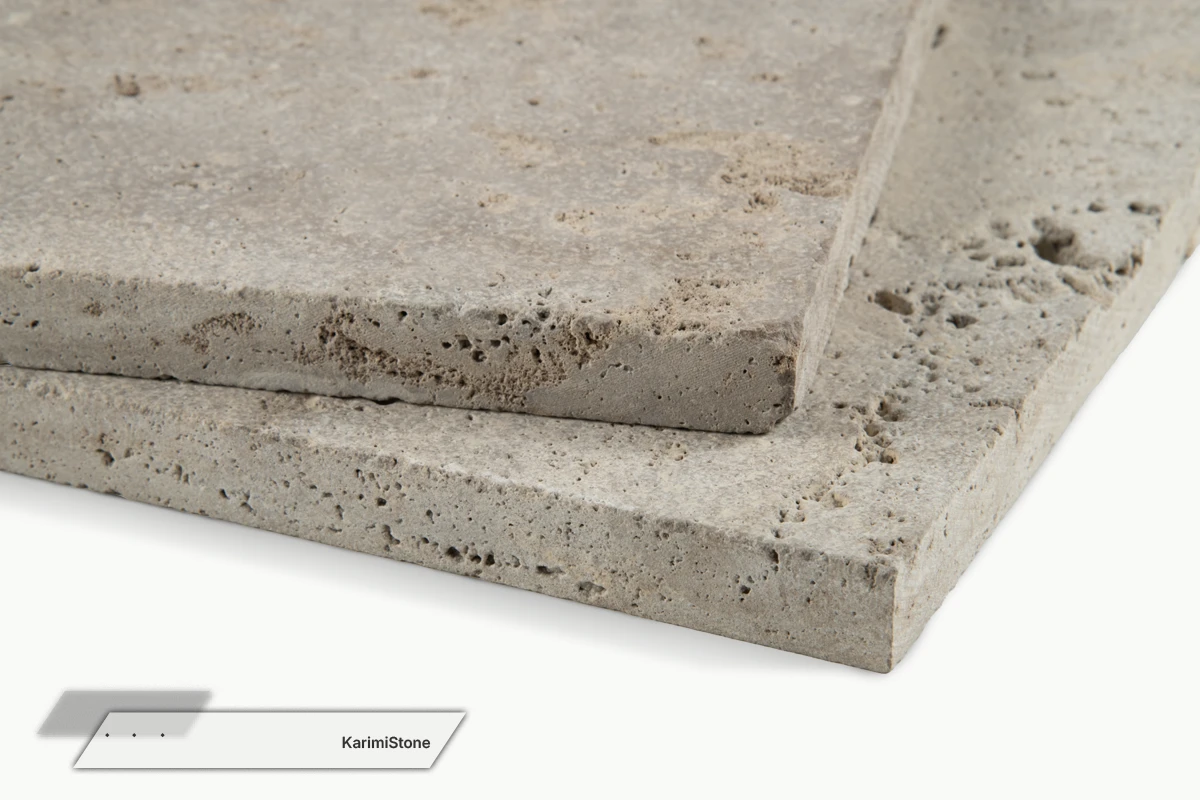
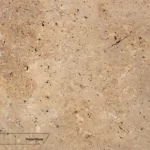
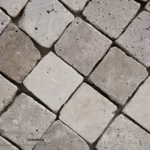
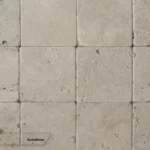
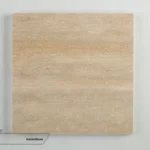
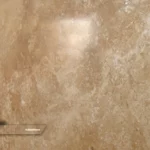
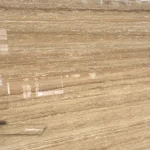
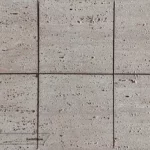
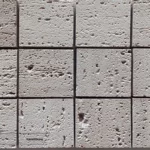
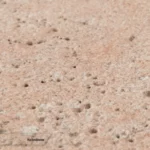
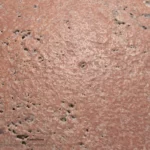
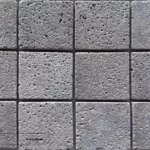
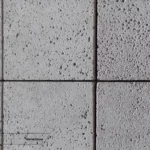
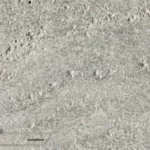









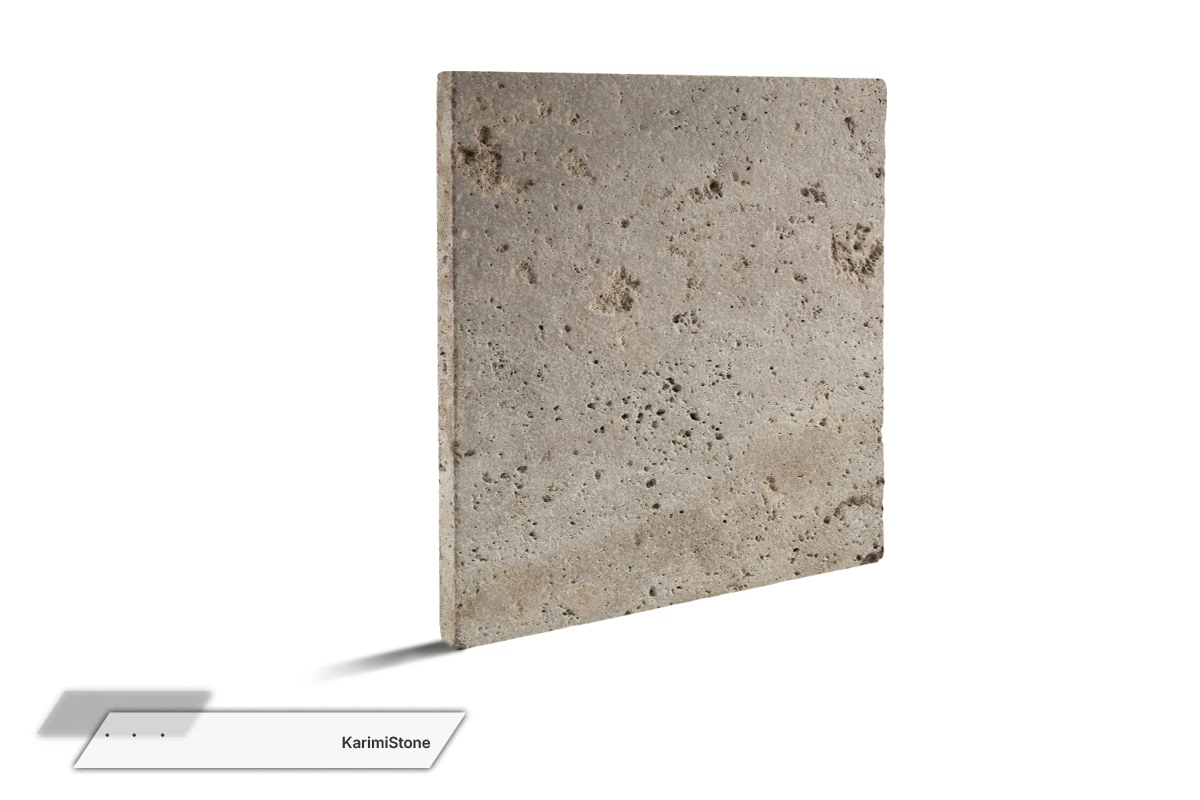
Beige Travertine Sandblasted Cross-Cut is an Iranian natural stone with warm cream-to-beige tones, natural pores, a soft cloud-like pattern, and a fine textured matte surface. The combination of a Sandblasted finish and Cross-Cut pattern creates a balanced architectural stone with low reflection, tactile texture, and natural visual movement.
Sandblasting creates fine surface roughness by directing abrasive particles onto the stone under controlled pressure. Cross-Cut production reveals the natural geological structure of travertine as cloudy, rounded, flowing, and irregular forms rather than long directional veins.
This combination makes Beige Travertine Sandblasted Cross-Cut particularly suitable for paving, courtyards, walkways, garden and villa flooring, stairs, landscape projects, exterior walls, pool surroundings, and other architectural areas where a natural textured surface is preferred.
What Is Beige Travertine Sandblasted Cross-Cut?
Beige Travertine Sandblasted Cross-Cut combines two characteristics that affect the appearance of the stone in different ways.
Cross-Cut determines how the natural geological structure appears across the face. Instead of long linear bands, the surface shows softer and less directional patterns.
Sandblasting creates the physical surface texture. Abrasive particles strike the stone under controlled pressure, producing a fine matte texture while keeping the natural beige color, pores, and mineral pattern visible.
The result is a warm natural stone with controlled roughness, low reflection, and a visually balanced pattern.
What Is Beige Travertine?
Beige Travertine is a natural calcium-carbonate stone formed through the precipitation of minerals from mineral-rich water.
As calcium-rich water reaches the surface and loses carbon dioxide, calcium carbonate can precipitate and gradually form travertine deposits. The U.S. Geological Survey (USGS) describes this process in naturally active travertine systems.
This geological formation produces many of the stone’s characteristic features:
- Natural pores and cavities
- Layered mineral structure
- Cream and beige colors
- White or light brown mineral markings
- Natural differences in texture
- Warm and neutral appearance
Iranian Beige Travertine is particularly useful across large architectural surfaces because its light and neutral palette can create warmth without making the space visually heavy.
Color and Natural Appearance
The color range of Beige Travertine is generally calm and balanced.
Depending on quarry source, geological layer, and stone selection, the surface may include:
- Light cream
- Ivory beige
- Pale beige
- Warm beige
- Honey-beige
- White mineral areas
- Light brown movement
These colors normally blend naturally rather than creating a strong contrast.
In a sandblasted Cross-Cut product, the colors are distributed across the surface in a softer and less directional pattern, while the matte texture reduces strong light reflection.
Other Iranian travertines can be explored in the Karimi Stone Travertine collection.
What Is a Sandblasted Finish?
Sandblasting is a mechanical stone-finishing process in which abrasive particles are directed onto the surface under controlled pressure.
The process creates fine physical texture without covering the natural identity of the travertine.
A controlled sandblasted surface generally provides:
- Matte appearance
- Fine surface roughness
- Reduced direct reflection
- Visible natural pores
- Tactile stone texture
- Small natural variations in surface level
The aim is to add texture while keeping the natural color, pores, and mineral movement of Beige Travertine clearly visible.
Other textured finishes can be compared in Karimi Stone’s Natural Stone Surface Finishes guide.
How Sandblasting Changes Beige Travertine
The final surface depends on how the sandblasting process is controlled.
Important production parameters include:
- Abrasive material
- Particle size
- Blasting pressure
- Processing speed
- Distance from the stone surface
- Number of passes
- Required depth of texture
More intensive blasting can produce stronger relief, while controlled processing creates a finer and more balanced texture.
For large projects, production consistency is important because differences in blasting intensity may become visible when many pieces are installed together.
Surface Texture and Walking Areas
Compared with a very smooth stone surface, sandblasting increases physical roughness and can provide more surface grip.
This is one reason the finish is commonly considered for paving, steps, pathways, courtyards, and other walking areas.
However, the name of a finish should not be treated as a guaranteed slip-resistance rating. Where slip performance is a technical or legal requirement, the actual finished product should be tested according to the relevant project standard.
What Is Cross-Cut Beige Travertine?
The direction in which a travertine block is cut determines how its geological layers appear on the finished surface.
In Cross-Cut Travertine, the resulting appearance is generally softer and less linear than Vein-Cut.
The surface may display:
- Cloud-like patterns
- Irregular mineral movement
- Rounded forms
- Flowing natural patterns
- Distributed natural pores
- Soft cream-to-beige transitions
This creates a relatively balanced surface without one dominant direction.
Why Sandblasting Works Well with Cross-Cut
Cross-Cut and sandblasting perform two different roles.
Cross-Cut controls the visual pattern. Sandblasting controls the physical surface texture.
The Cross-Cut pattern distributes natural movement across the stone face, while sandblasting adds matte tactile texture without introducing a new directional pattern.
This combination is particularly effective across wide paving areas, courtyards, landscape floors, and other projects where long parallel veins are not required.
Natural Pores and Stone Structure
Natural pores are a defining characteristic of travertine.
They can vary in:
- Size
- Shape
- Depth
- Number
- Distribution
Some Beige Travertine selections contain many small and relatively evenly distributed pores, while others have larger natural cavities.
Cross-Cut production can expose these pores in a more distributed pattern across the face.
Filling Options
Natural travertine cavities may be filled depending on the architectural application and desired appearance.
Suitable filling systems may include:
- Resin
- Epoxy
- UV-based stone fillers
Some projects require fewer visible pores and a more controlled surface, while others intentionally retain more of the natural cavity structure.
For sandblasted stone, the filling specification should be coordinated with the required final texture before full production.
Applications of Beige Travertine Sandblasted Cross-Cut
Exterior Paving
Exterior paving is one of the strongest applications for this material.
Possible uses include:
- Villa paving
- Garden flooring
- Courtyards
- Walkways
- Entrance areas
- Landscape paths
- Selected outdoor public spaces
Explore more options in the Karimi Stone Paving collection.
Stairs and Steps
The material can also be considered for exterior stairs, entrance steps, garden steps, architectural staircases, and selected public-space steps.
Thickness and technical performance should always be specified according to the individual project.
Patios and Courtyards
The cream and beige palette works naturally in outdoor living areas such as patios, residential courtyards, villa terraces, covered exterior spaces, and garden seating areas.
The non-directional pattern can be particularly useful on wide floors because the natural movement spreads across the overall surface.
Exterior Facades
Suitable Beige Travertine can also be considered for modern facades, classical facades, villa exteriors, entrance walls, architectural frames, and exterior feature walls.
The matte finish reduces strong daylight reflection while keeping the natural beige color visible.
Landscape Projects
The neutral palette works well with vegetation, soil, wood, concrete, water, and other natural materials.
Applications may include garden paths, landscape walls, villa gardens, decorative paving, courtyard features, and outdoor architectural elements.
Pool Surroundings
Suitable material may also be considered for selected pool-surround applications.
Because these are wet pedestrian areas, required slip performance, stone properties, thickness, installation method, and exposure conditions should be verified for the actual project.
Sorting and Project Selection
There is no single international commercial grading system for all Beige Travertine.
Project selection normally considers:
- Background color
- Beige tone
- Cross-Cut mineral pattern
- Pore distribution
- Tone consistency
- Surface texture
- Sandblasting consistency
- Overall visual range
For large orders, representative samples and an acceptable visual range should ideally be agreed before production.
Why Choose Beige Travertine Sandblasted Cross-Cut?
- Warm neutral color: Cream and beige tones work with many architectural styles.
- Textured matte surface: Sandblasting creates fine roughness and reduces glare.
- Cross-Cut appearance: Cloud-like patterns create a softer and less directional surface.
- Natural pores: The characteristic structure of travertine remains visible.
- Suitable for outdoor architecture: Particularly useful for paving, stairs, courtyards, and landscapes.
- Balanced on large surfaces: The non-directional pattern works well across wide areas.
- Project flexibility: Color, pores, texture, dimensions, and technical requirements can be coordinated before production.
Frequently Asked Questions
What is Beige Travertine Sandblasted Cross-Cut?
It is Beige Travertine produced with a Cross-Cut natural pattern and processed by sandblasting to create a fine matte textured surface.
What does sandblasting do to Beige Travertine?
Sandblasting creates fine surface roughness, reduces direct reflection, and gives the stone a more tactile appearance.
What does Cross-Cut mean?
Cross-Cut creates a softer, more cloud-like and less directional natural pattern than Vein-Cut travertine.
Does Beige Travertine naturally contain pores?
Yes. Natural pores and cavities are normal characteristics of travertine.
Does sandblasting make travertine non-slip?
Sandblasting increases surface texture and may improve grip compared with smoother finishes, but a specific slip-resistance level must be confirmed by testing the finished product.
Can the natural pores be filled?
Yes. The amount and type of filling can be selected according to project requirements.
Can it be used for paving?
Yes. Suitable material can be considered for villa paving, courtyards, pathways, garden areas, and other outdoor applications.
Can it be used for stairs?
Yes. Suitable selections can be used for entrance steps, garden stairs, and architectural stair applications when the technical requirements are met.
Can it be used in cold climates?
Suitability for freeze-thaw conditions should be determined using technical test data for the actual selected material rather than the commercial stone name alone.
Beige Travertine Sandblasted Cross-Cut by Karimi Stone
Karimi Stone produces, processes, supplies, and exports Iranian natural stone for residential, commercial, hospitality, landscape, and architectural projects.
For Beige Travertine Sandblasted Cross-Cut orders, material can be selected according to beige tone, Cross-Cut pattern, natural pore structure, surface texture, dimensions, thickness, and project requirements.
Production can include controlled sandblasting, Cross-Cut processing, project-based sorting, custom dimensions and thicknesses, quality control, export-grade packaging, and international supply.
With its warm color, natural pores, cloud-like Cross-Cut pattern, and matte textured surface, Beige Travertine Sandblasted Cross-Cut is a versatile Iranian natural stone for paving, stairs, courtyards, villas, landscape projects, exterior walls, and outdoor architecture.