
















Green Granite Polished: Properties, Uses and Global Supply
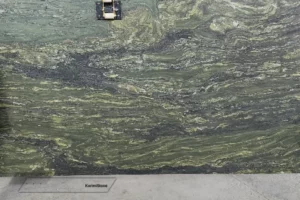
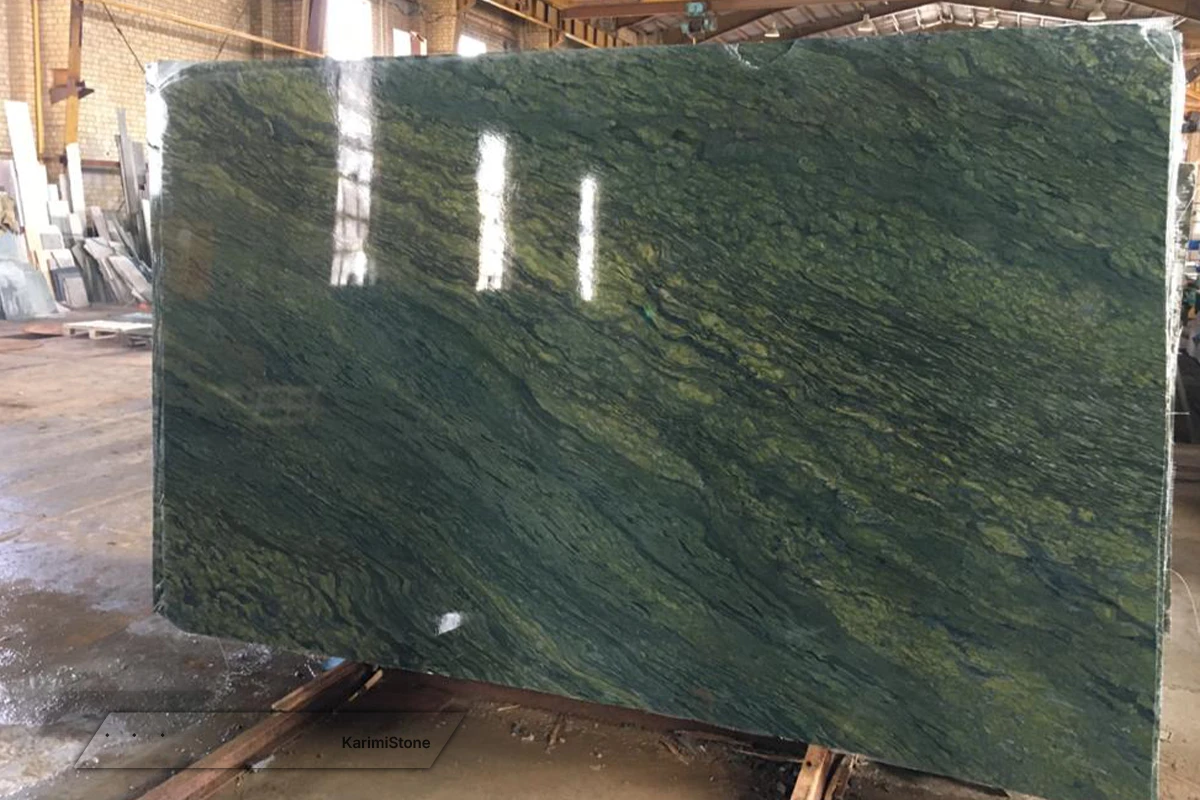
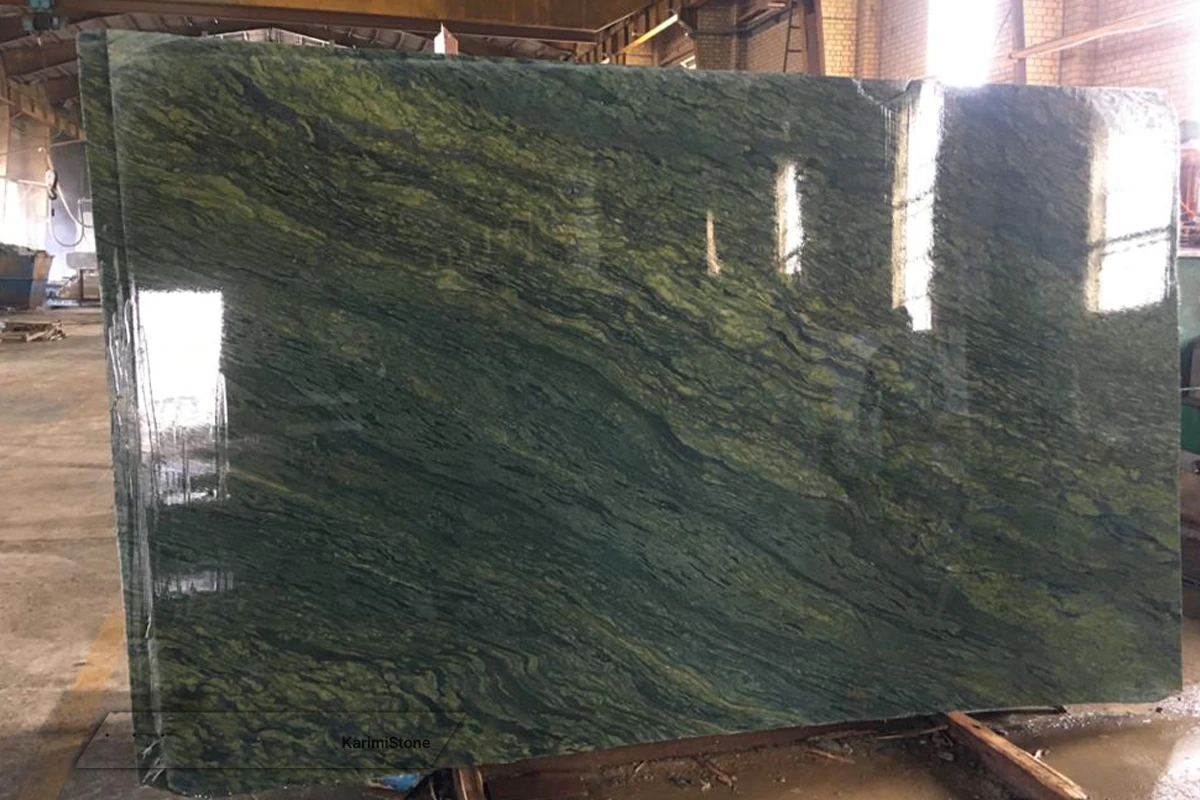
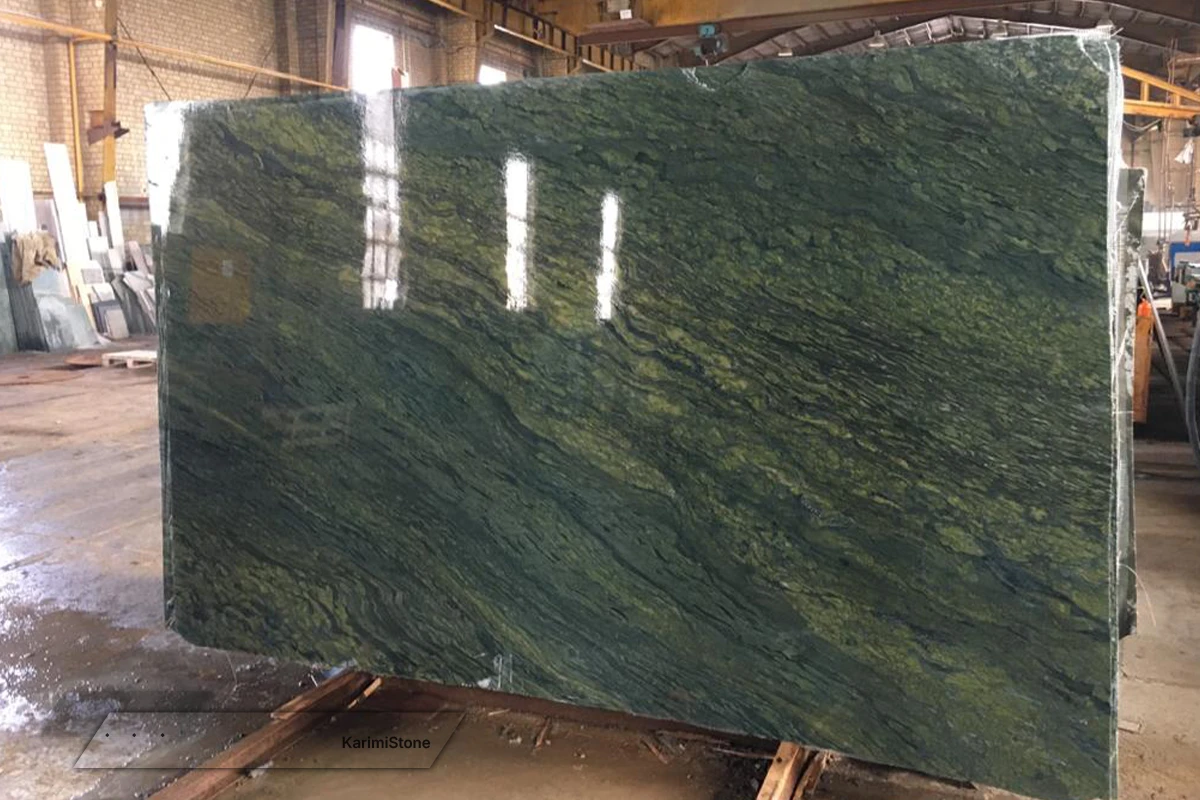
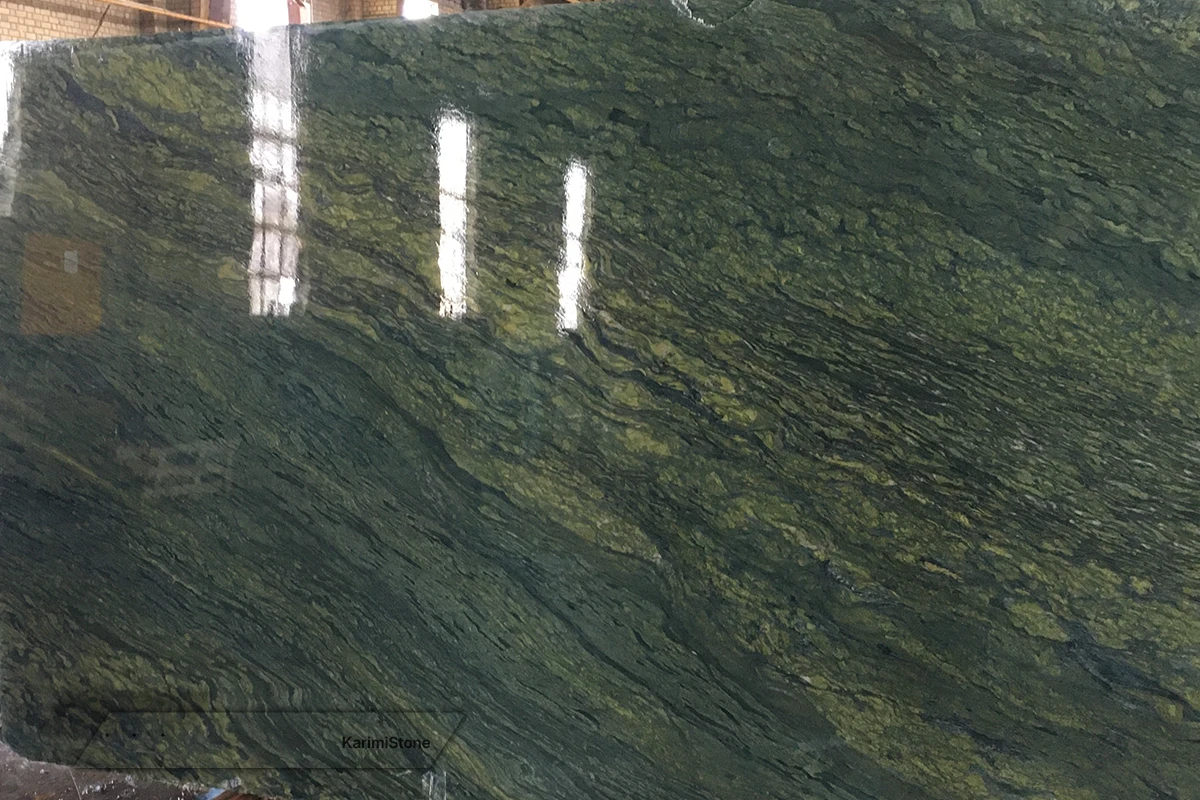
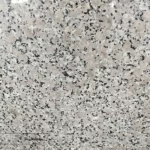
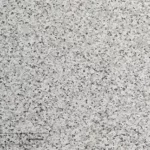
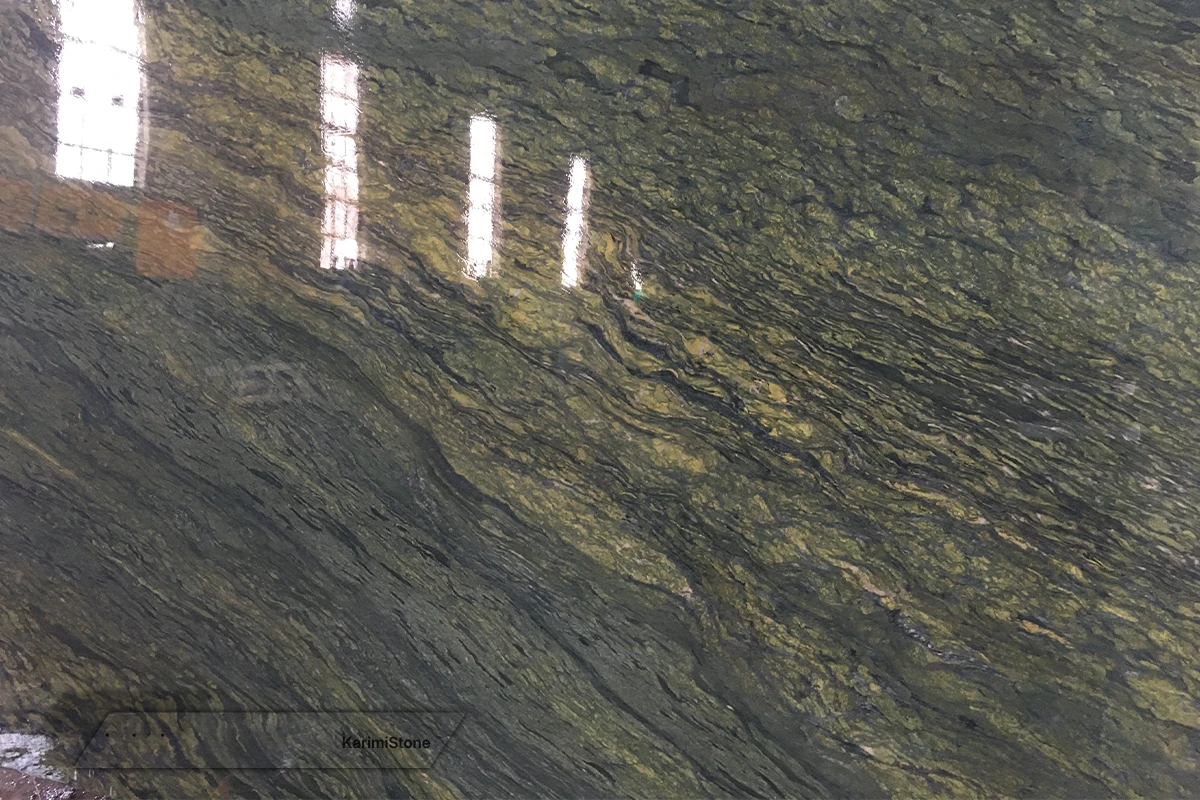
Green Granite Polished is an Iranian natural stone with a glossy surface, high density and distinctive green mineral patterns. The polished finish reflects light and makes the colour, grain and natural movement of the stone more visible.
Green granite belongs to the intrusive igneous rock family. It forms when molten rock cools and crystallises slowly below the Earth’s surface. This process creates an interlocking mineral structure that generally provides high mechanical strength and good abrasion resistance.
Negin Sang Karimi (Karimi Stone) processes and supplies Green Granite Polished in slabs, tiles, free-length pieces, steps, risers and custom-cut dimensions for domestic and international projects.
What Is Green Granite?
Green granite is available in shades ranging from deep forest green to lighter green and grey-green tones. Its colour may be associated with minerals such as chlorite, serpentine, feldspar and iron-bearing compounds.
Because it is a natural stone, colour, grain size and mineral distribution can vary between blocks and production lots. Birjand and Ardestan are among the recognised sources of Iranian green granite. Learn more in the Iranian Green Granite guide.
How Is Green Granite Polished?
The polished finish is produced through several stages of mechanical grinding and polishing. Diamond abrasives with progressively finer grit sizes remove saw marks, flatten the surface and gradually increase its reflection.
The final stages create the glossy appearance associated with Green Granite Polished. Polishing highlights the stone’s colour and mineral pattern, but it does not increase its structural strength. The strength of the material comes mainly from its natural mineral composition and crystalline structure.
Main Properties of Green Granite Polished
Glossy and Reflective Surface
The polished surface reflects natural and artificial light. This can make interior spaces appear brighter and helps display the green background and natural mineral movement of the stone.
Mechanical Strength
Green granite has a dense crystalline structure. With correct thickness, substrate preparation and installation, it can withstand regular foot traffic and mechanical loads.
Granite minerals commonly have a hardness of approximately 6–7 on the Mohs scale. However, Mohs hardness measures mineral scratch resistance and does not replace tests for compressive strength, flexural strength or abrasion resistance.
Relatively Low Water Absorption
The density of Green Granite Polished can provide relatively low water absorption. However, this does not make the stone completely stain-proof, waterproof or antibacterial. Cleaning, sealing, joint design and installation quality also affect its performance.
Heat Performance
Granite generally tolerates normal temperature changes well, but direct contact with very hot cookware should be avoided. Trivets are recommended for countertops. Dark green stone can also become hot under direct sunlight and should not automatically be described as cool in hot climates.
Cleaning and Chemical Exposure
Polished granite is generally easy to clean, but strong acids, alkaline chemicals and abrasive cleaners may affect the surface, sealer or joints. A pH-neutral natural-stone cleaner is the safer option for routine maintenance.
Indicative Technical Specifications
The following values are indicative and may vary by quarry section and production lot. Project-specific certificates should be requested before final approval.
| Property | Indicative Value | Referenced Method |
|---|---|---|
| Porosity | 0.5% | ASTM C97 |
| Density | 2840 kg/m³ | ASTM C97 |
| Water Absorption | 0.62% | ASTM C97 |
| Compressive Strength | 132.1 MPa | ASTM C170 |
| Flexural Strength | 12.5 MPa | Indicative Product Data |
| Abrasion Resistance | 39.5 mm | EN 14157 |
Architects can consult the Natural Stone Institute testing guide for recognised methods covering absorption, density, strength, abrasion, slip resistance and freeze-thaw durability.
Applications of Green Granite Polished
- Kitchen countertops: A glossy and durable surface for kitchens and islands.
- Vanity tops: Suitable for bathroom counters with correct sealing and maintenance.
- Interior flooring: Used in hotel lobbies, offices, shopping centres and residential spaces.
- Interior walls: Suitable for entrance walls, lift surrounds and decorative panels.
- Staircases: Available as steps, risers and landings for selected interior applications.
- Fireplace surrounds: Suitable when installed at a safe distance from direct flame.
- Reception desks: Used for counters and commercial interior surfaces.
- Architectural columns: Can be fabricated into custom decorative elements.
Polished stone may become slippery when wet. For bathrooms, entrances, ramps and other safety-sensitive floors, a slip-resistance test should be reviewed. A honed, brushed, flamed or grooved finish may be more suitable where greater traction is required.
Green Granite Polished vs Other Finishes
| Finish | Appearance | Texture | Common Use |
|---|---|---|---|
| Polished | Glossy and reflective | Very smooth | Countertops, walls and selected dry floors |
| Honed | Matte and low-glare | Smooth | Floors, walls, stairs and countertops |
| Brushed | Matte with natural movement | Lightly textured | Walls, counters and landscape elements |
| Flamed | Rough and granular | Strong texture | Exterior paving and outdoor stairs |
| Sandblasted | Matte and uniform | Fine texture | Façades, landscaping and selected floors |
Available Formats
Karimi Stone supplies Green Granite Polished in the following formats:
- Large-format slabs
- Standard and custom-size tiles
- Free-length pieces
- Steps and risers
- Countertop blanks
- Wall and lift panels
- Custom-cut pieces based on project drawings
Other natural stones and finishes can be compared in the Karimi Stone product catalogue.
Quality Control and Export Packaging
Before packing, the quality-control team can inspect dimensions, thickness, surface polish, edge straightness, visible cracks, chips and compliance with approved samples. Because green granite is natural, buyers should approve a representative colour and pattern range before mass production.
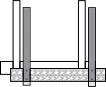
Depending on the format and shipping method, products can be packed in wooden crates, wooden pallets, iron pallets or iron bundles. Separators, corner protection and secure strapping help reduce movement and damage during transport.
Cleaning and Maintenance
- Use clean water and a pH-neutral stone cleaner.
- Remove oil, food and coloured liquids promptly.
- Avoid acidic and strongly alkaline cleaners.
- Do not use abrasive pads that can reduce the gloss.
- Use cutting boards and trivets on countertops.
- Test any sealer on a spare piece before full application.
Frequently Asked Questions
Is Green Granite Polished suitable for flooring?
Yes, it can be used for selected interior floors. Wet areas require slip testing because polished stone may become slippery.
Does polished green granite need sealing?
It depends on the stone lot and application. A compatible penetrating sealer may help protect countertops and frequently used surfaces.
Can polished granite be used outdoors?
It may be used for some exterior walls, but polished exterior flooring requires careful evaluation of weather, slip resistance and maintenance.
Are all slabs identical?
No. Natural differences in shade, grain and mineral pattern should be expected. Representative samples should be approved before production.
Green Granite Polished Manufacturer and Exporter
Green Granite Polished combines a reflective surface with the natural mechanical performance of Iranian granite. Negin Sang Karimi provides processing, custom sizing, quality control and export packaging for international projects.
To request samples, technical documents, pricing or a quotation, visit the Karimi Stone contact page.