
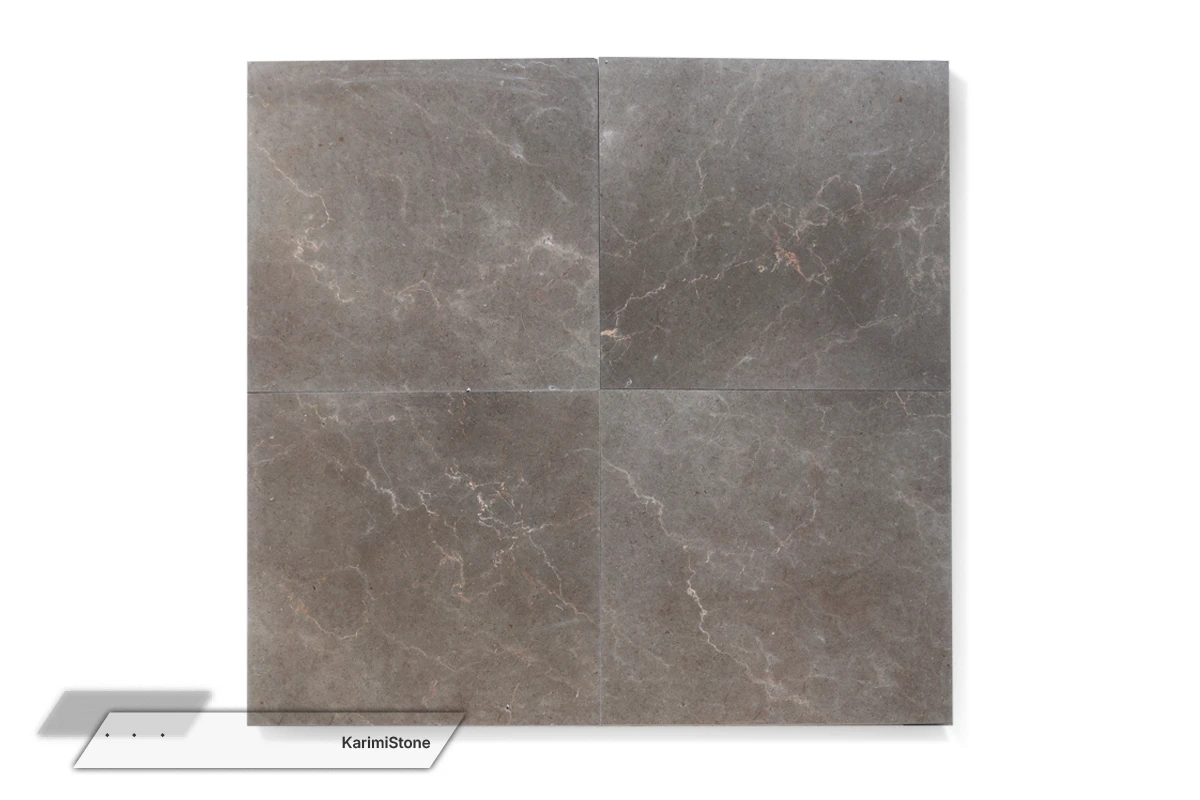
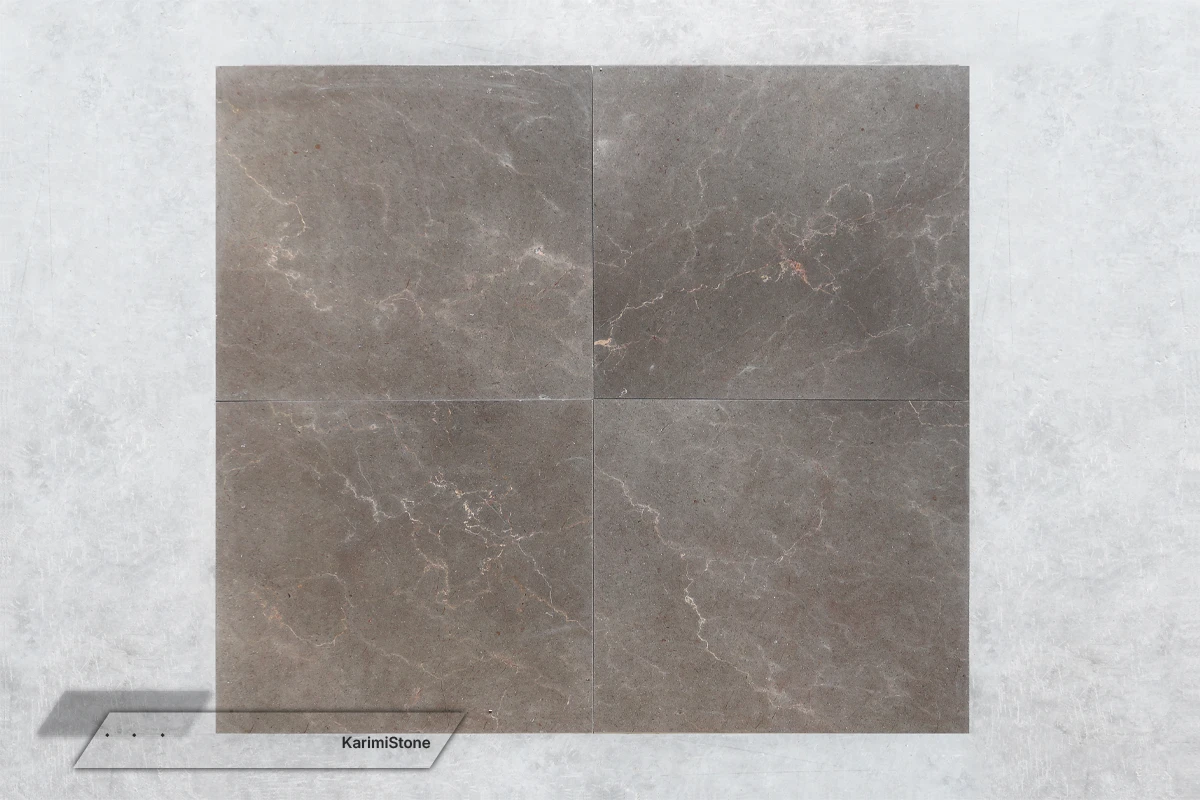
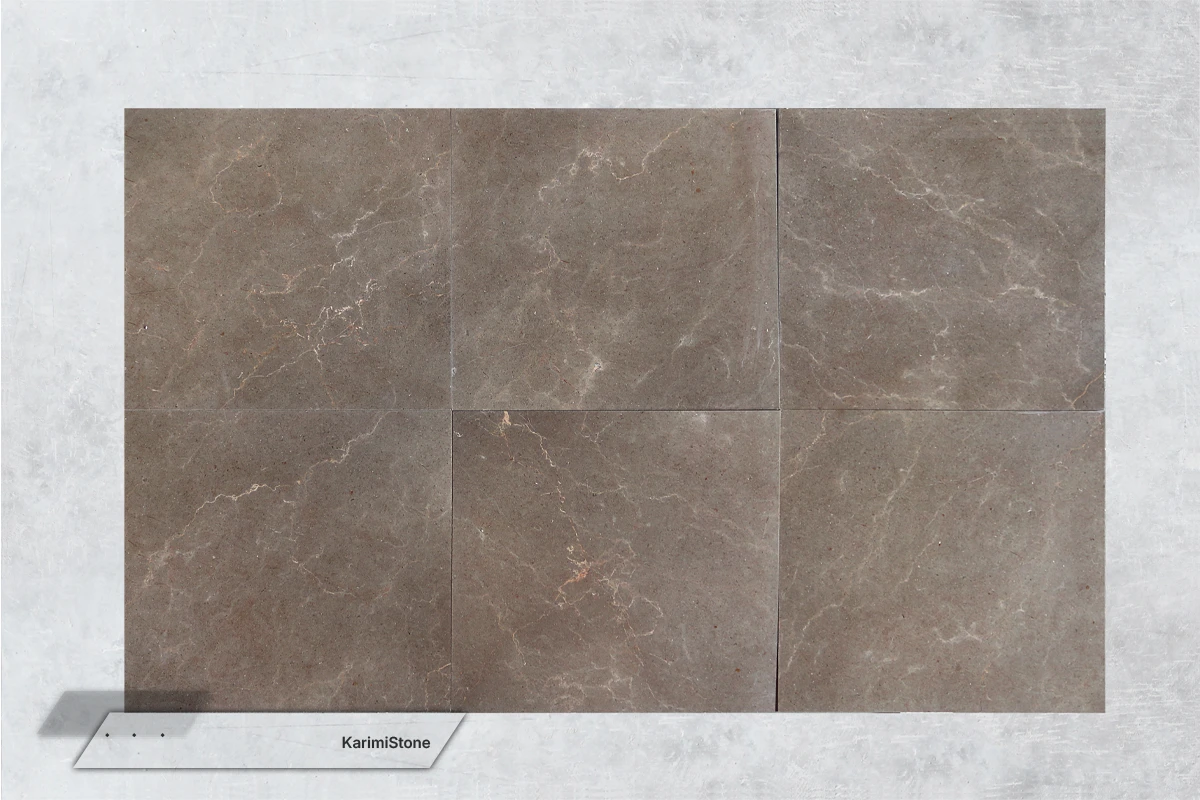
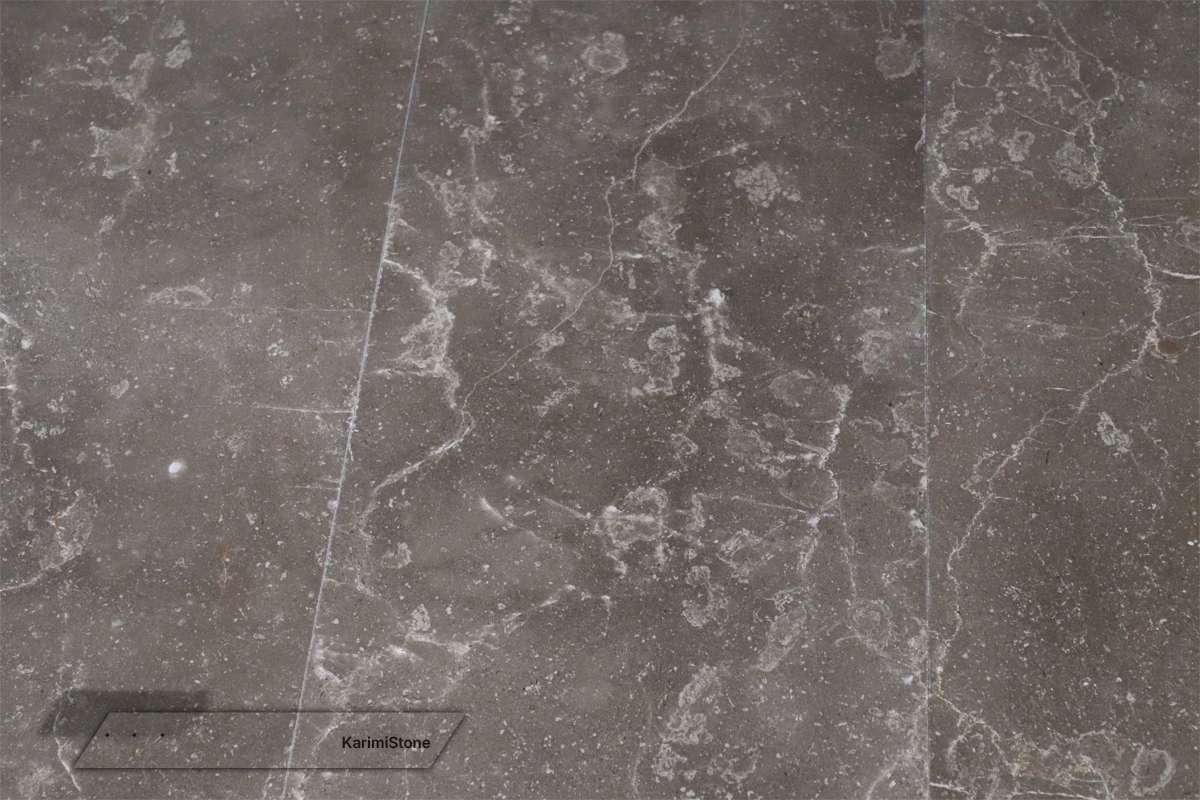
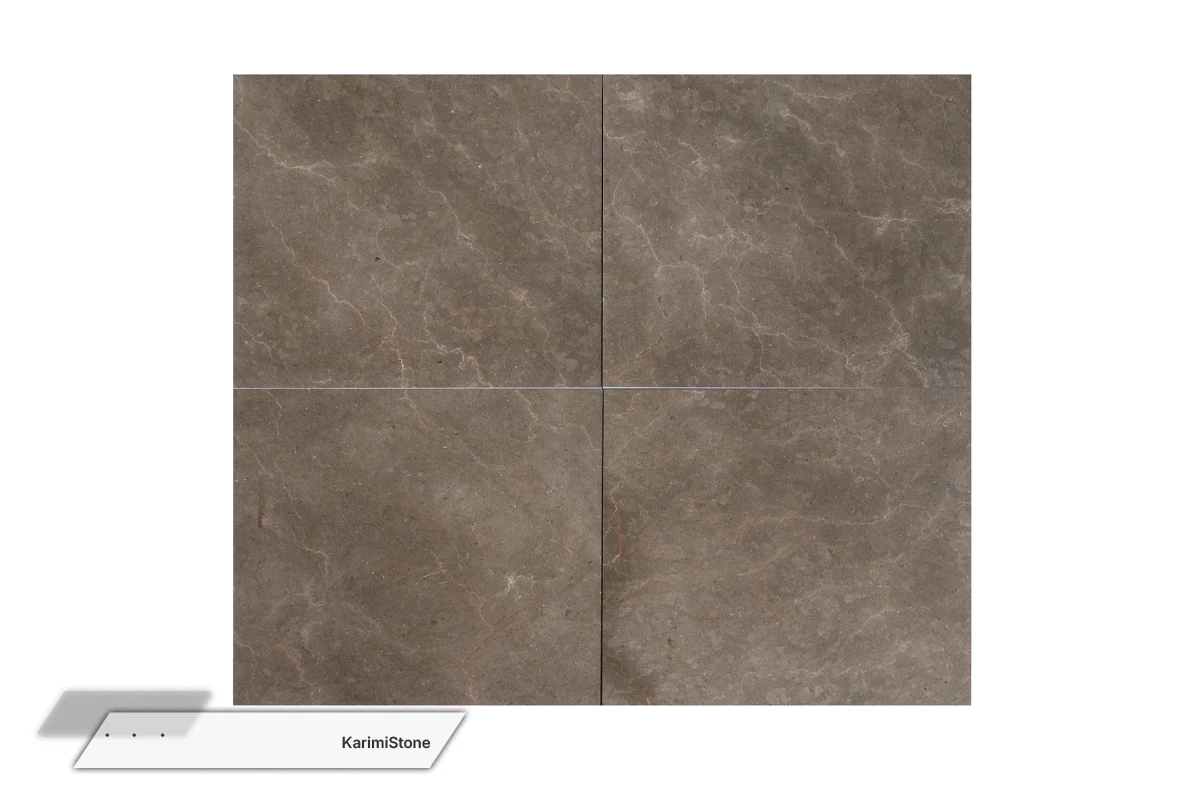
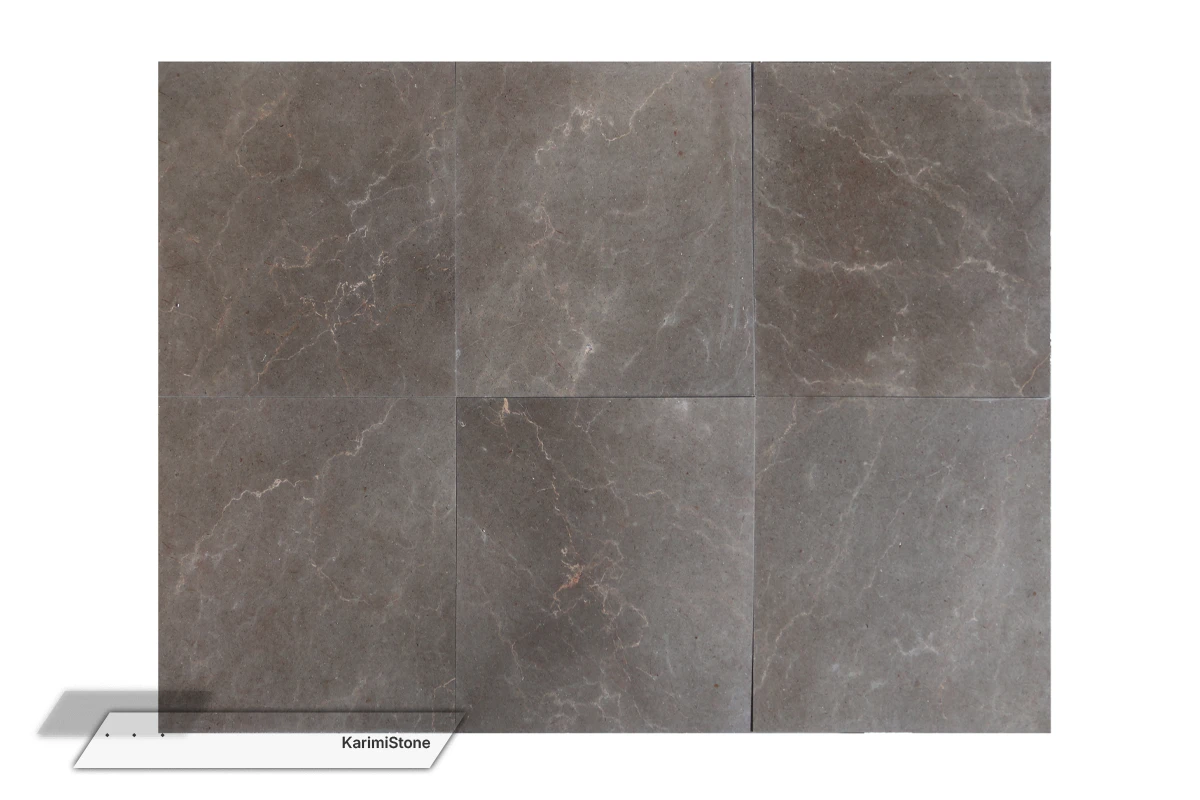
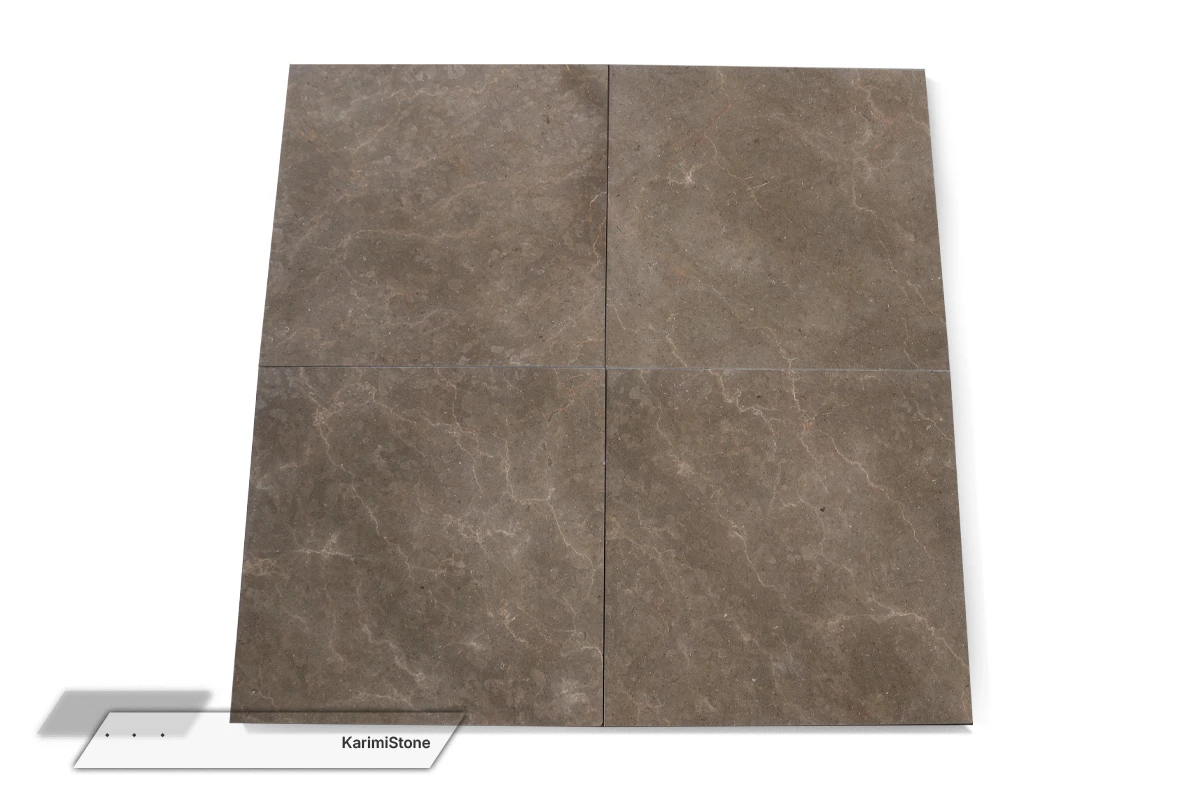
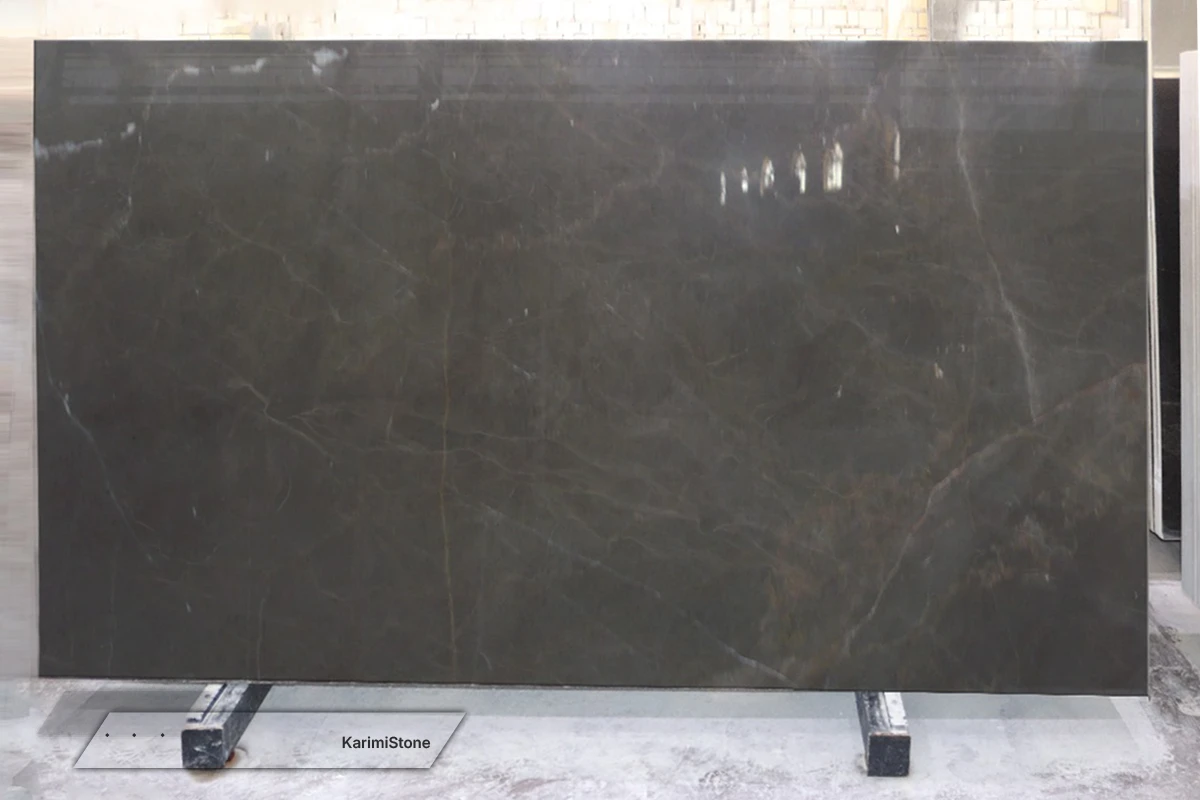


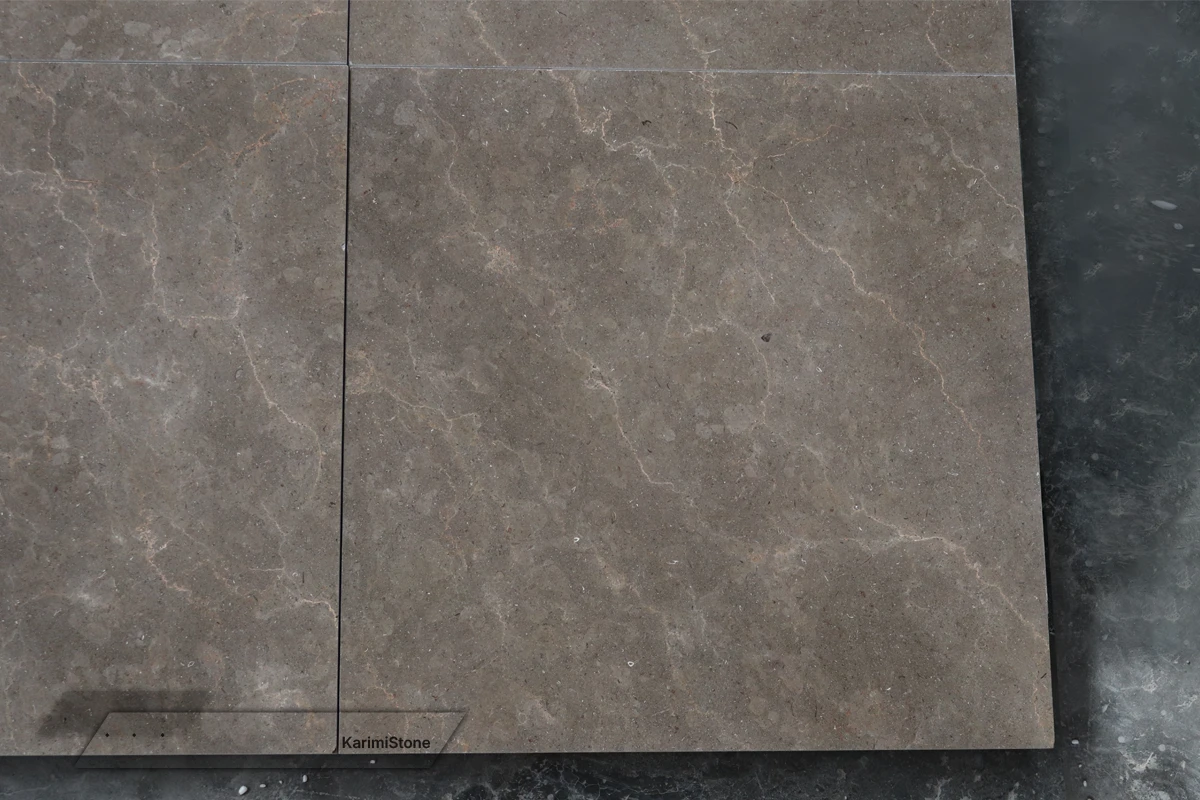


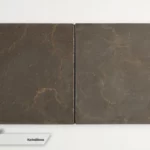



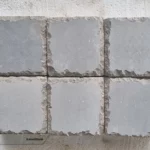
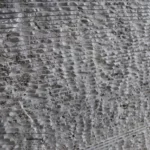
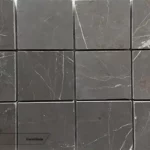
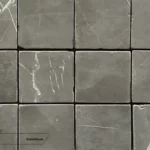























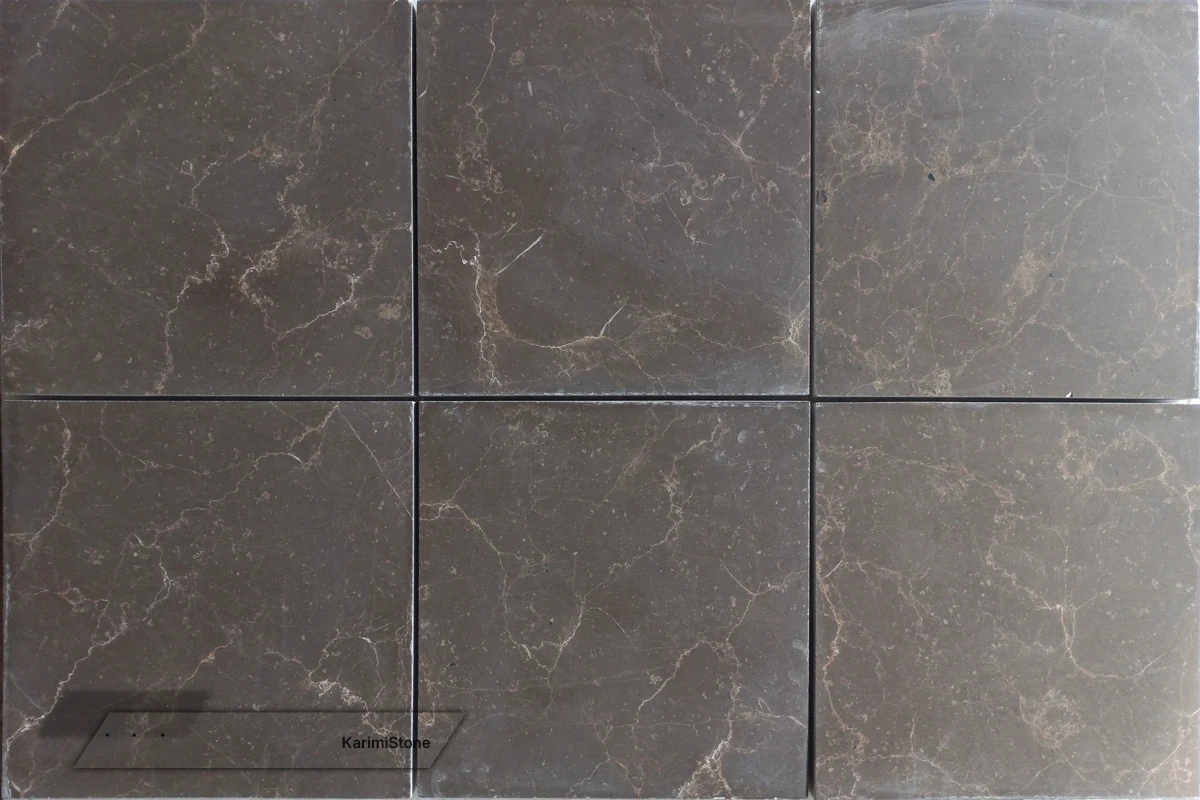
Grey Marble Polished is an Iranian natural marble with a calm grey background, dense crystalline structure, minimal strong veining, and a smooth reflective surface. The Polished finish enhances the natural grey color, increases visual depth, and gives the stone a clean and refined architectural appearance.
This material is associated with historic marble quarry areas near Hetn Abad in Isfahan Province, Iran. It is also known commercially by names such as Armani Grey, Armani Bronze, Bronze Marble, or Hetn Abad Marble, but it belongs to the Grey Marble family.
Grey Marble Polished is particularly suitable for interior flooring, lobby walls, reception areas, feature walls, staircases, countertops, vanity tops, elevator floors, fireplace surrounds, decorative panels, and other architectural spaces where a smooth and visually finished natural stone is required.
What Is Grey Marble Polished?
Grey Marble Polished is natural Iranian Grey Marble processed through several stages of mechanical grinding and polishing until the surface becomes smooth and reflective.
The polished finish does not change the geological identity of the material. Instead, it enhances its existing grey colors, subtle mineral movement, and natural tonal variation.
Compared with Honed Grey Marble, the polished version appears richer in color and interacts more strongly with both daylight and architectural lighting.
What Is Grey Marble?
Grey Marble is a natural metamorphic stone with a compact crystalline structure.
The U.S. Geological Survey (USGS) explains that metamorphic rocks form when existing rocks are transformed by heat, pressure, mineral-rich fluids, or combinations of these geological conditions. Marble is one of the common metamorphic rock types.
The Grey Marble used for this product typically displays:
- Light to medium grey backgrounds
- Occasional darker charcoal areas
- Very fine or almost invisible natural veins
- Subtle tonal movement
- Dense crystalline structure
- A visually clean and controlled appearance
Its relatively quiet natural pattern allows the material to cover large walls and floors without creating excessive visual noise.
Other grey materials can be explored in the Karimi Stone Grey Natural Stone collection.
Hetn Abad Grey Marble
The stone is associated with marble quarry areas near Hetn Abad in Isfahan Province.
Commercial names can vary between markets. Names such as Armani Grey, Armani Bronze, Bronze Marble, Mahkam Bronze Marble, and Hetn Abad Marble may be used for related selections.
Despite these commercial names, the stone should be treated technically and architecturally as Grey Marble.
Individual quarry blocks may show small differences in grey tone, charcoal intensity, and natural markings, so project selection should be based on approved physical samples.
What Is a Polished Finish?
A Polished finish is created through successive mechanical grinding and polishing stages.
Each stage uses progressively finer abrasives until surface irregularities are reduced and a reflective finish is produced.
Polishing can provide:
- Smooth surface
- High visual clarity
- Increased light reflection
- Richer grey coloration
- Greater contrast in subtle mineral patterns
- A refined architectural appearance
- A cleaner and more formal visual character
You can compare Polished with Honed, Brushed, Sandblasted, Bush-Hammered and other treatments in the Karimi Stone Natural Stone Surface Finishes guide.
How Polishing Changes Grey Marble
Polishing strongly affects the way light interacts with Grey Marble.
On an untreated or matte surface, incoming light is scattered. On a polished face, more light is reflected in a controlled direction.
This generally makes:
- Grey colors appear deeper
- Darker areas appear more defined
- Subtle mineral markings more visible
- The overall surface appear cleaner
- Architectural lighting more noticeable
The final appearance depends on abrasive sequence, polishing level, machine pressure, stone structure, filler quality, and consistency of processing.
Polished vs. Honed Grey Marble
| Characteristic | Polished | Honed |
|---|---|---|
| Surface | Smooth and reflective | Smooth and matte |
| Light reflection | High | Low |
| Grey color | Deeper and richer | Softer and calmer |
| Visual style | Refined and formal | Relaxed and understated |
| Architectural lighting | Strong interaction | Soft interaction |
Plain Natural Pattern
The current product is classified as Plain.
This means strong veins are not the dominant visual element.
The appearance is mainly defined by:
- Grey background
- Subtle light-to-dark tonal variation
- Fine natural markings
- The depth created by polishing
This makes Grey Marble Polished especially suitable for large surfaces where designers want natural stone without a highly dramatic pattern.
Technical Characteristics
| Property | Current Product Value | Reference |
|---|---|---|
| Porosity | 0.9% | ASTM C97 |
| Density | 2700 kg/m³ | ASTM C97 |
| Water Absorption | 0.15% | ASTM C97 |
| Compressive Strength | 41 MPa | ASTM C170 |
| Abrasion Resistance | 18 mm | EN 14157 |
| Flexural Strength | 20.5 MPa | Product Data |
| Cold Resistance | -30°C | Product Data |
| Heat Resistance | 100°C | Product Data |
These values represent the current Karimi Stone product specification. Natural stone can vary between quarry blocks and production batches, so technical projects should verify the characteristics of the actual selected material.
Applications of Grey Marble Polished
Interior Flooring
Polished Grey Marble can be considered for residential floors, hotel interiors, commercial areas, entrance halls, lobbies, corridors, and other controlled interior environments.
The reflective surface can make interiors feel brighter, particularly where architectural lighting is used.
Lobby and Reception Walls
Large polished panels work particularly well in:
- Hotel lobbies
- Reception areas
- Office entrances
- Commercial interiors
- Luxury residential spaces
The relatively Plain pattern helps large walls remain controlled rather than visually overloaded.
Feature Walls
Grey Marble Polished can create a strong but neutral feature wall, especially when combined with architectural lighting.
The material works naturally with black metal, brass or bronze details, glass, timber, white surfaces, and darker neutral materials.
Staircases
The material can be fabricated into:
- Stair treads
- Risers
- Landings
- Decorative staircase panels
Where polished stone is used on walking surfaces, required slip resistance should be considered separately.
Countertops and Vanity Tops
The current product configuration includes countertop applications.
For work surfaces, natural marble requires appropriate consideration of staining, sealing, acidic substances, cleaning products, and maintenance expectations.
Bathrooms
Grey Marble Polished can be considered for bathroom walls, vanity areas, and selected architectural surfaces.
On wet floors, polished stone can have lower grip than more textured finishes. Where slip performance is important, the actual surface should be tested.
Elevator Floors and Walls
The neutral grey palette and polished appearance work well in compact elevator interiors, entrance panels, and elevator surrounds.
Fireplace Surrounds
The stone’s calm color can provide a controlled architectural frame around fireplaces and decorative wall features.
Polished Marble and Slip Resistance
A polished stone surface is smooth and highly refined.
In wet conditions, polished surfaces may provide lower grip than textured alternatives.
Therefore, the term Polished should never be interpreted as indicating a particular slip-resistance performance.
Where a project requires a specific P-rating, Wet Pendulum result, or coefficient of friction, the actual finished material should be tested.
Grey Marble in Interior Design
One of the main advantages of Grey Marble is its ability to coordinate with many other materials.
It works particularly well with:
- Natural timber
- Black metal
- Bronze and brass details
- Glass
- White stone
- Concrete
- Minimal furniture
- Warm architectural lighting
The grey background creates contrast while the polished face adds visual clarity and refinement.
Cleaning and Maintenance
Grey Marble Polished should be maintained using products compatible with natural marble.
Recommended practices include:
- Regular removal of dust
- Use of a mild pH-appropriate stone cleaner
- Avoiding strong acidic cleaners
- Avoiding unnecessarily abrasive brushes
- Cleaning spills promptly
- Testing sealers before general application
Acids can react with carbonate minerals in marble and may create dull etched areas on polished surfaces.
Available Formats
The current product can be supplied in formats including:
- Tiles
- Slabs
- Free-length pieces
- Steps
- Risers
- Custom cut-to-size elements
- Decorative architectural pieces
Sorting and Quality Control
For project production, important selection criteria include:
- Grey background tone
- Acceptable tonal variation
- Natural markings
- Surface flatness
- Polishing quality
- Gloss consistency
- Dimensions
- Thickness
- Edge quality
- Visual compatibility between adjoining pieces
For large projects, representative samples should ideally establish the acceptable color range and polishing level before production.
Why Choose Grey Marble Polished?
- Neutral grey color: Compatible with many architectural styles.
- Reflective surface: Polishing increases visual brightness and color depth.
- Plain pattern: Suitable for large floors and walls without excessive visual noise.
- Refined appearance: Works particularly well in hotels, offices and premium interiors.
- Wide application range: Flooring, walls, stairs, countertops, elevators and decorative elements.
- Material coordination: Combines naturally with timber, metal, glass, concrete and lighter stones.
- Project production: Dimensions, thickness, polishing quality and sorting can be coordinated before production.
Frequently Asked Questions
What is Grey Marble Polished?
It is Iranian Grey Marble processed through progressive grinding and polishing to create a smooth and reflective surface.
Is Grey Marble also known as Bronze Marble?
Some related Grey Marble selections are commercially known as Armani Bronze, Bronze Marble or similar names, but the material belongs to the Grey Marble family.
Where does this Grey Marble come from?
The material is associated with marble quarry areas near Hetn Abad in Isfahan Province, Iran.
Does Grey Marble Polished have strong veins?
No. The current product is classified as Plain and generally has very fine or limited visible veining.
What does polishing do to Grey Marble?
Polishing creates a smooth reflective face and makes the grey colors and subtle mineral features appear deeper and clearer.
Can it be used for flooring?
Yes. Suitable material can be considered for controlled interior flooring applications.
Can it be used in bathrooms?
Yes, particularly for walls and vanity areas. For wet walking surfaces, required slip performance should be verified.
Is polished marble non-slip?
No. A specific slip-resistance requirement must be confirmed by testing the actual finished product.
How should polished marble be cleaned?
Use mild products suitable for natural marble and avoid strong acids and unnecessarily abrasive cleaning tools.
Grey Marble Polished by Karimi Stone
Karimi Stone produces, processes, supplies, and exports Iranian natural stone for residential, commercial, hospitality, and architectural projects.
For Grey Marble Polished orders, the stone can be selected according to grey tone, acceptable natural variation, polishing level, dimensions, thickness, edge requirements, and project application.
Production can include stone selection, precision cutting, controlled polishing, project sorting, dimensional inspection, quality control, export-grade packaging, and international supply.
With its calm grey color, compact marble structure, Plain natural pattern, and smooth reflective surface, Grey Marble Polished provides a refined Iranian natural stone solution for flooring, walls, stairs, countertops, elevators, hotels, offices, and premium architectural interiors.