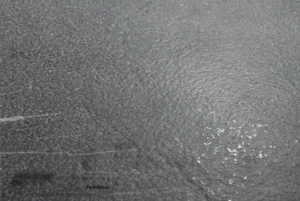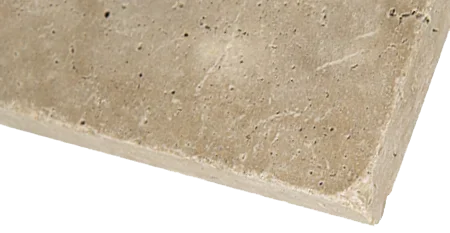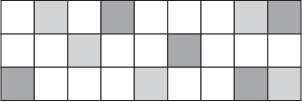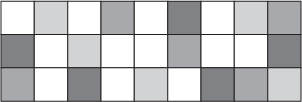
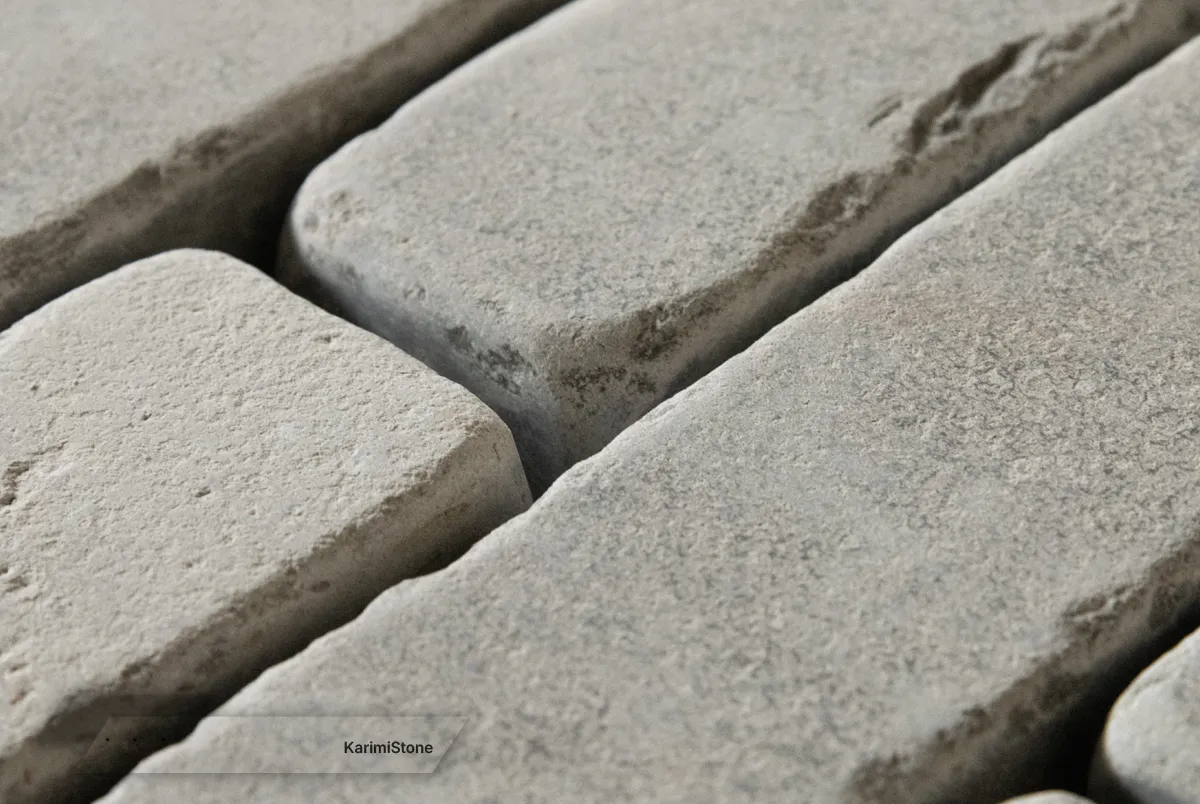


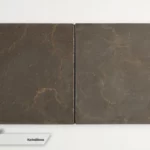

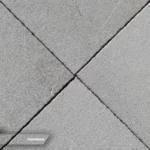
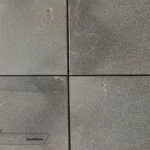
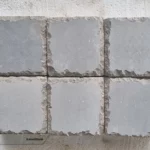
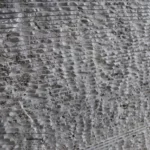
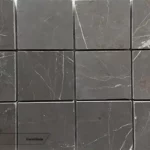
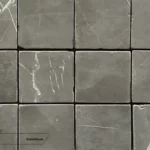
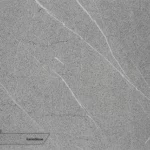










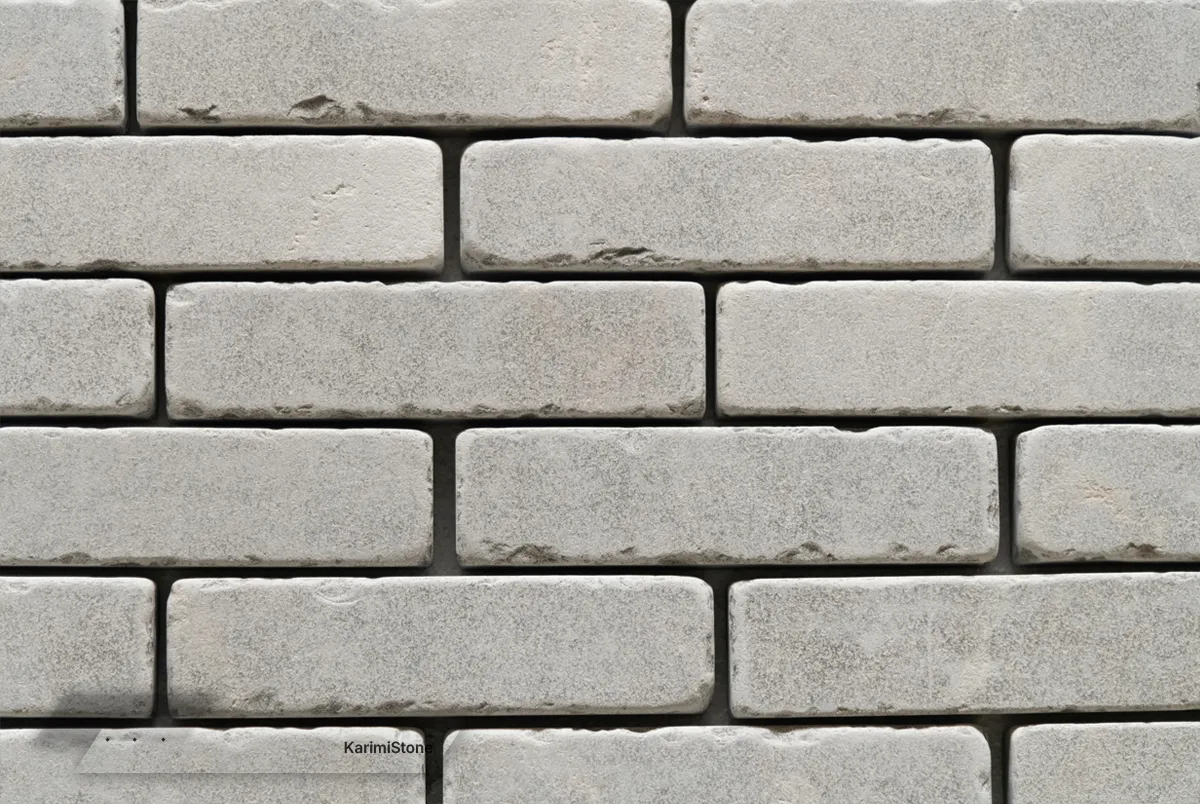
Grey Marble Sandblasted & Tumbled is an Iranian natural stone with a calm grey background, dense marble structure, a matte textured face, and softly rounded edges. The product combines a Sandblasted surface with a Tumbled edge, creating a practical and naturally aged architectural character for paving, garden areas, exterior spaces, walls, and pedestrian applications.
Sandblasting affects the main face of the stone by creating a fine, low-reflection texture. Tumbling works primarily on the edges and corners, gradually reducing sharpness and creating a softer, slightly irregular profile. These two processes perform different functions and should be specified separately.
Grey Marble Sandblasted & Tumbled is particularly suitable for projects where natural stone texture, visual simplicity, softened edges, and long-term architectural performance are more important than a highly polished appearance.
What Is Grey Marble Sandblasted & Tumbled?
Grey Marble Sandblasted & Tumbled combines two separate processing stages.
Sandblasting creates the main surface finish. Abrasive particles are directed toward the marble under controlled pressure, creating a fine, uniform and non-reflective texture.
Tumbling mainly changes the edges and corners. Individual pieces are processed with abrasive media so the originally sharp sawn edges become softer, slightly rounded, and naturally irregular.
The result is a textured matte face combined with relaxed edge geometry.
What Is Grey Marble?
Grey Marble is a natural metamorphic stone with a dense crystalline structure and a generally calm visual appearance.
The U.S. Geological Survey (USGS) explains that metamorphic rocks form when existing rocks are transformed by geological conditions such as heat, pressure, and mineral-rich fluids. Marble is one of the common metamorphic rock types.
Grey Marble typically displays:
- Light to medium grey backgrounds
- Darker grey or charcoal variation
- Limited strong veining
- Subtle natural mineral movement
- Dense crystalline structure
- A clean and controlled visual character
This relatively quiet appearance allows surface texture and architectural layout to become the main visual elements.
Explore other materials in the Karimi Stone Grey Natural Stone collection.
What Is a Sandblasted Finish?
A Sandblasted finish is created by directing fine abrasive material against the stone under controlled pressure.
The process gently modifies the upper surface and creates a fine granular texture without producing polish or shine.
On Grey Marble, Sandblasting typically creates:
- A matte surface
- Low direct reflection
- A fine granular texture
- Visible natural grey color
- Greater physical surface texture than polished marble
- A practical architectural appearance
You can view other products with the same surface treatment in the Karimi Stone Sandblasted Stone collection.
What Is a Tumbled Edge?
Tumbling is primarily an edge-finishing process for this product.
During tumbling, individual stone pieces move together with suitable abrasive media inside rotating or vibrating equipment.
Continuous contact gradually modifies the sharp sawn edges and corners.
The final edge character can include:
- Softened edges
- Slightly rounded corners
- Reduced sharpness
- Small controlled irregularities
- A gently aged appearance
- More visible joint definition after installation
Other products using this treatment can be explored in the Karimi Stone Tumbled Edge collection.
Sandblasted Surface vs. Tumbled Edge
| Processing | Main Area Affected | Result |
|---|---|---|
| Sandblasted | Main face | Fine, matte and textured surface |
| Tumbled | Edges and corners | Softened and slightly rounded edges |
| Sandblasted & Tumbled | Face + edges | Textured matte stone with relaxed edge geometry |
This distinction is important when entering product data: the correct configuration is Surface Finish: Sandblasted and Edge Finish: Tumbled.
Grey Marble Sandblasted vs. Sandblasted & Tumbled
The main face can be visually similar because both products use Sandblasting.
The major difference appears around the perimeter of each piece.
Grey Marble Sandblasted normally retains sharper sawn edges.
Grey Marble Sandblasted & Tumbled has softened and more relaxed edges.
You can compare the standard version with Grey Marble Sandblasted.
Visual Character
The combination creates a material with a grounded and natural appearance.
The Sandblasted surface scatters light rather than strongly reflecting it, while the Tumbled edges reduce the rigid geometry of freshly cut pieces.
The visual result includes:
- Matte grey surface
- Fine physical texture
- Low glare
- Softened edge lines
- Natural tonal variation
- A subtle aged character
Plain Natural Pattern
The current product is classified as Plain.
Its appearance is therefore based mainly on the grey background, subtle tonal changes, surface texture and softened edge profile rather than dramatic natural veins.
This makes it particularly suitable for repeated paving patterns and larger architectural surfaces.
Surface Grip and Slip Performance
A Sandblasted surface has more physical texture than a polished face and may provide improved underfoot grip.
However, Sandblasting should not automatically be described as having a guaranteed slip-resistance class.
The Tumbled edge also primarily changes the edge profile rather than the main walking surface.
For projects requiring a defined P-rating, Wet Pendulum result, coefficient of friction, or another slip-performance standard, the actual finished product should be tested.
Technical Characteristics
| Property | Current Product Value | Reference |
|---|---|---|
| Porosity | 0.9% | ASTM C97 |
| Density | 2700 kg/m³ | ASTM C97 |
| Water Absorption | 0.15% | ASTM C97 |
| Compressive Strength | 41 MPa | ASTM C170 |
| Abrasion Resistance | 18 mm | EN 14157 |
| Flexural Strength | 20.5 MPa | Product Data |
| Cold Resistance | -30°C | Product Data |
| Heat Resistance | 100°C | Product Data |
These values represent the current product specification. Natural stone can vary between quarry blocks and production batches, so technical projects should confirm the properties of the actual selected material.
Applications of Grey Marble Sandblasted & Tumbled
Paving
The combination of a matte textured face and softened edges makes this product particularly suitable for architectural paving layouts.
Possible applications include:
- Villa courtyards
- Pedestrian areas
- Landscape paving
- Covered terraces
- Entrance zones
- Architectural plazas
Sidewalk Paving
The current product configuration includes sidewalk paving.
For public or high-traffic projects, dimensions, thickness, installation base, joints, loading conditions, and tested surface performance should all be coordinated.
Garden and Villa Flooring
The neutral grey color works naturally with vegetation, timber, concrete, brick, metal, and water.
Tumbled edges can also make repeated tile layouts feel less rigid and more integrated with landscape architecture.
Exterior Walls
Grey Marble Sandblasted & Tumbled can also be considered for selected exterior wall applications.
The suitability of the material depends on thickness, fixing system, climate, drainage, exposure conditions, and engineering requirements.
Interior Walls
The current product configuration also includes interior walls.
The matte surface can create a quiet architectural background where strong reflection is not desired.
Landscape Architecture
The combination of grey stone, matte texture and softened edges works particularly well in landscape projects where natural materials and relaxed geometry are preferred.
Installation and Joint Appearance
Tumbled edges can make the joints between pieces more visible than sharp sawn edges.
This is normally part of the intended visual character.
Before production, the project should establish:
- Tile dimensions
- Joint width
- Edge-rounding intensity
- Installation pattern
- Grout color
- Acceptable tonal range
Cleaning and Maintenance
The Sandblasted face has more texture than polished marble, so dust and fine particles may settle within the surface.
Recommended maintenance includes:
- Regular removal of loose debris
- Cleaning with products compatible with natural marble
- Avoiding strong acidic chemicals
- Using brushes suitable for the surface texture
- Checking joints and drainage in exterior installations
- Testing protective treatments on a representative sample first
Available Formats
The current product configuration includes:
- Tiles
- Pattern Sets
- Brick-format pieces
Custom dimensions and project-specific pieces may also be coordinated when technically suitable.
Sorting and Quality Control
Important criteria include:
- Grey background tone
- Acceptable tonal variation
- Sandblasted texture consistency
- Tumbled edge intensity
- Corner character
- Dimensions
- Thickness
- Joint compatibility
- Visual consistency between adjoining pieces
For larger projects, an approved physical sample should ideally define both the required Sandblasted texture and the acceptable Tumbled edge range.
Why Choose Grey Marble Sandblasted & Tumbled?
- Neutral grey color: Works with modern, landscape, urban and traditional architecture.
- Matte textured face: Sandblasting reduces strong reflection.
- Softened edges: Tumbling creates a more relaxed perimeter.
- Plain pattern: Suitable for large and repetitive surfaces.
- Natural aged character: Soft edge variation gives the stone a less machine-perfect appearance.
- Project versatility: Suitable selections can be considered for paving, sidewalks, gardens and walls.
- Custom project production: Dimensions, thickness, texture and edge treatment can be coordinated before production.
Frequently Asked Questions
What is Grey Marble Sandblasted & Tumbled?
It is Iranian Grey Marble with a matte Sandblasted main face and softened Tumbled edges.
Is the whole stone Tumbled?
No. The primary surface finish is Sandblasted. Tumbling mainly affects the edges and corners.
What does Sandblasting do?
It creates a fine matte texture and reduces strong surface reflection.
What does Tumbling do?
It softens sharp edges and corners and creates a slightly aged edge profile.
Is it the same as Grey Marble Sandblasted?
No. The main face is similar, but the Tumbled version has softer and more irregular edges.
Does it have strong natural veins?
No. The current product is classified as Plain.
Can it be used for paving?
Yes. Paving and sidewalk paving are included in the current product configuration.
Is it automatically non-slip?
No. The Sandblasted texture may improve grip, but any required slip-resistance class must be confirmed by testing the finished material.
Grey Marble Sandblasted & Tumbled by Karimi Stone
Karimi Stone produces, processes, supplies, and exports Iranian natural stone for architectural, landscape, urban, residential, and commercial projects.
For Grey Marble Sandblasted & Tumbled orders, material can be selected according to grey tone, Sandblasted texture, Tumbled edge character, dimensions, thickness, installation pattern, and project requirements.
Production can include stone selection, controlled Sandblasting, Tumbled edge processing, project sorting, dimensional control, quality inspection, export-grade packaging, and international supply.