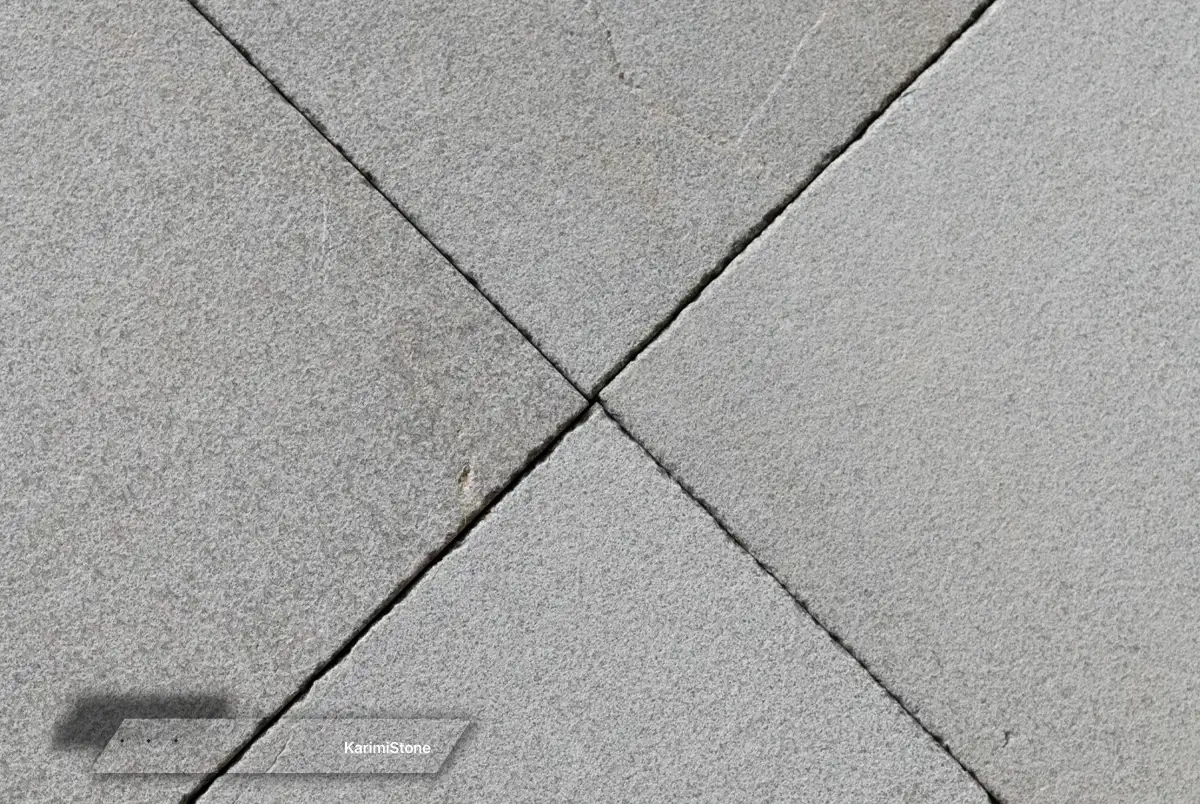
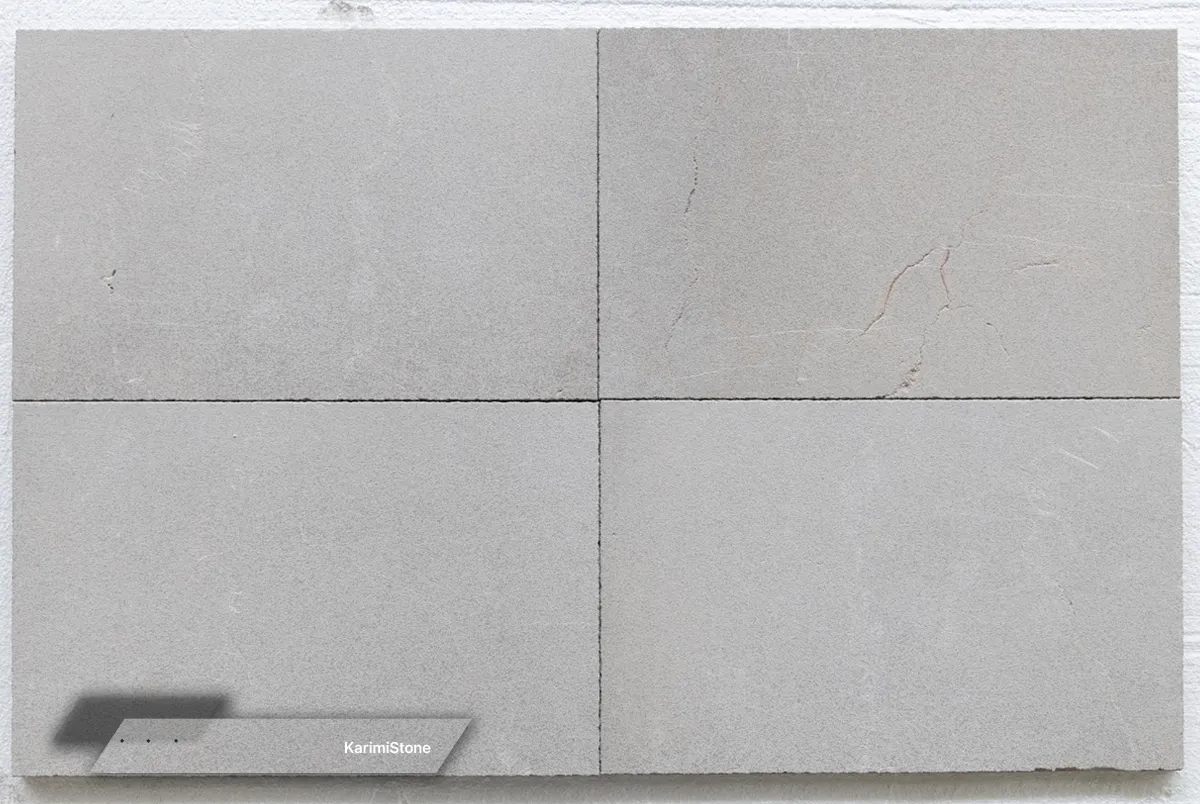
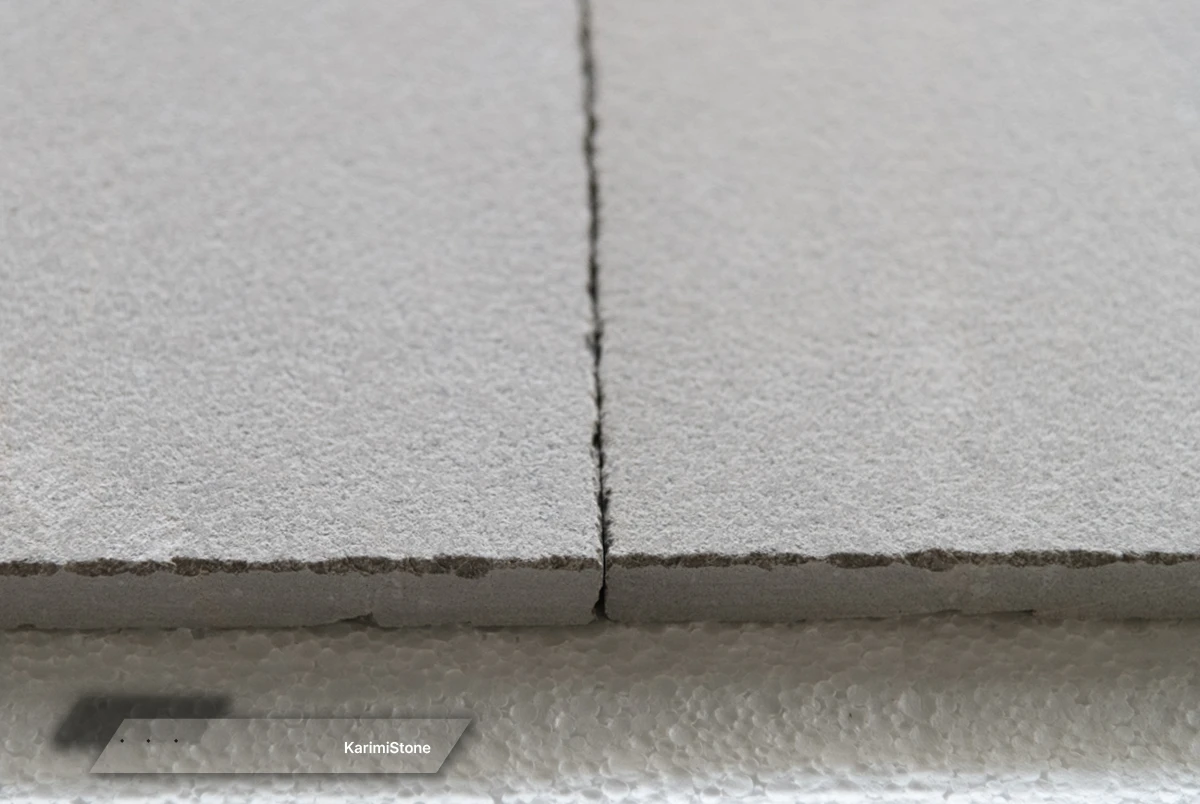
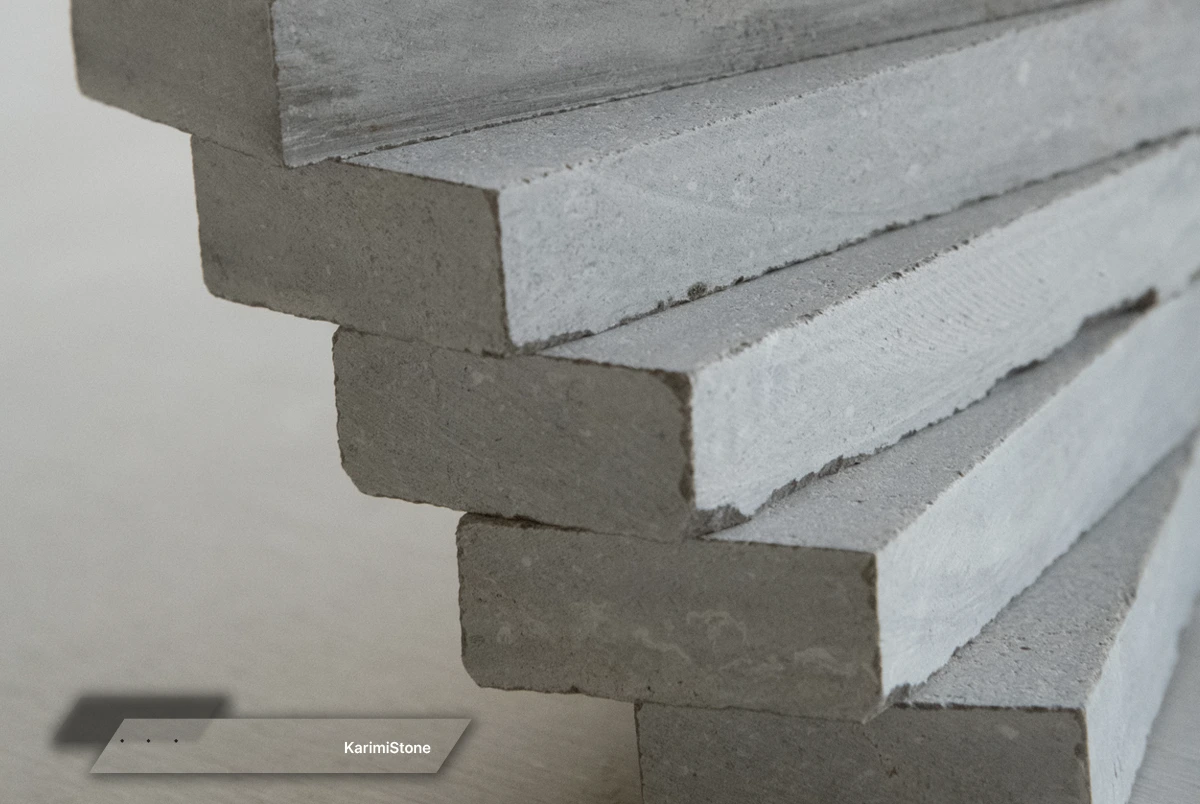
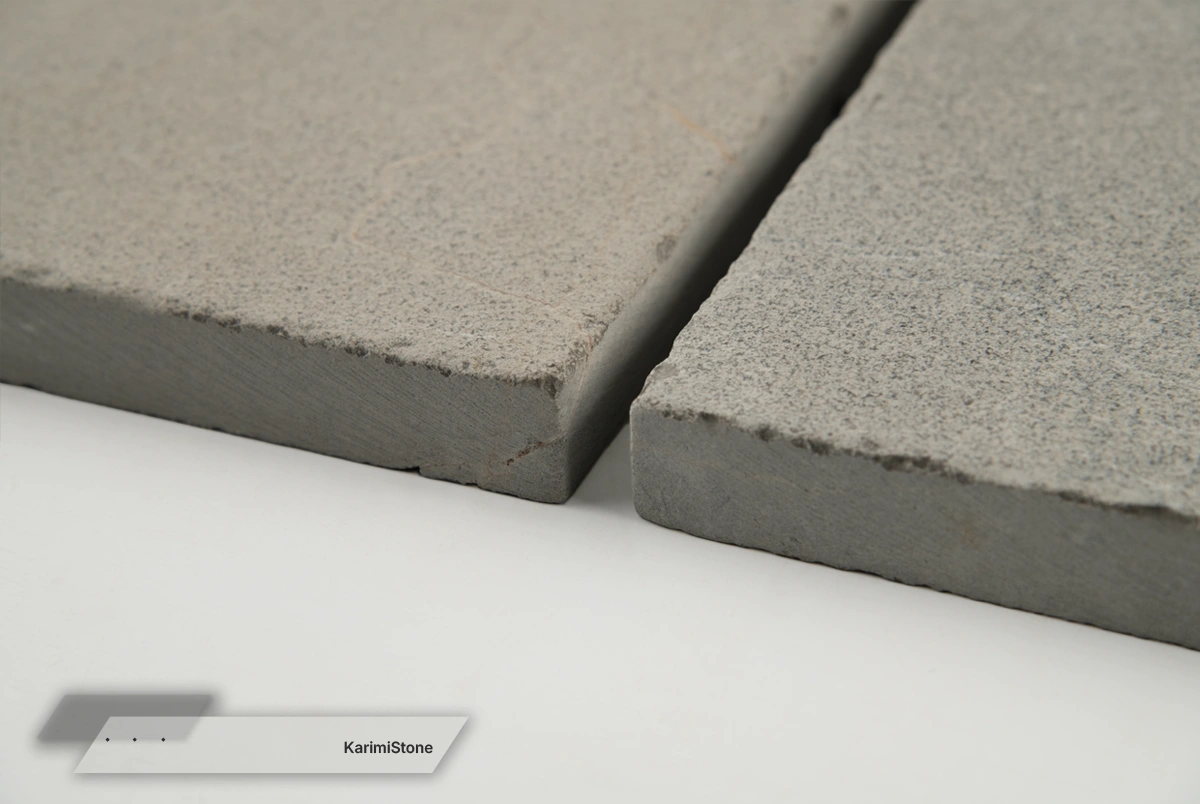
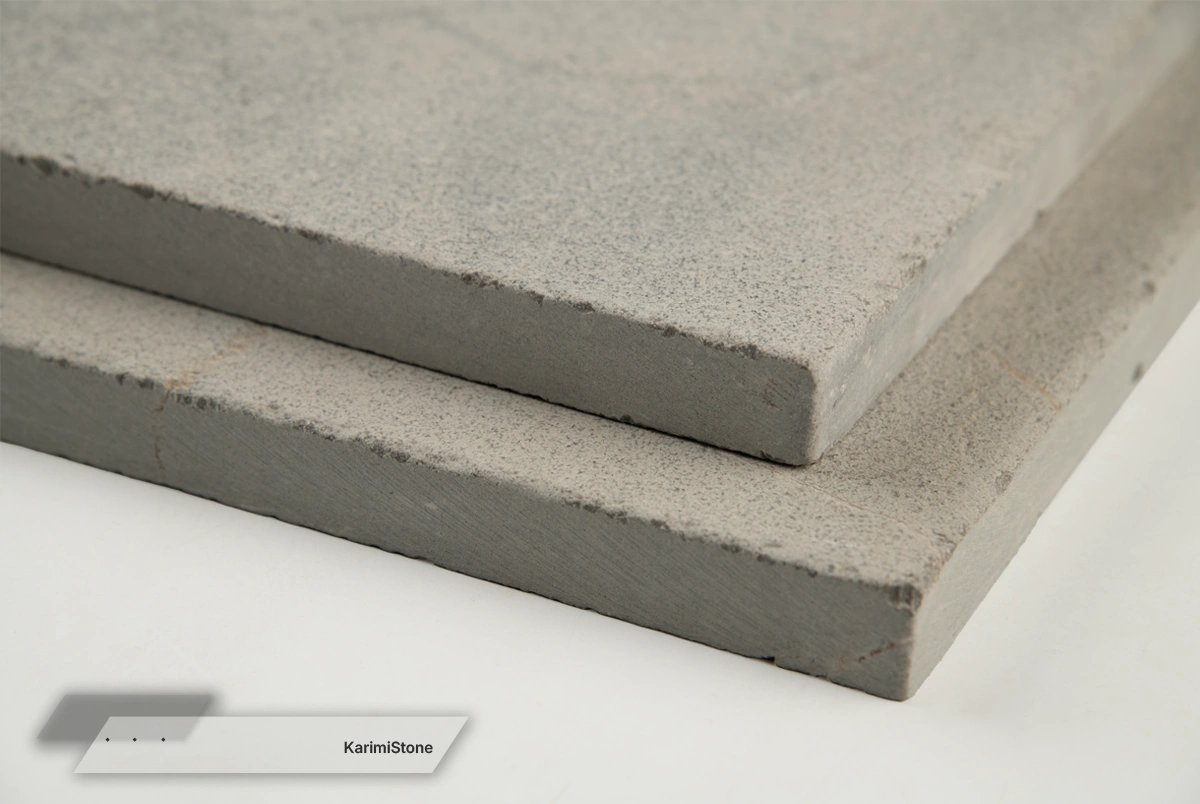
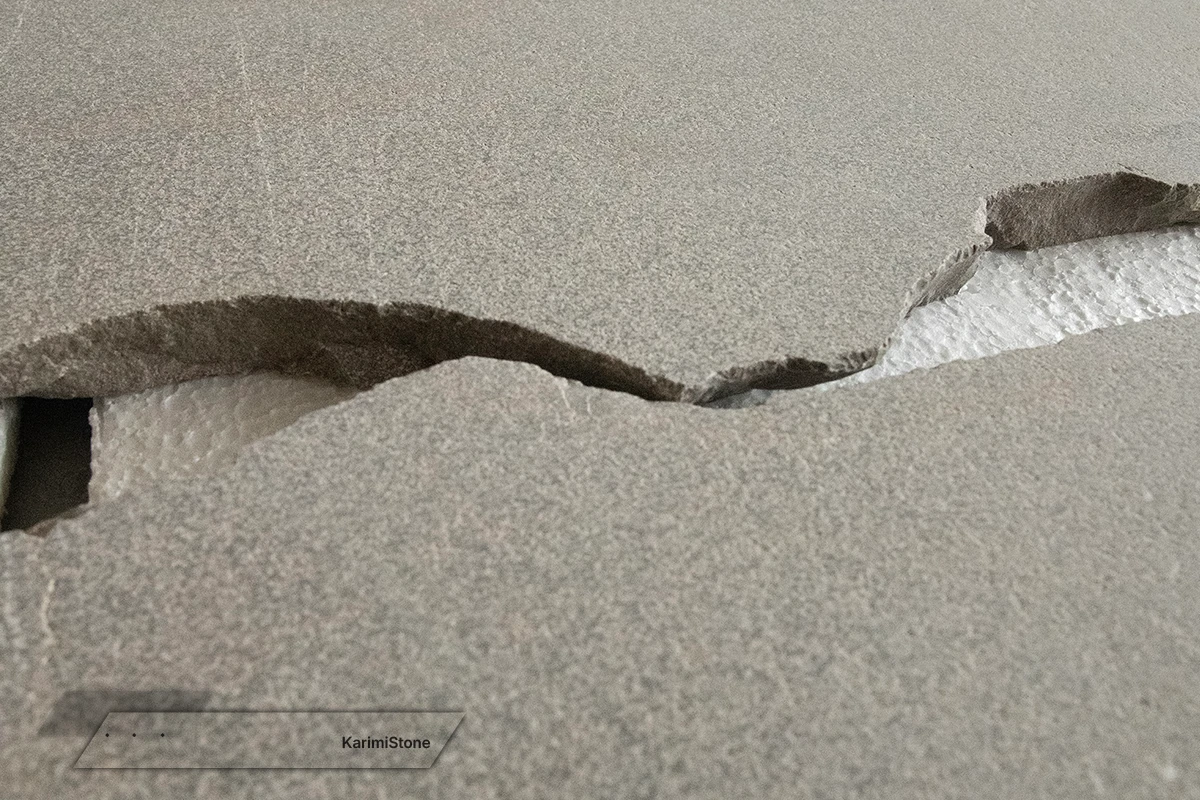
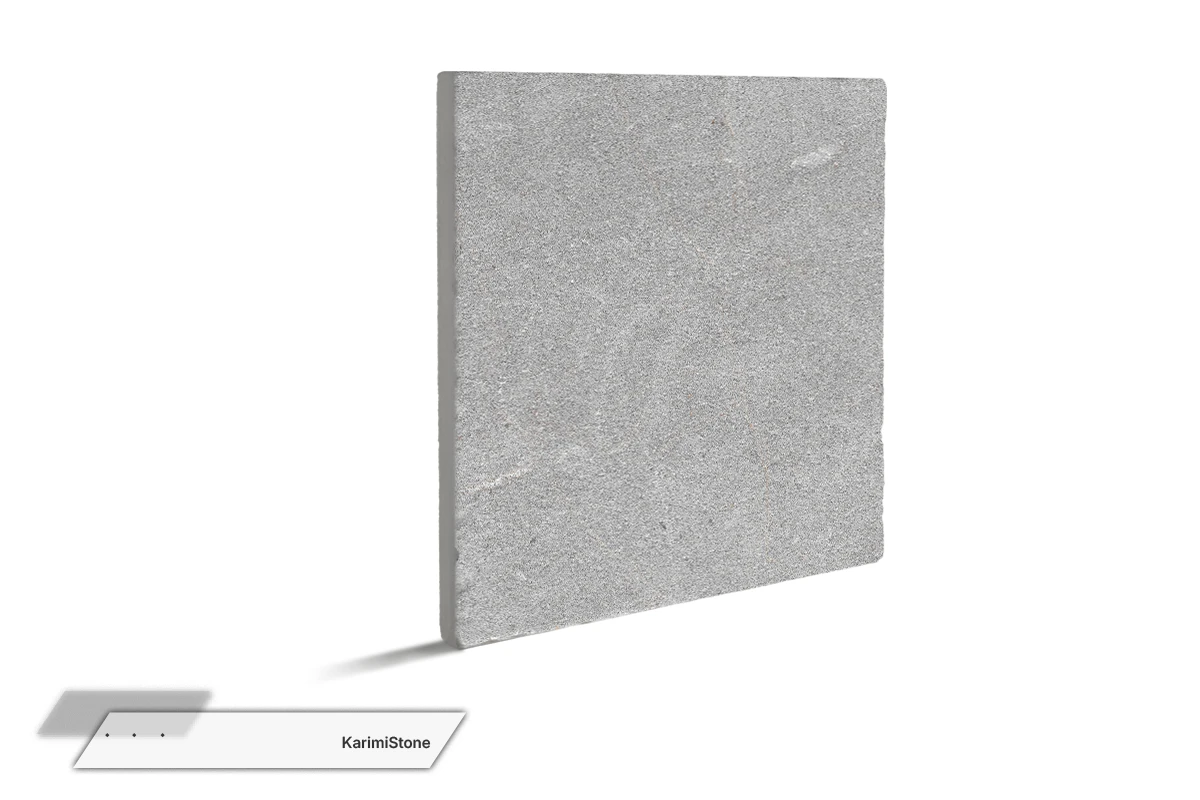
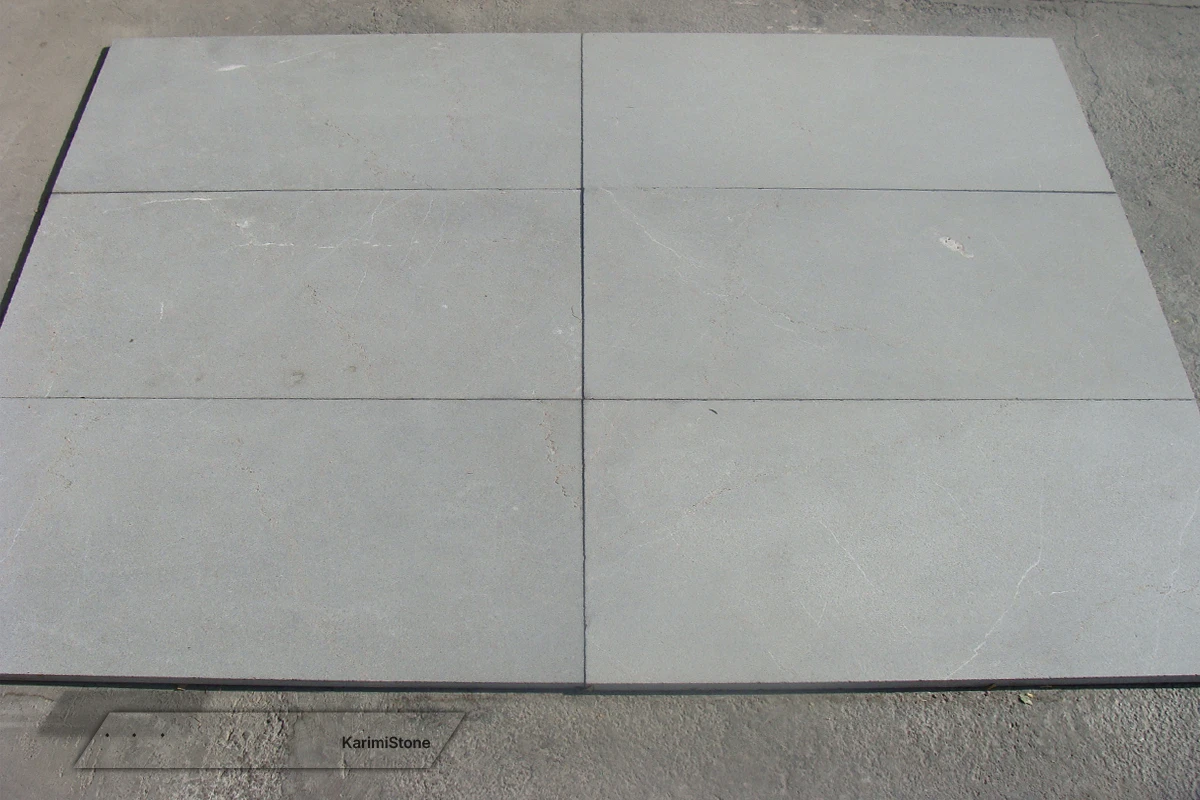
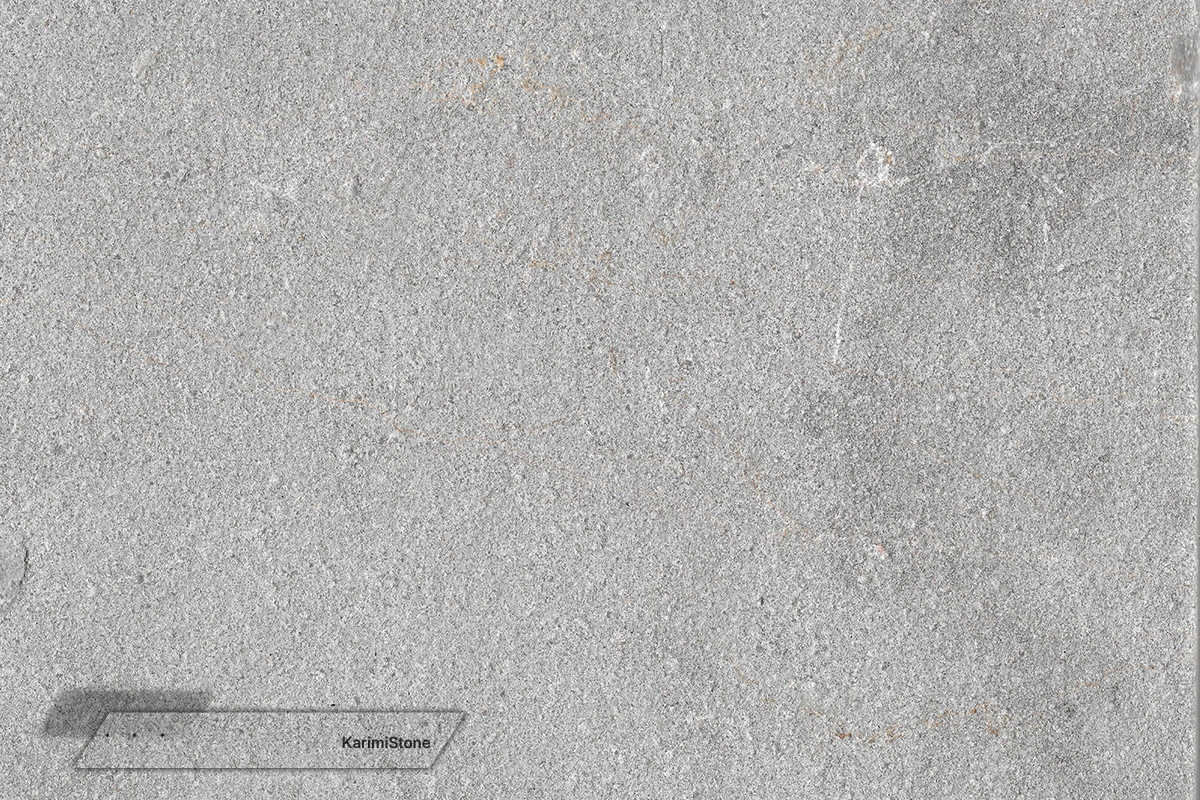
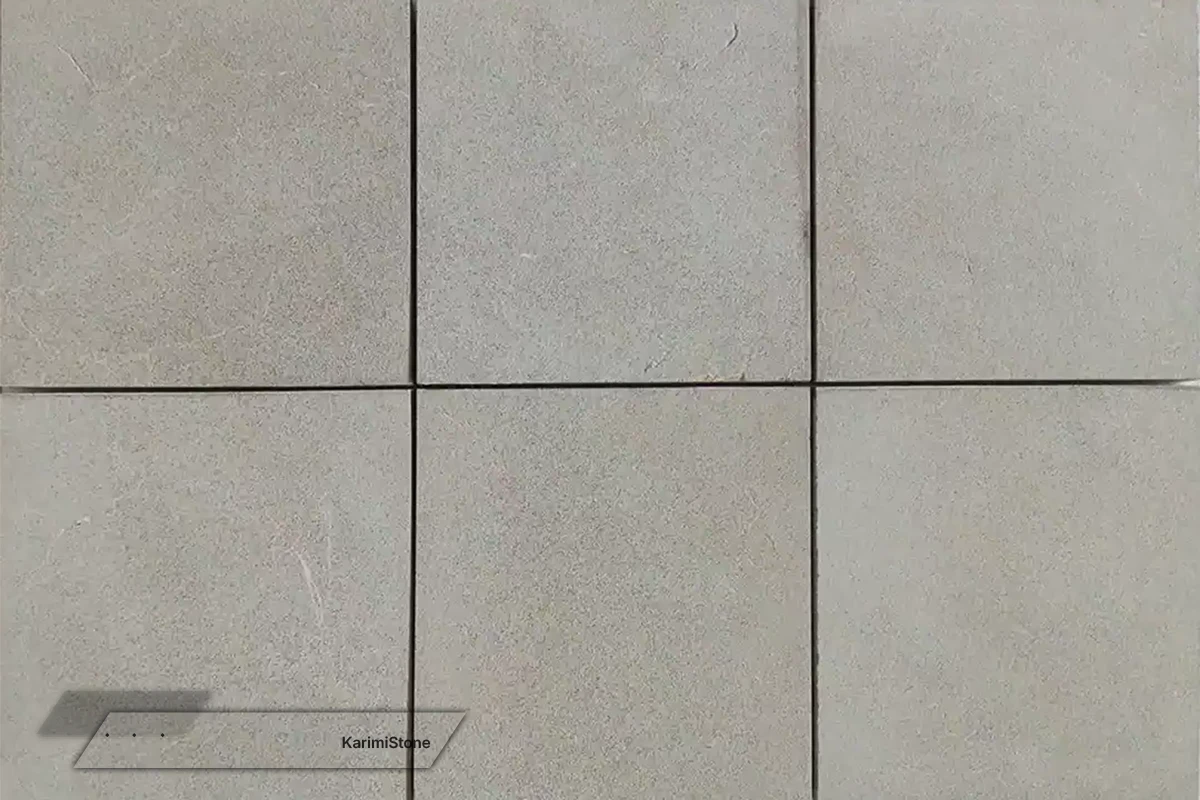
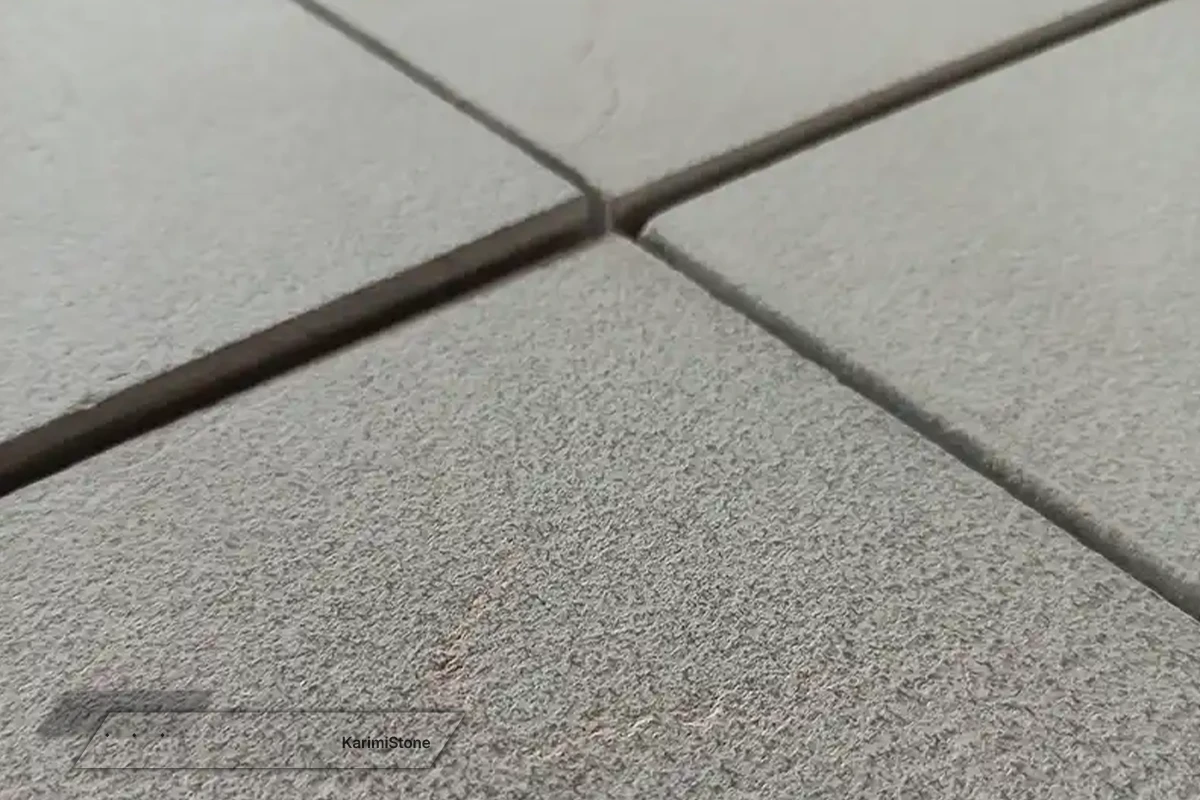
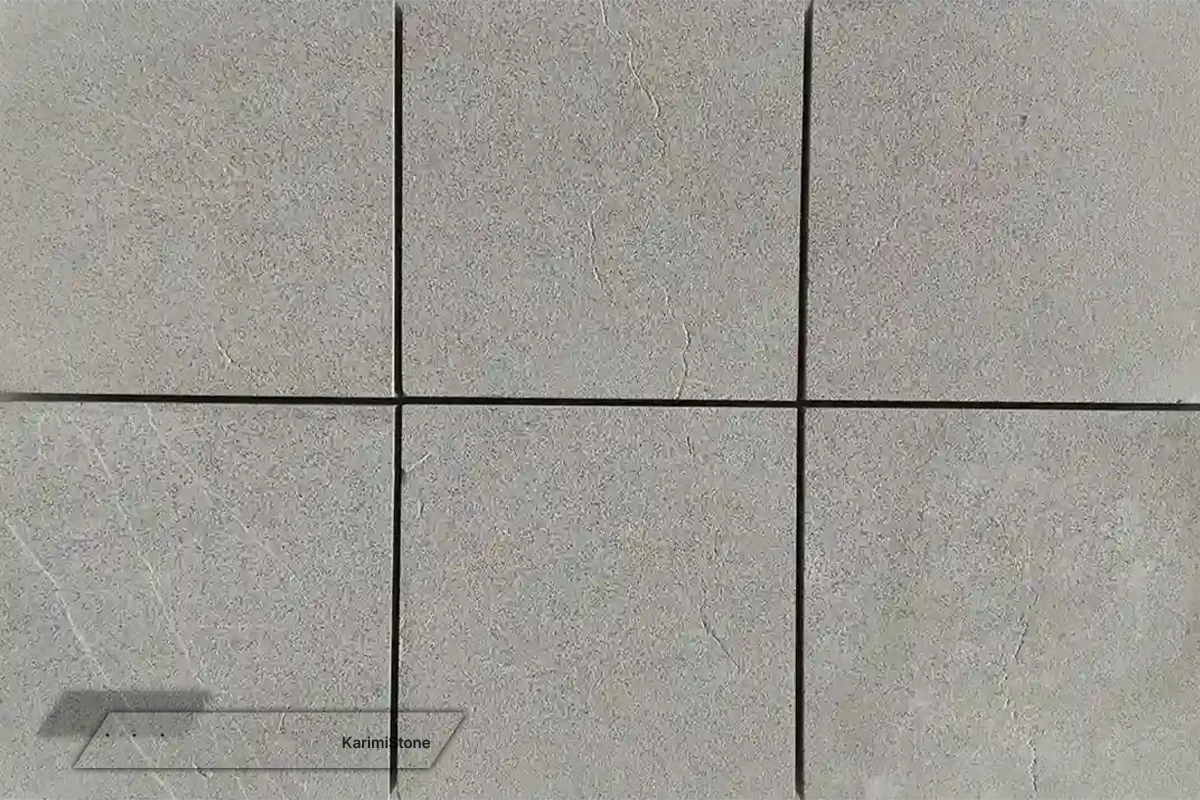
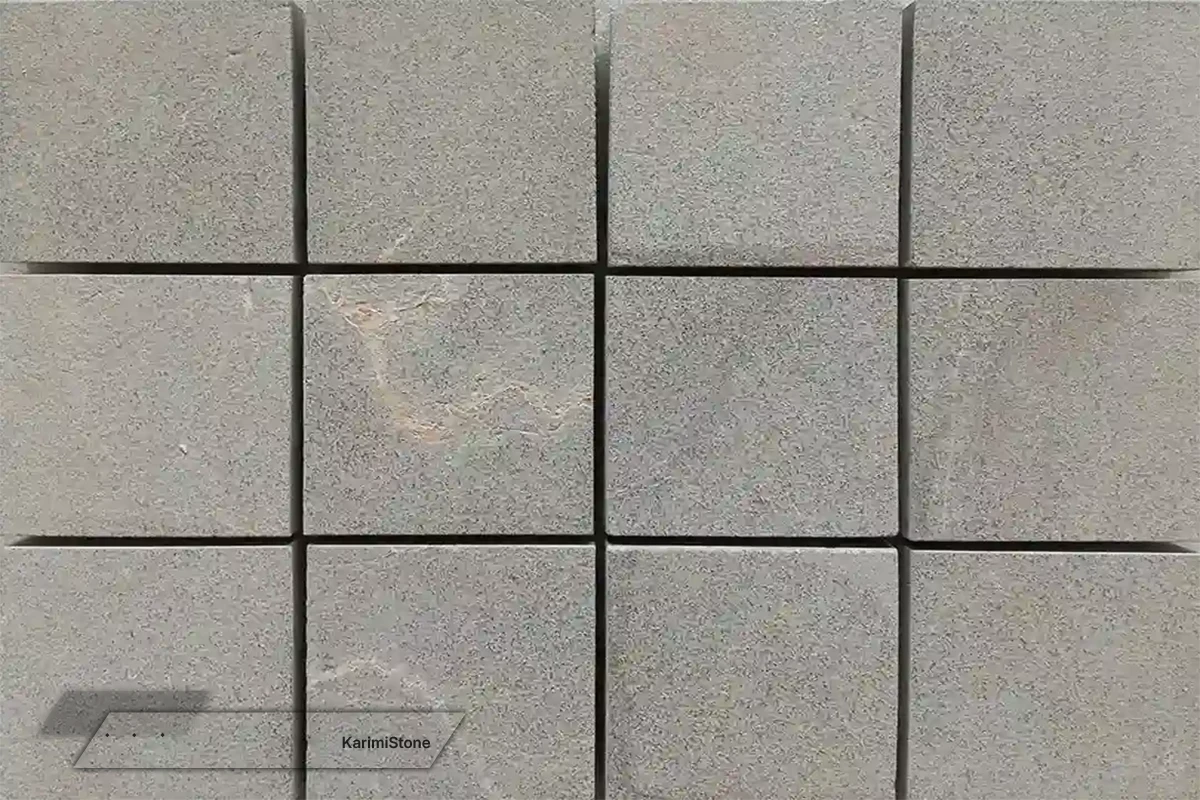
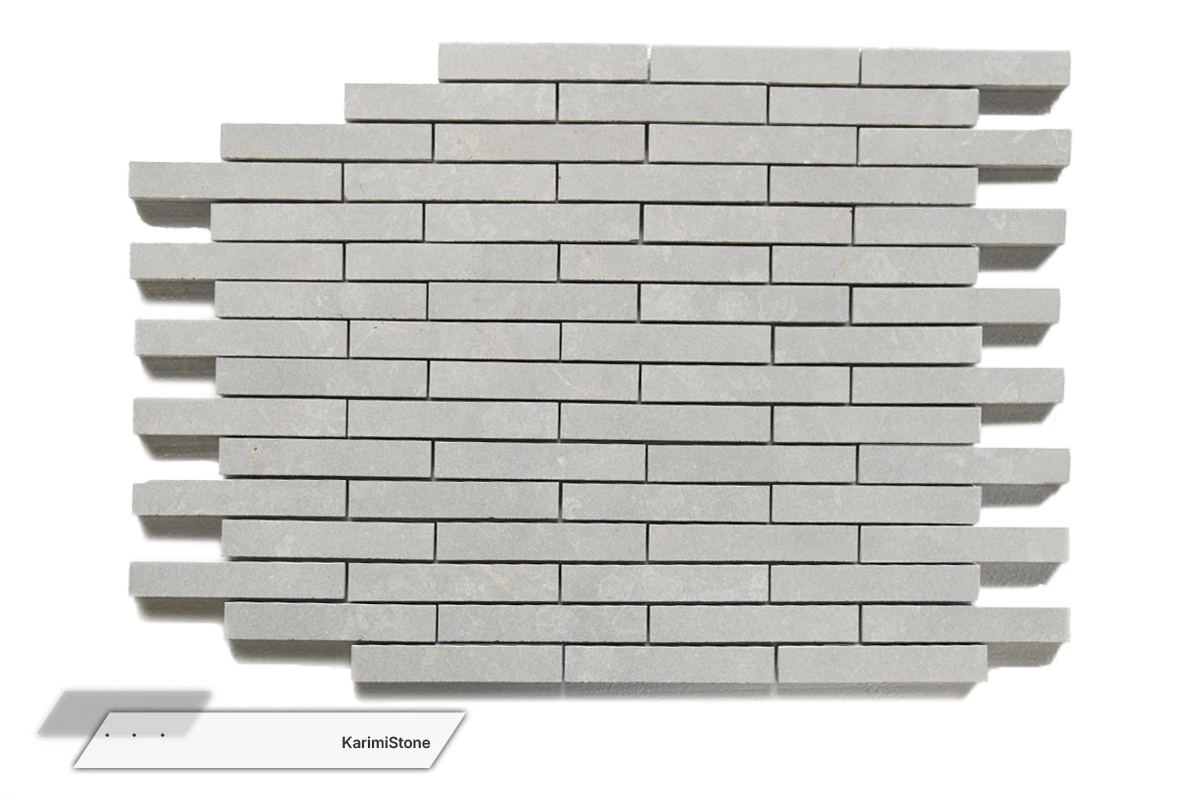
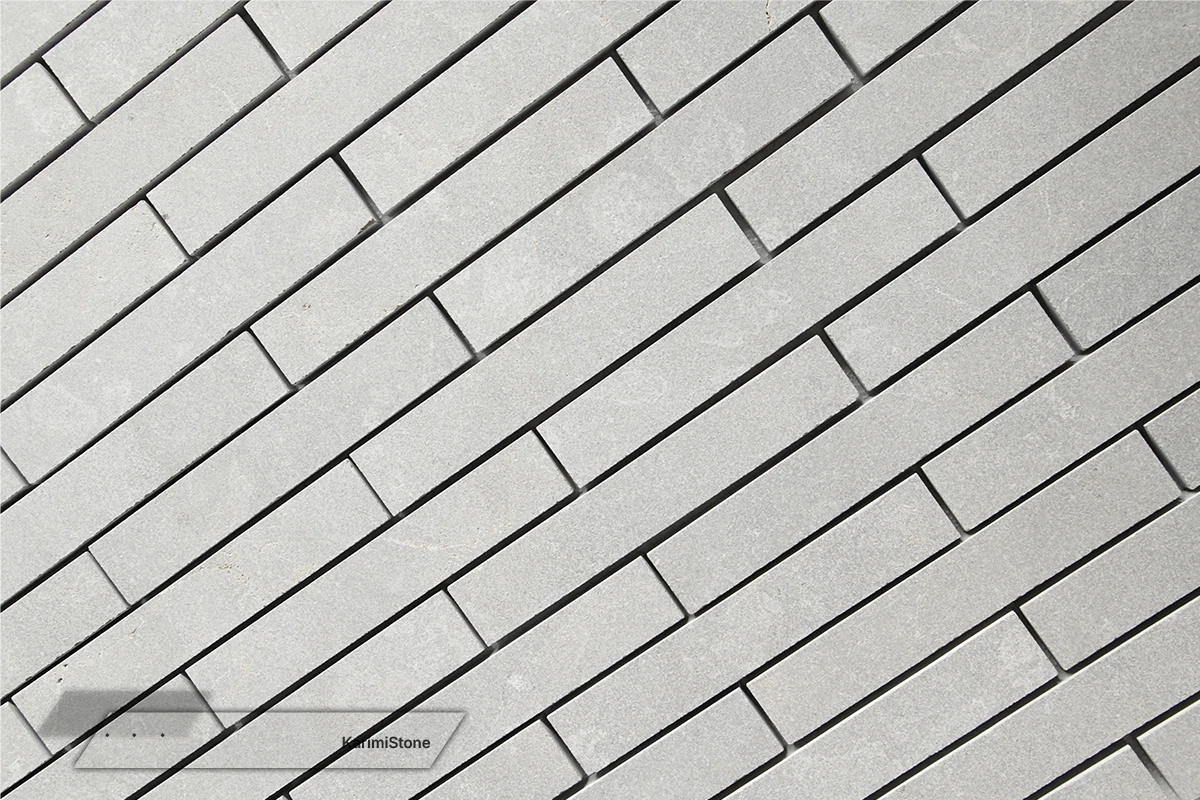
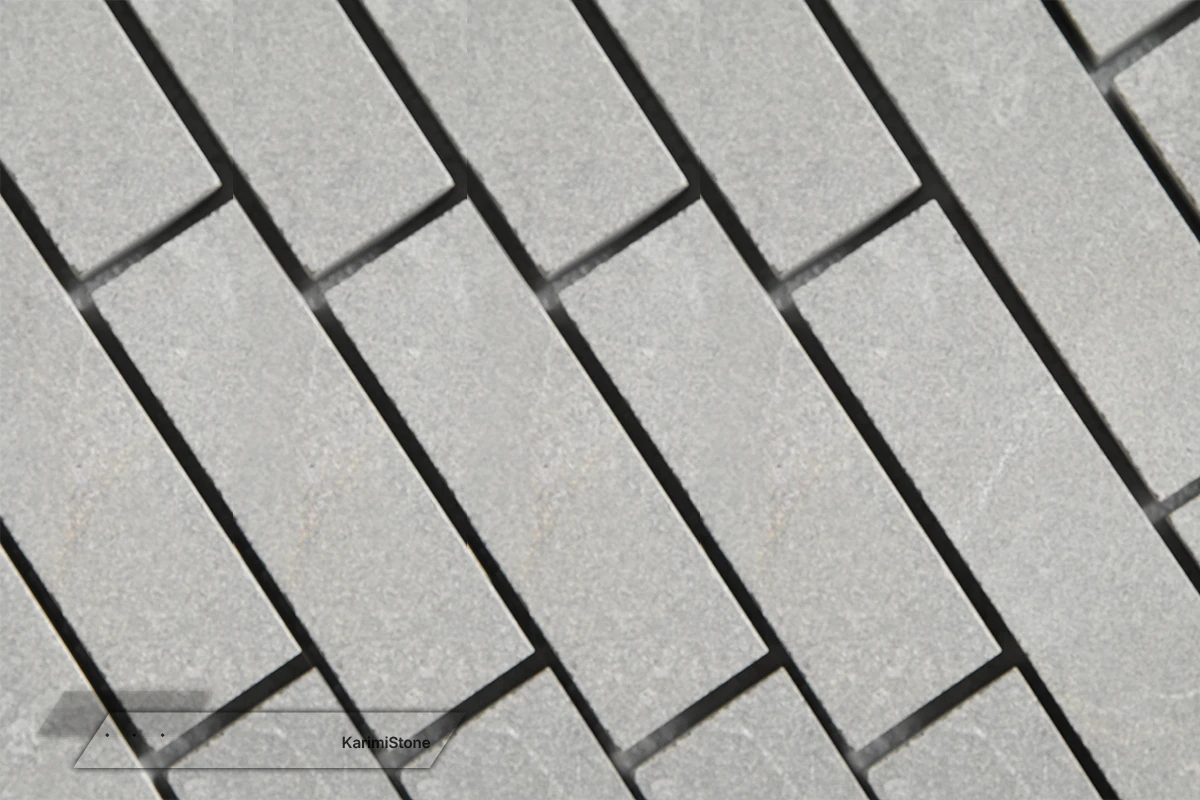
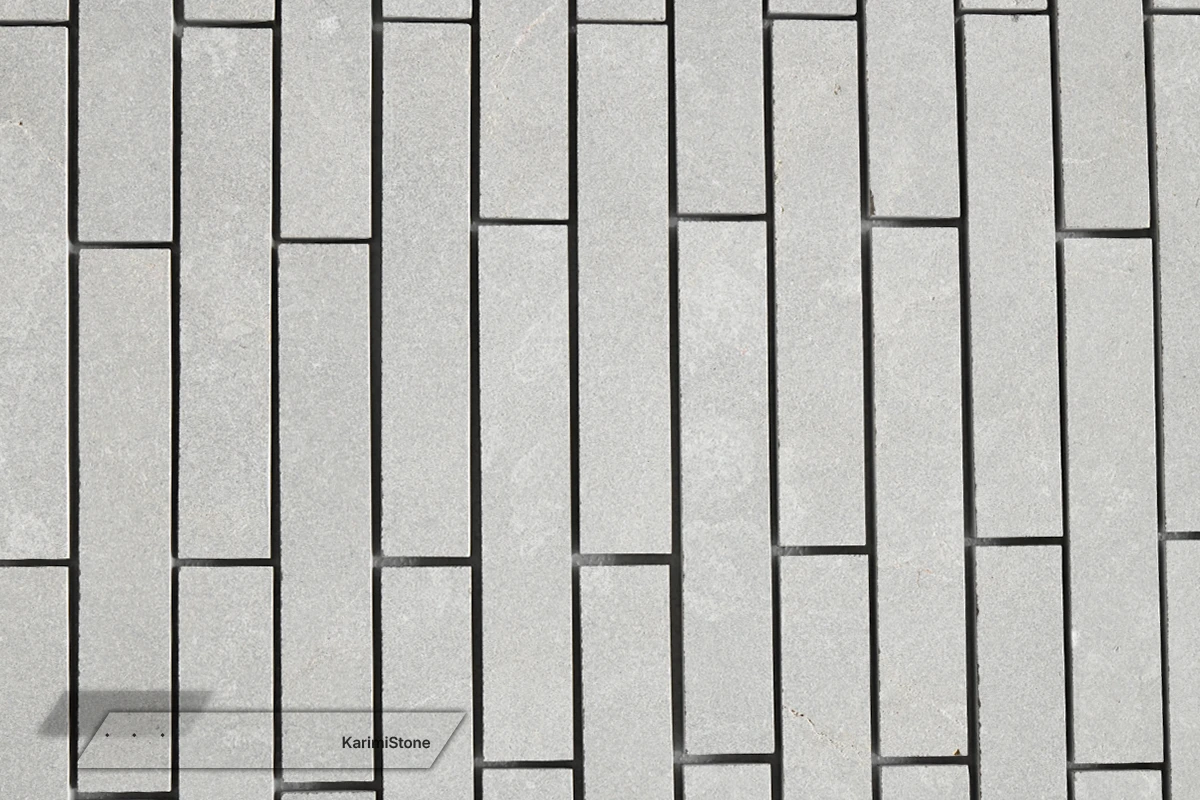
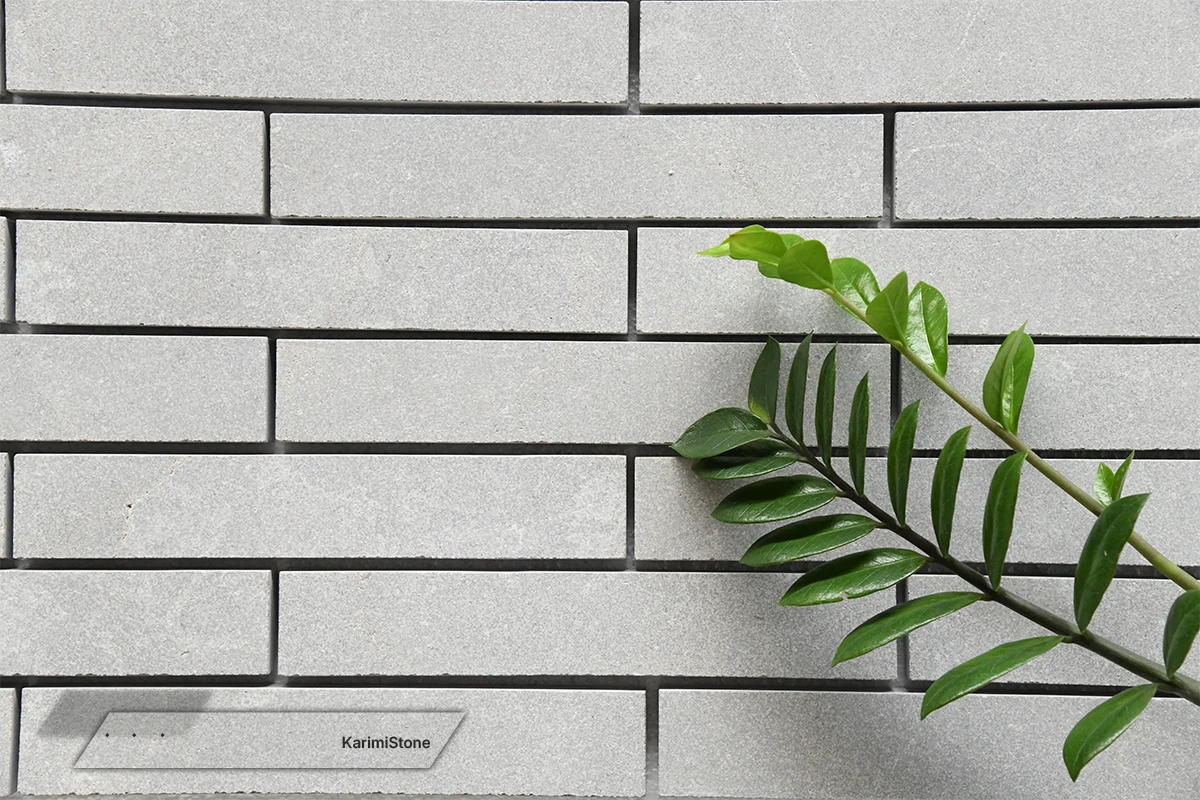
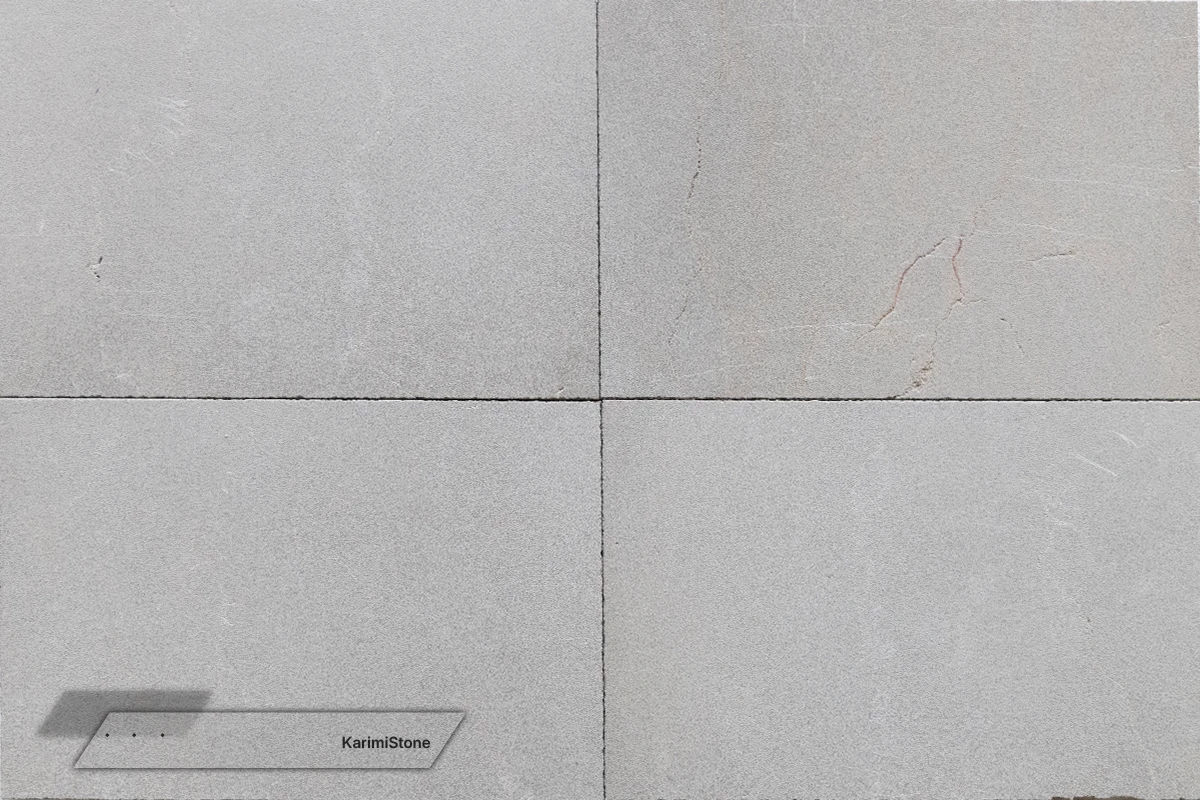
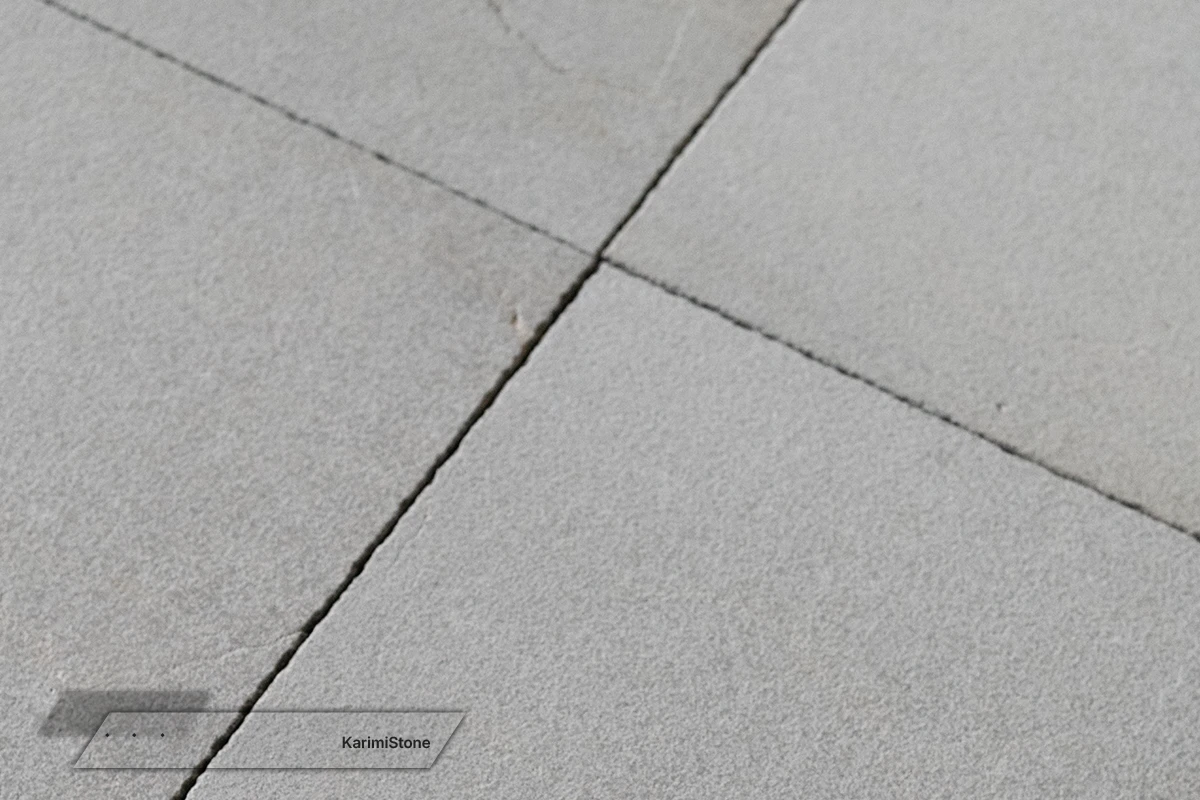
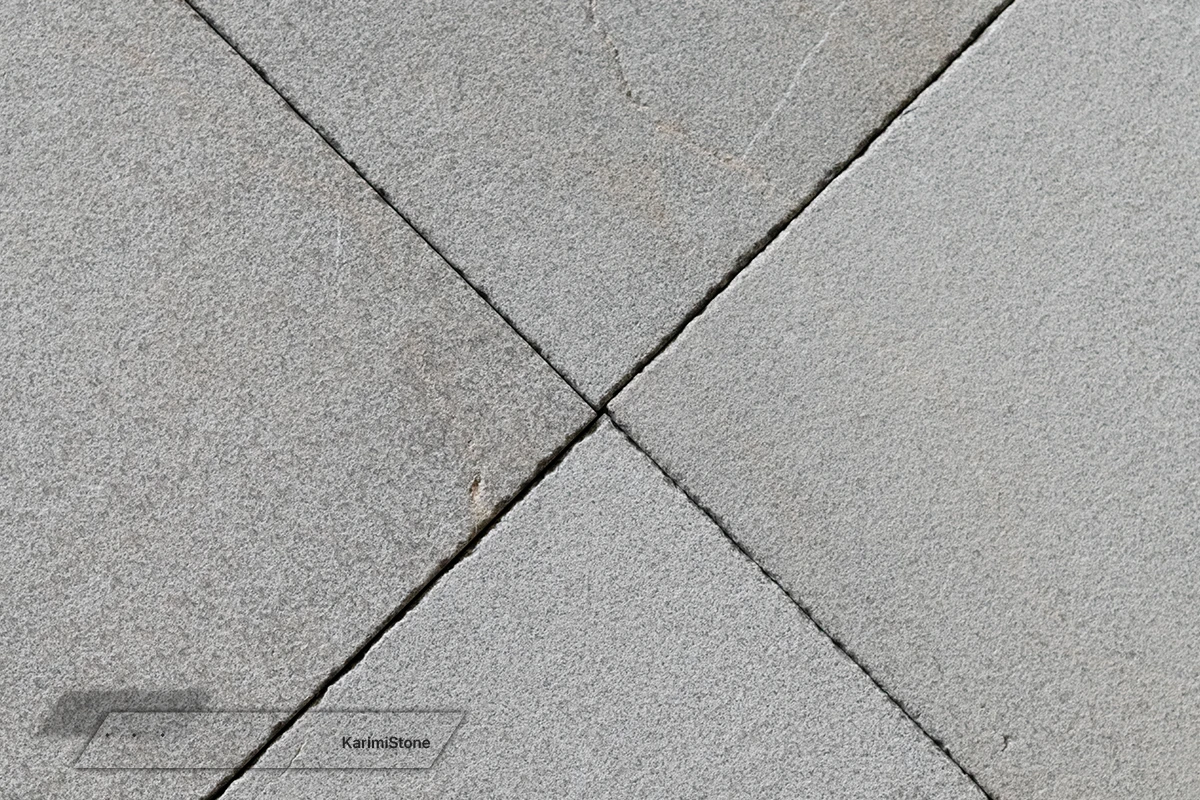
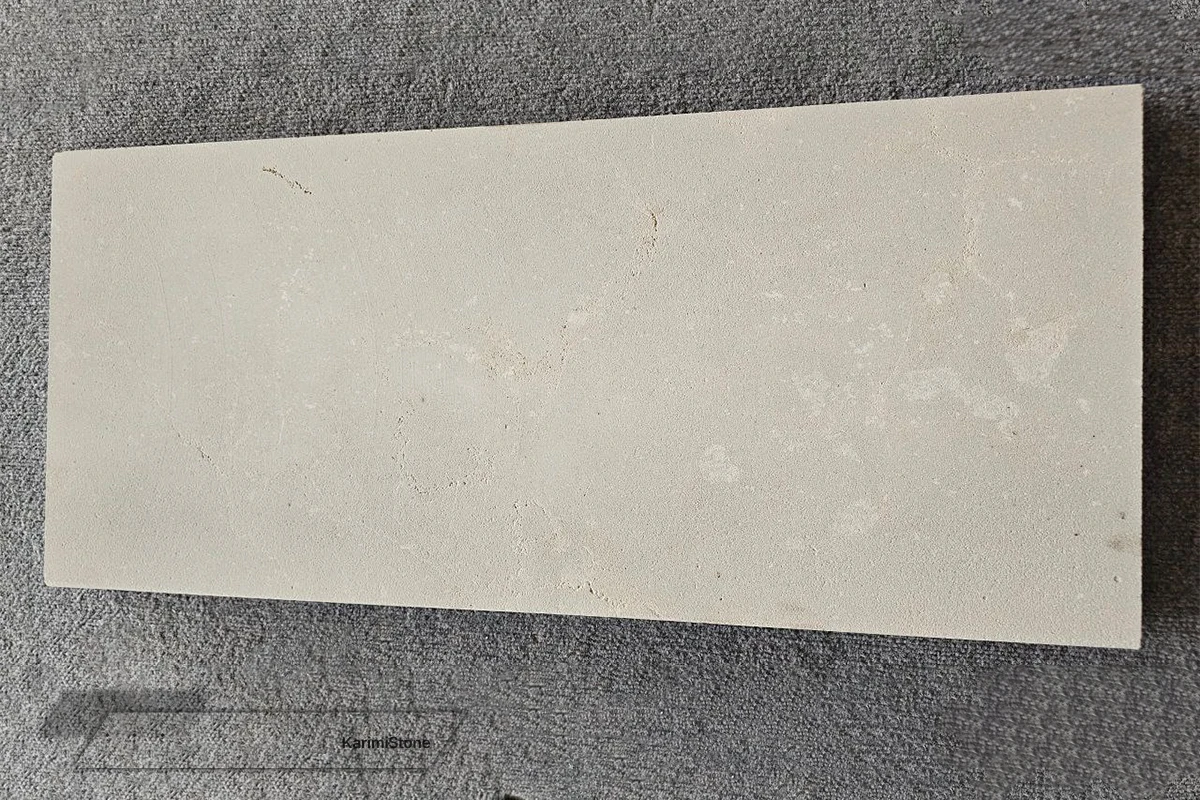
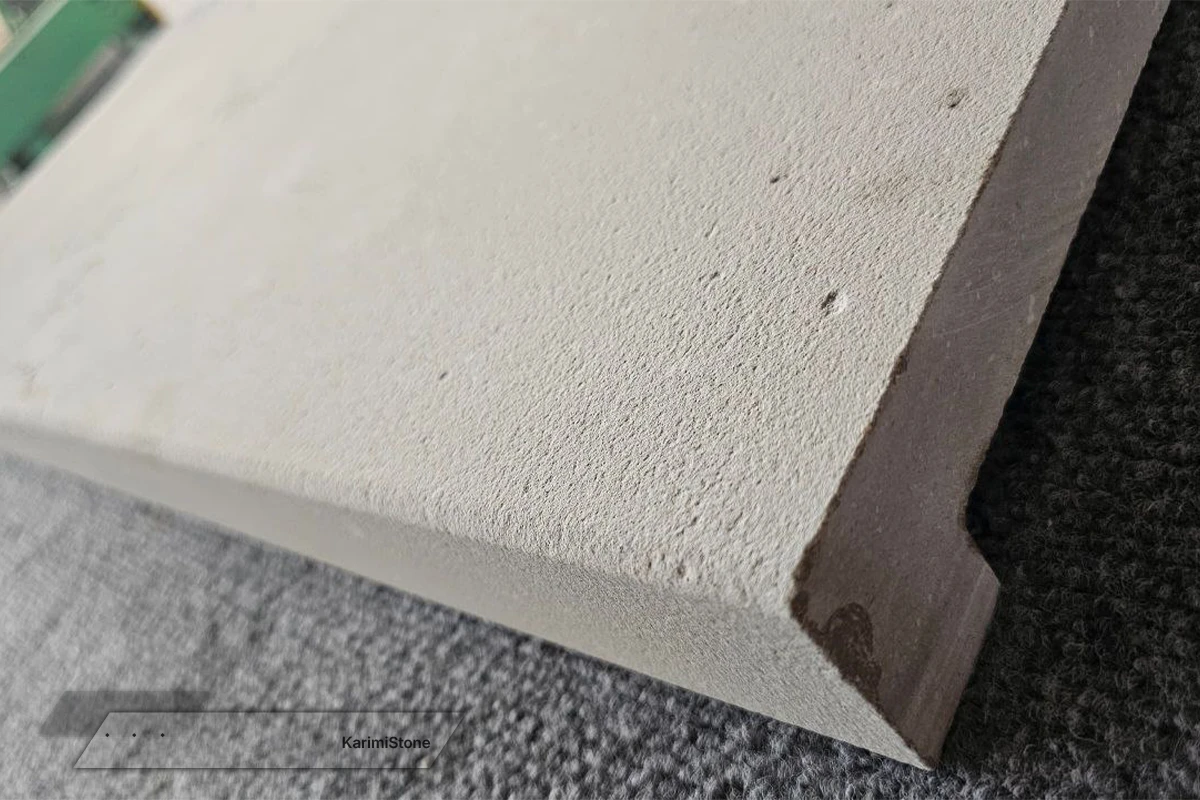
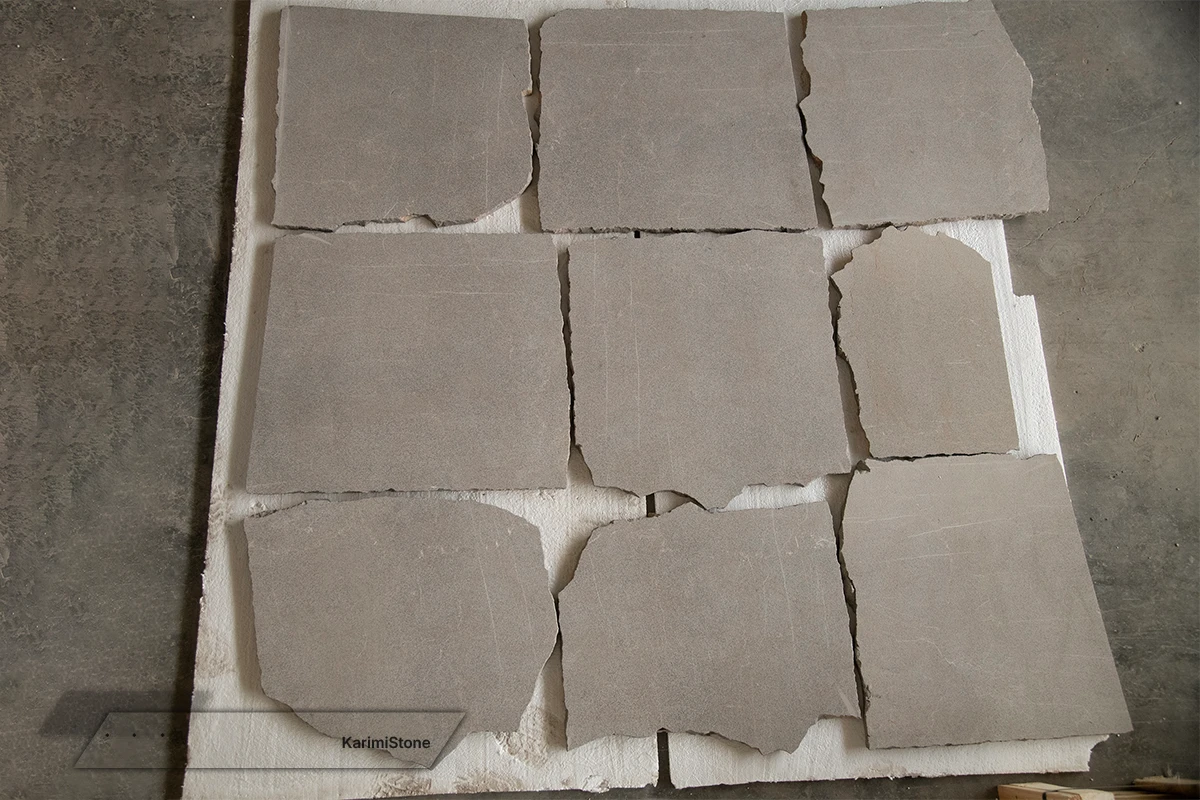
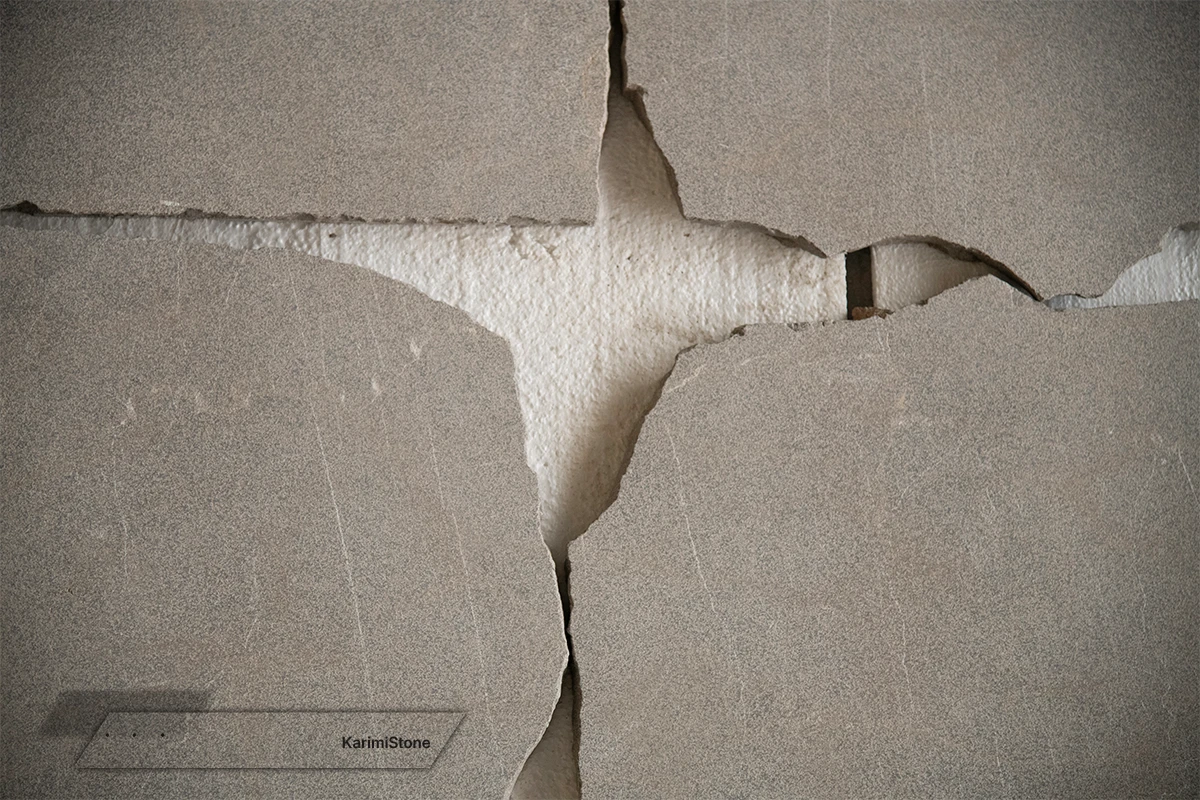
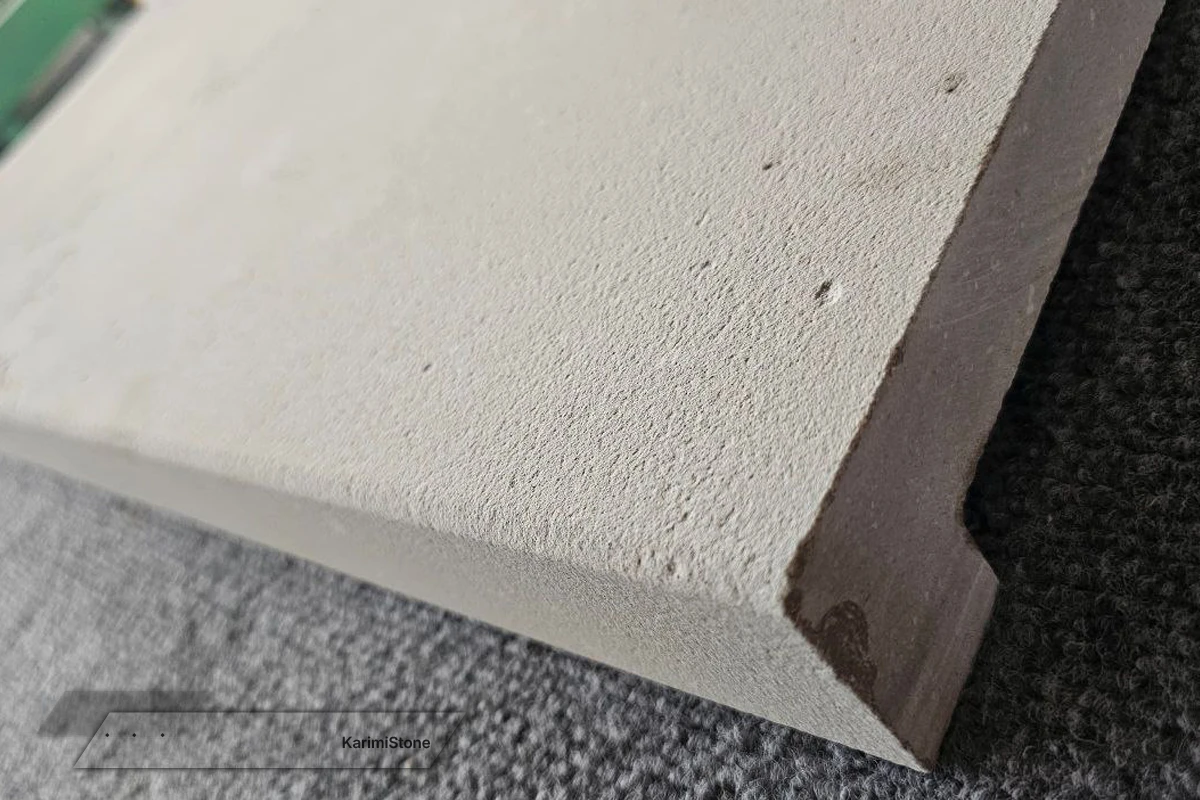
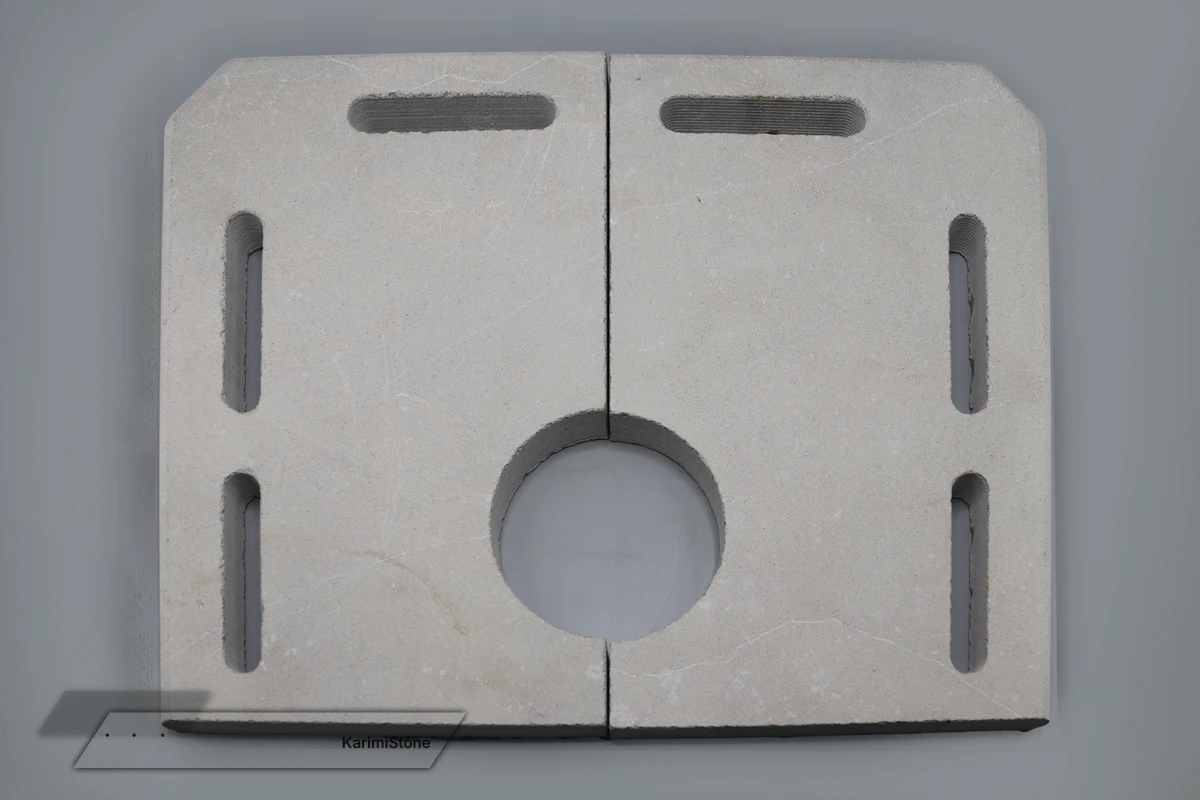
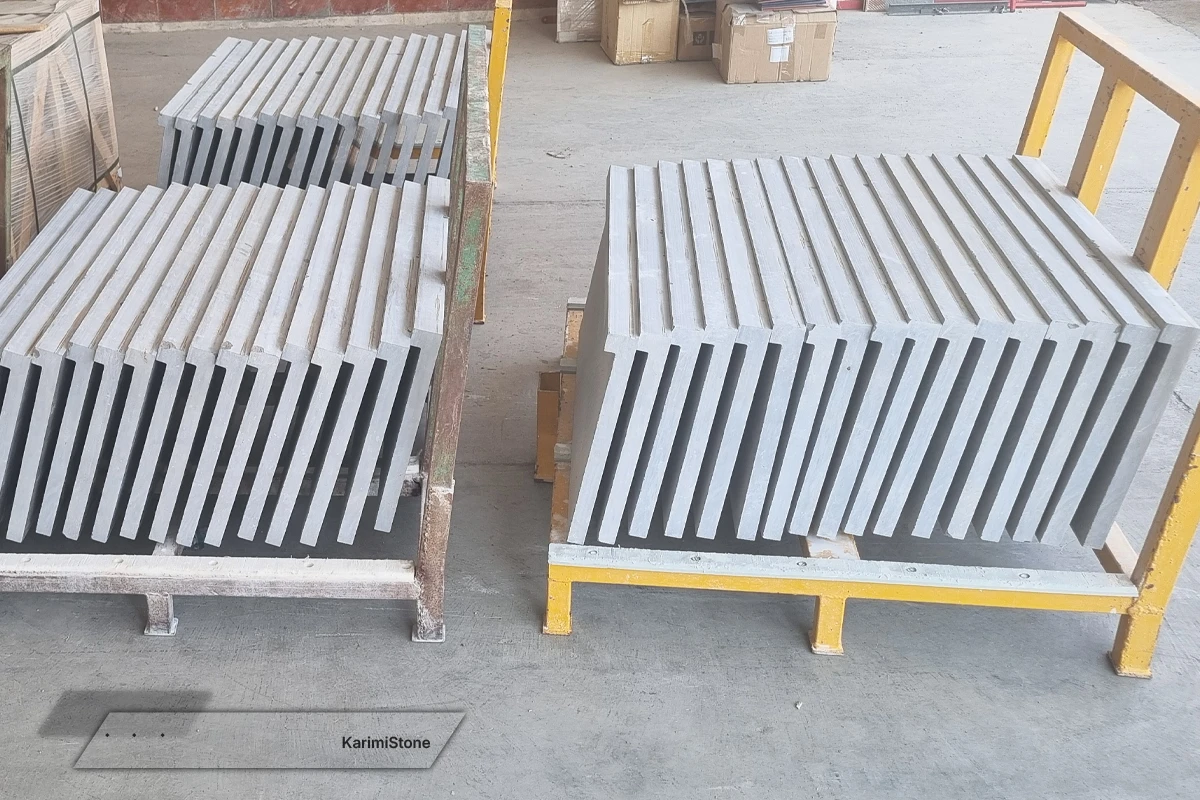
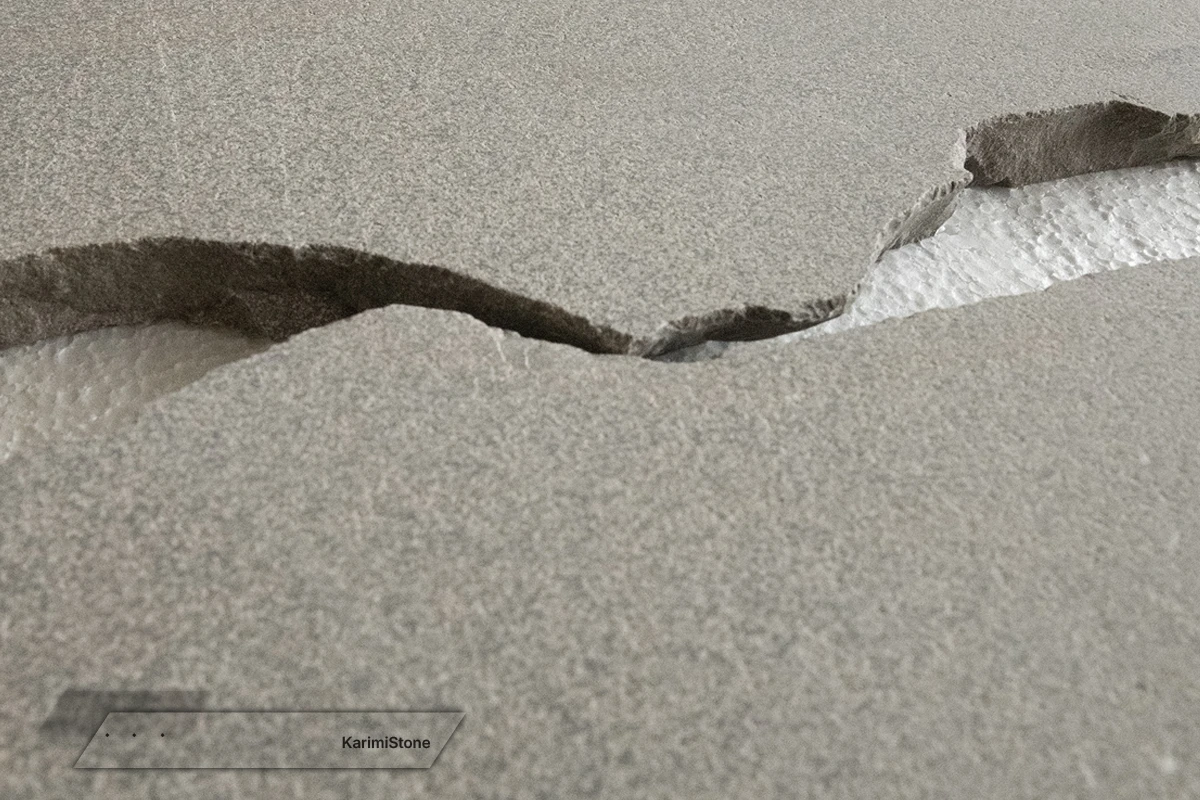


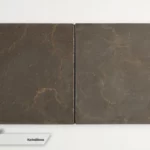

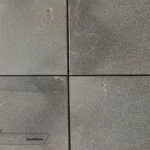
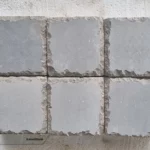
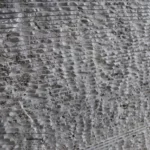
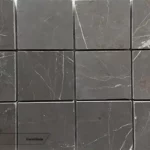
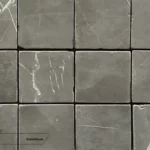
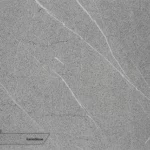















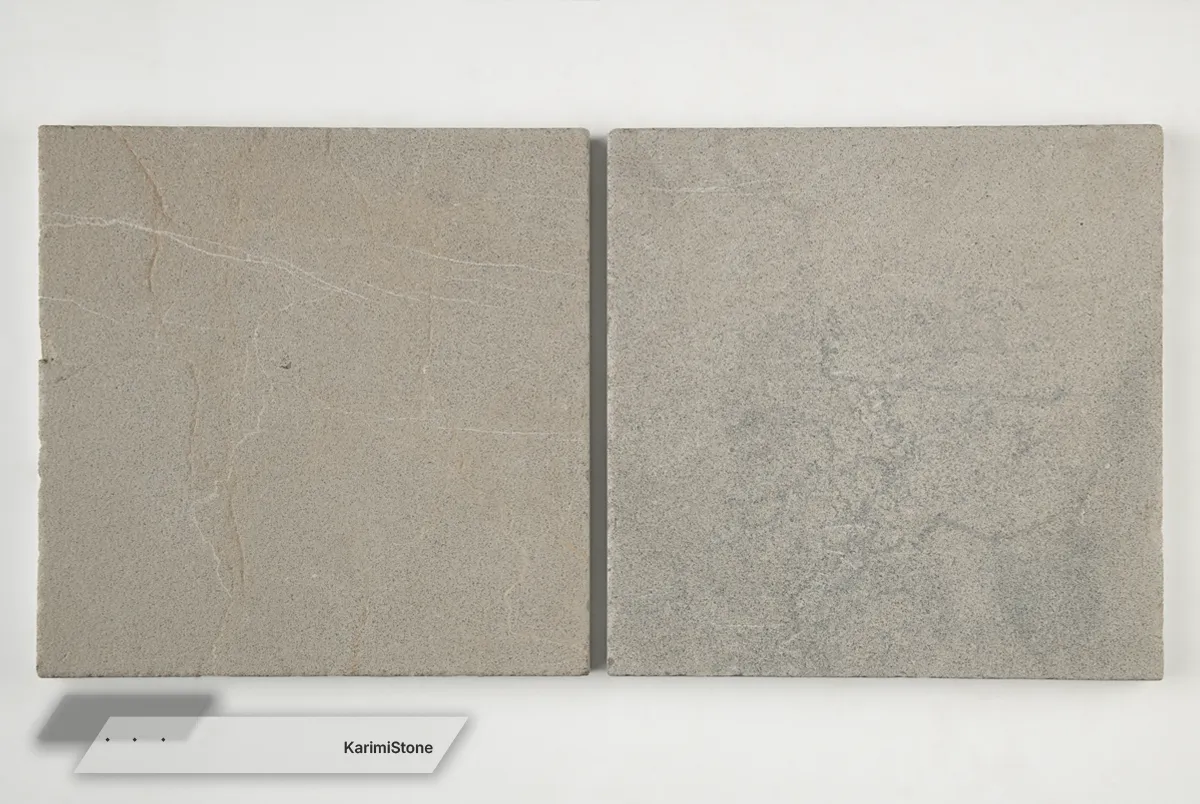
Grey Marble Sandblasted is an Iranian natural stone with a calm grey color, dense marble structure, minimal strong veining, and a finely textured matte surface. The Sandblasted finish removes strong surface reflection and creates a controlled granular texture, giving the material a practical architectural character for exterior, semi-outdoor, and selected interior applications.
The neutral grey background allows Grey Marble Sandblasted to cover large surfaces without excessive visual movement, while the textured face provides a more tactile alternative to polished or honed marble. It can be considered for paving, sidewalks, garden and villa flooring, stairs, courtyards, terraces, exterior walls, poolside architectural elements, curbstones, and other high-use project areas.
What Is Grey Marble Sandblasted?
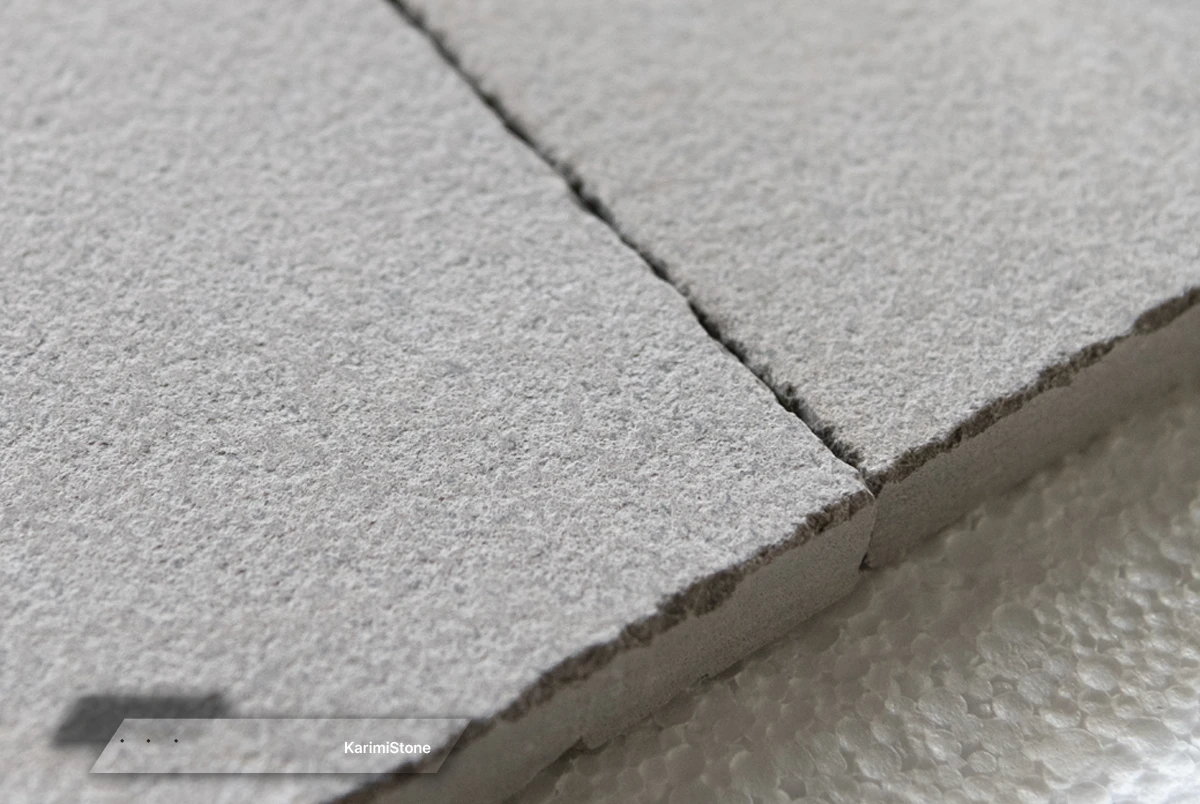
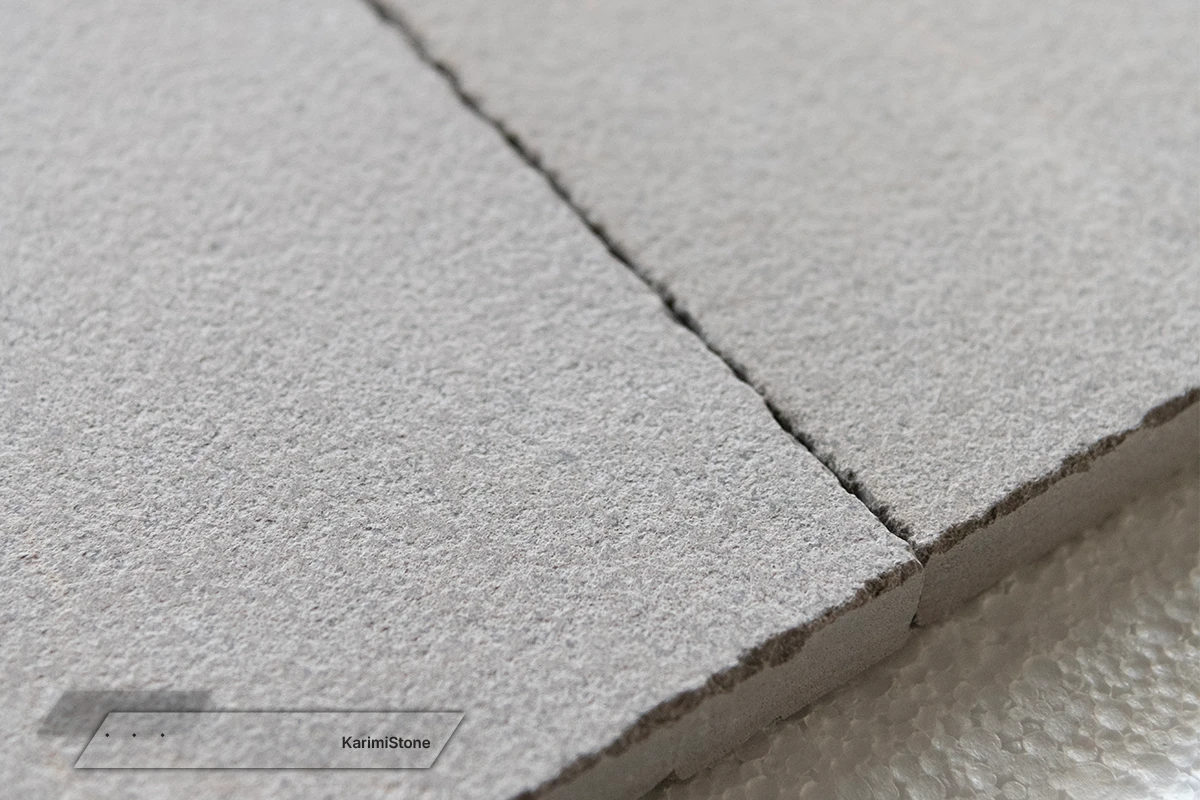
Grey Marble Sandblasted is natural Iranian Grey Marble treated with controlled abrasive blasting to create a finely textured, low-reflection surface.
During processing, abrasive particles are directed toward the stone face under controlled pressure. Their impact modifies the upper surface and creates numerous small irregularities without producing the deep relief associated with Bush-Hammered or Hand-Hammered finishes.
The finished material remains recognizably Grey Marble but acquires a more functional and architectural surface character.
What Is Grey Marble?
Grey Marble is a natural metamorphic stone with a compact crystalline structure.
The U.S. Geological Survey (USGS) explains that metamorphic rocks form when existing rocks are transformed by geological conditions such as heat, pressure, and mineral-rich fluids. Marble is one of the common metamorphic rock types.
Typical characteristics of this Grey Marble include:
- Light to medium grey background
- Occasional darker charcoal tones
- Limited strong natural veining
- Subtle tonal variation
- Dense crystalline structure
- Clean and visually controlled appearance
Explore other materials in the Karimi Stone Grey Natural Stone collection.
What Is a Sandblasted Finish?
Sandblasting is a mechanical surface-treatment process in which fine abrasive material is directed toward the stone under controlled pressure.
The process changes the surface without adding gloss. Instead, it creates a matte and slightly rough physical texture.
On Grey Marble, Sandblasting generally produces:
- A matte surface
- Low direct light reflection
- A fine granular texture
- A visually softer grey color
- Greater physical texture than polished marble
- A clean architectural appearance
Other products using this treatment can be explored in the Karimi Stone Sandblasted Stone collection.
How Sandblasting Changes Grey Marble
A Polished Grey Marble reflects directional light and normally displays a deeper, more saturated grey color.
Sandblasting changes this interaction with light. The small high and low points created across the surface scatter light in many directions.
As a result:
- Direct glare is reduced
- The surface appears matte
- Grey tones may appear softer
- Subtle texture becomes visible under side lighting
- The stone develops a more functional and natural character
The final appearance depends on abrasive type, blasting pressure, processing speed, number of passes, stone structure, and the approved reference sample.
Sandblasted vs. Polished Grey Marble
| Characteristic | Sandblasted | Polished |
|---|---|---|
| Surface | Fine textured | Smooth |
| Reflection | Low | High |
| Visual character | Matte and functional | Refined and formal |
| Grey appearance | Softer | Deeper and richer |
| Typical project direction | Exterior and high-use surfaces | Mainly controlled interior surfaces |
Sandblasted vs. Sandblasted & Brushed
Grey Marble Sandblasted receives the abrasive-blasting treatment only.
With Grey Marble Sandblasted & Brushed, an additional brushing stage follows the Sandblasting process and softens the more pronounced surface texture.
The standard Sandblasted version therefore retains a cleaner granular character, while Sandblasted & Brushed feels somewhat softer and more tactile.
You can compare the two products with Grey Marble Sandblasted & Brushed.
Sandblasted vs. Sandblasted & Tumbled
These products can have a similar main face because both use Sandblasting.
The difference is the edge treatment.
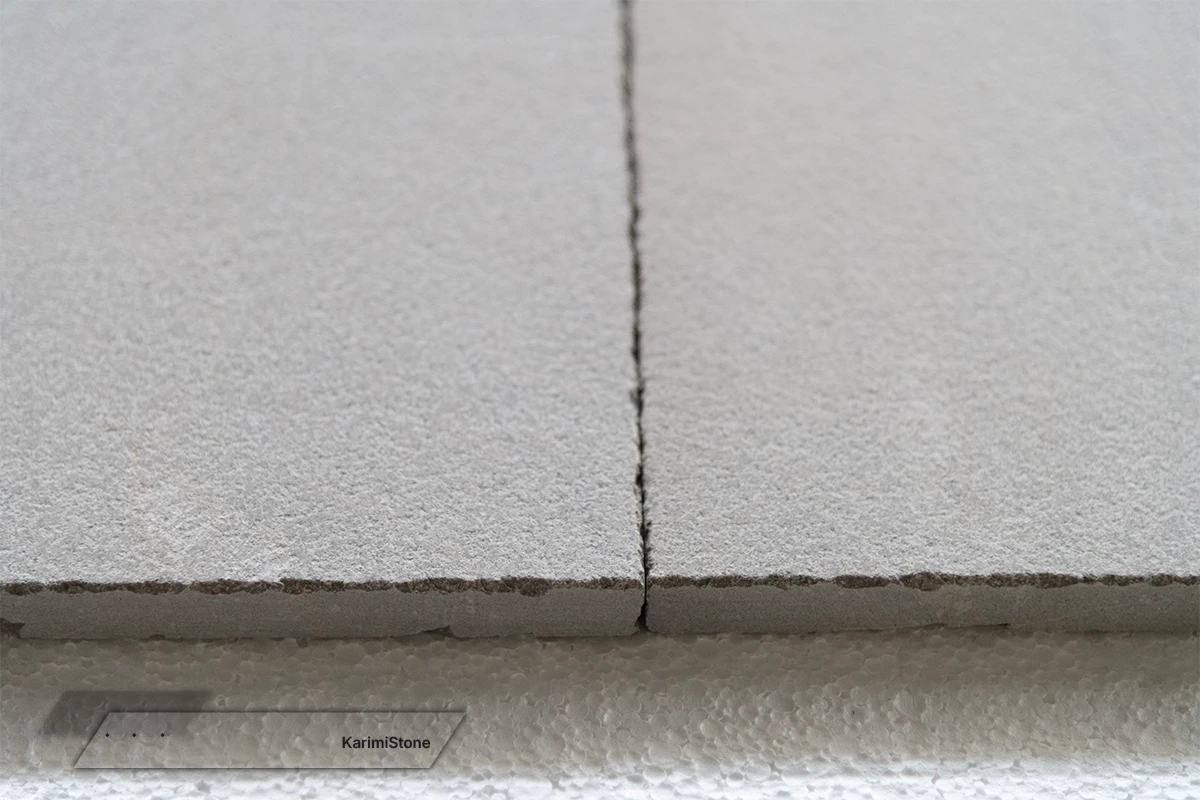
Grey Marble Sandblasted uses a Sawn edge.
Grey Marble Sandblasted & Tumbled uses softened Tumbled edges and corners.
Therefore, the standard Sandblasted product provides a cleaner, sharper modular geometry.
Plain Natural Pattern
The current product is classified as Plain.
The surface is therefore not dominated by dramatic veins or strong directional movement.
Its visual identity comes mainly from:
- The grey background
- Subtle tonal differences
- The fine Sandblasted texture
- Low light reflection
This makes the product useful for large pavements, walls, courtyards, and repeated architectural modules.
Surface Grip and Slip Performance
Sandblasting creates greater physical texture than Polished or highly smooth stone surfaces.
This additional texture may improve underfoot grip and is one reason the finish is commonly considered for paving, sidewalks, stairs, entrances, garden paths, and other exterior surfaces.
However, the term Sandblasted should not be interpreted as a guaranteed slip-resistance classification.
If a project requires a specific P-rating, Wet Pendulum result, coefficient of friction, or other regulatory performance, the actual finished stone should be tested according to the applicable standard.
Technical Characteristics
| Property | Current Product Value | Reference |
|---|---|---|
| Porosity | 0.9% | ASTM C97 |
| Density | 2700 kg/m³ | ASTM C97 |
| Water Absorption | 0.15% | ASTM C97 |
| Compressive Strength | 41 MPa | ASTM C170 |
| Abrasion Resistance | 0.18 mm | EN 14157 |
| Flexural Strength | 20.5 MPa | Product Data |
| Cold Resistance | -30°C | Product Data |
| Heat Resistance | 100°C | Product Data |
These values reflect the current Karimi Stone product data. Natural stone can vary between quarry blocks and production batches, so technical projects should confirm the properties of the actual selected material and applicable laboratory documentation.
Applications of Grey Marble Sandblasted
Exterior Paving
Exterior paving is one of the main applications of Sandblasted Grey Marble.
Possible project uses include:
- Villa courtyards
- Architectural plazas
- Pedestrian routes
- Entrance areas
- Landscape flooring
- Covered terraces
- Shared exterior circulation areas
Sidewalk Paving
The neutral grey appearance and textured surface make the material suitable for selected sidewalk and urban pedestrian projects.
For heavily trafficked public areas, thickness, substrate, loading conditions, joint design, drainage, and required performance should be determined by the project specification.
Garden and Villa Flooring
Grey Marble combines naturally with:
- Vegetation
- Natural timber
- Concrete
- Brick
- Metal
- Water
- Other grey or neutral stones
The matte surface works especially well in modern and minimal landscape design.
Staircases and Steps
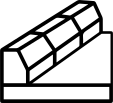
Grey Marble Sandblasted can be fabricated into stair treads, risers, landings, garden steps, and entrance stairs.
For pedestrian stairs, the actual finished surface should satisfy the slip-performance requirements of the project.
Exterior Walls
The low-reflection texture can also create a controlled appearance on selected exterior walls and facade elements.
Stone thickness, fixing system, wind loads, climate, drainage, and engineering requirements should be considered separately from the visual finish.
Interior Walls
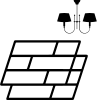
The product can also be used where an interior design requires a matte and tactile stone wall rather than a polished reflective face.
Possible locations include:
- Entrance walls
- Commercial interiors
- Feature walls
- Circulation spaces
- Architectural panels
Pool Coping and Poolside Architecture
The current product configuration includes pool-coping applications.
For wet environments, the actual finished surface should be evaluated together with edge geometry, drainage, installation, sealing, maintenance, and project-specific slip requirements.
Curbstones
Grey Marble Sandblasted can also be manufactured as curbs and other landscape edge elements.
Dimensions, thickness, edge geometry, and installation details can be defined according to project requirements.
Grey Marble Sandblasted in Architecture
The neutral grey color and non-reflective surface coordinate easily with contemporary building materials.
Common combinations include:
- Exposed concrete
- Black metal
- Galvanized steel
- Natural wood
- Glass
- White natural stone
- Landscape vegetation
The Sandblasted texture adds material depth without competing strongly with surrounding design elements.
Cleaning and Maintenance
A textured surface can retain more fine dust than polished stone, so maintenance should reflect the installation environment.
Recommended practices include:
- Regularly removing loose debris
- Using cleaners compatible with natural marble
- Avoiding strong acidic cleaning products
- Using brushes appropriate for the surface texture
- Checking drainage and joints in exterior installations
- Testing sealers or protective treatments on a representative sample before general use
Available Formats
The current product configuration includes:
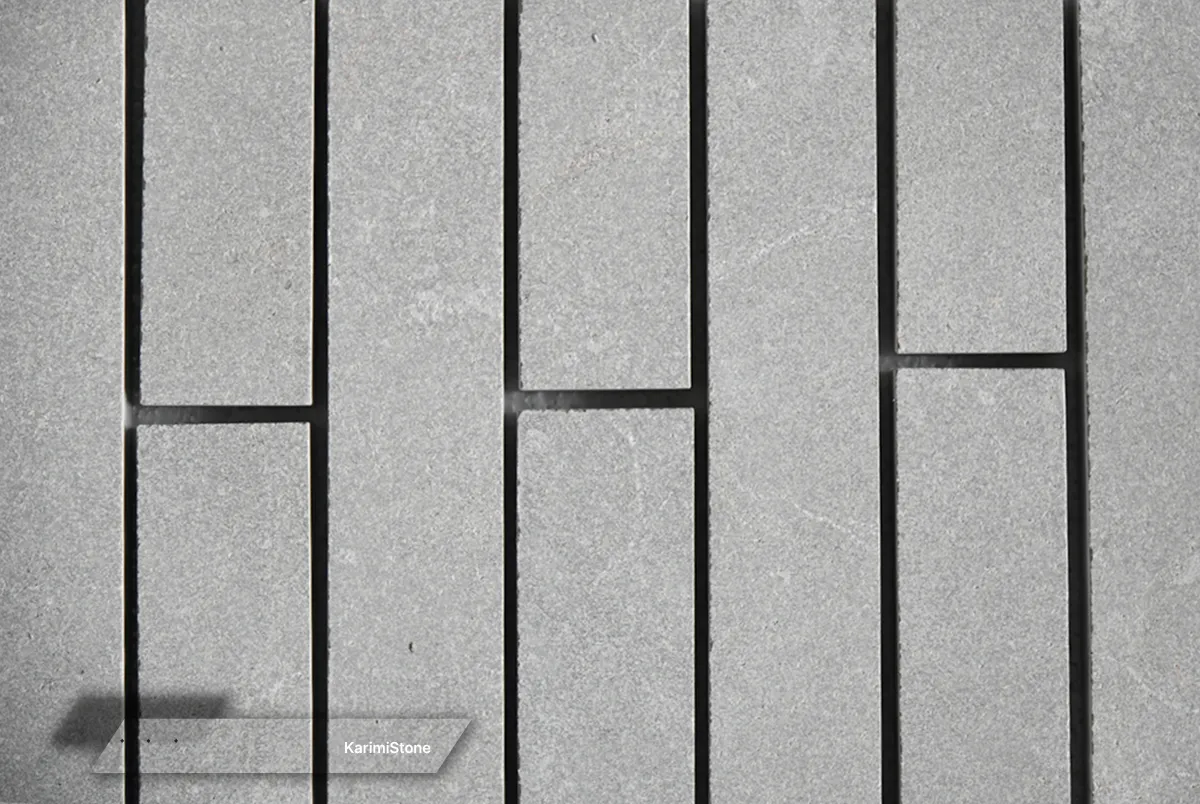
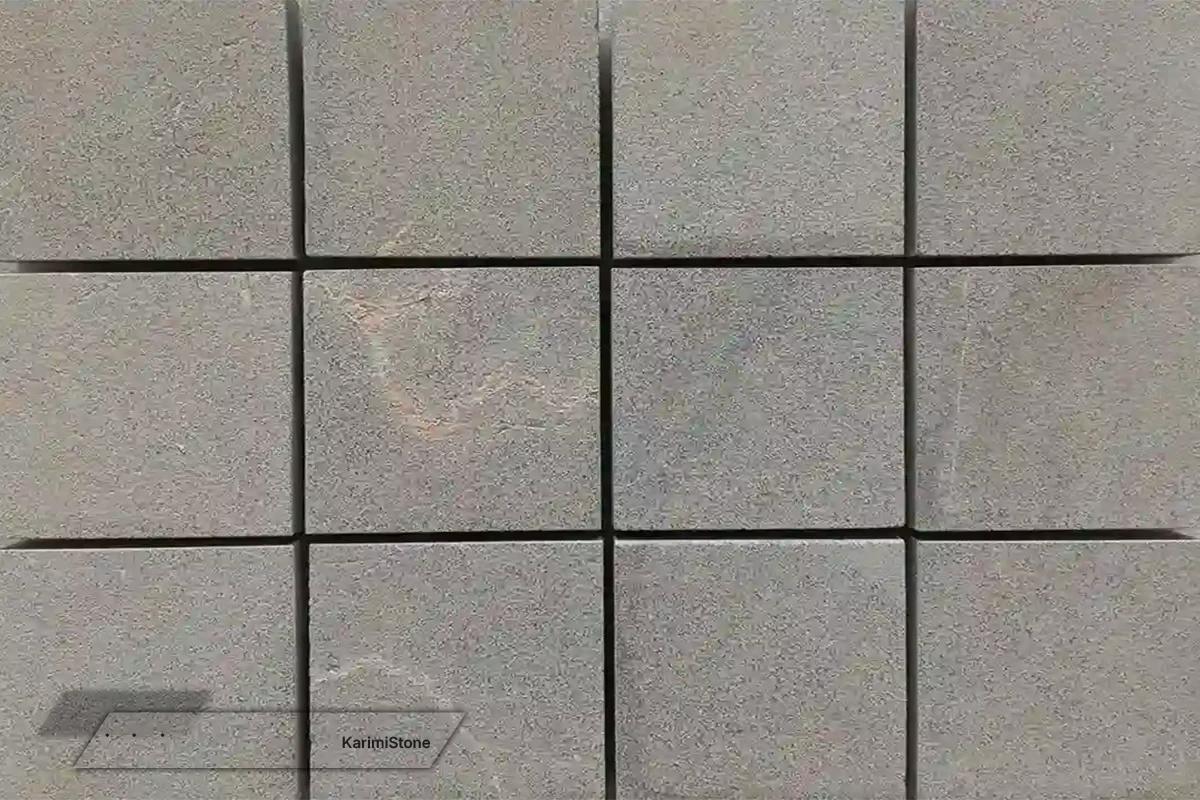
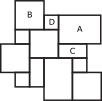
- Crazy Paving
- Tiles
- Pattern Sets
- Free-Length pieces
- Steps
- Risers
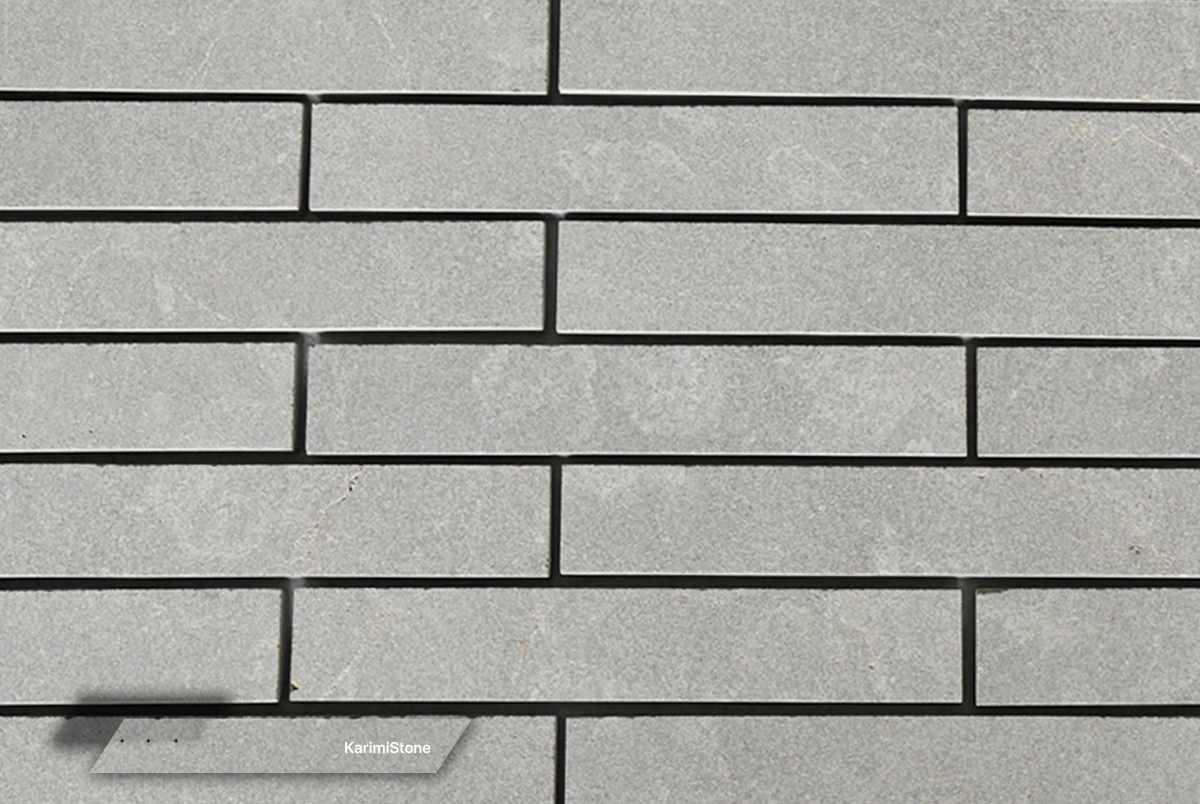
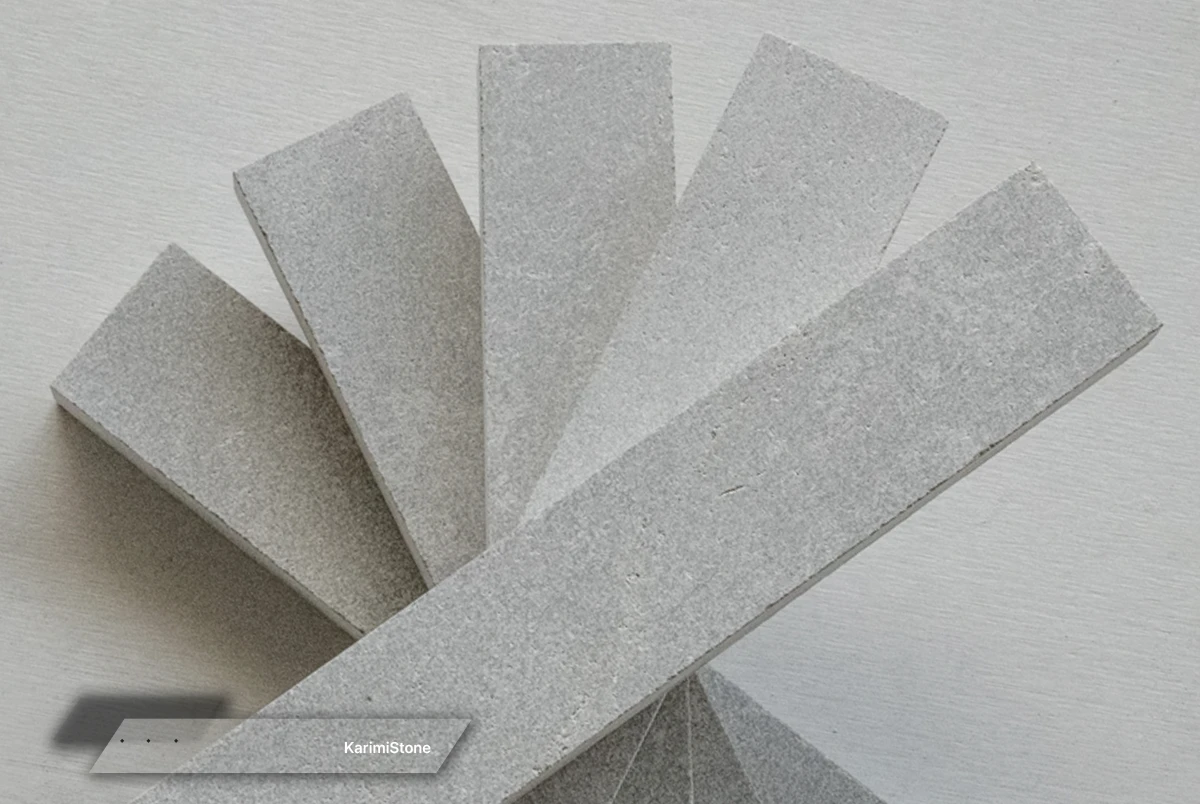
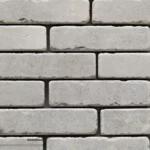
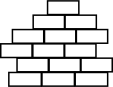
- Brick-format pieces
- Curbstones
Sorting and Quality Control
For project orders, important criteria include:
- Grey background tone
- Acceptable tonal variation
- Sandblasting consistency
- Texture depth
- Surface cleanliness
- Dimensions
- Thickness
- Sawn-edge quality
- Visual compatibility between adjoining pieces
For larger orders, an approved physical reference sample should define both the acceptable grey range and the required Sandblasted texture.
Why Choose Grey Marble Sandblasted?
- Neutral grey color: Easy to coordinate with modern, urban and landscape architecture.
- Matte surface: Reduces strong direct glare.
- Fine physical texture: Provides a more tactile alternative to polished stone.
- Plain pattern: Suitable for large continuous surfaces.
- Wide project use: Paving, sidewalks, stairs, walls, gardens, curbs and poolside elements.
- Clean Sawn edge: Provides more precise modular geometry than Tumbled versions.
- Project production: Dimensions, thickness, texture and sorting can be coordinated according to specifications.
Frequently Asked Questions
What is Grey Marble Sandblasted?
It is Iranian Grey Marble treated with controlled abrasive blasting to create a fine, matte, low-reflection surface.
Is Grey Marble Sandblasted shiny?
No. Sandblasting creates a matte surface and significantly reduces direct reflection.
Does it have strong natural veins?
No. The current product is classified as Plain and generally has a calm grey appearance.
What is the difference between Sandblasted and Polished Grey Marble?
Polished marble is smooth and reflective, while Sandblasted marble has a fine textured and matte surface.
What is the difference between Sandblasted and Sandblasted & Tumbled?
The main face can be similar, but the standard Sandblasted product has a Sawn edge while the Tumbled version has softened edges and corners.
Can Grey Marble Sandblasted be used for paving?
Yes. Paving and sidewalk paving are included among its current project applications.
Can it be used for stairs?
Yes. Steps and risers can be manufactured according to project dimensions.
Is Sandblasted marble automatically non-slip?
No. The texture may improve grip compared with smooth stone, but any required slip rating should be confirmed through testing.
Can it be used around pools?
Suitable material can be considered for poolside applications when drainage, installation, edge design, sealing and tested slip performance meet project requirements.
Grey Marble Sandblasted by Karimi Stone
Karimi Stone produces, processes, supplies and exports Iranian natural stone for architectural, urban, landscape, residential and commercial projects.
For Grey Marble Sandblasted orders, material can be selected according to grey tone, Sandblasted texture, dimensions, thickness, Sawn-edge quality, project application and installation requirements.
Production can include stone selection, controlled Sandblasting, project sorting, custom cutting, dimensional inspection, quality control, export-grade packaging and international supply.