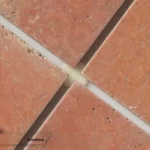
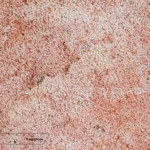
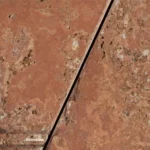
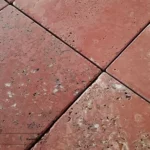















Red Travertine Vein-Cut Honed
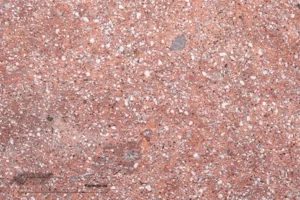
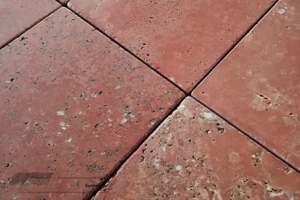
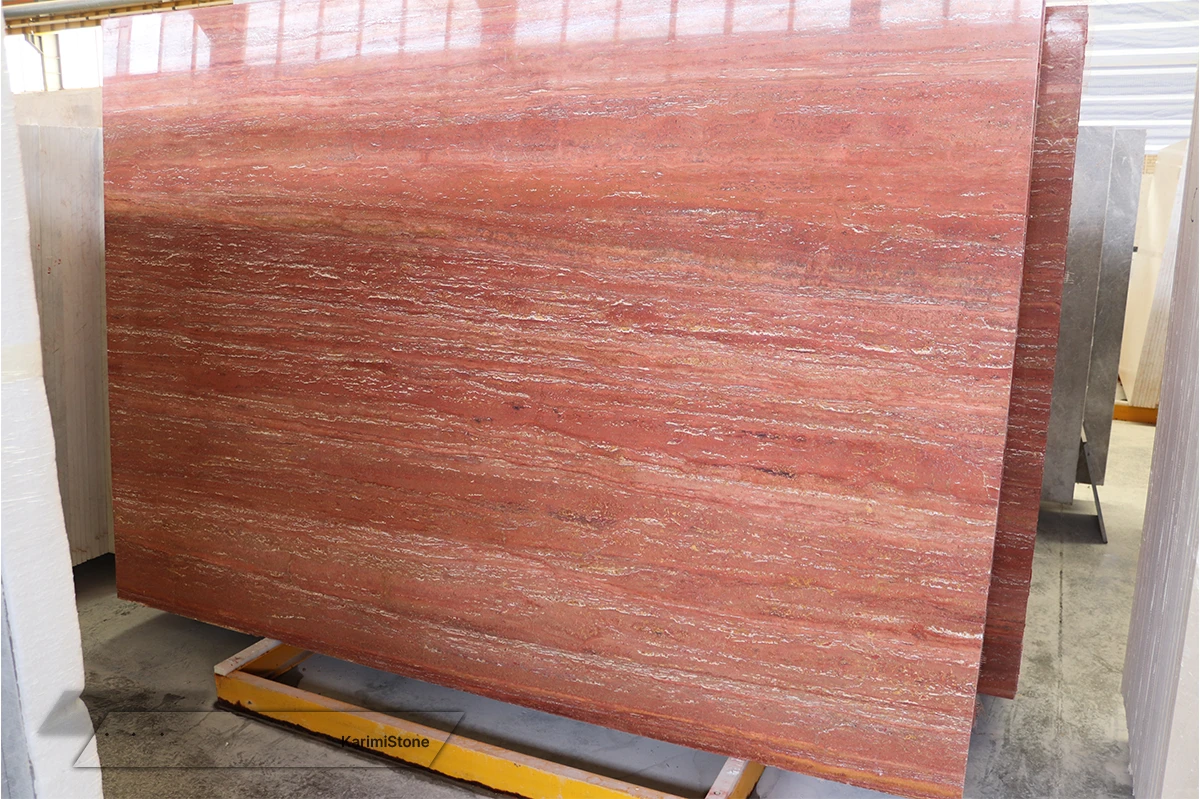
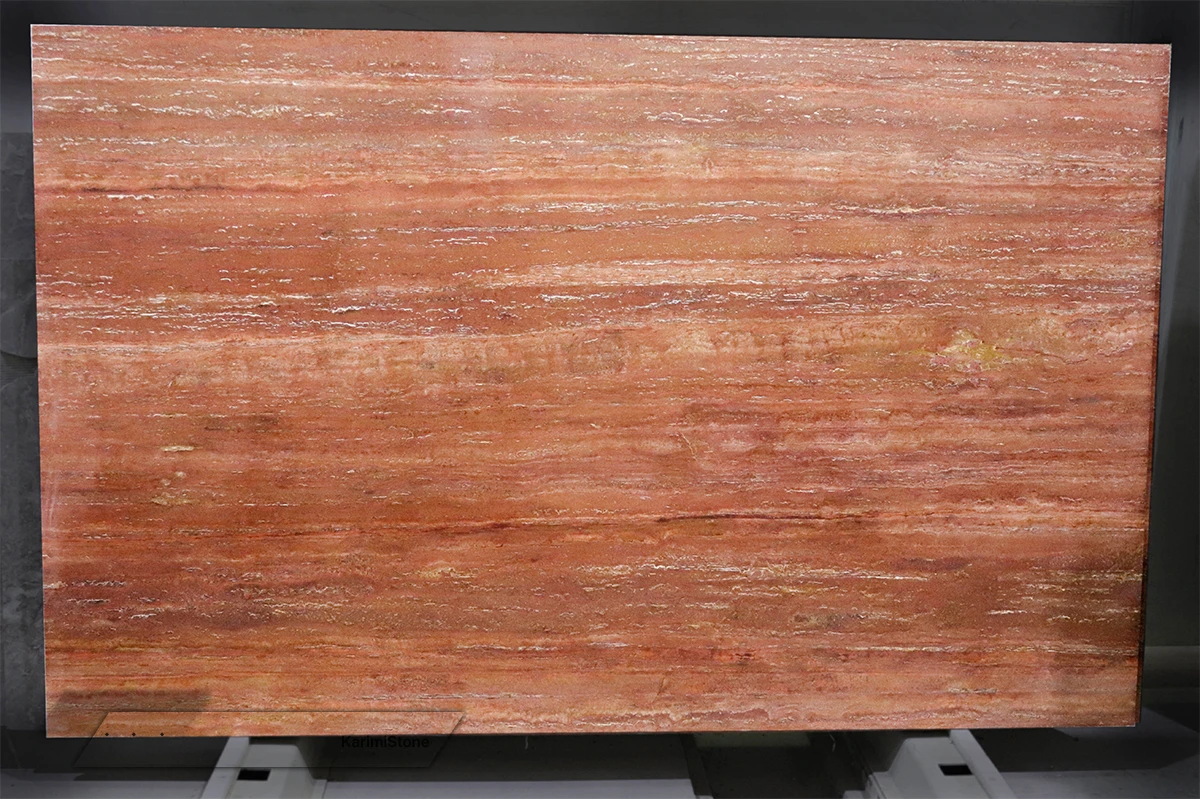
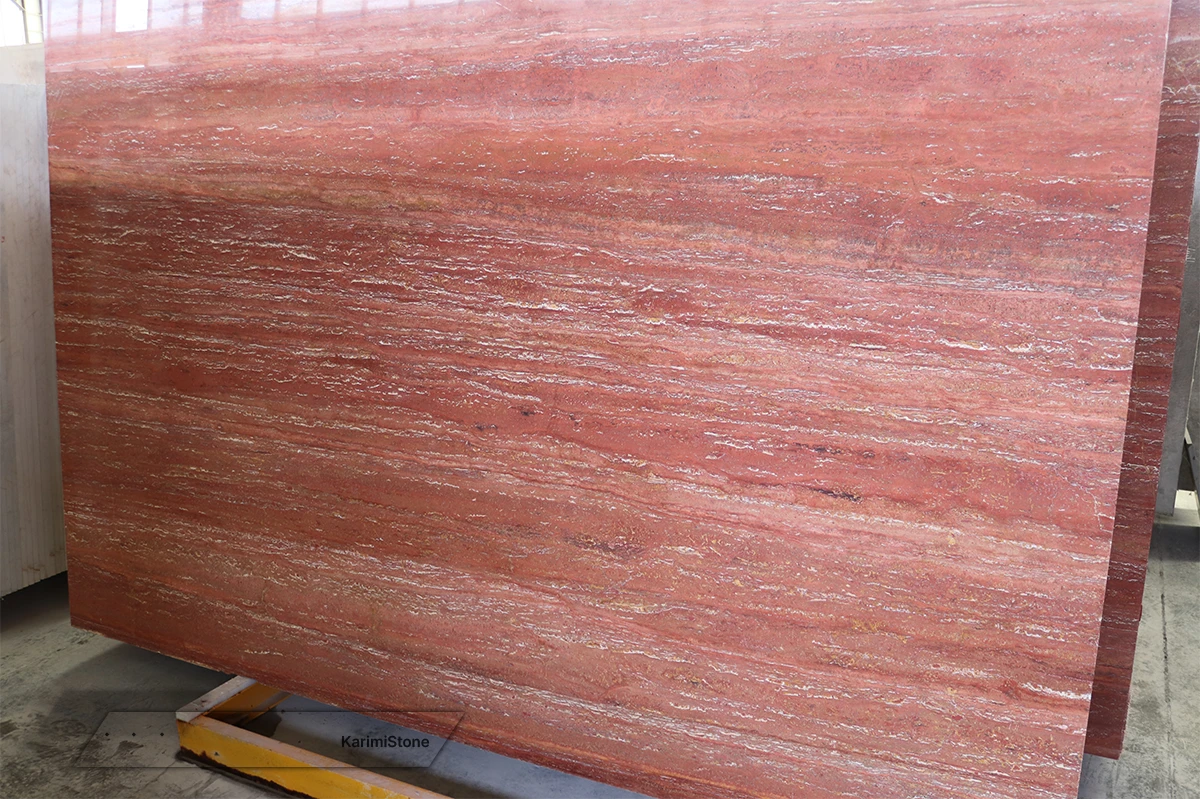
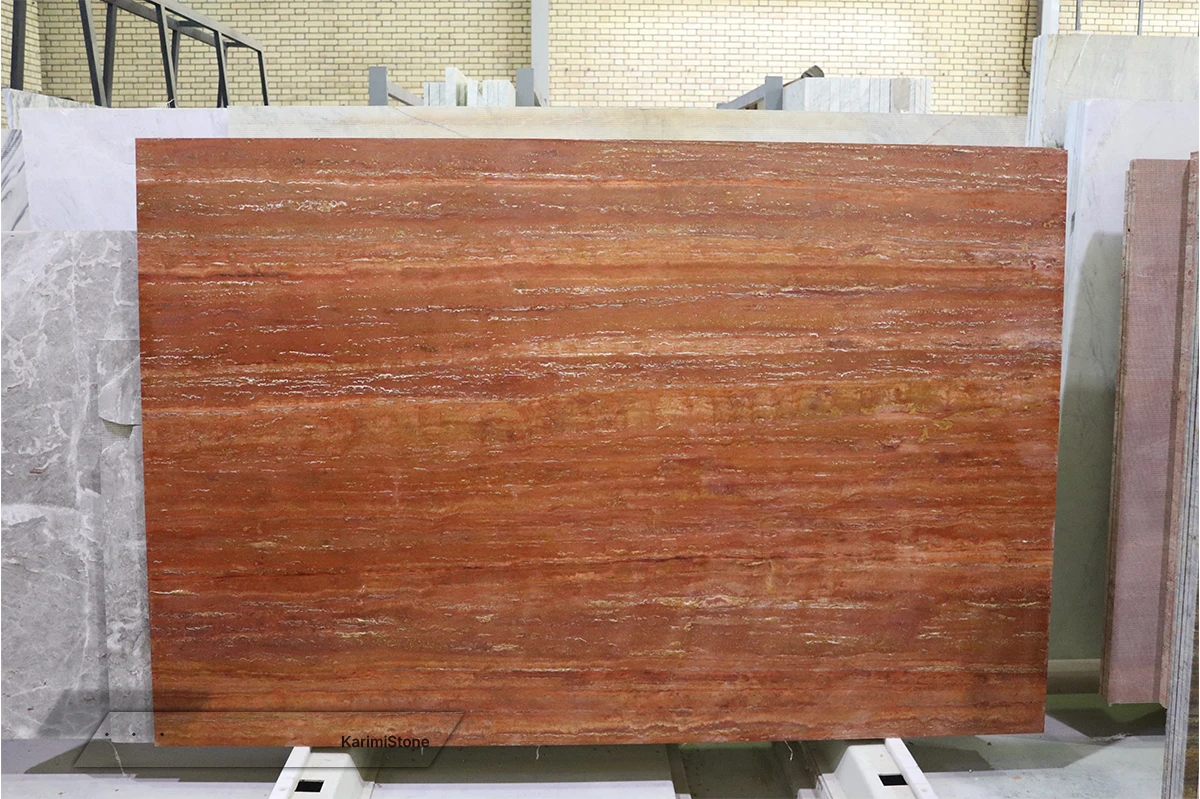
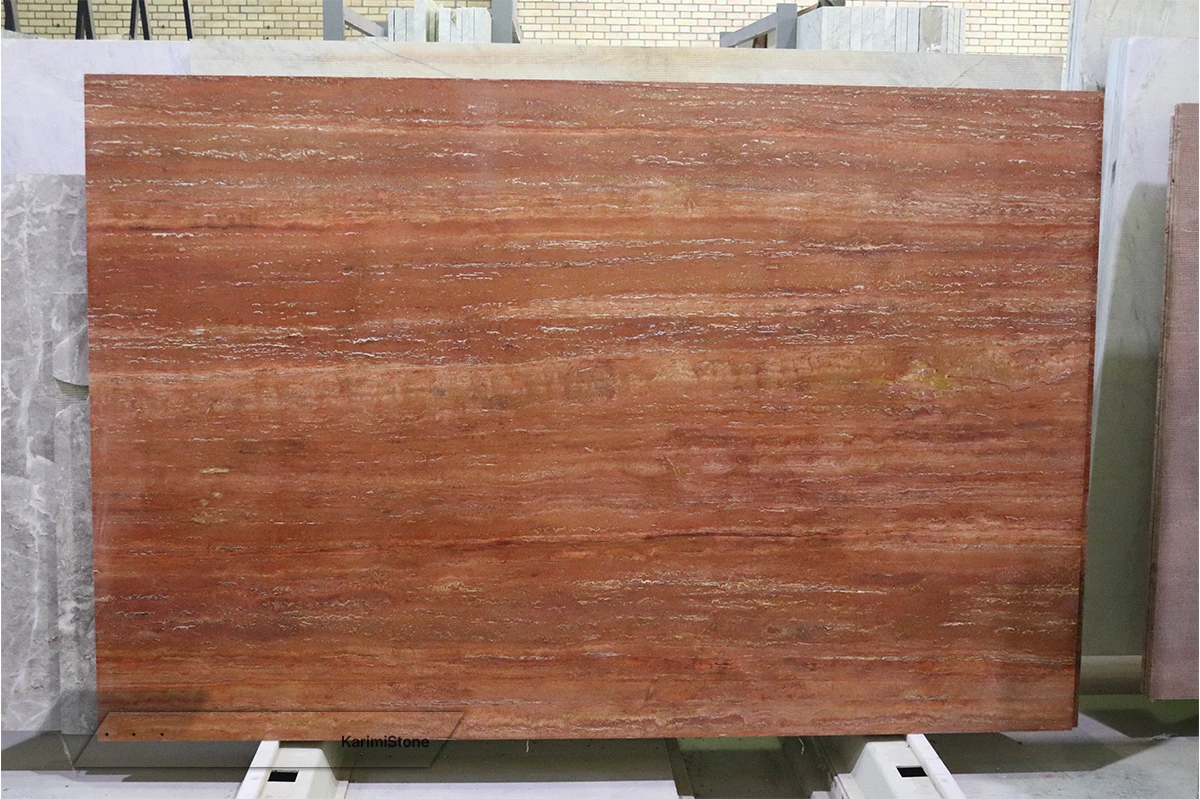
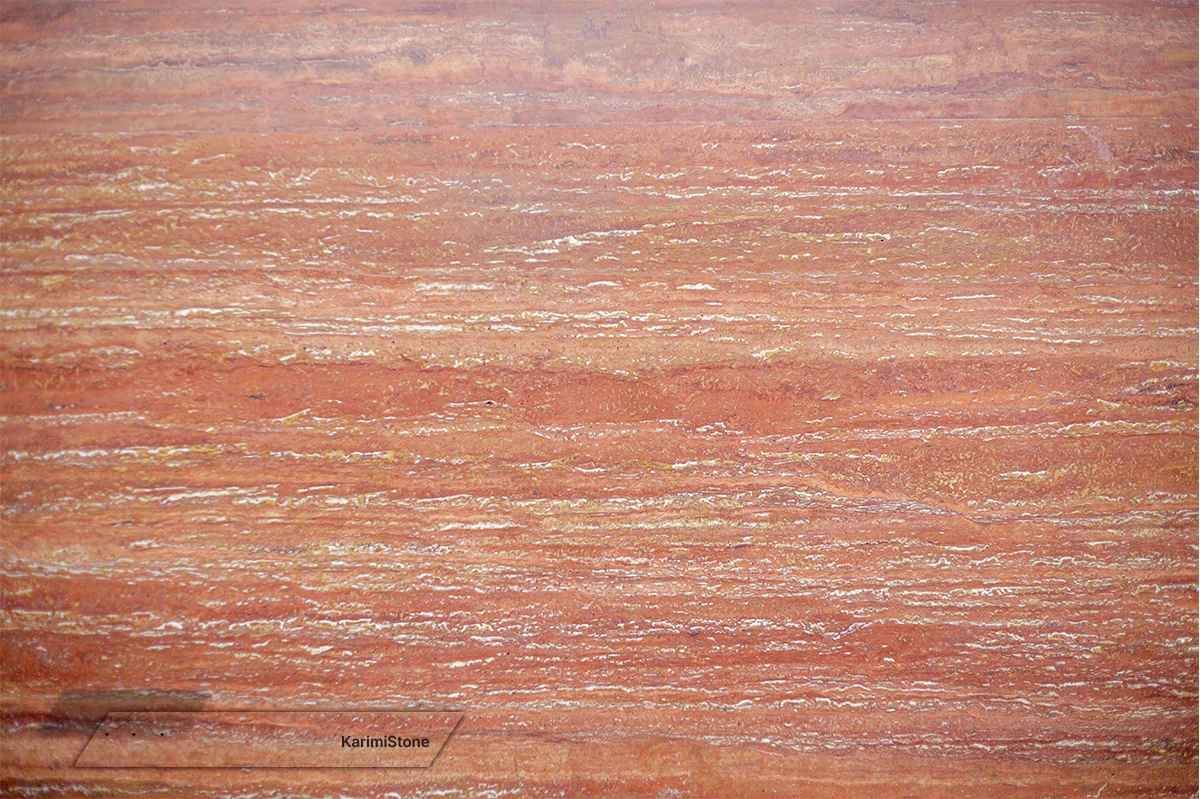
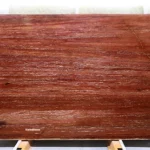
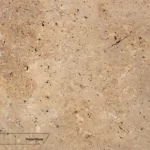
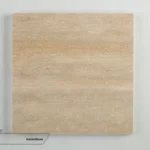
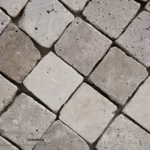
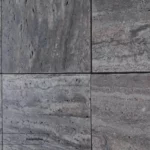
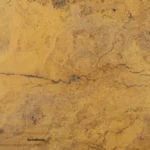
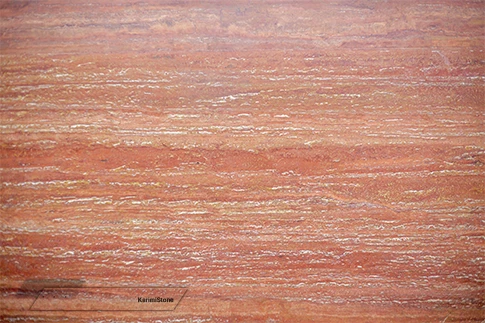
Red Travertine Vein-Cut Honed is an Iranian natural stone distinguished by its warm red color, linear mineral bands and smooth matte surface. The stone is cut parallel to its natural bedding to reveal flowing veins and then mechanically honed to remove cutting marks and surface reflection.
The combination of a directional vein-cut pattern and a non-reflective finish makes this material suitable for interior walls, flooring, entrances and selected exterior applications. Its red background may include white, cream, grey or brown lines, giving each production block a naturally different appearance.
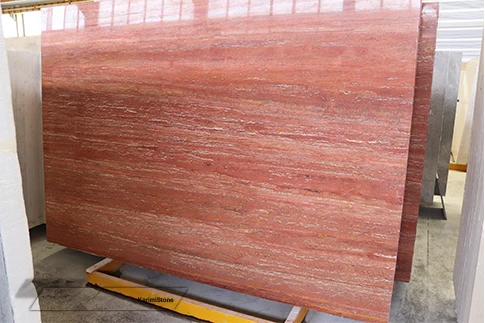
What Is Red Travertine Vein-Cut Honed?
Red Travertine Vein-Cut Honed combines two production processes. Vein-cutting determines the direction of the natural pattern, while honing determines the final surface texture.
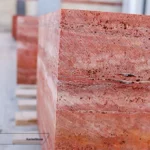
In the vein-cut method, the travertine block is cut parallel to its natural geological layers. This displays the bedding as long, flowing and relatively parallel bands. It is visually different from cross-cut travertine, which normally shows cloud-like or circular patterns.
After cutting, abrasive tools gradually grind the surface until it becomes flat and smooth. The process stops before the reflective stage associated with a polished finish. The finished surface is therefore matte rather than shiny.
Natural Characteristics of Iranian Red Travertine
Red Travertine is a sedimentary natural stone mainly composed of calcium carbonate. Its red, orange and brown tones are associated with naturally occurring iron compounds.
- Directional veins: vein-cutting reveals long and structured mineral bands.
- Natural color variation: the red tone and vein distribution vary between blocks.
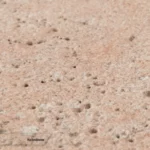
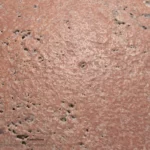
- Natural pores: the surface may be supplied with filled or unfilled pores.
- Low reflection: the honed surface reduces glare under direct lighting.
- Good workability: the stone can be produced as slabs, tiles, wall panels and steps.
- Architectural contrast: the red color works well beside cream, beige, grey and black stone.
Production and Honing Process
The production of Red Travertine Vein-Cut Honed normally includes these stages:
- Block selection: checking color, cracks, bedding direction and structural condition.
- Vein-cut positioning: placing the block so that sawing follows the natural layers.
- Primary cutting: producing slabs or strips in the required thickness.
- Filling when specified: filling selected surface pores with compatible material.
- Honing: grinding the surface with progressively finer abrasive tools.
- Dimensional cutting: producing tiles, panels, steps or custom components.
- Quality control: checking dimensions, thickness, finish, cracks and color range.
Filled and unfilled honed surfaces have different appearances. The filling color, percentage of open pores and final honing level should be approved through physical samples before mass production.
Benefits of the Honed Finish
- Produces a smooth surface without mirror-like reflection
- Displays the natural red color under controlled light
- Makes dust and footprints less noticeable than a polished surface
- Generally provides more grip than highly polished stone
- Works with both contemporary and traditional architectural designs
- Allows easier routine cleaning than deeply textured finishes
A honed finish does not make the stone completely non-slip. Slip resistance must be tested when Red Travertine Vein-Cut Honed is specified for wet floors, public entrances or other safety-sensitive locations.
Applications
- Interior wall cladding and decorative walls
- Residential and commercial flooring
- Hotel lobbies and reception areas
- Entrance halls and covered corridors
- Fireplace surrounds and architectural details
- Interior steps and risers
- Columns, borders and directional wall panels
- Selected exterior walls with a suitable installation system
Installation, Filling and Sealing
- Specify whether the natural pores should be filled or remain open.
- Use adhesive, mortar and grout compatible with calcareous natural stone.
- For wall panels, select the fixing method according to size, weight and installation height.
- Use a compatible penetrating sealer in areas exposed to moisture or staining.
- Remember that sealing reduces absorption but does not make travertine waterproof.
- Test filler, adhesive, grout and sealer on a sample before installation.
- Provide suitable drainage and movement joints for exterior applications.
Cleaning and Maintenance
Clean Red Travertine Vein-Cut Honed with a pH-neutral cleaner formulated for limestone and travertine. Avoid vinegar, acidic cleaners, abrasive powders and aggressive chemicals. Spills should be removed promptly, especially when the material is installed on countertops or floors.
Further care guidance is available from the Natural Stone Institute.
Available Production Formats
- Honed slabs
- Standard and custom tiles
- Free-length strips
- Wall and façade panels
- Steps and risers
- Skirting and decorative borders
- Custom cut-to-size components
Production and Export by Karimi Stone
Negin Sang Karimi (Karimi Stone) produces, supplies and exports Iranian natural stone for domestic and international projects. Production control covers block selection, vein-cut sawing, filling, honing, dimensional cutting, sorting and export packaging.
Every batch of Red Travertine Vein-Cut Honed is inspected for dimensions, thickness, vein direction, surface uniformity, visible cracks, edge condition and approved color range. Export orders are protected with suitable separators and reinforced wooden packaging.
For samples, technical information or a quotation, visit the Karimi Stone contact page.
Frequently Asked Questions
What is the difference between vein-cut and cross-cut travertine?
Vein-cut travertine displays long parallel mineral bands. Cross-cut travertine normally displays cloudy, circular or irregular patterns.
Is honed Red Travertine shiny?
No. Honing creates a flat and smooth surface without the mirror-like reflection of polished stone.
Can it be used for wet flooring?
It may be considered after evaluating slip resistance, drainage, sealing and the installation system for the intended location.
Should the natural pores be filled?
This depends on the design and application. Filled surfaces are generally easier to clean, while unfilled surfaces retain more of the natural travertine structure.