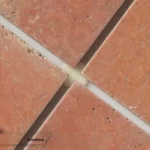
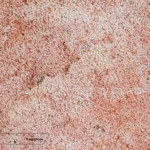
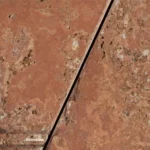
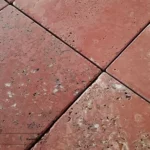
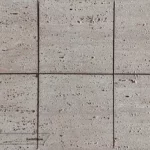
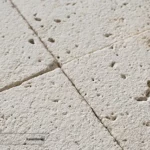
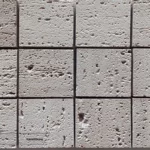
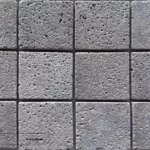
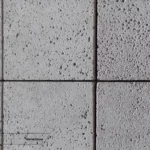
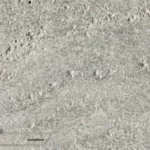













Red Travertine Cross-Cut Sandblasted
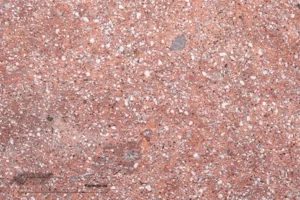
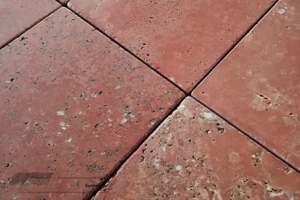
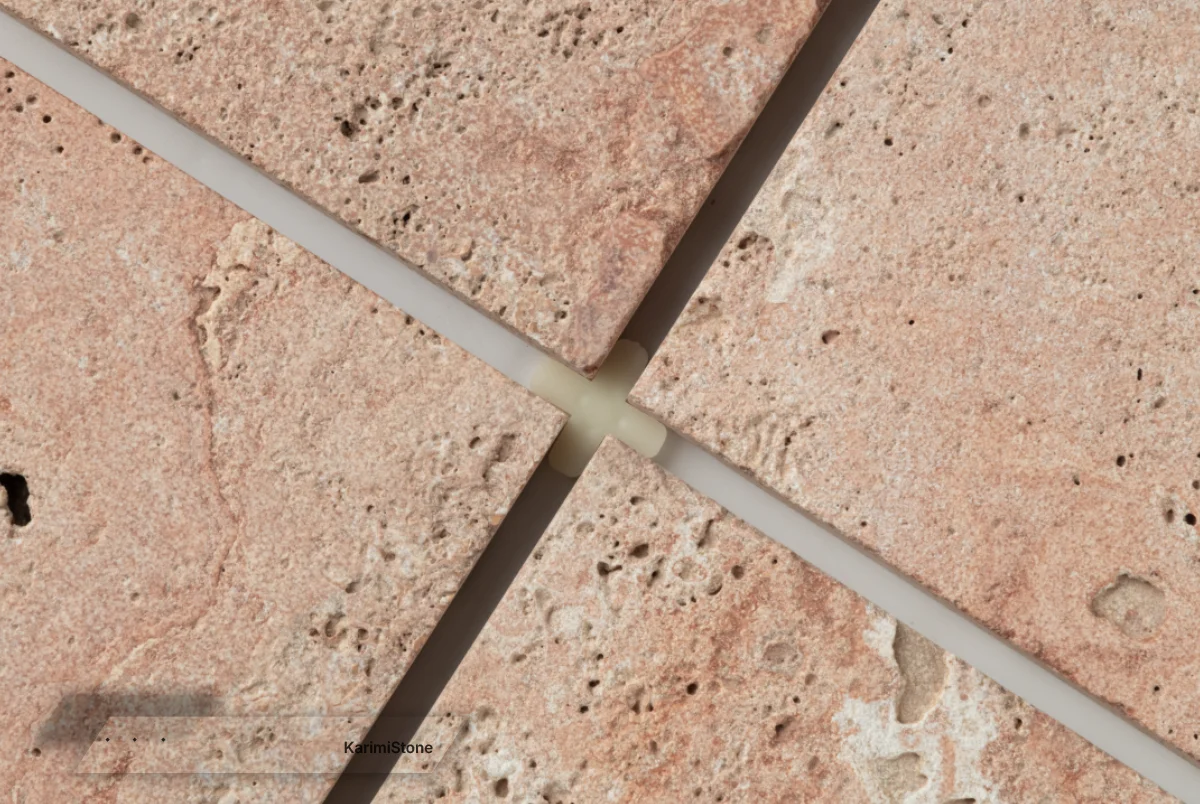
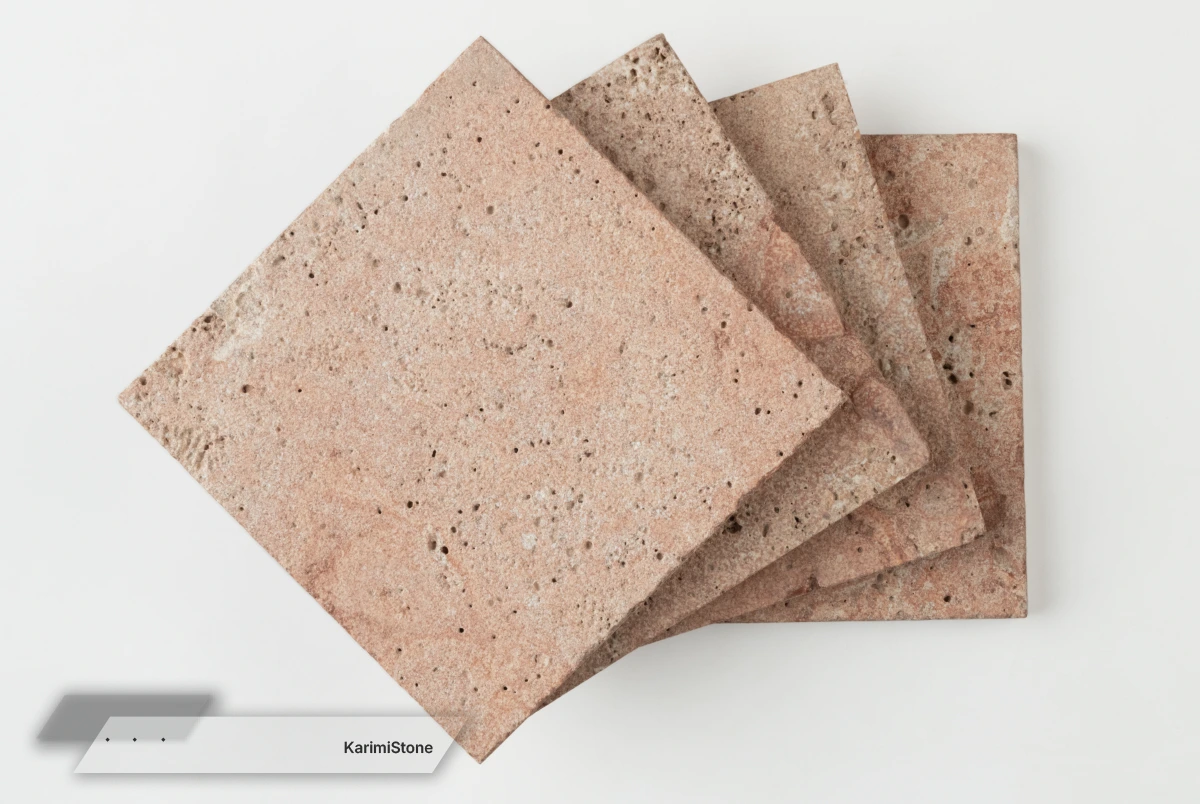
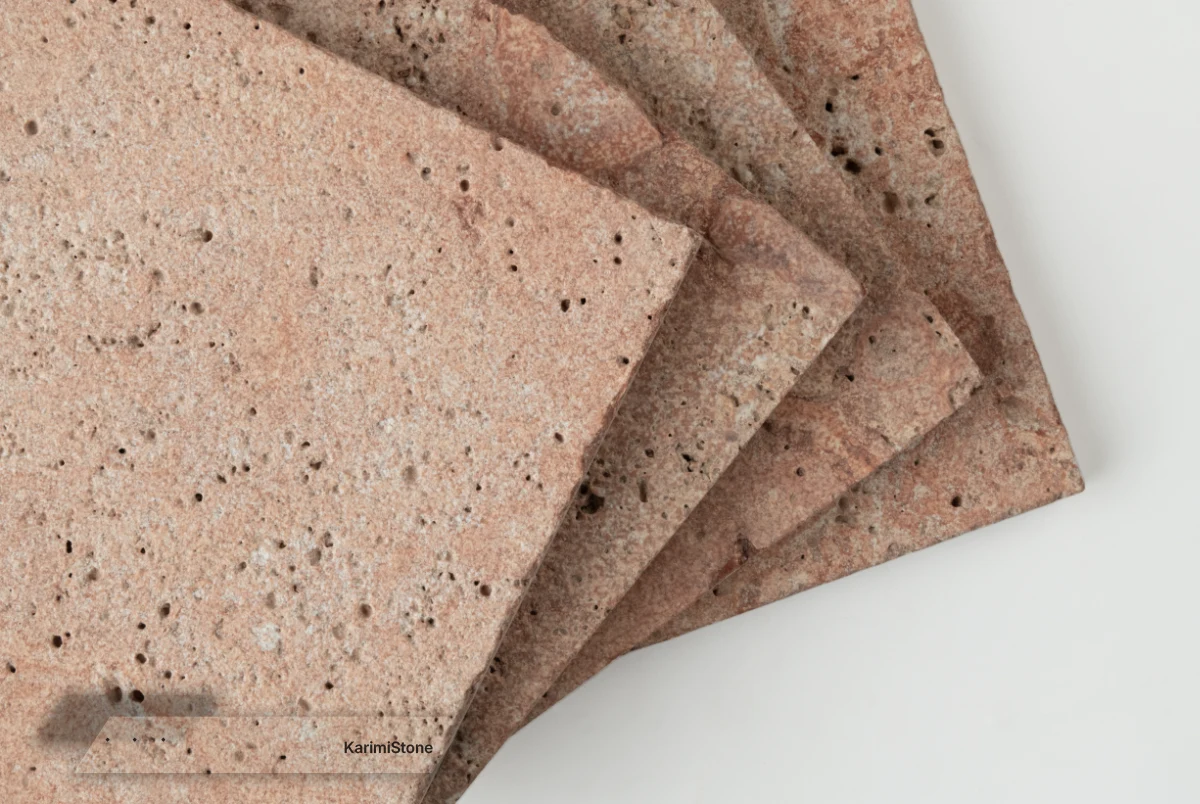
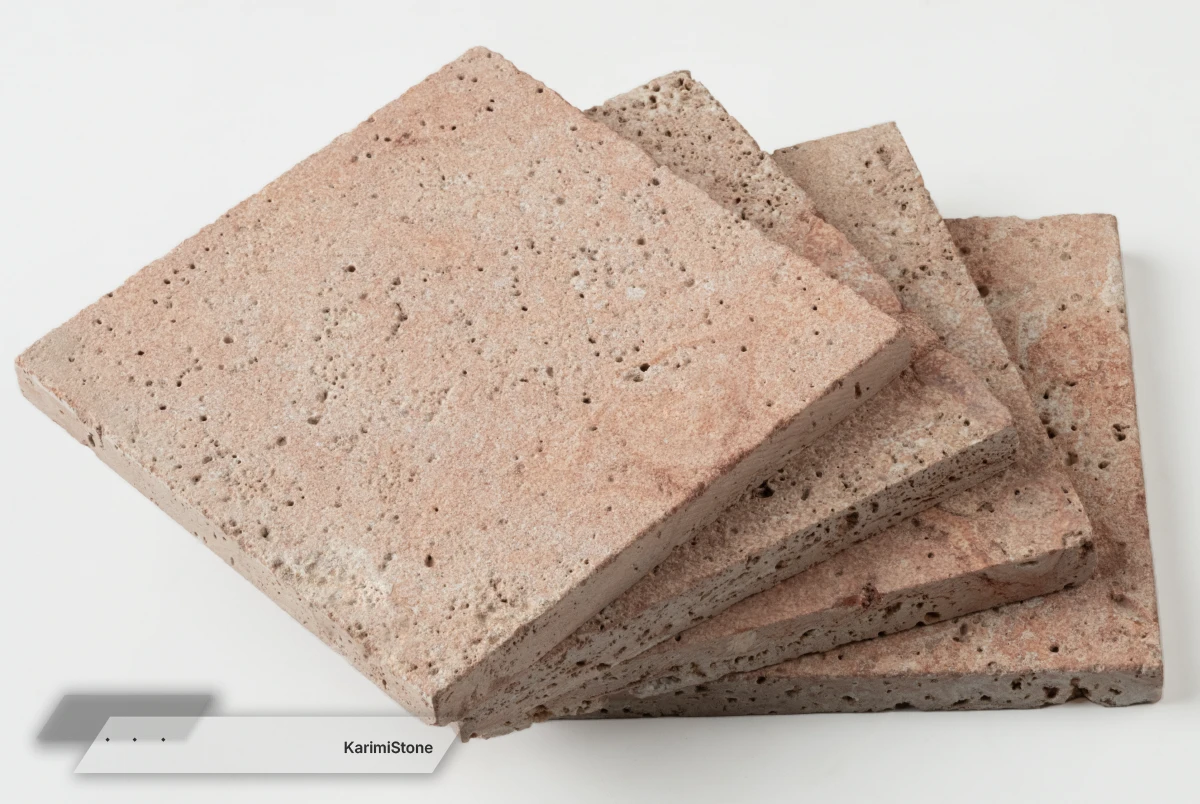
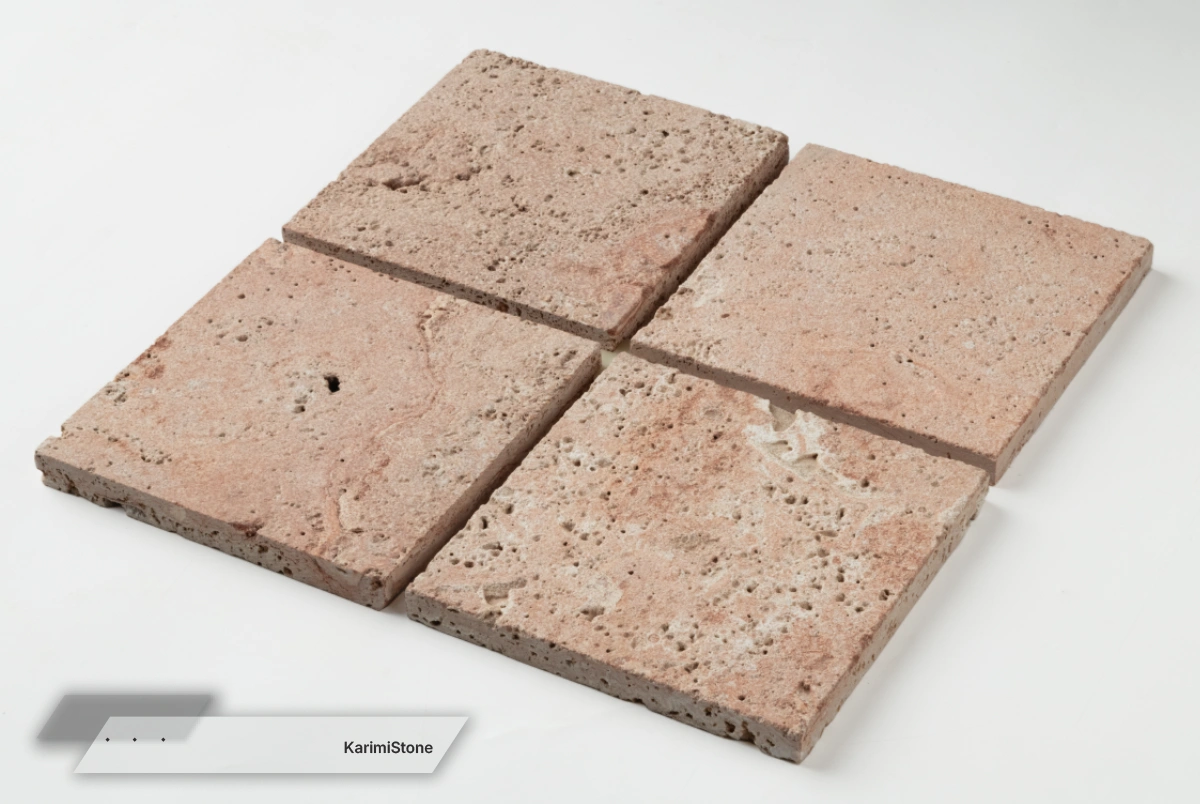
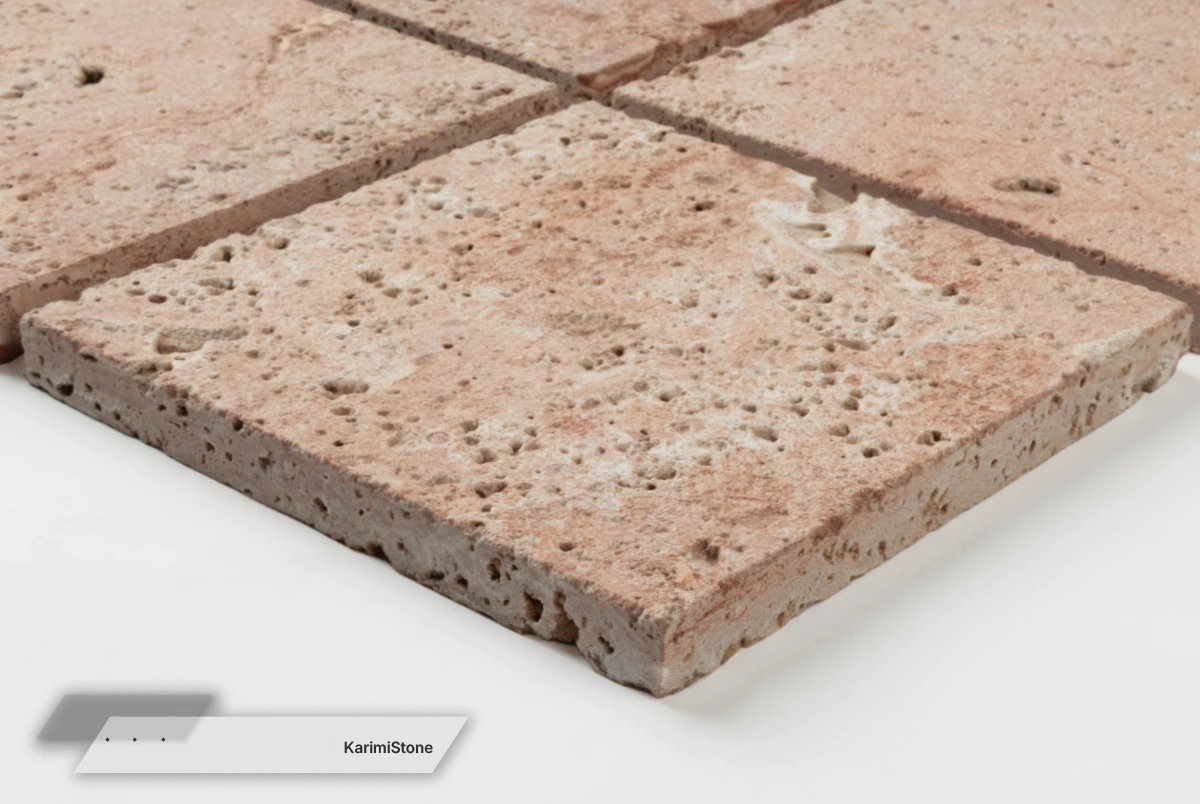
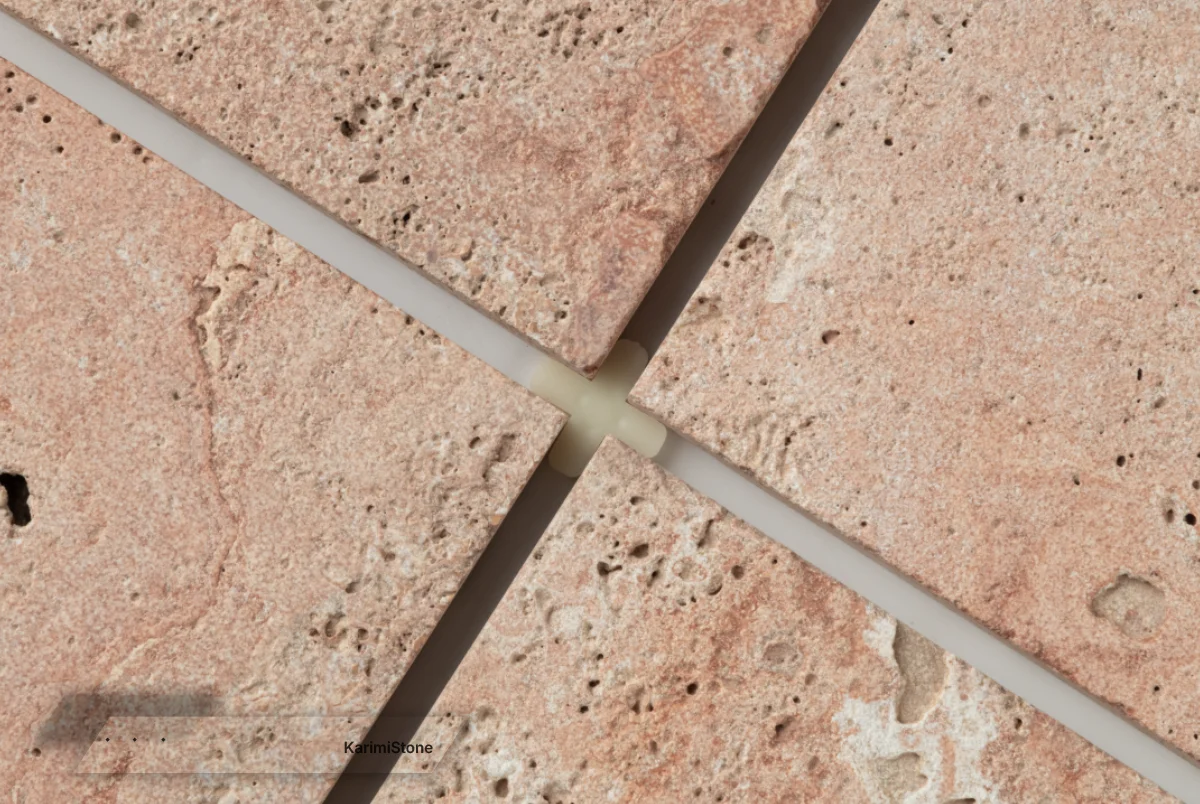
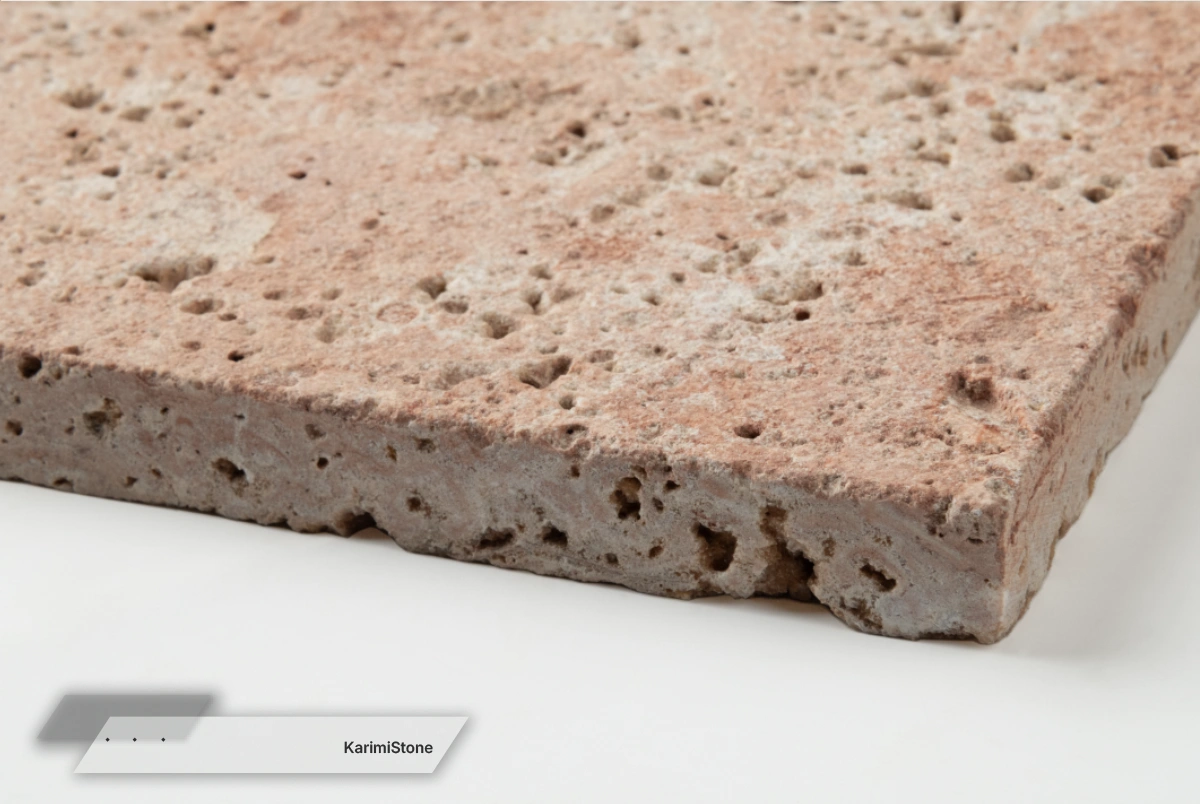
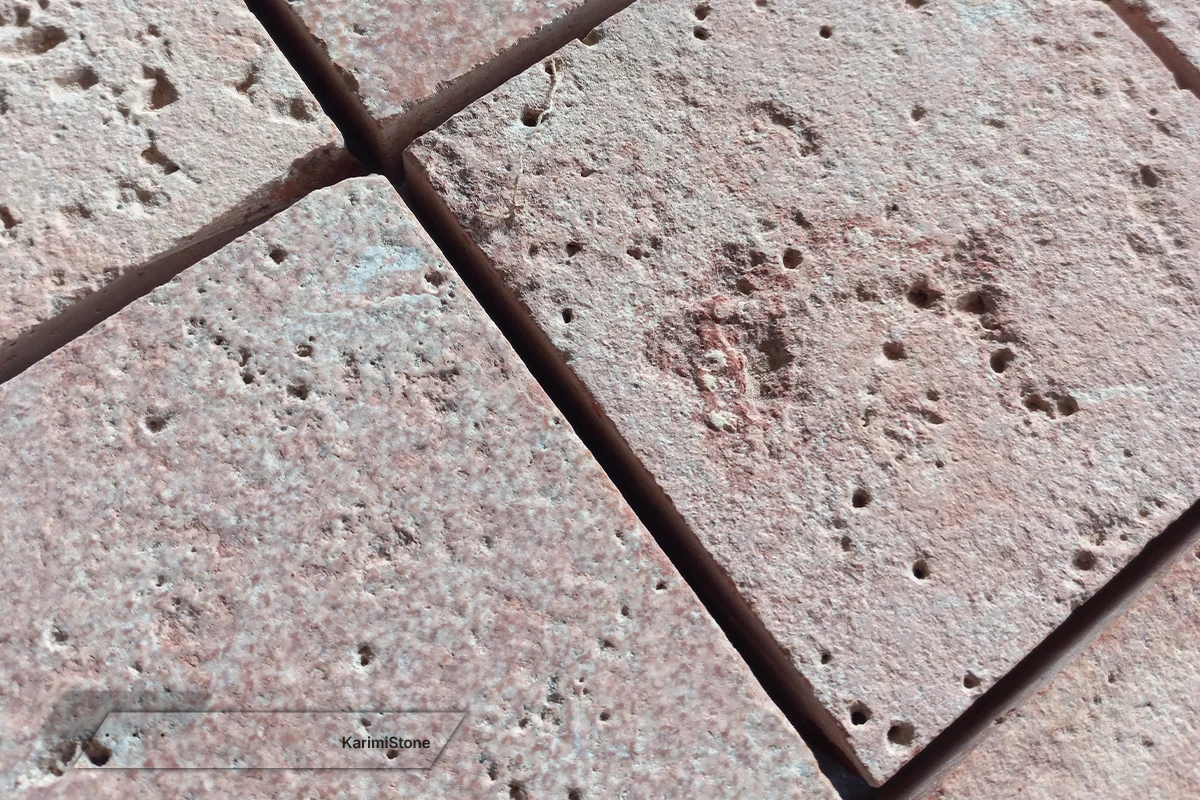
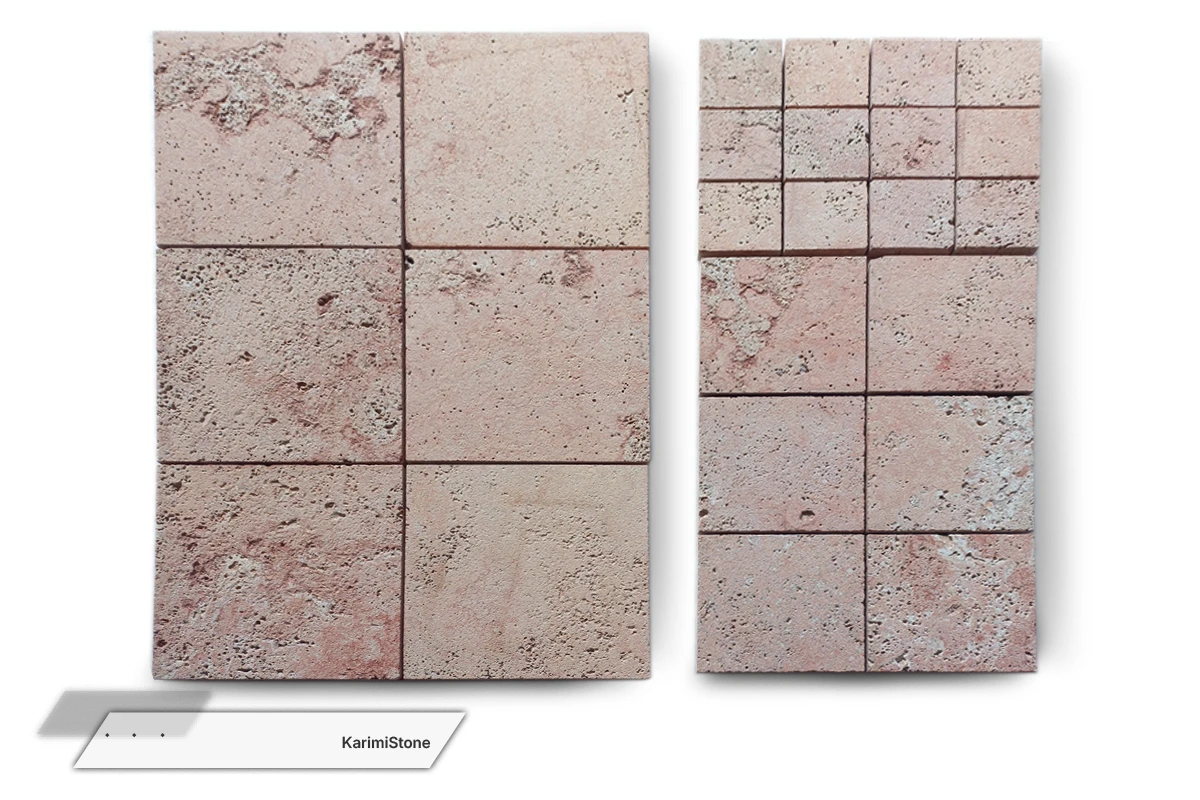
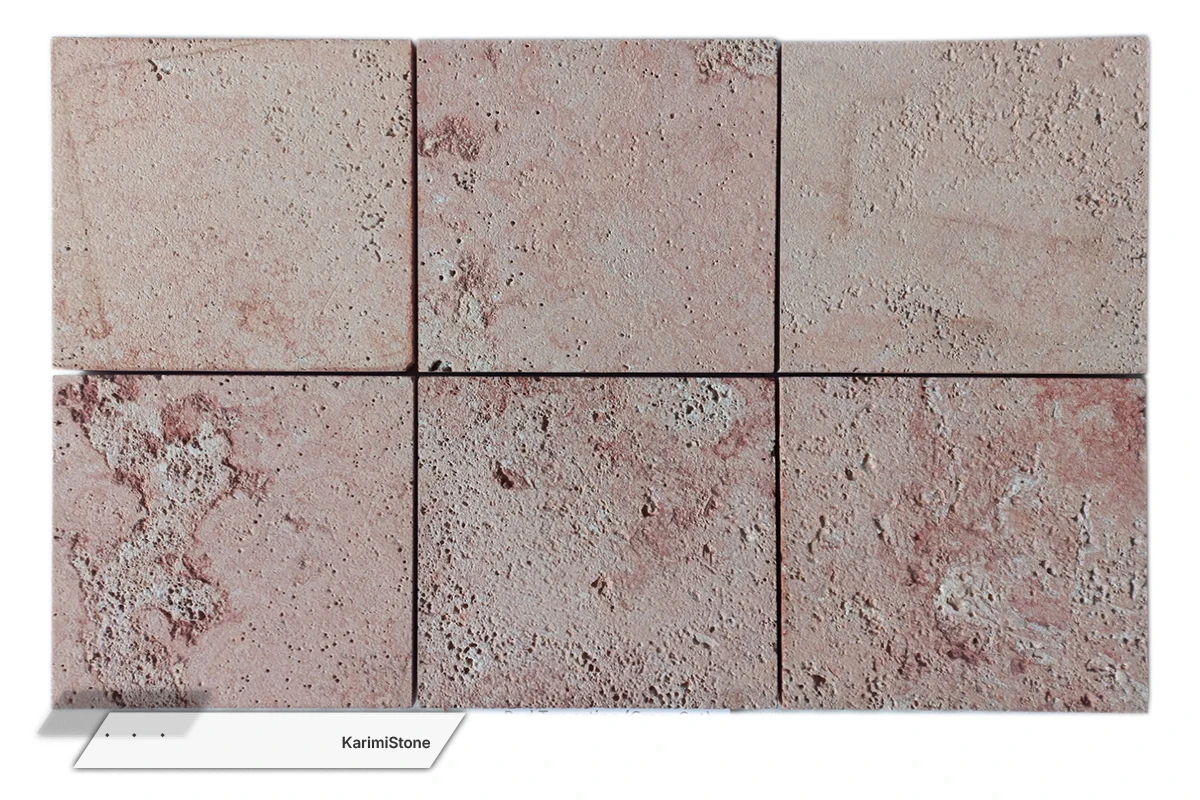
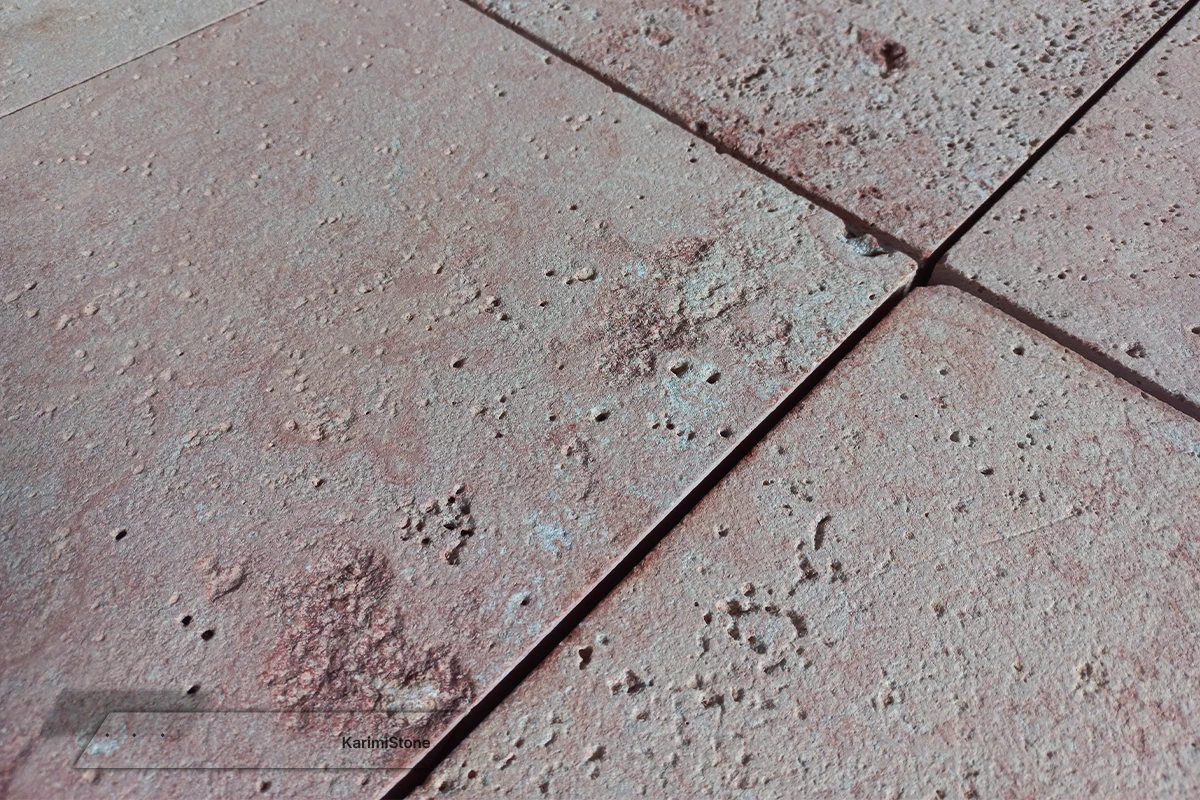
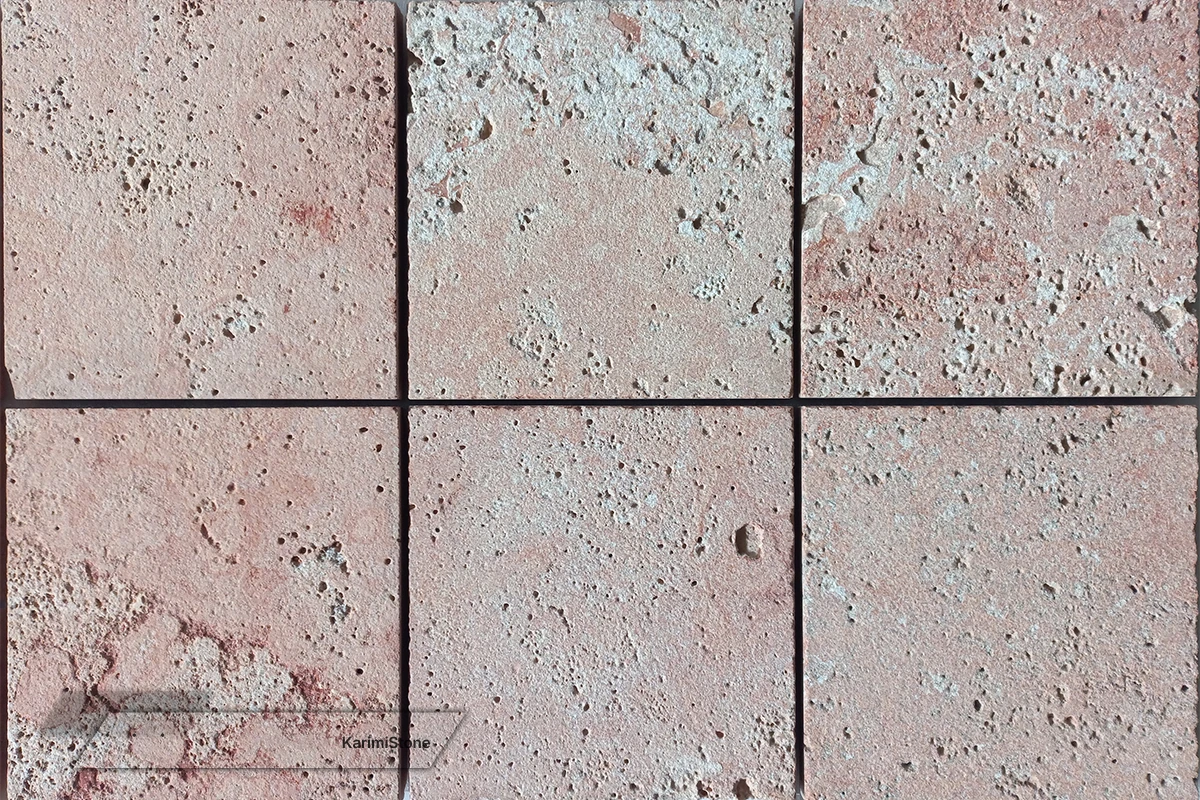
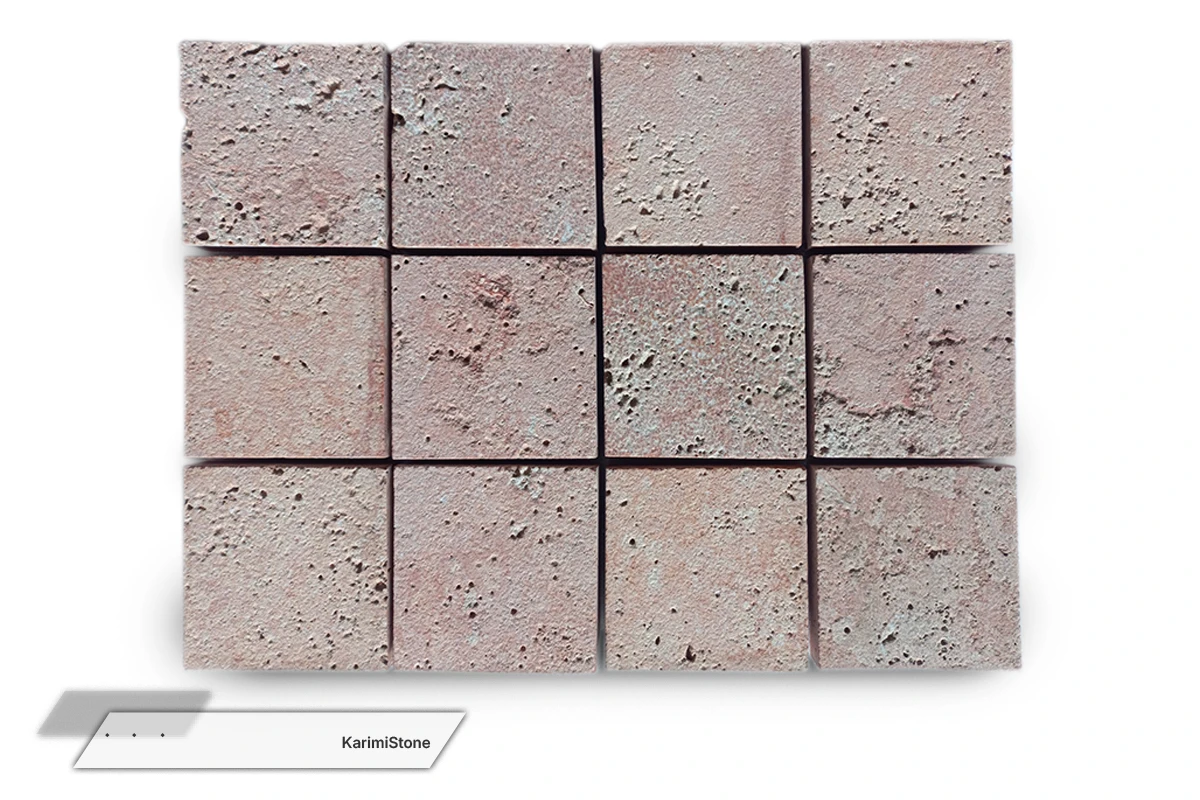
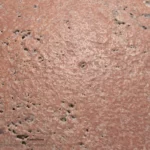
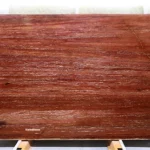
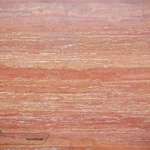
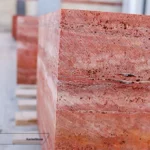
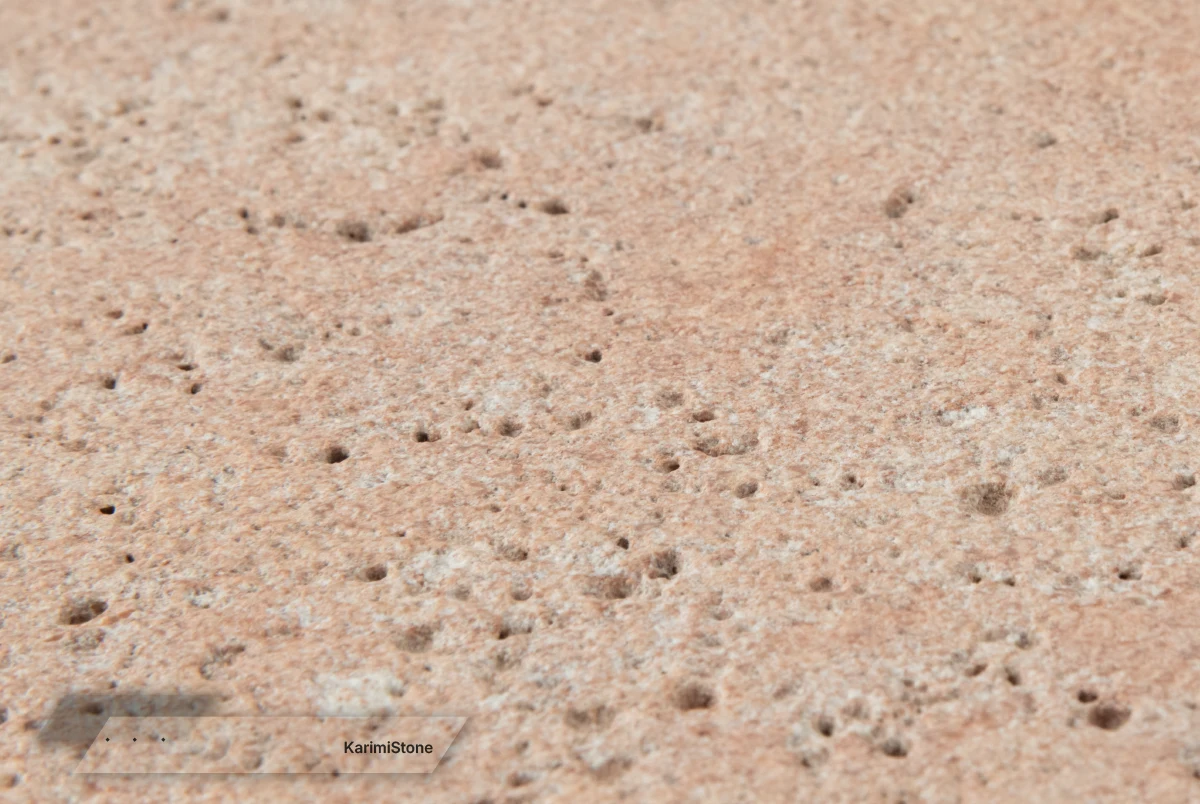
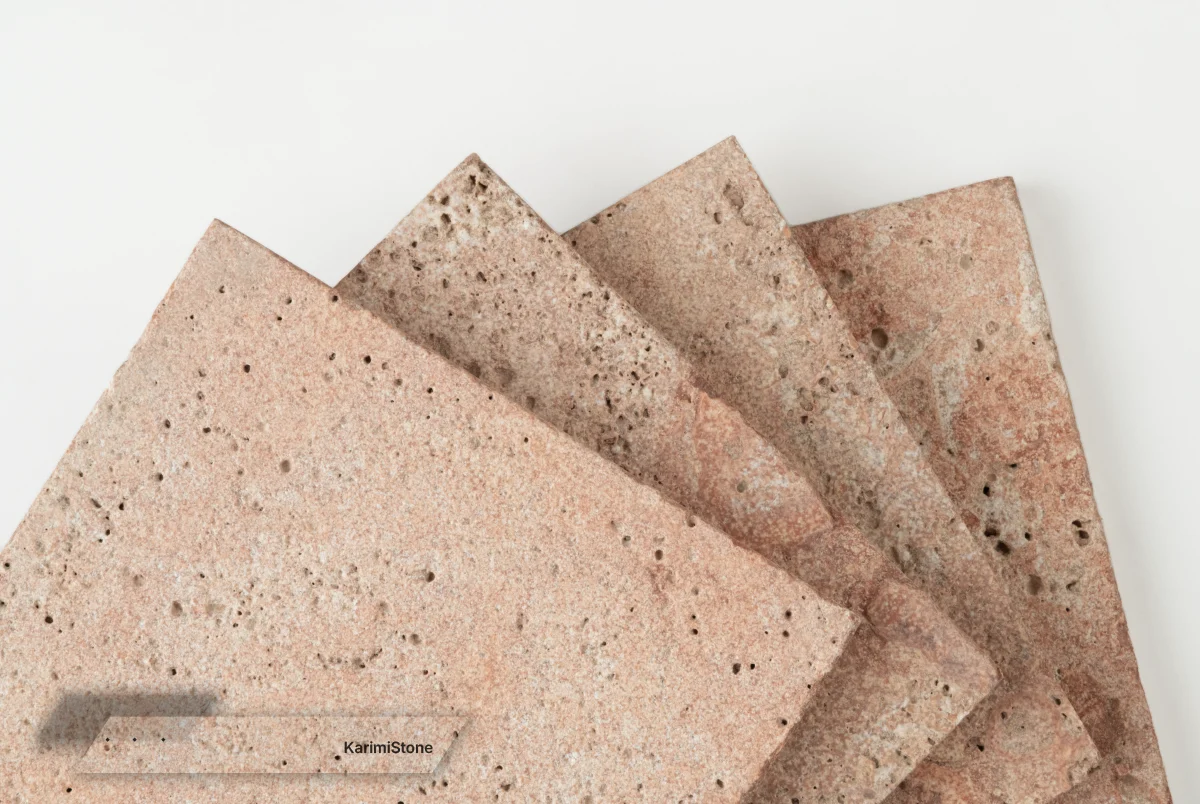
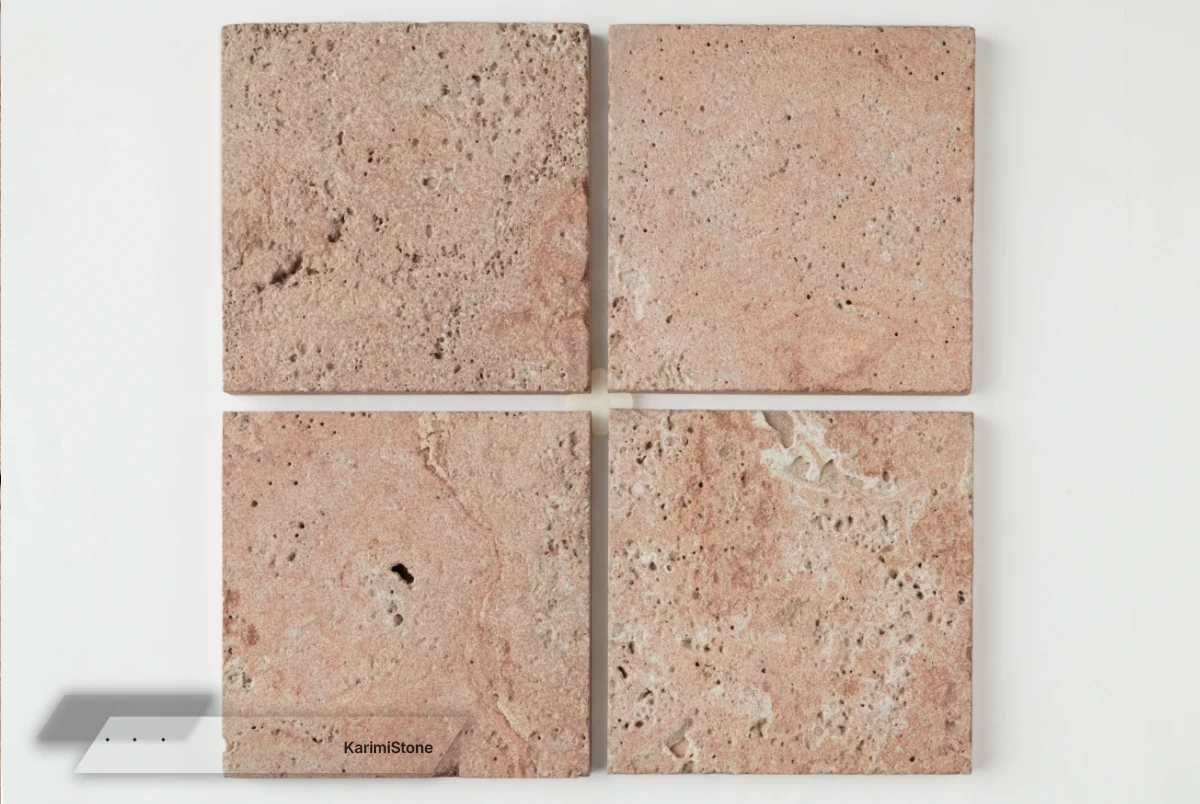
Red Travertine Cross-Cut Sandblasted is an Iranian natural stone with a warm red background, cloud-like mineral patterns and a controlled textured surface. Cross-cutting reveals the stone’s non-directional pattern, while sandblasting removes surface shine and produces a slightly rough finish.
This combination makes the material suitable for façades, garden paths, courtyards and selected exterior flooring. The finished surface generally provides more grip than polished travertine while maintaining the natural red, orange, cream, grey and brown colors of the stone.
What Is Red Travertine Cross-Cut Sandblasted?
Red Travertine Cross-Cut Sandblasted combines a transverse cutting direction with an abrasive surface treatment. In cross-cut production, the block is sawn across its natural geological layers. This creates cloudy, circular and irregular patterns rather than the parallel bands associated with vein-cut travertine.
During sandblasting, controlled abrasive particles are projected against the surface. The process removes fine surface material, reduces reflection and creates a consistent granular texture. Pressure, abrasive type, treatment time and stone condition determine the final depth of the finish.
Natural Characteristics of Iranian Red Travertine
Red Travertine is a sedimentary natural stone composed mainly of calcium carbonate. Its red and brown tones are associated with naturally occurring iron compounds.
- Cross-cut pattern: displays distributed, cloud-like mineral movement.
- Natural pores: cavities may remain open or be partially filled before treatment.
- Low-glare surface: sandblasting reduces reflection under direct light.
- Natural variation: color and pattern differ between blocks and production batches.
- Good workability: the stone can be produced as tiles, panels, steps and custom pieces.
- Color contrast: the red background works well beside cream, beige, grey and black stone.
Sandblasting Production Process
The production of Red Travertine Cross-Cut Sandblasted normally includes these stages:
- Block selection: checking color, cracks, pores and structural condition.
- Cross-cut positioning: arranging the block for cutting across its natural layers.
- Primary sawing: producing slabs or strips in the required thickness.
- Calibration: controlling thickness and surface flatness when specified.
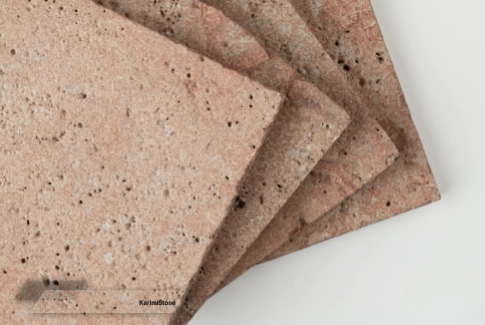
- Sandblasting: creating the required texture with controlled abrasive projection.
- Cleaning: removing abrasive residue and loose particles.
- Quality control: checking dimensions, texture, cracks, edges and color range.
Light and deep sandblasting produce different colors and textures. The required finish should therefore be approved through a physical sample before mass production.
Surface Grip and Exterior Performance
The textured face of Red Travertine Cross-Cut Sandblasted generally provides more grip than a polished surface. It may therefore be considered for pedestrian paths, covered entrances and other areas where surface traction is important.
Sandblasting does not make travertine completely slip-proof, waterproof or automatically frost-resistant. Suitability depends on laboratory results, slip testing, drainage, thickness, installation method, climate and the characteristics of the supplied batch.
Applications
- Exterior façades and wall cladding
- Garden paths and landscape paving
- Courtyards and covered patios
- Building entrances
- Exterior steps and risers
- Selected pool-surround areas
- Commercial outdoor spaces
- Decorative walls and architectural borders
Installation and Sealing
- Use an installation system compatible with natural travertine.
- Provide a stable substrate, suitable slope and drainage for horizontal exterior surfaces.
- Use mechanical anchoring for façade panels when required by engineering calculations.
- Apply a compatible penetrating sealer where moisture or staining is expected.
- Remember that sealing reduces absorption but does not make the stone waterproof.
- Test adhesive, grout, filler and sealer on a sample before installation.
- Provide movement joints according to the project design.
Cleaning and Maintenance
Clean Red Travertine Cross-Cut Sandblasted with a soft brush, water and a pH-neutral cleaner intended for limestone or travertine. Avoid vinegar, acidic cleaners and uncontrolled high-pressure washing. Dirt should not be allowed to build up inside the textured surface.
Additional maintenance guidance is available from the Natural Stone Institute.
Available Formats
- Sandblasted slabs
- Standard and custom tiles
- Free-length pieces
- Façade panels
- Steps and risers
- Paving pieces
- Custom cut-to-size components
Production and Export by Karimi Stone
Negin Sang Karimi (Karimi Stone) produces, supplies and exports Iranian natural stone. Production control covers block selection, cross-cut sawing, calibration, sandblasting, dimensional cutting, sorting and export packaging.
Each batch of Red Travertine Cross-Cut Sandblasted is inspected for dimensions, thickness, surface texture, visible cracks, edge condition and approved color range. Export orders are packed with suitable separators and reinforced protection.
For samples, technical documents or a quotation, visit the Karimi Stone contact page.
Frequently Asked Questions
What does cross-cut mean?
Cross-cut means that the stone is cut across its natural layers, producing cloud-like and irregular patterns instead of long parallel veins.
Is sandblasted Red Travertine completely non-slip?
No. Its textured surface generally improves grip, but slip resistance must be tested for the intended application.
Can it be used in freezing climates?
The decision depends on batch testing, water absorption, drainage, fixing details and freeze-thaw exposure.
Does the stone require sealing?
Sealing is recommended in areas exposed to moisture, pollution, oil or staining substances.