












Vanak Limestone Bush-Hammered
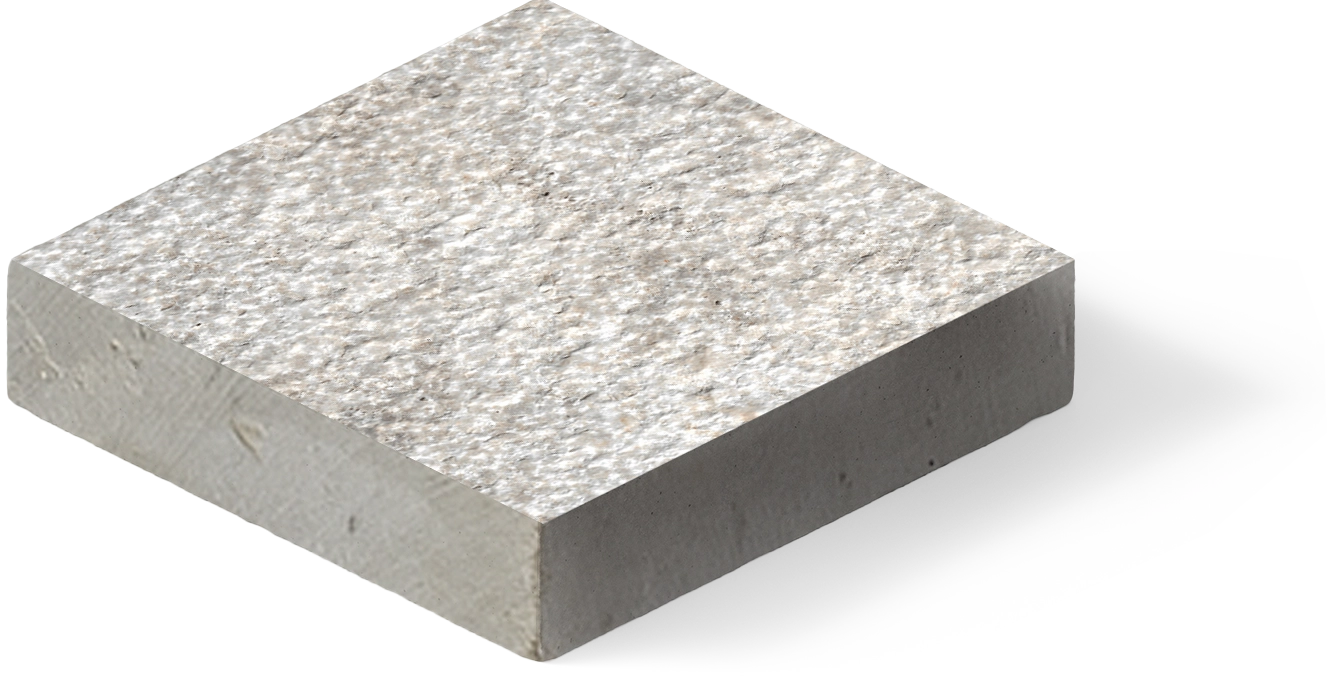
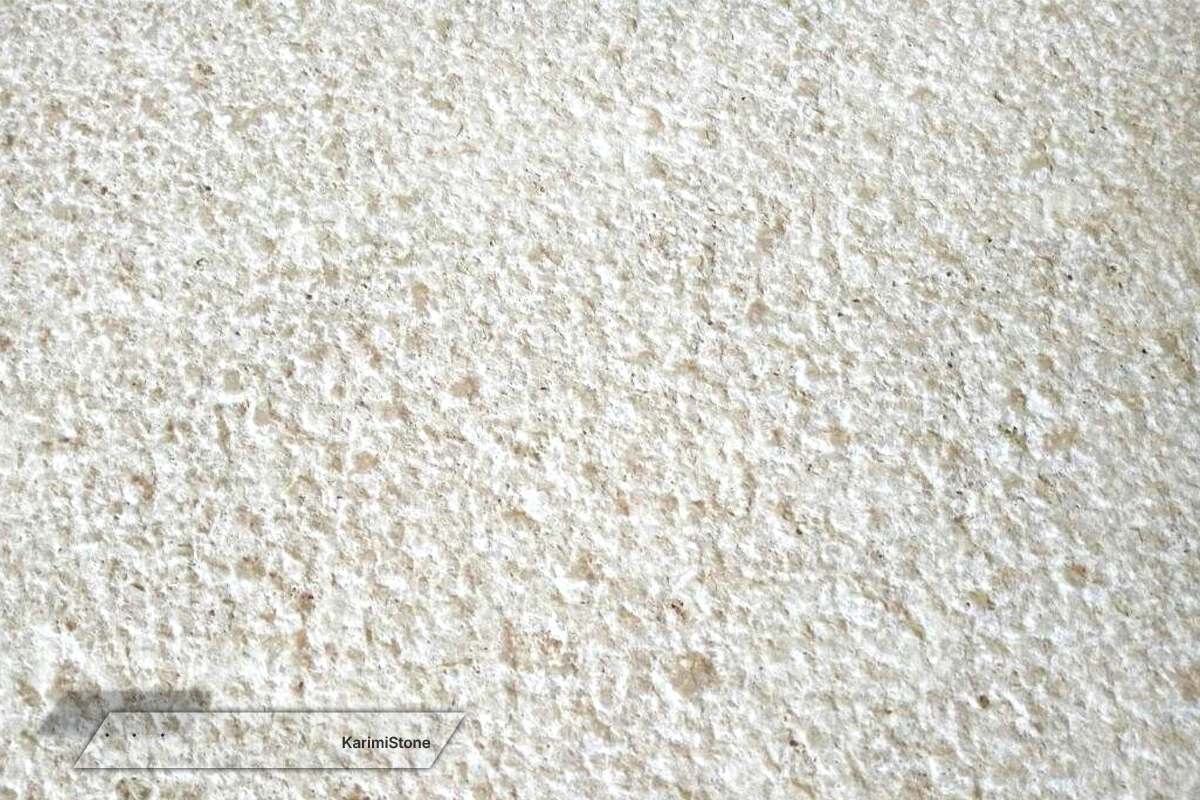
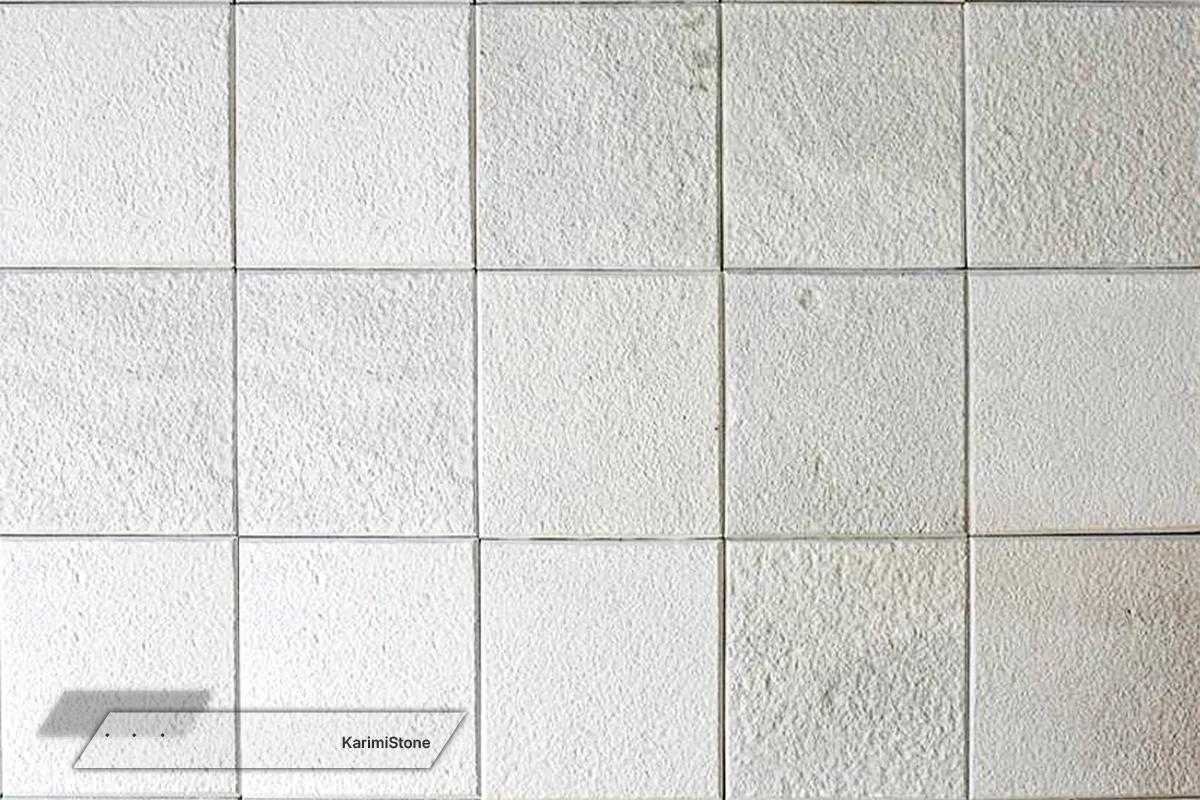
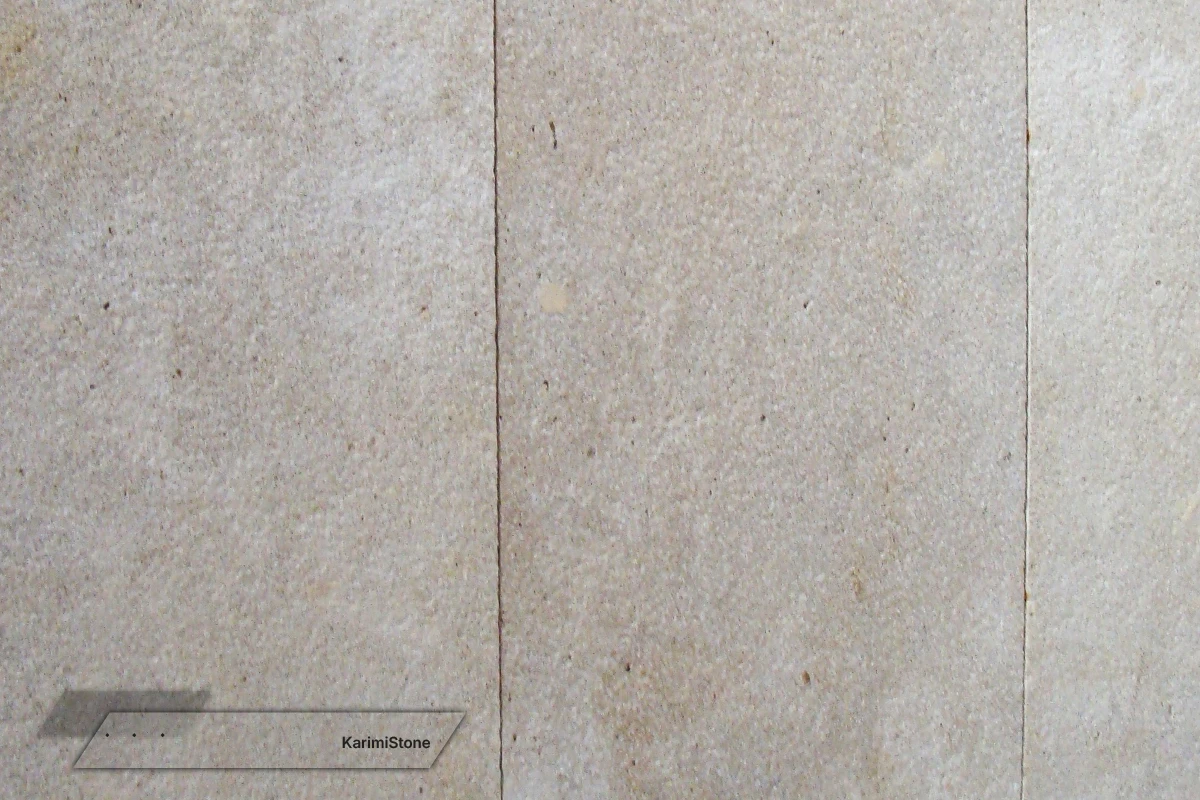
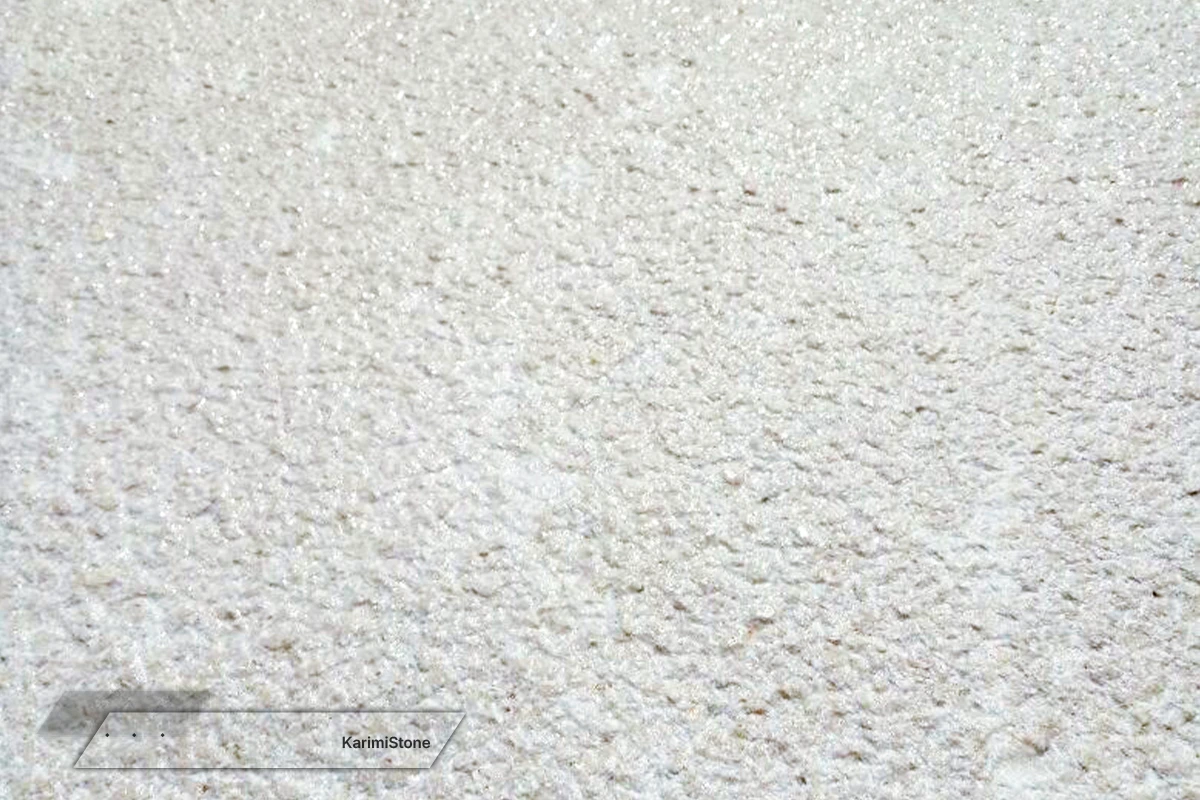
Vanak Limestone Bush-Hammered is an Iranian natural limestone with a light cream-to-beige color and a mechanically textured surface. Repeated impacts from multi-point tools create numerous small depressions across the face, reduce reflection and generally provide more grip than polished limestone.
The controlled texture makes the material suitable for façades, pedestrian paths, garden paving, courtyards and selected exterior stairs. Its relatively uniform background also supports coordinated installation across large architectural areas.
What Is Vanak Limestone Bush-Hammered?
Vanak Limestone Bush-Hammered is produced by repeatedly striking the stone surface with a mechanical tool fitted with multiple metal points. Each impact removes a small amount of material and forms a rough, granular texture.
Unlike a polished surface, bush-hammering does not reflect light strongly. It is also rougher than a honed finish and is commonly selected where surface traction and low glare are important.
Natural Characteristics of Vanak Limestone
Vanak Limestone is sourced from Iran and is known for its light cream-to-beige background and relatively consistent natural texture. Color, fine fossils and mineral points may vary between quarry sections and blocks.
- Light color range: generally cream to beige.
- Textured surface: small controlled depressions are formed mechanically.
- Low reflection: the finish reduces glare in direct sunlight.
- Natural variation: color and markings differ between production batches.
- Good workability: suitable for tiles, panels, steps and custom components.
- Coordinated sorting: project-specific color and texture selection is available.
Bush-Hammering Process
The production of Vanak Limestone Bush-Hammered normally includes the following stages:
- Block selection: checking color, cracks, fossils and structural condition.
- Primary sawing: producing slabs or strips in the required thickness.
- Calibration: controlling thickness and surface flatness.
- Bush-hammering: creating the specified texture with multi-point tools.
- Dimensional cutting: producing tiles, panels, steps and custom pieces.
- Cleaning: removing stone dust and loose particles.
- Quality control: checking dimensions, texture, cracks, edges and color range.
Light, medium and deep bush-hammering create different textures and color appearances. The required pattern and depth should be approved through a physical sample before mass production.
Surface Grip and Safety
The rough surface of Vanak Limestone Bush-Hammered generally provides more grip than polished limestone, particularly when used for pedestrian paths and exterior stairs. However, no natural stone finish should be described as completely slip-proof without testing.
For public, wet or safety-sensitive flooring, slip resistance must be verified according to the project specification and applicable local requirements.
Applications
- Exterior façades and wall cladding
- Public pedestrian paths
- Garden paving and landscape areas
- Courtyards and open yards
- Building entrances
- Exterior steps and risers
- Selected terraces and pool-surround areas
- Decorative textured walls
Exterior Use and Frost Considerations
Bush-hammering changes the surface texture but does not make limestone waterproof or automatically frost-resistant. Exterior suitability depends on batch-specific water absorption, strength, drainage, thickness, fixing details and freeze-thaw exposure.
In cold or wet climates, laboratory testing, correct drainage, compatible impregnation and an engineered installation system may be required.
Installation and Sealing
- Use an adhesive or mortar system compatible with natural limestone.
- Provide a stable substrate, correct slope and sufficient drainage.
- Use mechanical anchoring for façade panels when required by engineering calculations.
- Apply a compatible penetrating sealer where moisture or staining is expected.
- Remember that sealing reduces absorption but does not waterproof limestone.
- Test adhesive, grout and sealer on a physical sample.
- Provide movement joints according to the project design.
Cleaning and Maintenance
Clean Vanak Limestone Bush-Hammered with a soft brush, water and a pH-neutral cleaner intended for calcareous natural stone. Avoid vinegar, acidic chemicals and uncontrolled high-pressure washing.
General maintenance guidance is available from the Natural Stone Institute.
Available Production Formats
- Bush-hammered slabs
- Standard and custom tiles
- Façade and wall panels
- Steps and risers
- Paving pieces
- Free-length strips
- Custom cut-to-size components
Sorting and Quality Control
Every batch is inspected according to the approved project requirements. The main control criteria include:
- Background color and acceptable tonal range
- Texture depth and density
- Dimensions and thickness
- Surface flatness and edge condition
- Visible cracks or weak areas
- Consistency with the approved sample
Production and Export by Karimi Stone
Negin Sang Karimi (Karimi Stone) produces, supplies and exports Iranian natural stone. The company manages block selection, sawing, calibration, bush-hammering, cutting, inspection, sorting and export packaging.
Each order of Vanak Limestone Bush-Hammered can be produced as slabs, tiles, panels, steps or custom components, subject to block dimensions and project specifications. Honed, polished, sandblasted, brushed, split-face and cut-broken finishes are also available.
For samples, technical documents or a quotation for Vanak Limestone Bush-Hammered, visit the Karimi Stone contact page.
Frequently Asked Questions
Is bush-hammered limestone completely non-slip?
No. The texture generally improves grip, but slip resistance must be verified through suitable testing.
Can it be used in freezing climates?
The decision depends on batch testing, water absorption, drainage, stone thickness and installation details.
Does it require sealing?
Sealing is recommended in areas exposed to moisture, pollution, oil or staining substances.
Can the texture depth be customized?
Yes. Light, medium or deeper textures can be produced, subject to stone thickness and sample approval.