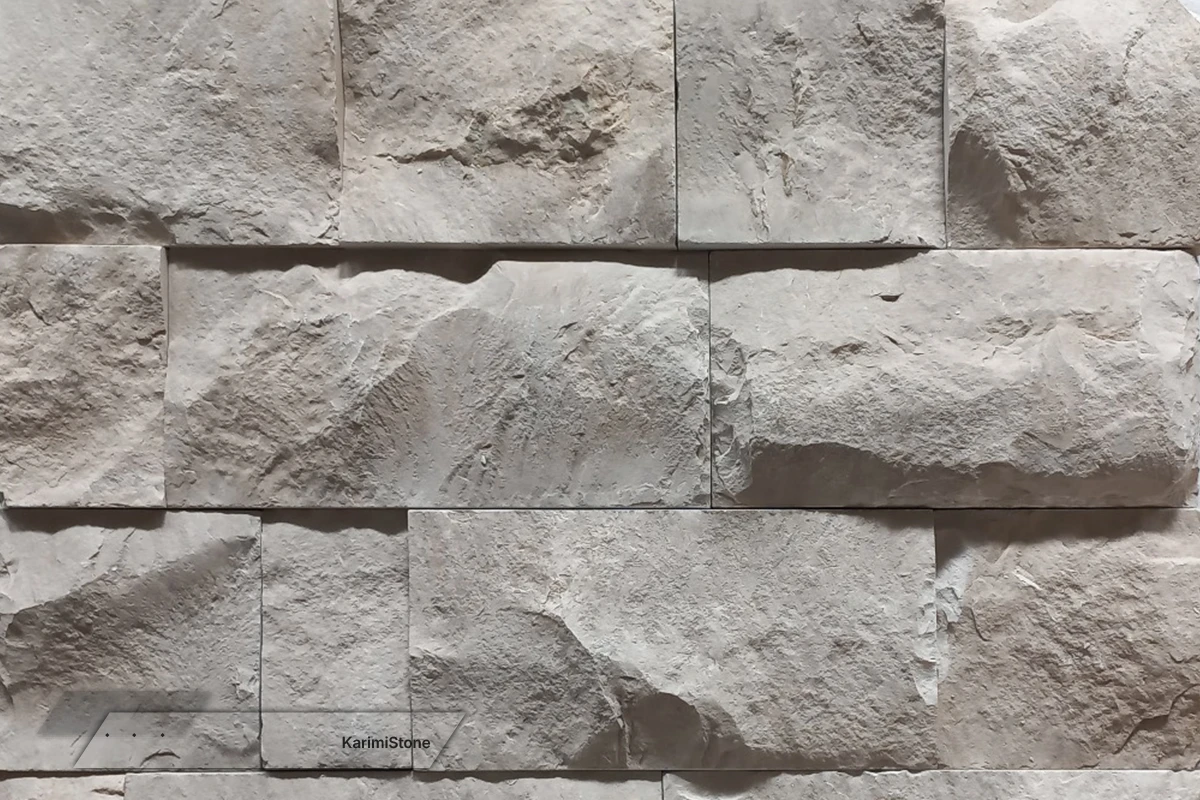











Gohare Split-Face Limestone
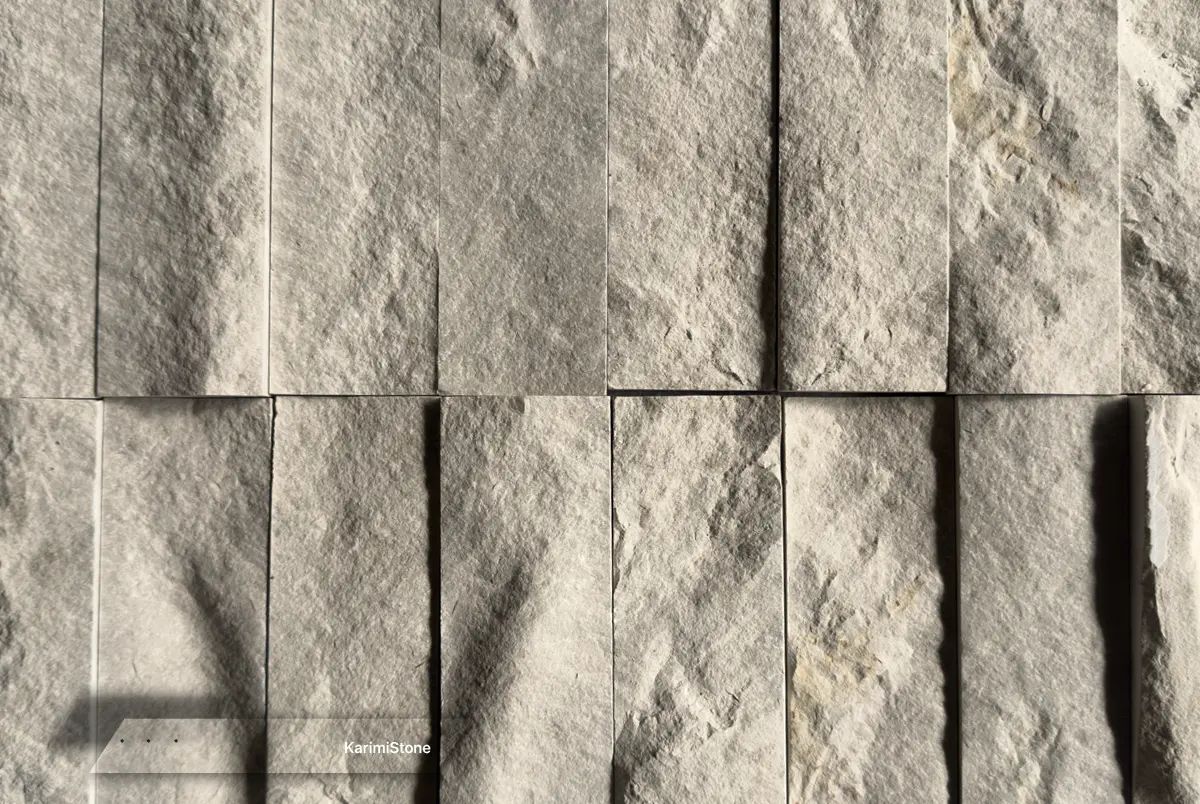
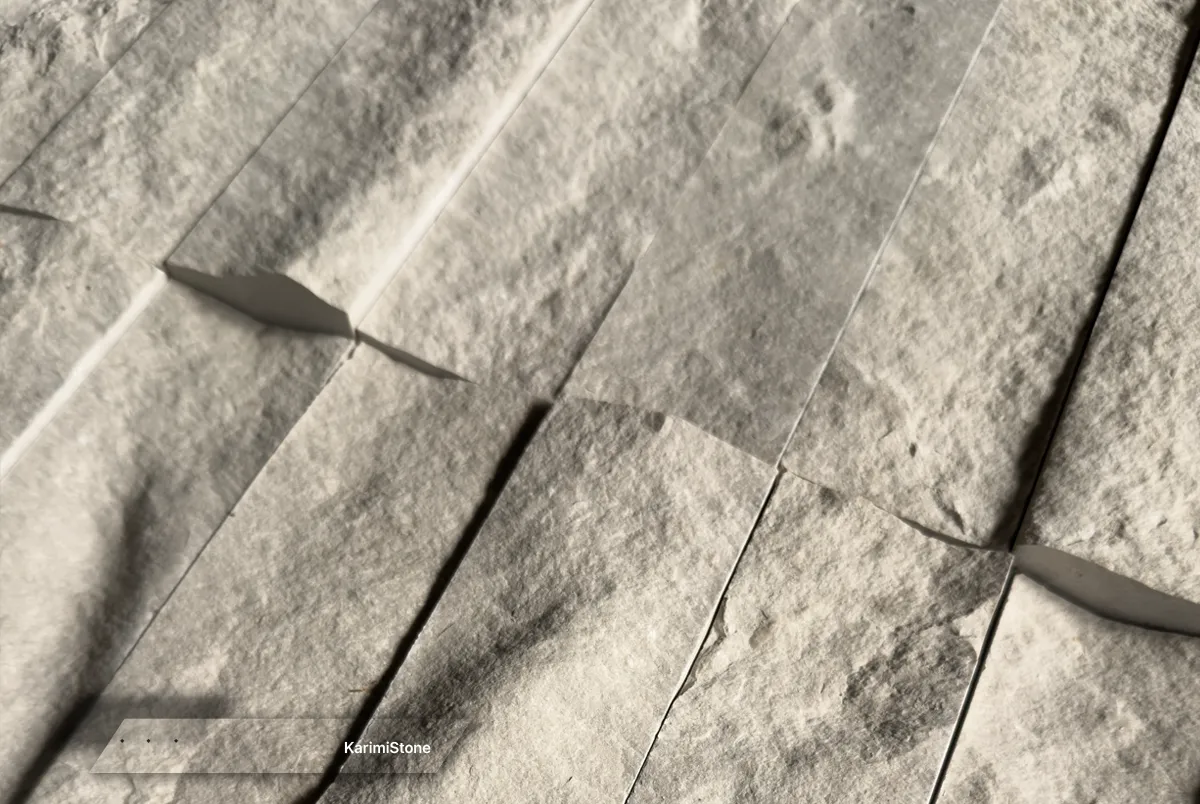
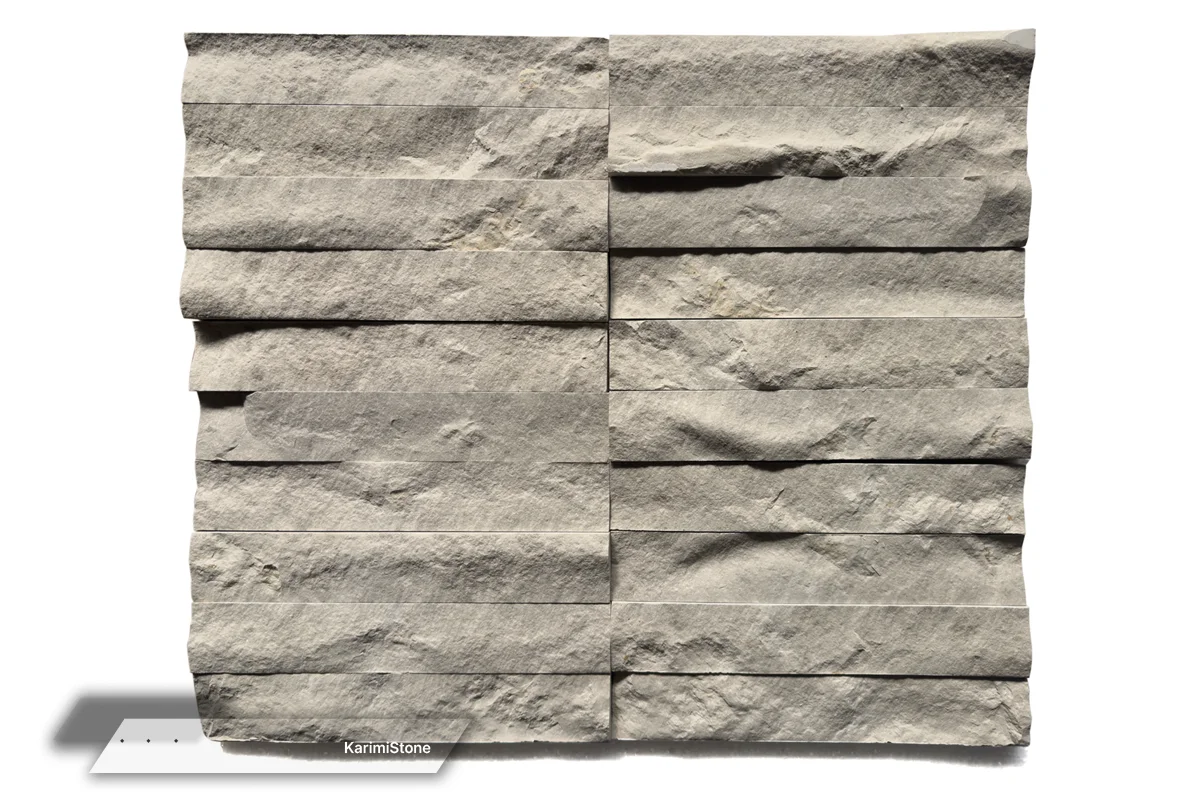
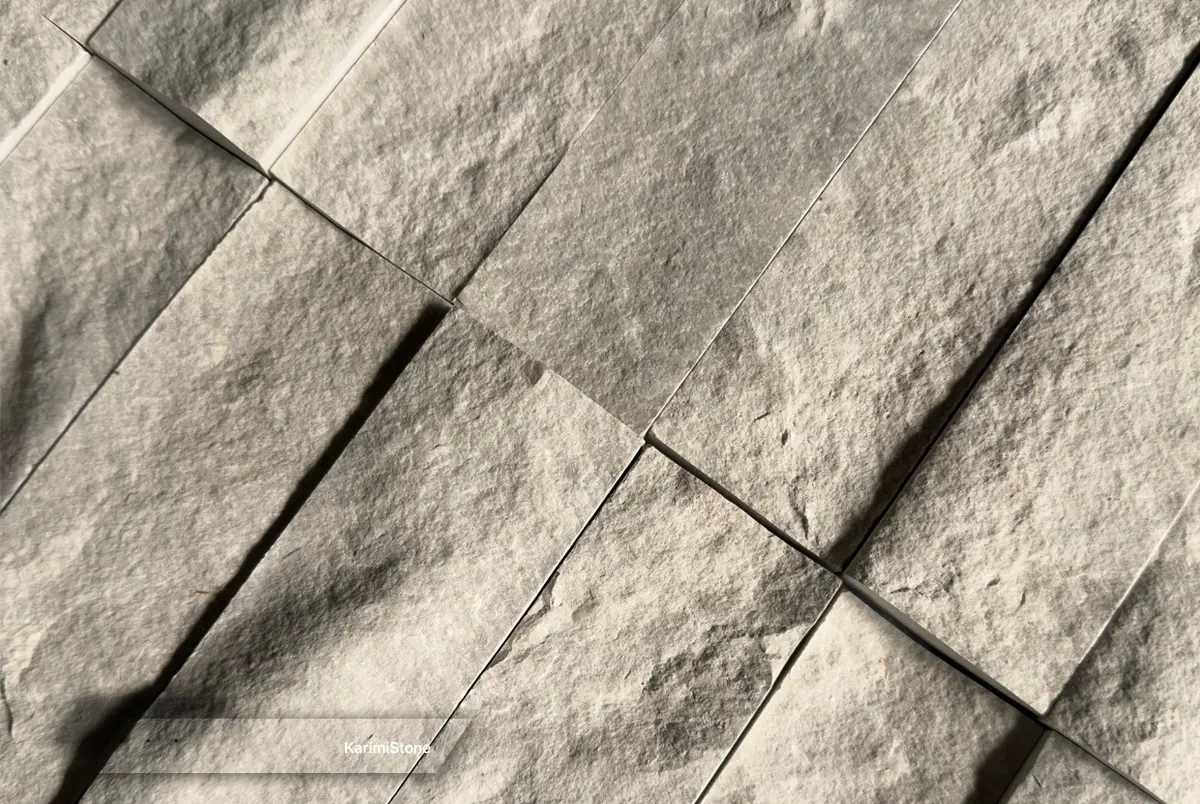
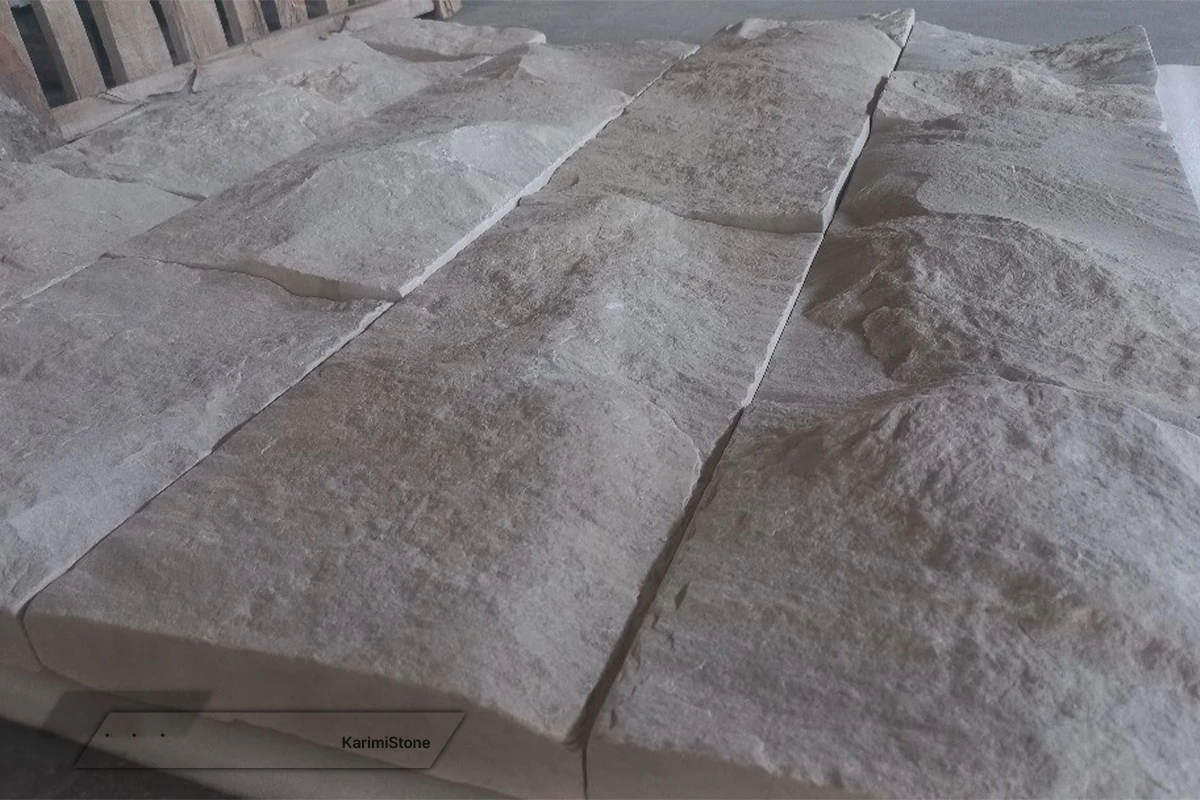
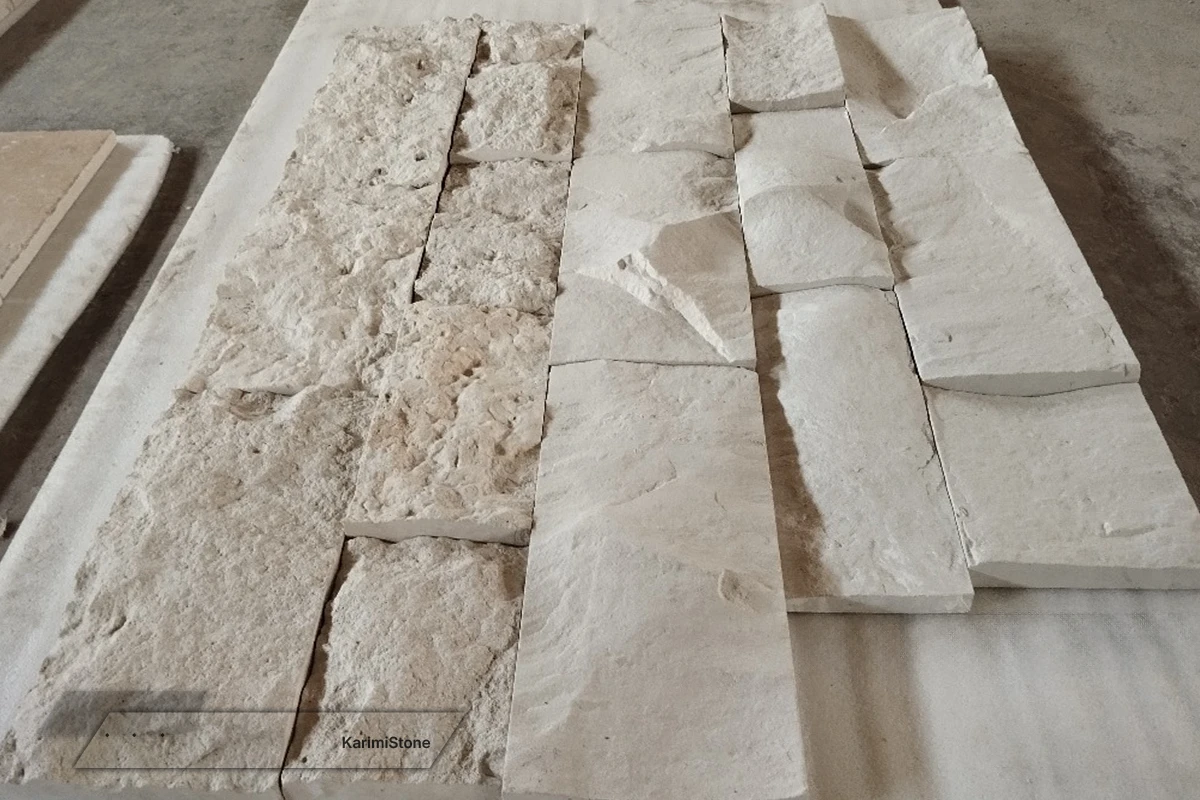
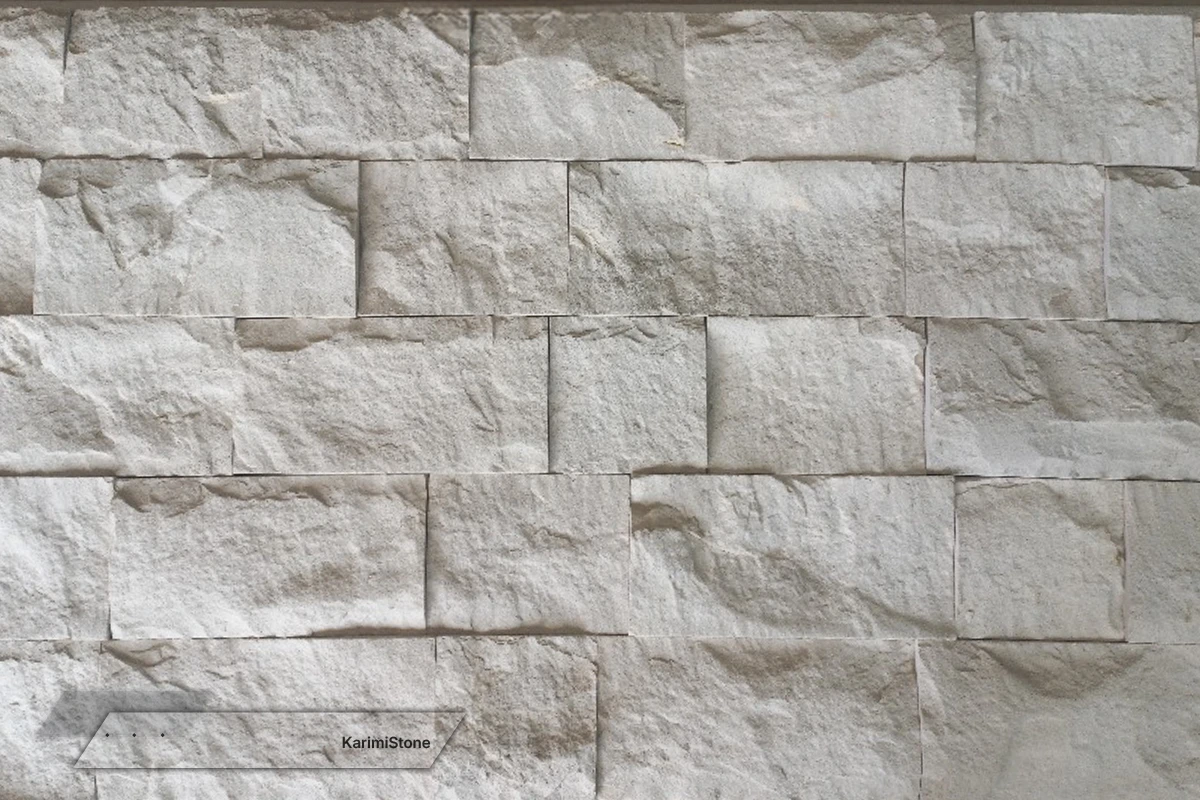
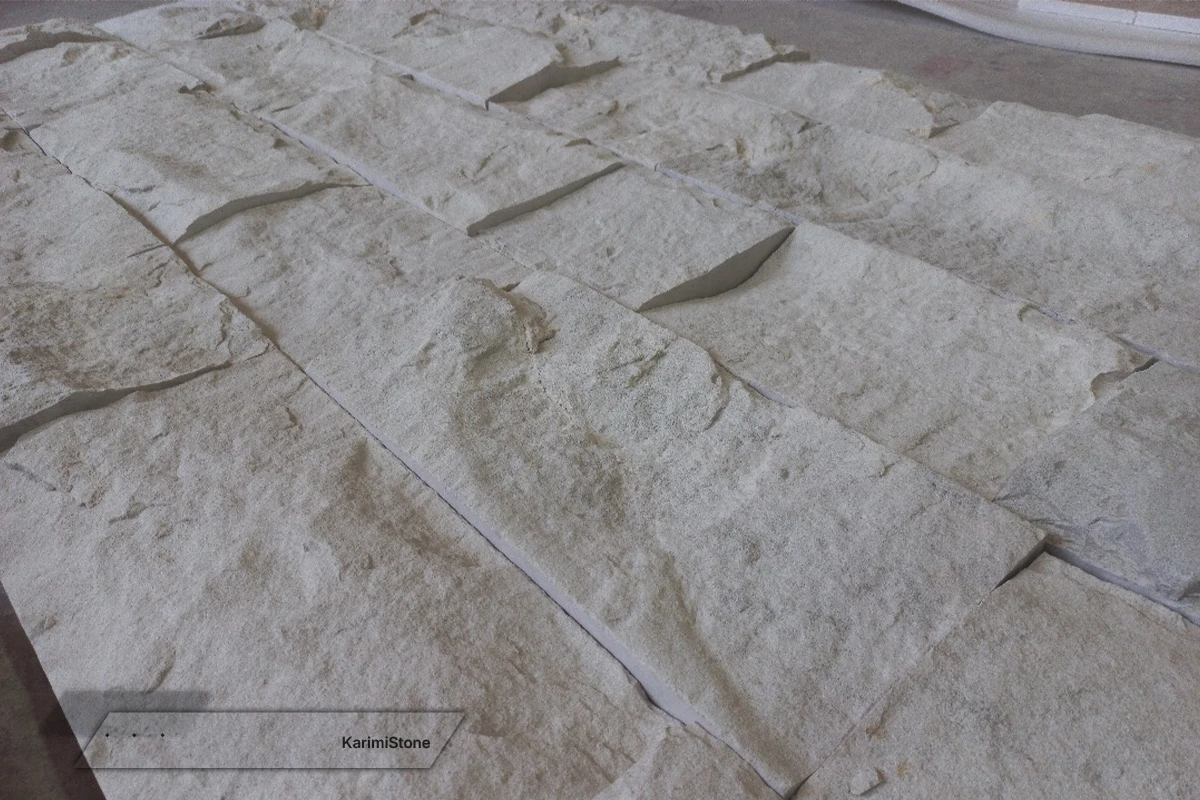
Gohare Split-Face Limestone is an Iranian cream limestone with a naturally fractured, three-dimensional surface. The finish is produced by mechanically splitting cut pieces to expose the internal structure of the stone and create irregular ridges, broken textures and strong shadow lines.
Gohare limestone is extracted near Khorramabad in Lorestan Province, western Iran. Its light cream-to-beige background, fine structure and natural grey fossils make it suitable for exterior façades, interior walls, entrance areas and landscape applications.
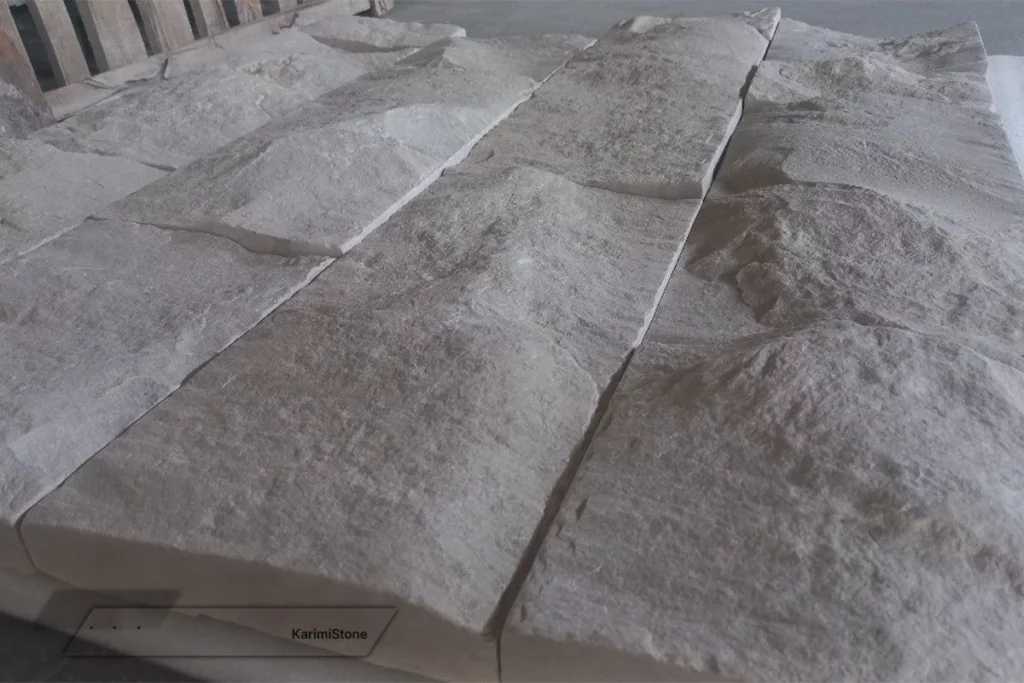
What is Gohare Split-Face Limestone?
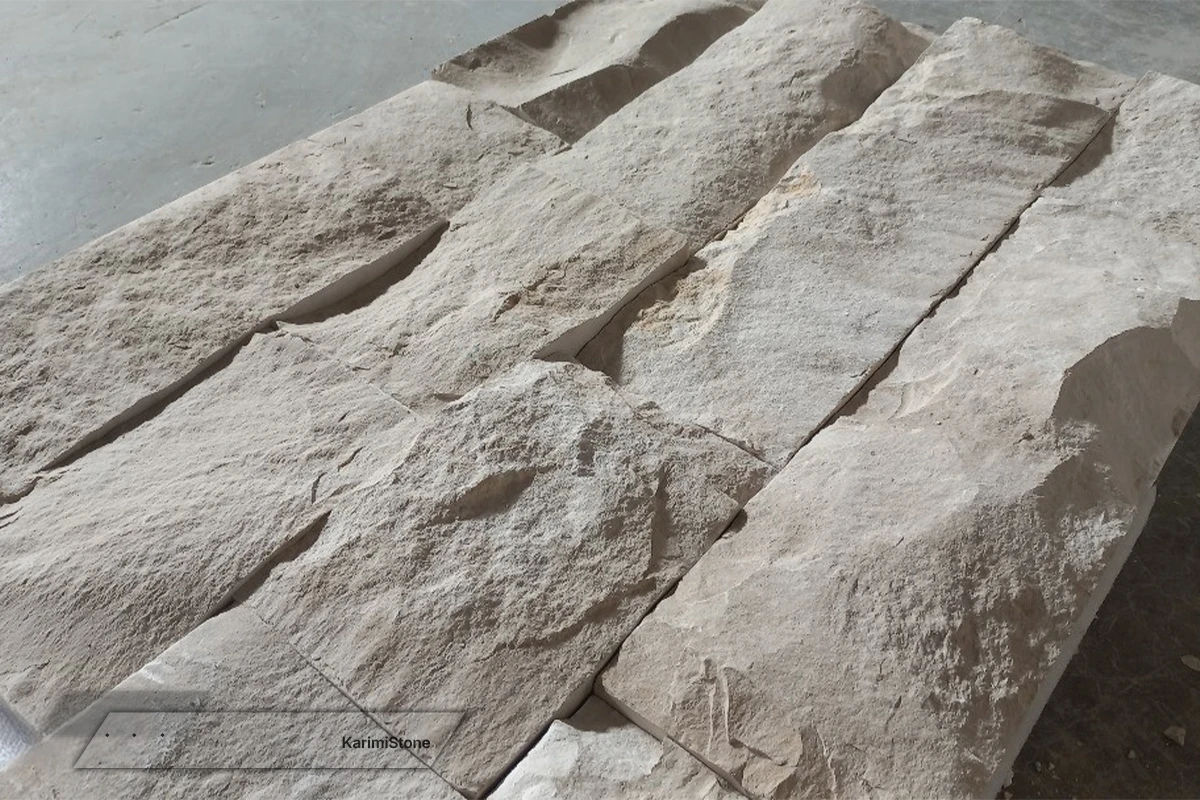
Gohare Split-Face Limestone is produced by splitting prepared stone pieces with hydraulic pressure or mechanical tools. Instead of grinding or polishing the surface, the process separates the stone along its internal structure.
The result is a rough and uneven face with natural ridges. Each piece has small differences in depth and texture because the stone does not break in exactly the same way every time.
Unlike polished limestone or honed limestone, Split-Face does not create a flat surface. It is primarily intended for vertical cladding where texture and shadow are required.
Split-Face production process
- Block selection: Blocks are checked for color, fossils, cracks and structural condition.
- Primary cutting: Blocks are cut into slabs, strips or rectangular pieces.
- Dimensional preparation: The width, length and required backing thickness are established.
- Mechanical splitting: Hydraulic or mechanical equipment separates the stone and exposes a fractured face.
- Edge preparation: The back and installation edges are adjusted where required.
- Cleaning: Loose particles and processing dust are removed.
- Quality control: Dimensions, backing thickness, texture and visible defects are checked.
Because the surface depth is naturally irregular, total panel thickness may vary. Project specifications should define the minimum backing thickness and acceptable maximum projection.
Color and fossil sorting
Gohare Split-Face Limestone normally has a light cream, beige or slightly greyish-cream color. Natural fossil patterns may appear in different concentrations:
- Low-fossil selection: Cleaner and more uniform background
- Medium-fossil selection: Moderate natural fossil distribution
- High-fossil selection: More visible grey fossil markings
Fossil classification describes appearance and does not independently determine structural quality. The fractured surface may expose fossils differently from one piece to another, so physical samples should be approved for large façades.
Split-Face and Cut-Broken: what is the difference?
A Split-Face surface is created mainly by splitting the stone to expose its natural fracture. A Cut-Broken finish normally begins with controlled surface grooves followed by mechanical breaking.
Split-Face generally appears more naturally irregular, while Cut-Broken retains more visible organization from its original groove pattern. The correct option depends on the required texture, panel dimensions and installation system.
Benefits of Gohare Split-Face Limestone
- Three-dimensional surface: Natural ridges give depth to walls and façades.
- Strong shadow contrast: The appearance changes according to the direction of light.
- Low reflectivity: The fractured face does not create mirror-like glare.
- Natural surface variation: Each piece has a slightly different texture.
- Suitable for vertical cladding: It is mainly produced for walls and façade panels.
- Lower visibility of minor marks: Small scratches are less noticeable than on smooth stone.
Technical specifications
The following figures are indicative values. Results may vary according to quarry section, block, production lot, specimen direction and laboratory method.
| Property | Indicative value | Reference |
|---|---|---|
| Stone classification | Natural limestone | Geological classification |
| Color | Light cream to beige | Visual sorting |
| Water absorption | Approximately 0.53% | ASTM C97 |
| Bulk density | Approximately 2661 kg/m³ | ASTM C97 |
| Porosity | Approximately 2.59% | ASTM C97 |
| Compressive strength | Approximately 19.4 MPa | ASTM C170 |
| Flexural strength | Approximately 12.4 MPa | Laboratory report |
| Abrasion test result | Approximately 59.31 mm | EN 14157 |
The supplied lot must be checked against its test certificate. ASTM C97/C97M covers absorption and bulk specific gravity testing for dimension stone. Further testing information is available from the Natural Stone Institute.
Applications of Gohare Split-Face Limestone
Gohare Split-Face Limestone is primarily recommended for vertical architectural surfaces:
- Exterior building façades
- Interior textured walls
- Entrance walls and portals
- Commercial building cladding
- Lobby and reception walls
- Stairwell walls
- Garden and landscape walls
- Boundary walls
- Columns and architectural elements
- Custom façade panels
The deep, uneven face is generally not recommended for countertops, working surfaces or normal pedestrian flooring because it is difficult to clean and does not provide a level walking surface.
Façade installation
Installation of Gohare Split-Face Limestone must consider the irregular face and the remaining structural thickness behind it. Mechanical fixing is generally recommended for larger façade panels according to engineering calculations and local building regulations.
Anchors must connect to a sound part of the stone and not only to a thin surface ridge. Panel weight should be calculated using the maximum actual thickness rather than only the nominal backing thickness.
Exterior use and cold climates
Splitting does not make limestone waterproof or automatically frost-resistant. Exterior suitability depends on water absorption, climate, panel dimensions, joint design, drainage and lot-specific test results.
In wet or cold climates, protected joints, mechanical fixing, correct water drainage and a compatible penetrating sealer may be required. A sealer can reduce moisture penetration but cannot replace correct installation.
Cleaning and maintenance
- Remove dust with a soft brush or controlled low-pressure air.
- Use a pH-neutral cleaner suitable for limestone.
- Avoid vinegar, acids and aggressive cleaning products.
- Do not use uncontrolled high-pressure washing.
- Inspect façade joints, anchors and drainage periodically.
Available formats
Negin Sang Karimi supplies Gohare Split-Face Limestone as façade panels, tiles, battens, strips and custom cut-to-size components. Final dimensions depend on backing thickness, texture depth and installation requirements.
Related products include Gohare Cut-Broken, Gohare Grooved and the complete Gohare limestone collection.
Production and export by Karimi Stone
Negin Sang Karimi (Karimi Stone) manages quarry extraction, block selection, dimensional cutting, splitting, sorting, quality control and export preparation.
Before packing, pieces are checked for dimensions, backing thickness, surface depth, texture range, edge condition and visible cracks. Textured pieces are packed with suitable separators to prevent direct contact and damage during transport.
For samples, technical documents or a quotation for Gohare Split-Face Limestone, please contact Karimi Stone.
Frequently asked questions
Is Split-Face the same as Cut-Broken?
No. Split-Face exposes a natural fracture, while Cut-Broken usually combines prepared grooves with controlled breaking.
Can the surface depth be identical on every piece?
No. Natural splitting creates controlled but unavoidable variation. An acceptable texture range should be approved through samples.
Can Split-Face limestone be used for flooring?
It is primarily intended for walls and façades. Its uneven surface is generally unsuitable for normal walking areas.
Can it be used in cold regions?
Suitability must be confirmed through lot testing, drainage design, fixing details and local climate requirements.