



Select your preferred language
Share With
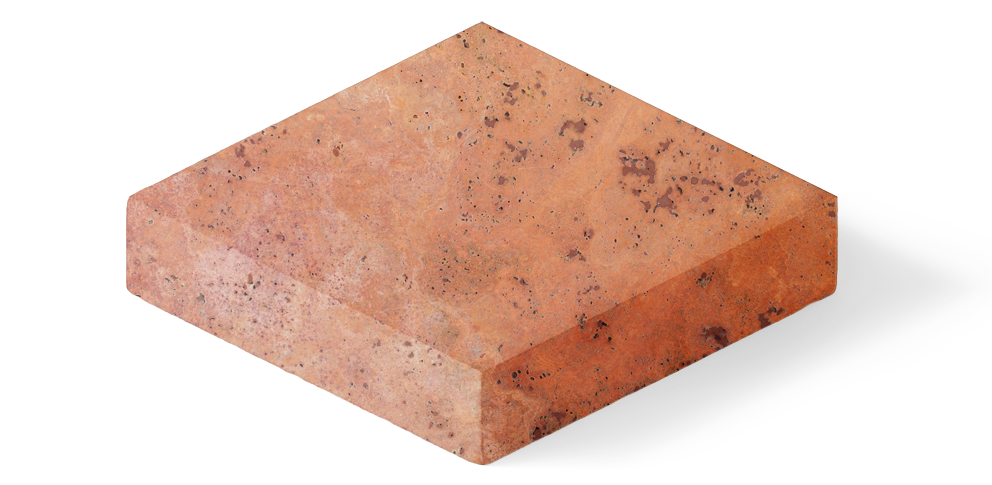
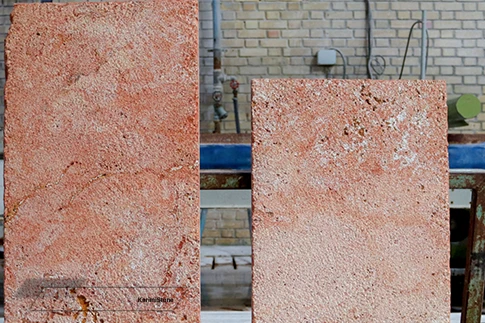
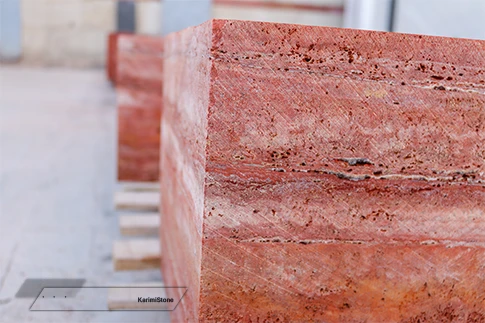
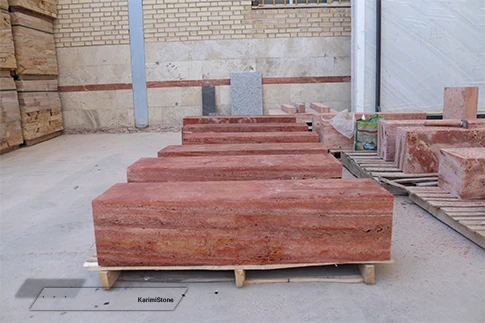
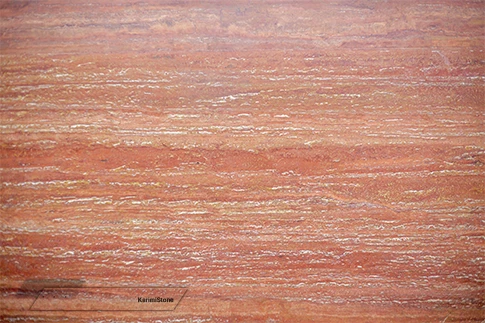
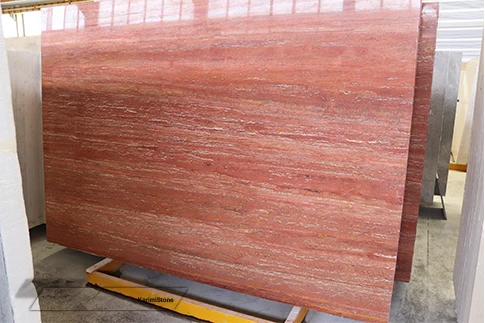
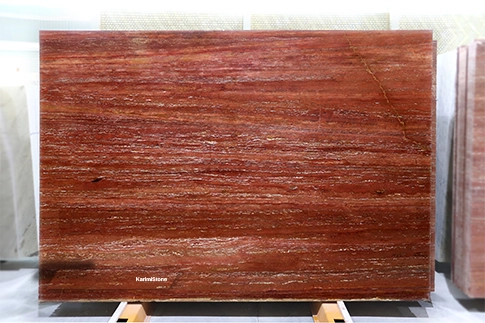
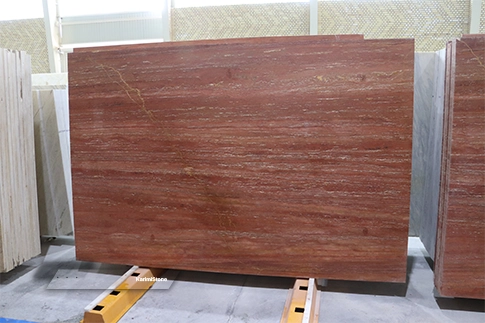
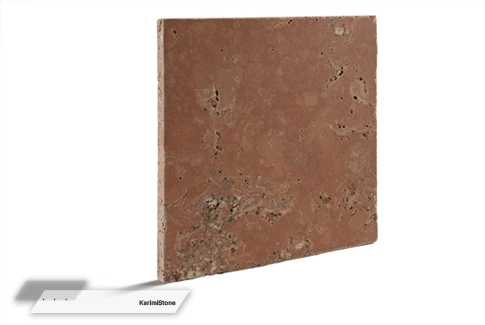
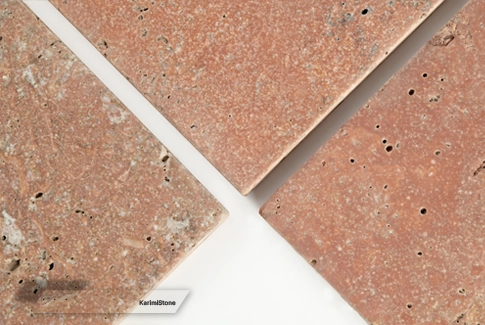
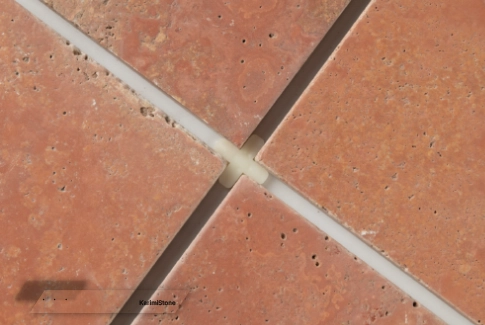
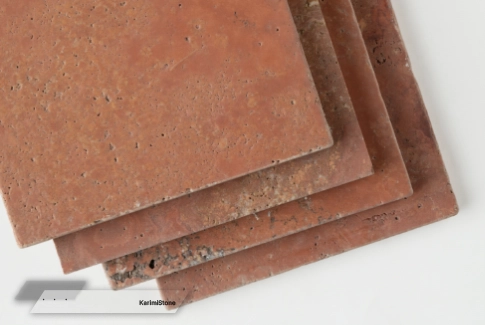
Stone Name: Red Travertine
Stone Type: Travertine
Origin: Iran
Other Names: Sorya Red Travertine, Sorya Stone, Azarshahr Red Travertine
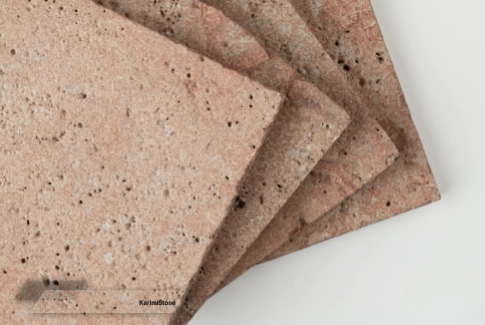
Available Cuts: Slab, Tile, Free-length Size, Step & Riser
Finishes: Polished, Honed, Leathered, Sandblasted, Bush-Hammered
✓

✓

✓
✓


✓
✓

✓

✓
✓
Key Features:
Main Iranian Quarries
Applications
Supplier Status – Karimi Stone
|
Additional Information
This stone—known in European markets as Sorya Red Travertine—has a vibrant, decorative color that makes it ideal for luxury façades, villas, gardens, and landscape design. It is produced in both vein-cut and cross-cut. Due to its strong, bold coloration, Red Travertine is often used as a separating band or accent line in interior flooring and outdoor paving.
Red Travertine Characteristics
Appearance & Formation
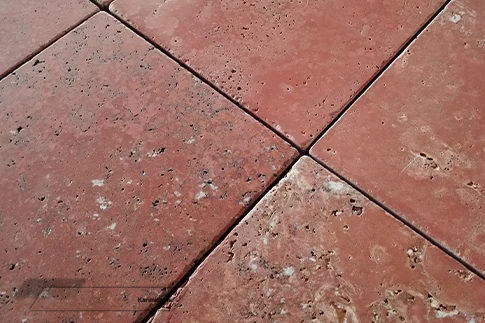
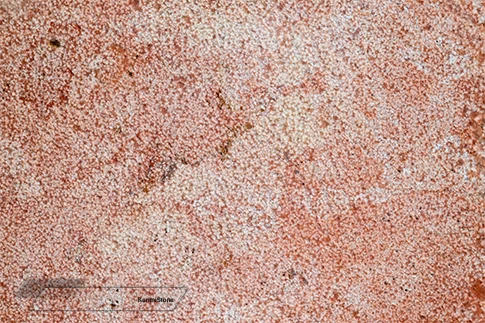
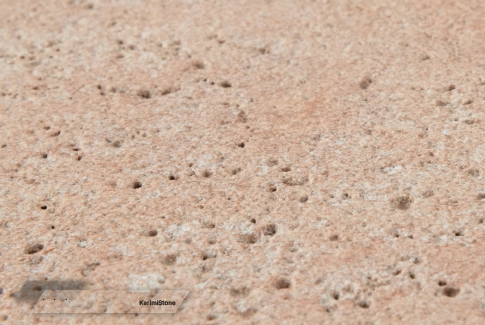
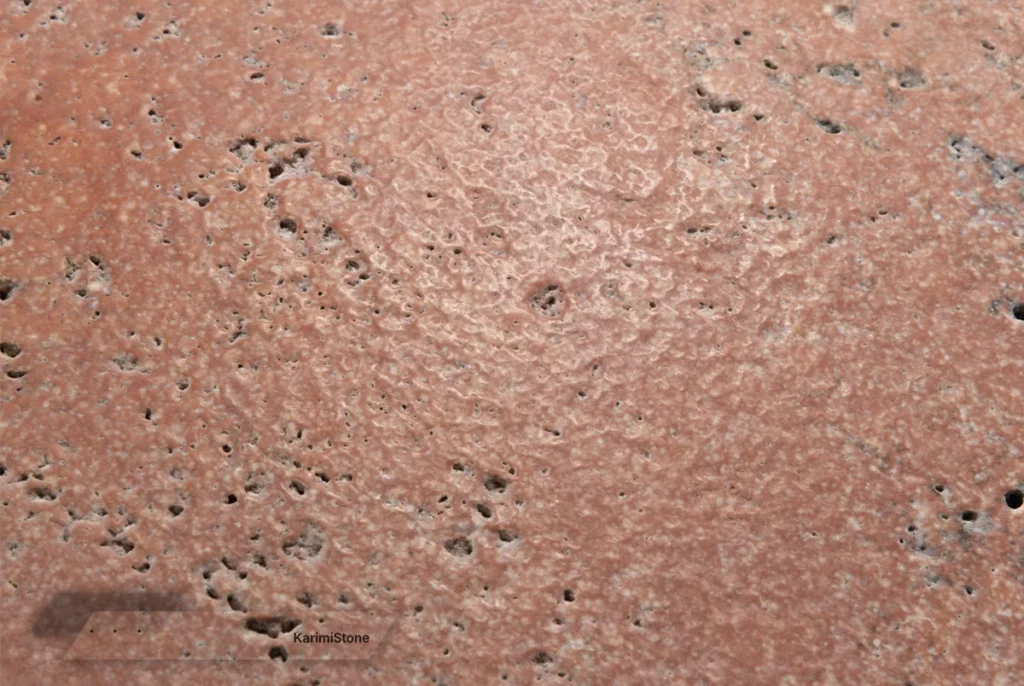
Red Travertine forms from calcium carbonate deposits, and its red coloration comes from natural iron oxide.
Appearance details:
Why Red Travertine Is Popular
This material is widely used in both modern and traditional architecture. Its decorative value makes it ideal not only for practical construction but also for beauty design applications such as mosaics, fountains, and swimming pool features.
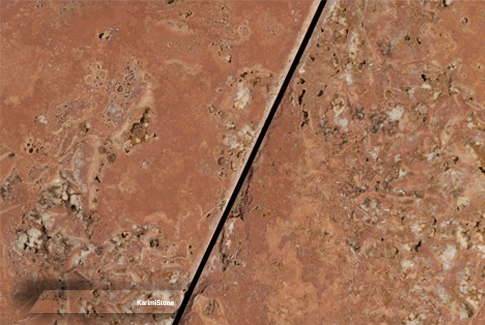
During production, the pores of Red Travertine are filled with resin or epoxy, allowing the stone to achieve a shiny finish after polishing.
Key Advantages
Recommended Uses
Important Considerations
Demand & Quarry Locations
Iran is one of the world’s primary producers of high-quality Red Travertine, with major deposits in:
Turkey also has active demand for this stone, with usage recorded in regions such as Kütahya and Denizli.
Limited quarry output has contributed to the high global demand for this travertine.
Red Travertine Tiles (Overview)
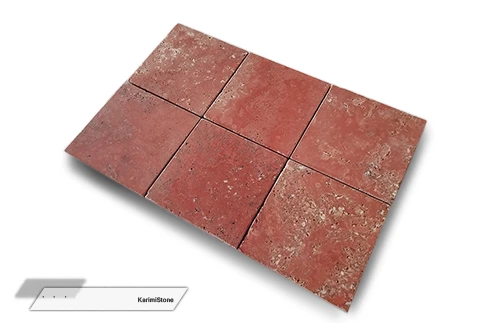
Karimi Stone (Negin Sang Karimi) manufactures and exports all Red Travertine formats—slabs, tiles, long sizes, pavers—and offers all finishes and custom sizes based on client requirements.